Labneh with Za'atar & Olive Oil Recipe — Lebanese Labneh Mezze & Breakfast
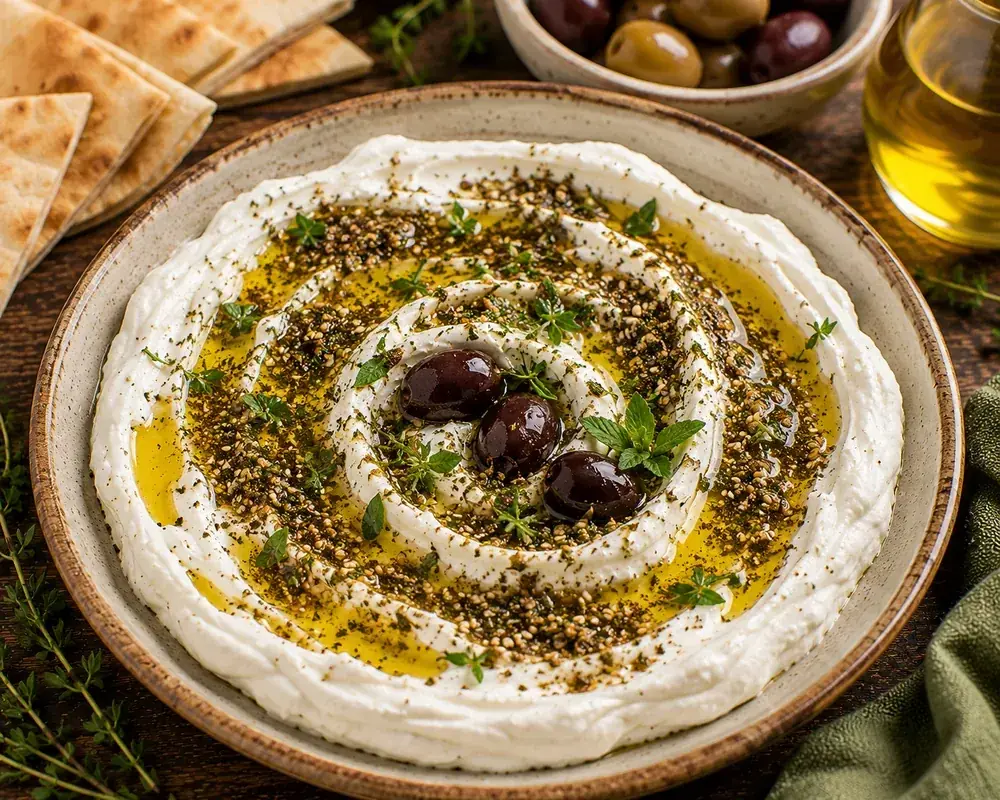
This labneh with za'atar and olive oil recipe is a classic Lebanese-inspired mezze and breakfast made with thick strained yogurt, fragrant za'atar, extra virgin olive oil, fresh mint, parsley, crisp cucumber, tomatoes, olives, and warm pita. An easy Mediterranean dish that can be made with store-bought labneh or homemade labneh from full-fat plain yogurt.
Prep Time
10 mins
Cook Time
0 mins
Total Time
10 mins
Servings
4
A TASTE OF TRADITION
The Story Behind This Recipe
Labneh with za'atar and olive oil is a beautiful example of how Lebanese food can turn a few everyday ingredients into a complete and satisfying meal. The dish is simple by design: thick strained yogurt provides the creamy base, za'atar brings an earthy and aromatic character, and extra virgin olive oil adds richness and fruitiness.
Cultural & Culinary Context
Labneh has a long-standing place in Lebanese and wider Levantine food traditions. It is commonly eaten for breakfast and appears alongside bread, olives, fresh vegetables, herbs, and other mezze dishes. Rather than being reserved for special occasions, labneh belongs to the kind of everyday table food that can be prepared quickly and shared by the whole family. Its familiar combination with olive oil and za'atar reflects the importance of dairy, herbs, bread, and olive oil in Lebanese home cooking.
What Makes It Mediterranean?
The dish reflects the Mediterranean food pattern through its use of cultured dairy, extra virgin olive oil, fresh vegetables, herbs, olives, and flatbread. The ingredients are served simply so their individual flavors remain recognizable. Olive oil is not merely a cooking fat here; it is part of the finished dish, while vegetables and herbs provide freshness alongside the creamy labneh.
Mediterranean Influences
- 🌿Extra virgin olive oil is used as a finishing ingredient and provides the dish's characteristic fruity richness.
- 🌿Fresh cucumber, tomatoes, mint, and parsley add freshness and seasonal vegetables.
- 🌿Olives provide a traditional savory accompaniment.
- 🌿Warm flatbread makes the dish practical as a shared breakfast or mezze.
- 🌿Za'atar combines aromatic herbs and spices that are deeply familiar in Levantine cooking.
- 🌿The preparation emphasizes simple, minimally processed ingredients and balanced portions.
Ingredients
- 2 cups labneh (Use thick, cold labneh. If unavailable, make homemade labneh by straining full-fat plain yogurt; allow 12–24 hours for a thick spreadable texture.)
- 2 tbsp extra virgin olive oil (Use a flavorful olive oil because it is served raw and becomes one of the main flavors of the dish.)
- 2 tbsp za'atar seasoning (Use a fragrant Lebanese-style blend. Za'atar blends vary in saltiness, so taste before adding extra salt.)
- 1 tbsp fresh mint, finely chopped (Chop shortly before serving to preserve its fresh aroma.)
- 1 tbsp fresh parsley, finely chopped (Pat the parsley dry before chopping so excess water does not thin the labneh.)
- 0.5 tsp sumac (Optional; adds a sharper citrus-like tang.)
- 1 fresh cucumber, sliced (Keep the slices cold and dry them if they are very watery.)
- 1 cherry tomatoes (Drain excess juice after cutting if the tomatoes are particularly juicy.)
- 1 mixed olives (Drain well before serving.)
- 1 warm whole wheat pita bread (Warm shortly before serving so it stays soft and flexible.)
Instructions
- 1
If using store-bought labneh, keep it refrigerated until you are ready to assemble the dish. If making it at home, first prepare the labneh using the method in the Cooking Guide below and chill it until thick.
- 2
Spoon the labneh onto a wide shallow serving plate or bowl. Spread it with the back of a spoon into an even layer that is thick enough to hold its shape.
- 3
Create gentle swirls across the surface with the back of the spoon. These shallow grooves will catch the olive oil and za'atar.
- 4
Drizzle the extra virgin olive oil evenly over the labneh. Leave some of the creamy surface visible rather than completely covering it with oil.
- 5
Sprinkle the za'atar over the labneh and olive oil. Distribute it evenly so each scoop gets some of the aromatic seasoning.
- 6
Scatter the chopped mint and parsley over the top. Add the optional sumac if you want a brighter, more tangy finish.
- 7
Arrange the cucumber, cherry tomatoes, and drained olives around the labneh. Keeping the watery vegetables around the edges helps prevent the labneh from becoming watery.
- 8
Warm the pita shortly before serving. It should be soft and flexible rather than dry or heavily toasted.
- 9
Serve immediately, allowing everyone to tear pieces of pita and scoop up the labneh with the toppings.
SET YOURSELF UP FOR SUCCESS
Before You Cook
👨🍳 Keep In Mind
- •If using homemade labneh, begin at least 12 hours ahead because the yogurt needs time to drain. For a very thick labneh suitable for spreading, 18–24 hours of refrigeration is often more useful than trying to rush the process.
- •For homemade labneh, use full-fat plain yogurt with live cultures when possible. Avoid flavored, sweetened, or very thin drinking-style yogurt.
- •Prepare a clean cheesecloth, fine-mesh strainer, or clean kitchen cloth and a bowl deep enough to collect the drained whey without allowing the strainer to sit in the liquid.
- •Keep the labneh refrigerated while it strains. Do not leave yogurt sitting at room temperature for the entire straining period.
- •Prepare the vegetables shortly before serving and drain watery vegetables well.
💡 Helpful Tips
- •For homemade labneh, mix about 1 teaspoon of salt into 4 cups of full-fat plain yogurt, place the yogurt in a lined strainer over a bowl, cover it, and refrigerate for 12–24 hours.
- •If the yogurt is still soft after 12 hours, do not add flour, starch, or other thickeners. Simply continue straining until it reaches the desired consistency.
- •The finished labneh should be thick enough that a spoon can create a visible groove without the groove immediately filling with liquid.
- •Do not drown the labneh in olive oil. The oil should complement the yogurt rather than make the spread difficult to scoop.
- •Taste your za'atar before adding extra salt because commercial blends differ considerably in saltiness.
- •Pat fresh herbs dry before chopping and drain olives well. Excess water is one of the easiest ways to make the finished plate watery.
- •For the best texture contrast, keep the labneh cool and the pita warm.
👀 How Do I Know It's Done?
- ✓The labneh is ready to serve when it holds its shape on the plate and does not spread like ordinary yogurt.
- ✓The olive oil and za'atar should sit visibly on the surface without immediately disappearing into a watery mixture.
- ✓The finished plate should have a creamy center with distinct fresh vegetables, olives, herbs, and pita around it.
- ✓There is no cooking stage for the assembled dish; once the labneh is properly thick and the toppings are prepared, it is ready to serve.
WANNA SEE IT IN ACTION ?
Step-by-Step Visual Guide

Prepare the Labneh and Accompaniments
Have thick chilled labneh ready and prepare the cucumber, tomatoes, olives, mint, parsley, za'atar, and olive oil before assembling the plate.
💡 Tip: Dry the vegetables and herbs well so excess moisture does not thin the labneh.

Spread the Labneh
Spoon the thick labneh onto a wide shallow plate and spread it into an even, substantial layer with the back of a spoon.
💡 Tip: Keep the layer thick enough to hold spoon marks and support the toppings.

Create Spoon Swirls
Use the back of the spoon to make gentle decorative grooves across the labneh surface.
💡 Tip: The shallow grooves create small places for olive oil and za'atar to collect.

Add Olive Oil and Za'atar
Drizzle extra virgin olive oil over the labneh and sprinkle za'atar evenly across the surface.
💡 Tip: Use enough olive oil to flavor the labneh without covering the entire surface.

Add Herbs and Fresh Accompaniments
Scatter mint, parsley, and optional sumac over the labneh, then arrange cucumber, tomatoes, and olives around the edges.
💡 Tip: Keep juicy vegetables around the edge instead of placing them directly on the labneh.

Finish and Serve with Warm Pita
Warm the pita until soft and flexible, place it beside the finished labneh, and serve immediately.
💡 Tip: Serve while the pita is warm and the labneh remains cool for the best texture contrast.
Tweak It
Make This Recipe Work for You
Adapt the recipe to your ingredients, dietary needs, budget, time, serving size, or meal-prep plans.
🔄 Ingredient Substitutions
Make labneh at home
If prepared labneh is unavailable, strain 4 cups of full-fat plain yogurt mixed with about 1 teaspoon of salt through cheesecloth or a clean kitchen cloth over a bowl in the refrigerator for 12–24 hours. Continue straining if you want a firmer consistency.
Use thick Greek yogurt when necessary
Very thick full-fat Greek yogurt can be used when labneh is unavailable and you need a quick substitute. The flavor and texture will be lighter than traditionally strained labneh.
🌱 Dietary Adjustments
Gluten-free serving
Serve the labneh with gluten-free flatbread or fresh vegetables instead of regular pita.
Reduce the sodium
Use a lower-sodium labneh, reduce the salt in homemade labneh, choose unsalted za'atar when available, and rinse or limit the olives.
💰 Budget-Friendly Options
Keep it budget-friendly
Make labneh from plain yogurt at home and use seasonal cucumbers and tomatoes. A simple plate of labneh, vegetables, olives, and pita does not require expensive ingredients.
⏱️ Time-Saving Options
Prepare the labneh ahead
Strain the yogurt the night before. Once the labneh is ready, the final dish takes only a few minutes to assemble.
👨👩👧👦 Serving Adjustments
Serve a larger group
For a larger breakfast or mezze table, multiply the labneh and toppings while keeping the toppings around the edges so the serving plate remains easy to scoop.
🥡 Meal Prep
Prepare components separately
Keep labneh refrigerated in its container and store washed, dried vegetables separately. Add olive oil, za'atar, herbs, and vegetables to the serving plate shortly before eating.
RECIPE RESCUE
🧩 What Do You Need Help With?
Choose the problem you're facing and get a recipe-specific solution instead of a generic cooking tip.
WHAT IF?
🔄 What If...?
Choose your situation and we'll show you a practical pathway for making this recipe work.
STORAGE & LEFTOVERS
🥡 Storage & Leftovers
Store plain homemade or opened labneh in a clean airtight container in the refrigerator.
Keep the assembled serving plate separate from leftover vegetables whenever possible because cucumber and tomato release water.
For the best texture, add olive oil, za'atar, herbs, and fresh vegetables shortly before serving rather than storing the fully assembled plate.
Always use clean utensils when serving from stored labneh.
Best Storage Time
Homemade labneh is best used within several days when kept properly refrigerated; follow the yogurt's date and food-safety guidance when making it at home.
How to Store
Use a clean airtight glass or food-safe container for refrigerated labneh.
SERVING & PAIRING
🍽️ Serving & Pairing
Serve labneh as a Lebanese breakfast or as part of a mezze spread. Spread it generously on a shallow plate, make spoon swirls, add olive oil and za'atar, and surround it with fresh vegetables and olives. Warm pita should be served alongside so it can be torn and used for scooping.
What Goes Well With It?
RECIPE FAQ
❓ Frequently Asked Questions
How do you make labneh with za'atar and olive oil?
To make labneh with za'atar and olive oil, start with 2 cups of thick chilled labneh, either store-bought or homemade from full-fat plain yogurt strained for 12–24 hours. Spoon the labneh onto a wide shallow serving plate and spread it into a thick, even layer. Use the back of a spoon to create gentle swirls across the surface, then drizzle with 2 tablespoons extra virgin olive oil and sprinkle with 2 tablespoons za'atar. Scatter 1 tablespoon finely chopped fresh mint and 1 tablespoon finely chopped fresh parsley over the top, adding 1/2 teaspoon sumac if desired. Arrange sliced cucumber, cherry tomatoes, and drained mixed olives around the labneh, then serve with warm whole wheat pita. Taste the za'atar and labneh before adding extra salt because both can vary in saltiness.
What is labneh?
Labneh is a thick strained-yogurt food traditionally enjoyed throughout the Levant, including Lebanon. It has a creamy texture and pleasantly tangy flavor and is commonly served with olive oil, za'atar, bread, vegetables, and olives.
How do I make labneh if I cannot buy it?
Mix about 1 teaspoon of salt into 4 cups of full-fat plain yogurt. Place it in a cheesecloth-lined strainer over a deep bowl, cover it, and refrigerate for 12–24 hours. Continue straining if you want it thicker. The finished texture should be thick enough to spread and hold spoon marks.
Can I use Greek yogurt instead of labneh?
Very thick full-fat Greek yogurt can work as a quick substitute, although it will generally be less concentrated and have a somewhat different texture from properly strained labneh.
Why is my homemade labneh still watery?
It probably needs more straining. Yogurts differ in water content, so the 12–24 hour guideline is a range rather than a guarantee. Continue refrigerating and draining until the labneh is thick enough to hold its shape.
Should labneh be served cold or at room temperature?
Keep labneh refrigerated for food safety and serve it cool. Prepare the toppings shortly before serving so the vegetables stay fresh and crisp.
Can I prepare the labneh the night before?
Yes. Homemade labneh is particularly convenient to prepare overnight because the yogurt can strain in the refrigerator while you are not cooking.
Why does my finished labneh become watery?
Watery vegetables, poorly drained olives, or a labneh that was not strained enough can introduce liquid. Dry the vegetables, drain the olives, and strain the yogurt longer when making homemade labneh.
Is za'atar always salty?
No. Za'atar blends differ in their proportions of herbs, sesame, sumac, and salt. Taste your blend before adding additional salt to the dish.
What makes this a Lebanese dish?
Labneh, olive oil, za'atar, olives, fresh vegetables, herbs, and flatbread are all strongly associated with everyday Lebanese and wider Levantine food traditions. The combination is especially natural as part of a Lebanese breakfast or mezze table.
Explore More
Go deeper into the cuisine
Learn more about the ingredients, traditions, and cooking approaches connected to this recipe.
You May Also Like
More delicious recipes from the Breakfast

Mediterranean Shakshuka Recipe — Healthy Eggs in Tomato and Red Pepper Sauce
A Mediterranean-style shakshuka made with eggs gently cooked in a spiced tomato and pepper sauce with garlic, onion, and herbs. Serve it straight from the pan with warm pita for scooping up the rich tomato sauce.

Ful Medames Recipe — Traditional Egyptian Fava Beans
A traditional Egyptian ful medames made with tender fava beans, garlic, cumin, fresh lemon juice, and extra virgin olive oil, finished with tomato, red onion, parsley, and warm pita. The beans are partly mashed for a thick texture while plenty remain whole.

Mediterranean Avocado Toast Recipe — Healthy Lebanese-Style Avocado Toast with Feta & Za'atar
A Lebanese-style Mediterranean avocado toast topped with creamy avocado, fresh vegetables, herbs, and savory seasonings. It comes together quickly and makes a simple breakfast when you want something fresh and filling without much cooking.