
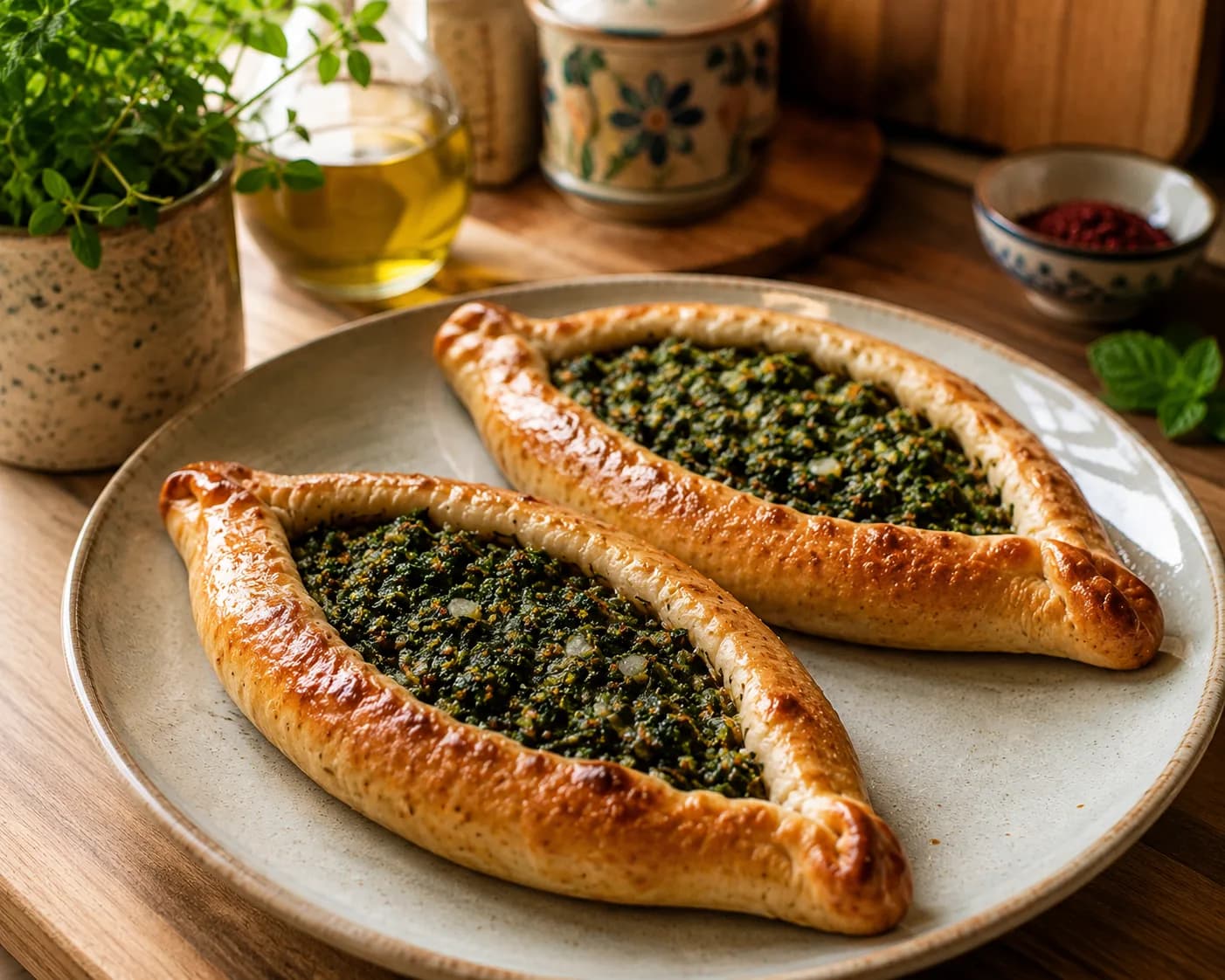
Spinach Fatayer Recipe — Lebanese Spinach Pies with Sumac & Lemon
Lebanese spinach fatayer made with soft dough and a savory filling of spinach, onion, lemon, herbs, and sumac. The pastries are shaped into open boat-like forms and baked until the dough is lightly golden and the filling is tender.
Prep Time
35 mins
Cook Time
25 mins
Total Time
60 mins
Servings
12
A TASTE OF TRADITION
The Story Behind This Recipe
Spinach fatayer are one of the most recognizable savory pastries of the Levant. Known as fatayer sabanekh, they combine a soft bread-like dough with a tangy spinach filling seasoned with lemon and sumac. Their appeal comes from the contrast between the tender pastry and the bright, savory filling.
Cultural & Culinary Context
Fatayer belong to the broader Levantine tradition of filled doughs that appear in home cooking, bakeries, mezze spreads, family gatherings, and everyday meals. Spinach versions are particularly associated with the eastern Mediterranean and are valued because inexpensive seasonal greens can be transformed into a flavorful pastry that is easy to share.
What Makes It Mediterranean?
The filling reflects several defining Mediterranean ingredients and techniques: leafy greens, onion, fresh herbs, lemon, sumac, and extra virgin olive oil. Rather than relying on a heavy sauce or rich filling, the recipe builds flavor through fresh produce, acidity, herbs, and spices. That balance makes spinach fatayer a natural fit within a Mediterranean-style table.
Mediterranean Influences
- 🌿Fresh spinach and herbs form the foundation of the filling.
- 🌿Extra virgin olive oil is used as the principal cooking fat.
- 🌿Fresh lemon juice adds brightness and balances the earthy greens.
- 🌿Sumac provides a naturally tart flavor characteristic of Levantine cooking.
- 🌿Whole wheat flour adds a rustic grain element to the dough.
- 🌿The pastries are baked and commonly served as part of a shared mezze spread.
Ingredients
- 2 cups whole wheat flour (Spoon into the measuring cup and level it rather than packing it tightly.)
- 1 cup all-purpose flour
- 1 tsp instant yeast
- 1 tsp sugar (Helps support yeast activity and lightly rounds the flavor.)
- 1 tsp sea salt
- 1 cup warm water (Use comfortably warm water, not hot water, so the yeast is not damaged.)
- 2 tbsp extra virgin olive oil
- 4 cups fresh spinach, finely chopped (Chop fairly finely so the filling sits comfortably inside the large boat-shaped pastries.)
- 1 medium onion, finely diced
- 0.25 cup fresh parsley, chopped
- 2 tbsp fresh mint, chopped
- 2 tbsp fresh lemon juice
- 1 tbsp ground sumac (Provides the characteristic tangy Levantine flavor.)
- 0.5 tsp ground black pepper
- 0.25 tsp ground allspice
Instructions
- 1
Combine the whole wheat flour, all-purpose flour, instant yeast, sugar, and salt in a large mixing bowl.
- 2
Add the warm water and olive oil gradually, mixing until the ingredients come together into a soft dough.
- 3
Knead the dough until it becomes smooth and elastic. If it feels very sticky, add only a small amount of flour at a time; avoid making the dough stiff.
- 4
Cover the dough and let it rise for about 1 hour, or until noticeably puffy. The exact rising time can vary with room temperature.
- 5
While the dough rises, combine the chopped spinach, onion, parsley, mint, lemon juice, sumac, black pepper, and allspice.
- 6
Squeeze the spinach mixture very thoroughly to remove excess liquid. This is one of the most important steps for preventing soggy fatayer.
- 7
Preheat the oven to 400°F (200°C) and line a baking tray with parchment paper.
- 8
Divide the risen dough into 12 equal portions. Shape each into a ball, cover them, and let them rest for about 10 minutes so the dough relaxes before rolling.
- 9
Roll each dough ball into a large oval, approximately 5–6 inches (13–15 cm) long and about 3–4 mm thick. Keep enough strength in the center to hold the filling.
- 10
Place about 2 tablespoons of the spinach filling lengthwise down the center of each oval, leaving a clear border around the filling.
- 11
Fold the long sides slightly inward toward the filling while keeping the center open. Pinch both ends firmly to create the characteristic large open boat shape.
- 12
Arrange the fatayer on the prepared tray with space between them. Do not crowd the tray because close contact can interfere with even browning.
- 13
Bake for about 20–25 minutes, checking toward the end, until the exposed dough is fully baked and the edges are golden brown.
- 14
Allow the fatayer to rest for several minutes before serving. They can be enjoyed warm or at room temperature.
SET YOURSELF UP FOR SUCCESS
Before You Cook
👨🍳 Keep In Mind
- •Wash the spinach and allow it to drain well before chopping.
- •Have a clean towel ready because removing excess moisture from the spinach is critical.
- •Use comfortably warm water for the dough rather than very hot water.
- •Give the dough time to rest after dividing it so it rolls without repeatedly shrinking.
- •Preheat the oven fully before the shaped fatayer go in.
💡 Helpful Tips
- •Do not compensate for a wet spinach filling by adding large amounts of flour. Squeeze the filling instead.
- •If the dough keeps springing back while rolling, cover it and let it rest for another few minutes.
- •Keep a visible dough border around the filling so the edges can be pinched securely.
- •Avoid overfilling the boats because excess filling can release liquid during baking.
- •Leave space between the pastries so hot air can circulate around the edges.
- •The large boat shape should remain open in the center; do not pinch the entire pastry closed.
👀 How Do I Know It's Done?
- ✓The dough should no longer look raw or translucent around the edges.
- ✓The outer rim should have developed a golden-brown color.
- ✓The underside should be baked through rather than pale and doughy.
- ✓The filling should look cooked and slightly softened rather than watery.
- ✓If the pastry is still pale after 20 minutes, continue baking and check it every few minutes.
Tweak It
Make This Recipe Work for You
Adapt the recipe to your ingredients, dietary needs, budget, time, serving size, or meal-prep plans.
🔄 Ingredient Substitutions
Using Frozen Spinach
Frozen spinach can be used when fresh spinach is unavailable, but thaw it completely and squeeze it extremely well before mixing the filling.
Adjusting the Flour Blend
For a softer dough, replace part of the whole wheat flour with additional all-purpose flour while keeping enough whole wheat flour for its hearty texture.
🌱 Dietary Adjustments
Vegan Fatayer
The listed ingredients are naturally suitable for a vegan preparation. Check packaged flour and yeast if strict dietary certification is important.
Vegetarian Mezze
Serve the fatayer alongside hummus, labneh or another suitable dip, olives, and fresh vegetables for a substantial vegetarian spread.
💰 Budget-Friendly Options
Budget-Friendly Filling
Use seasonal spinach and herbs when available. The filling does not require expensive ingredients because lemon, sumac, onion, and herbs provide most of its character.
⏱️ Time-Saving Options
Prepare the Dough Ahead
Prepare the dough earlier and keep it covered in the refrigerator until needed. Allow it to soften before shaping so it can roll easily.
👨👩👧👦 Serving Adjustments
Make Smaller Fatayer
For a party-style mezze, divide the dough into more portions and use less filling per piece. Keep the same open boat-shaping technique.
🥡 Meal Prep
Prepare for Later
Bake the fatayer ahead of serving and allow them to cool before storing. Reheat gently in the oven to bring back some of the freshly baked texture.
RECIPE RESCUE
🧩 What Do You Need Help With?
Choose the problem you're facing and get a recipe-specific solution instead of a generic cooking tip.
WHAT IF?
🔄 What If...?
Choose your situation and we'll show you a practical pathway for making this recipe work.
STORAGE & LEFTOVERS
🥡 Storage & Leftovers
Allow baked fatayer to cool before placing them in a container.
Store them in an airtight container in the refrigerator if keeping them for more than a short period at room temperature.
Place parchment between layers if the pastries need to be stacked.
Reheat gently in an oven or toaster oven to improve the pastry texture.
Best Storage Time
Best enjoyed fresh, but refrigerated fatayer can generally be kept for up to 3 days.
How to Store
Use a shallow airtight container and avoid compressing the large boat-shaped pastries.
SERVING & PAIRING
🍽️ Serving & Pairing
Serve the large spinach fatayer warm or at room temperature as part of a Lebanese mezze spread, breakfast, snack, or light meal. Let the open boat shape remain visible when arranging them so the spinach filling is part of the presentation.
What Goes Well With It?
RECIPE FAQ
❓ Frequently Asked Questions
How do you make spinach fatayer?
To make spinach fatayer, first prepare a soft dough with 2 cups whole wheat flour, 1 cup all-purpose flour, 1 teaspoon instant yeast, 1 teaspoon sugar, 1 teaspoon sea salt, 1 cup warm water, and 2 tablespoons extra virgin olive oil. Knead until smooth and elastic, cover, and let it rise for about 1 hour. For the filling, combine 4 cups finely chopped fresh spinach with 1 medium finely diced onion, 1/4 cup chopped fresh parsley, 2 tablespoons chopped fresh mint, 2 tablespoons fresh lemon juice, 1 tablespoon ground sumac, 1/2 teaspoon black pepper, and 1/4 teaspoon ground allspice. Squeeze the spinach mixture very thoroughly to remove excess liquid. Divide the risen dough into 12 portions, rest them briefly, then roll each into a large oval about 5–6 inches (13–15 cm) long and 3–4 mm thick. Place about 2 tablespoons of filling lengthwise through the center, fold the long sides slightly inward, and pinch both ends firmly to create the characteristic large open boat shape. Bake at 400°F (200°C) for about 20–25 minutes until the dough is fully baked and the edges are golden. Rest for several minutes and serve warm or at room temperature.
What are spinach fatayer?
Spinach fatayer, or fatayer sabanekh, are Levantine baked pastries filled with seasoned spinach, onion, herbs, lemon, and sumac. They are commonly enjoyed as mezze, snacks, breakfast, or part of a shared meal.
Why is my spinach fatayer filling watery?
Fresh spinach releases a great deal of moisture. Squeeze the chopped spinach mixture very thoroughly before filling the dough. This is one of the most important steps for keeping the pastry crisp rather than soggy.
Why did my dough shrink after rolling?
The gluten may still be tense. Cover the dough and let it rest for another 5–10 minutes before rolling again.
Can I make the fatayer smaller?
Yes. Divide the dough into more portions and use less filling. The same open boat-shaping method can be used for smaller mezze-sized pastries.
Should the center of these fatayer be closed?
No. This version is intentionally shaped as a large open boat. The long sides are folded slightly inward and the ends are pinched while the spinach filling remains visible in the center.
Can I serve spinach fatayer at room temperature?
Yes. They are delicious warm but are also well suited to mezze spreads where they may sit at room temperature for serving.
Explore More
Go deeper into the cuisine
Learn more about the ingredients, traditions, and cooking approaches connected to this recipe.
You May Also Like
More delicious recipes from the Mezze
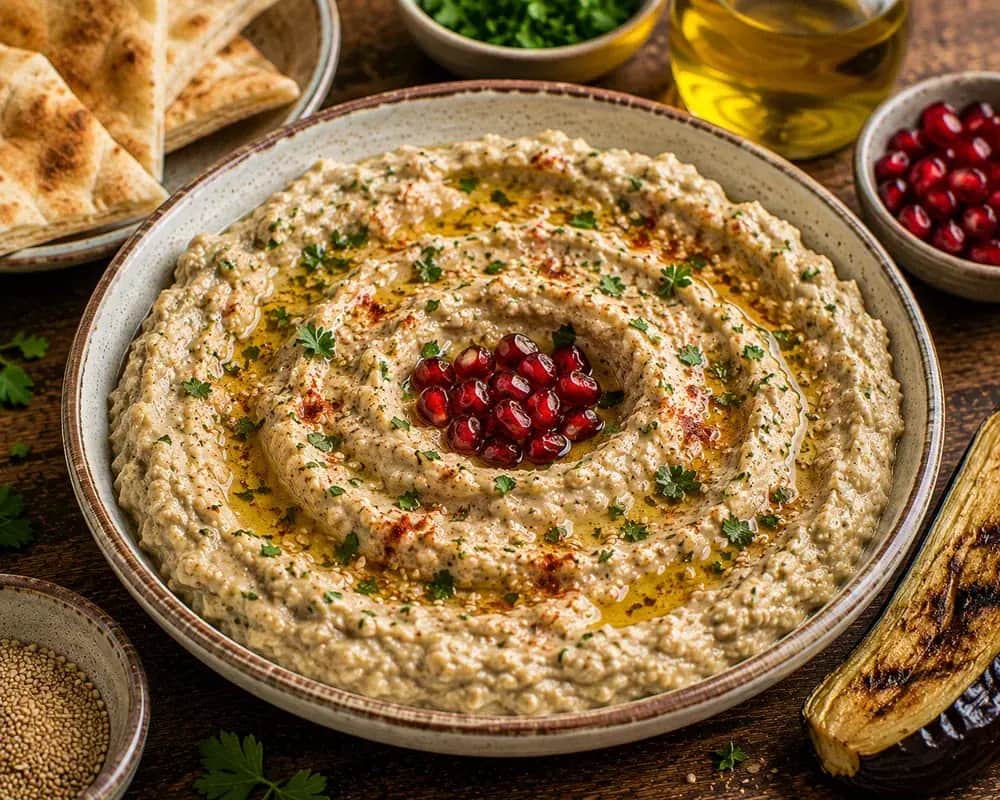
Classic Baba Ganoush Recipe
A classic Baba Ganoush recipe made with smoky roasted eggplant, tahini, garlic, fresh lemon juice, and extra virgin olive oil. This creamy Mediterranean mezze is rich, flavorful, and naturally plant-based.
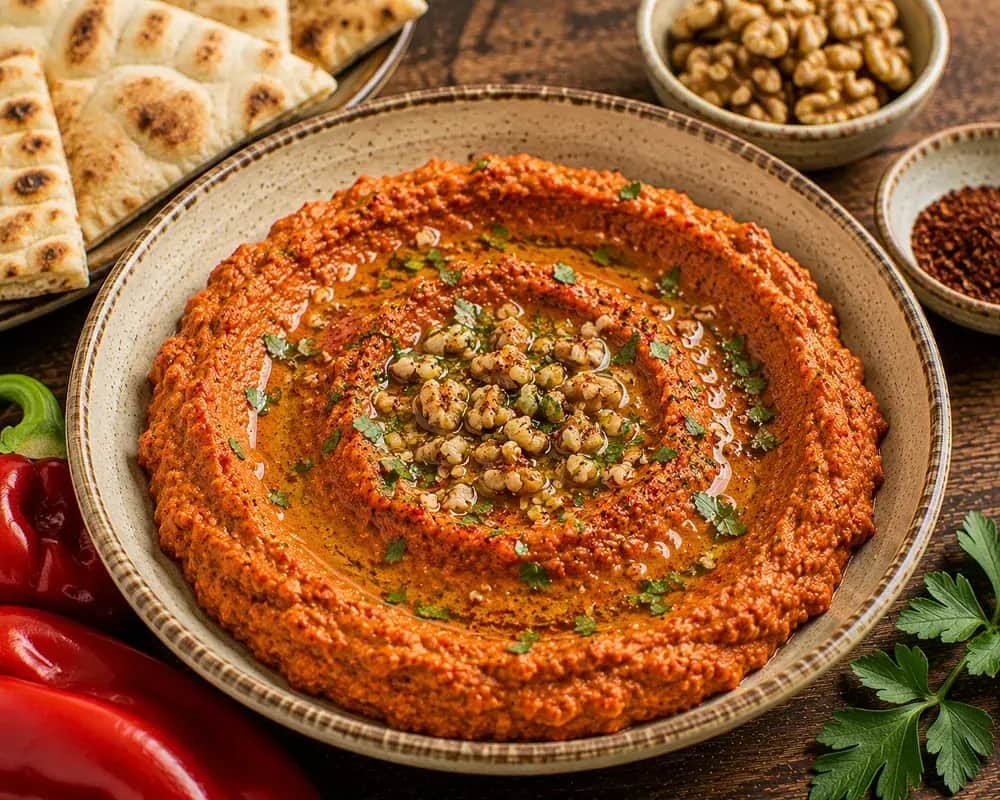
Muhammara Recipe — Aleppine Syrian Roasted Red Pepper & Walnut Dip
This Muhammara recipe is a traditional Aleppine Syrian roasted red pepper and walnut dip made with roasted red peppers, toasted walnuts, pomegranate molasses, extra virgin olive oil, garlic, cumin, and warm spices. Thick, smoky, sweet-tart, and richly textured, this easy Levantine mezze is perfect with warm pita, vegetables, and other shared dishes.
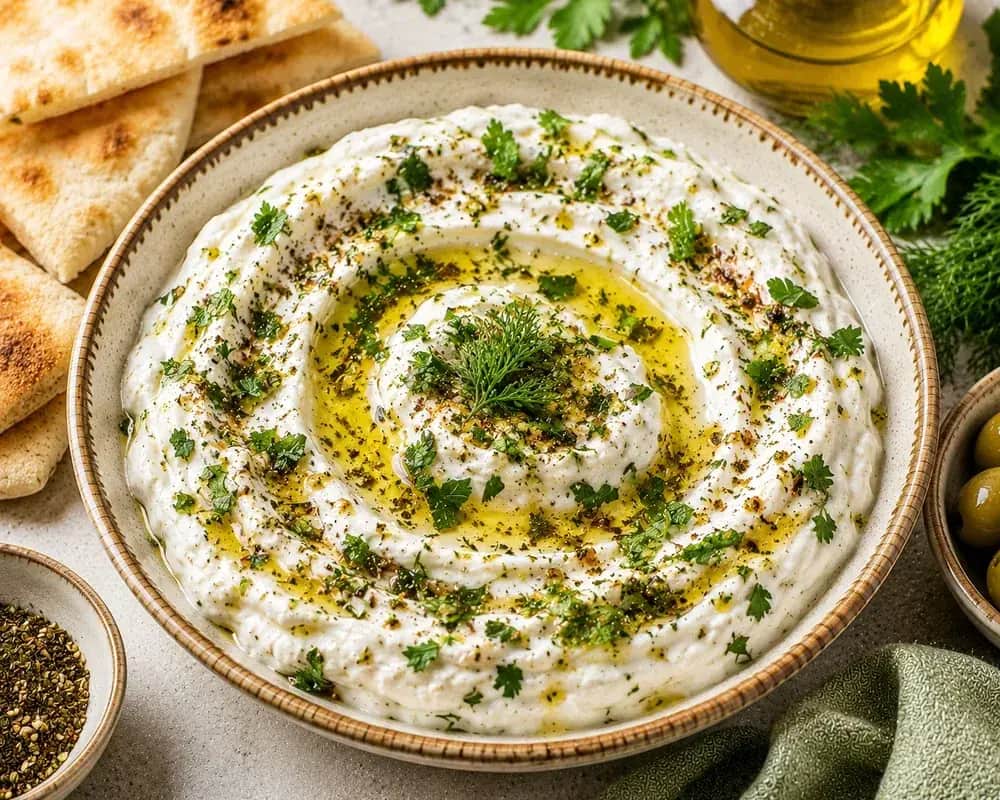
Herbed Labneh Dip Recipe — Lebanese Labneh with Fresh Herbs & Za'atar
A creamy labneh dip seasoned with fresh herbs, olive oil, garlic, and Mediterranean spices. Strained yogurt gives labneh its thick texture and tangy flavor, making it easy to spread across warm pita or serve as part of a mezze table.