
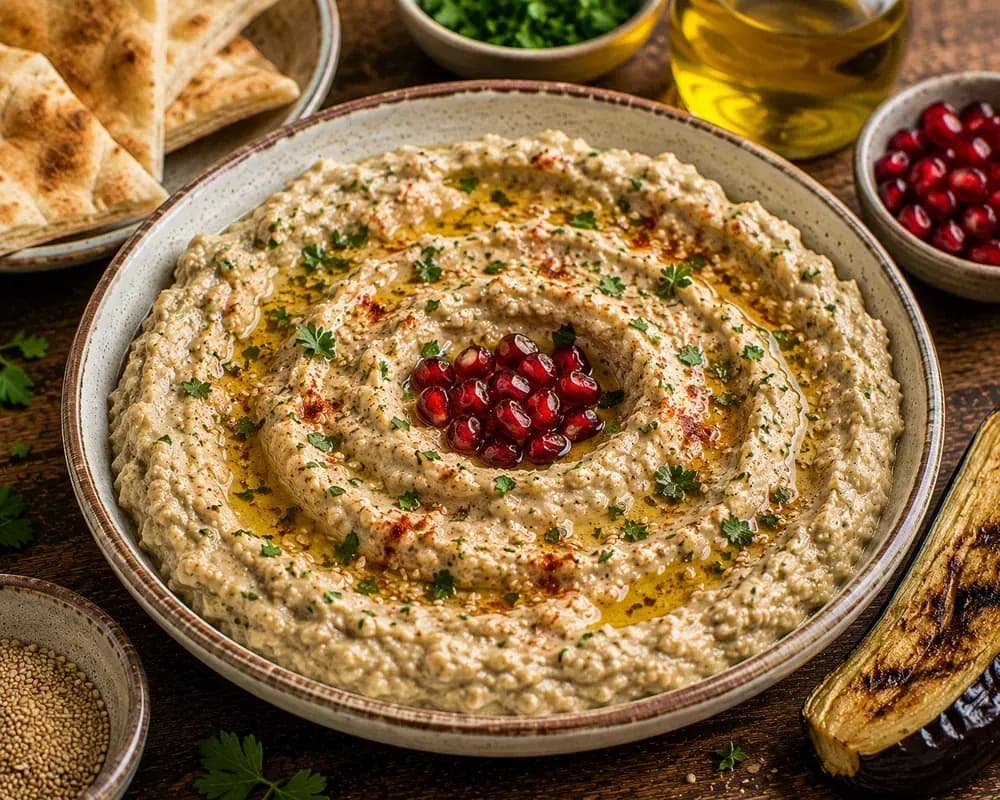
Classic Baba Ganoush Recipe
A classic Baba Ganoush recipe made with smoky roasted eggplant, tahini, garlic, fresh lemon juice, and extra virgin olive oil. This creamy Mediterranean mezze is rich, flavorful, and naturally plant-based.
Prep Time
15 mins
Cook Time
40 mins
Total Time
55 mins
Servings
6
A TASTE OF TRADITION
The Story Behind This Recipe
Some dishes announce themselves with a long list of ingredients. Baba Ganoush does the opposite. Its magic begins with an eggplant, a little heat, and enough patience to let the vegetable completely transform. Under the heat of the oven, the firm flesh softens into a silky, almost creamy texture while the skin darkens and takes on a deep roasted character. Once the smoky flesh is scooped out and drained, tahini brings a gentle nuttiness, lemon cuts through the richness, garlic adds warmth, and olive oil ties everything together. It is a dish built around balance rather than complexity, and that is precisely what makes it so satisfying.
Cultural & Culinary Context
Baba Ganoush belongs naturally to the world of Middle Eastern and Eastern Mediterranean mezze, where a meal is often enjoyed as a collection of shared dishes rather than one large centerpiece. A bowl of the dip might sit among hummus, vegetables, olives, pickles, salads, warm bread, and other small plates, inviting everyone at the table to take a little of this and a little of that. Eggplant is especially well suited to this style of cooking because it can be prepared ahead and served cool or at room temperature. The dish also demonstrates an important tradition of turning simple vegetables into food with enough character to stand confidently alongside richer dishes.
What Makes It Mediterranean?
The flavor structure of Baba Ganoush is unmistakably Mediterranean: roasted vegetables provide the foundation, tahini contributes richness, extra virgin olive oil adds fruitiness, lemon provides acidity, and garlic and cumin bring aromatic depth. Nothing needs to overpower the eggplant. Instead, each ingredient has a role in creating contrast. The smoky vegetable is softened by creamy tahini, the richness is lifted by lemon, and the fresh garnish brings color and brightness. It is a good example of how Mediterranean cooking can create a memorable dish from a small number of everyday ingredients.
Mediterranean Influences
- 🌿Eggplant is the central vegetable and is cooked until its natural flavor becomes concentrated and deeply savory.
- 🌿Tahini adds a nutty, creamy element commonly found across Eastern Mediterranean cuisine.
- 🌿Extra virgin olive oil provides richness and carries the flavors of the other ingredients.
- 🌿Fresh lemon juice supplies the acidity needed to balance the roasted eggplant and tahini.
- 🌿Garlic, cumin, parsley, and pomegranate provide layers of aromatic, herbal, earthy, and fresh flavors.
- 🌿The dip is designed naturally for a shared mezze table rather than as a single isolated dish.
Ingredients
- 2 large eggplants (Choose firm eggplants with smooth, glossy skin.)
- 0.25 cup tahini (Stir well before measuring.)
- 2 tbsp fresh lemon juice (Add gradually and adjust to taste.)
- 2 cloves garlic (Finely minced or grated.)
- 2 tbsp extra virgin olive oil (Plus more for serving.)
- 0.5 tsp ground cumin
- 0.5 tsp sea salt (Adjust to taste.)
- 0.25 tsp freshly ground black pepper (Adjust to taste.)
- 1 tbsp fresh parsley (Finely chopped for garnish.)
- 0.25 tsp smoked paprika (Optional, for garnish and extra smoky aroma.)
- 2 tbsp pomegranate seeds (Optional, for garnish.)
Instructions
- 1
Preheat the oven to 220°C (425°F) and line a baking tray with parchment paper.
- 2
Wash and dry the eggplants thoroughly, then pierce them several times with a fork so steam can escape during roasting.
- 3
Place the eggplants on the tray and roast for 35–40 minutes, turning once halfway through, until the skins are deeply charred and wrinkled and the flesh is completely soft.
- 4
Remove the eggplants from the oven and let them cool for about 10 minutes, until they are comfortable enough to handle.
- 5
Cut the eggplants open lengthwise and scoop the soft flesh away from the skins.
- 6
Transfer the eggplant flesh to a fine-mesh colander and let it drain for about 10 minutes, gently pressing once or twice to remove excess liquid.
- 7
Place the drained eggplant flesh in a food processor or mixing bowl.
- 8
Add the tahini, lemon juice, garlic, extra virgin olive oil, cumin, salt, and black pepper.
- 9
Blend or mash until creamy while keeping a little texture rather than turning the eggplant into a completely smooth puree.
- 10
Taste and adjust the lemon juice, tahini, garlic, salt, or cumin until the flavors are balanced.
- 11
Transfer the baba ganoush to a wide serving bowl and use the back of a spoon to create a shallow swirl across the surface.
- 12
Drizzle with extra virgin olive oil and garnish with parsley, smoked paprika, and optional pomegranate seeds.
- 13
Let the baba ganoush rest for about 15 minutes before serving so the flavors can settle.
- 14
Serve with warm pita, fresh vegetables, olives, or other Mediterranean mezze.
SET YOURSELF UP FOR SUCCESS
Before You Cook
👨🍳 Keep In Mind
- •Choose eggplants that feel firm and heavy for their size, with smooth, glossy skins and no large soft areas.
- •Make sure the eggplants are completely dry before roasting so the skins can blister and char properly.
- •Stir your tahini thoroughly before measuring because the oil and sesame paste naturally separate in the jar.
- •Have a fine-mesh colander ready before roasting; draining the eggplant is one of the most important steps for concentrated flavor and good texture.
💡 Helpful Tips
- •Do not rush the roasting stage. The eggplant needs to become completely soft before it will produce the right baba ganoush texture.
- •A little char on the skin contributes roasted aroma, but remove heavily burned pieces of skin so they do not make the dip bitter.
- •Drain the eggplant before adding tahini. Excess moisture can make the dip loose and dilute the flavors.
- •Add lemon gradually because the acidity of different lemons varies considerably.
- •Do not over-process the eggplant. A slightly textured baba ganoush has more character than a completely smooth puree.
- •Let the finished dip rest before serving. The garlic, tahini, lemon, and roasted eggplant become more harmonious as they sit.
👀 How Do I Know It's Done?
- ✓The eggplant is ready when a fork or knife passes through the thickest part with almost no resistance.
- ✓The flesh should separate easily from the skin with a spoon.
- ✓After draining, very little free liquid should collect around the eggplant.
- ✓The finished dip should taste balanced: smoky and savory first, followed by creamy tahini, bright lemon, and gentle garlic.
Tweak It
Make This Recipe Work for You
Adapt the recipe to your ingredients, dietary needs, budget, time, serving size, or meal-prep plans.
🔄 Ingredient Substitutions
Use pomegranate molasses
Replace a small portion of the lemon juice with pomegranate molasses for a deeper sweet-tart flavor. Use it sparingly so the dip remains balanced.
Adjust the garlic
Use one clove for a gentler flavor or three cloves for a more pronounced garlic character. Fresh garlic becomes stronger as the dip rests.
Adjust the tahini
If your tahini is particularly thick, loosen it with a teaspoon of lemon juice or water before mixing it into the eggplant.
🌱 Dietary Adjustments
Keep it completely plant-based
The recipe is naturally vegan. Serve it with vegetables, olives, or a suitable plant-based bread for a complete mezze plate.
Serve it gluten-free
The dip itself contains no gluten. Pair it with sliced vegetables, gluten-free crackers, or certified gluten-free flatbread.
💰 Budget-Friendly Options
Buy eggplant in season
Seasonal eggplant is usually flavorful and affordable. Since the vegetable is the foundation of the dish, good-quality seasonal produce makes a noticeable difference.
Build an affordable mezze
Serve baba ganoush with sliced cucumber, tomato, olives, pickles, and homemade flatbread to create a generous shared spread without relying on expensive ingredients.
⏱️ Time-Saving Options
Roast extra eggplant
Roast several eggplants at once and refrigerate the drained flesh. It can be turned into baba ganoush later or used in salads and other vegetable dishes.
Prepare the base ahead
The roasted and drained eggplant can be prepared in advance. Refrigerate it in an airtight container and combine it with the fresh ingredients when needed.
👨👩👧👦 Serving Adjustments
For a smaller mezze
Halve the ingredient quantities for a smaller gathering. Use one large eggplant and taste the lemon and tahini carefully because smaller batches can require slightly different seasoning.
For a larger gathering
Double the ingredients for a generous mezze table. Roast the eggplants in batches if necessary so they have enough space to roast rather than steam.
🥡 Meal Prep
Make it the day before
Baba ganoush can be prepared a day ahead. The resting time allows the garlic, lemon, tahini, and roasted eggplant flavors to blend more deeply.
Refresh before serving
For the best presentation, add fresh olive oil, parsley, paprika, and pomegranate seeds just before serving rather than storing the garnishes on the dip.
RECIPE RESCUE
🧩 What Do You Need Help With?
Choose the problem you're facing and get a recipe-specific solution instead of a generic cooking tip.
WHAT IF?
🔄 What If...?
Choose your situation and we'll show you a practical pathway for making this recipe work.
STORAGE & LEFTOVERS
🥡 Storage & Leftovers
Transfer leftover baba ganoush to an airtight container and refrigerate promptly.
Keep the dip chilled and use a clean spoon when serving.
The flavor may become more pronounced as it rests, especially the garlic.
Bring the dip toward room temperature before serving for a fuller texture and flavor.
Refresh with a small drizzle of olive oil and fresh parsley before serving.
Best Storage Time
Up to 4 days refrigerated
How to Store
Airtight glass or food-safe container
SERVING & PAIRING
🍽️ Serving & Pairing
Spoon baba ganoush onto a wide serving plate and use the back of a spoon to create a shallow well or swirl. Finish with extra virgin olive oil, parsley, a light dusting of smoked paprika, and pomegranate seeds if desired. Serve with warm pita and surround it with fresh vegetables, olives, pickles, and other mezze.
What Goes Well With It?
RECIPE FAQ
❓ Frequently Asked Questions
How do you make baba ganoush?
Baba ganoush is made by roasting eggplants until the skins are deeply charred and the flesh is completely tender. The roasted flesh is scooped out and drained, then combined with tahini, fresh lemon juice, garlic, extra virgin olive oil, cumin, salt, and black pepper. The mixture is blended or mashed until creamy while retaining a little texture, then finished with olive oil, parsley, smoked paprika, and optional pomegranate seeds before serving.
Why does baba ganoush need to be drained?
Roasted eggplant releases a significant amount of moisture. Draining it concentrates the eggplant flavor and helps produce a creamy dip instead of a watery one.
Can I make baba ganoush without tahini?
Yes, although tahini contributes an important nutty richness and creamy texture. If you leave it out, increase the olive oil slightly and season carefully with lemon, garlic, and salt.
Should baba ganoush be completely smooth?
Not necessarily. A slightly textured dip often has more character and makes the roasted eggplant easier to taste. Mash by hand if you prefer a rustic consistency.
Why does my baba ganoush taste bitter?
Heavy charred skin, naturally bitter eggplant, or excessive garlic can contribute bitterness. Remove heavily burned skin and balance the dip with tahini, lemon, olive oil, and salt.
Can I use a blender instead of a food processor?
Yes, but use short pulses and avoid over-processing. A blender can quickly turn the eggplant into a completely smooth puree, while baba ganoush is usually more enjoyable with some texture.
Can I prepare baba ganoush ahead of time?
Yes. It can be prepared a day ahead and refrigerated. In fact, resting gives the garlic, lemon, tahini, and roasted eggplant time to develop a more integrated flavor.
What should I serve with baba ganoush?
Warm pita, fresh vegetables, olives, pickles, hummus, falafel, grilled foods, and other mezze are all excellent pairings. It can also be served as part of a vegetable-forward lunch plate.
Explore More
Go deeper into the cuisine
Learn more about the ingredients, traditions, and cooking approaches connected to this recipe.
You May Also Like
More delicious recipes from the Mezze
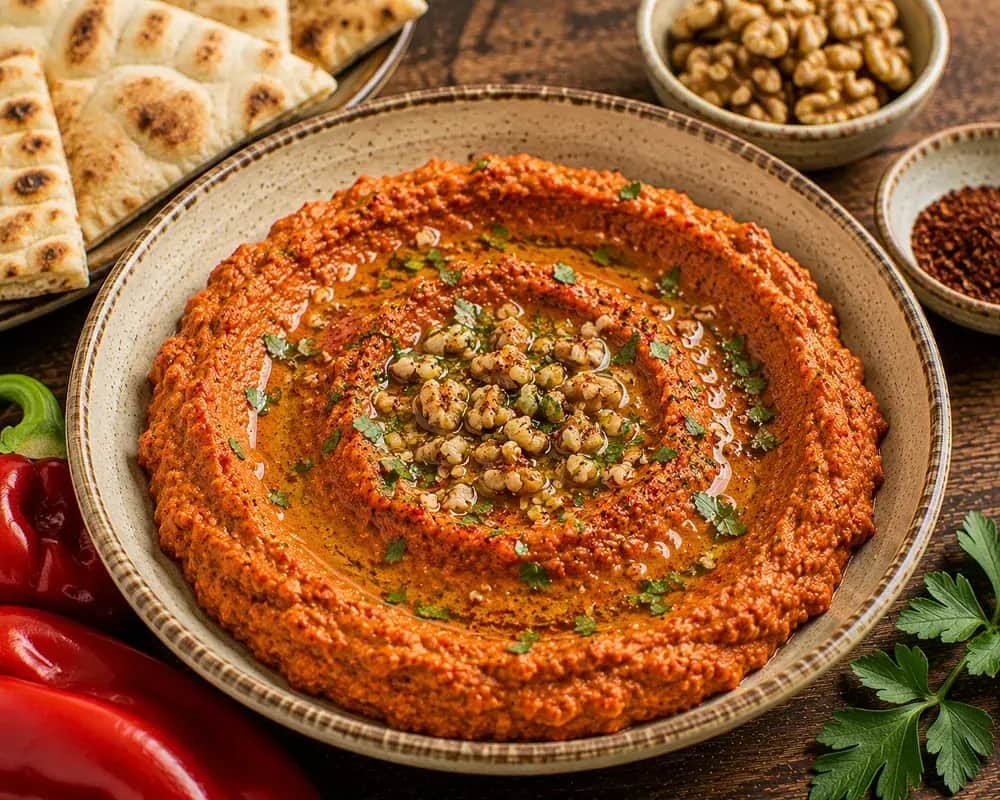
Muhammara Recipe — Aleppine Syrian Roasted Red Pepper & Walnut Dip
This Muhammara recipe is a traditional Aleppine Syrian roasted red pepper and walnut dip made with roasted red peppers, toasted walnuts, pomegranate molasses, extra virgin olive oil, garlic, cumin, and warm spices. Thick, smoky, sweet-tart, and richly textured, this easy Levantine mezze is perfect with warm pita, vegetables, and other shared dishes.
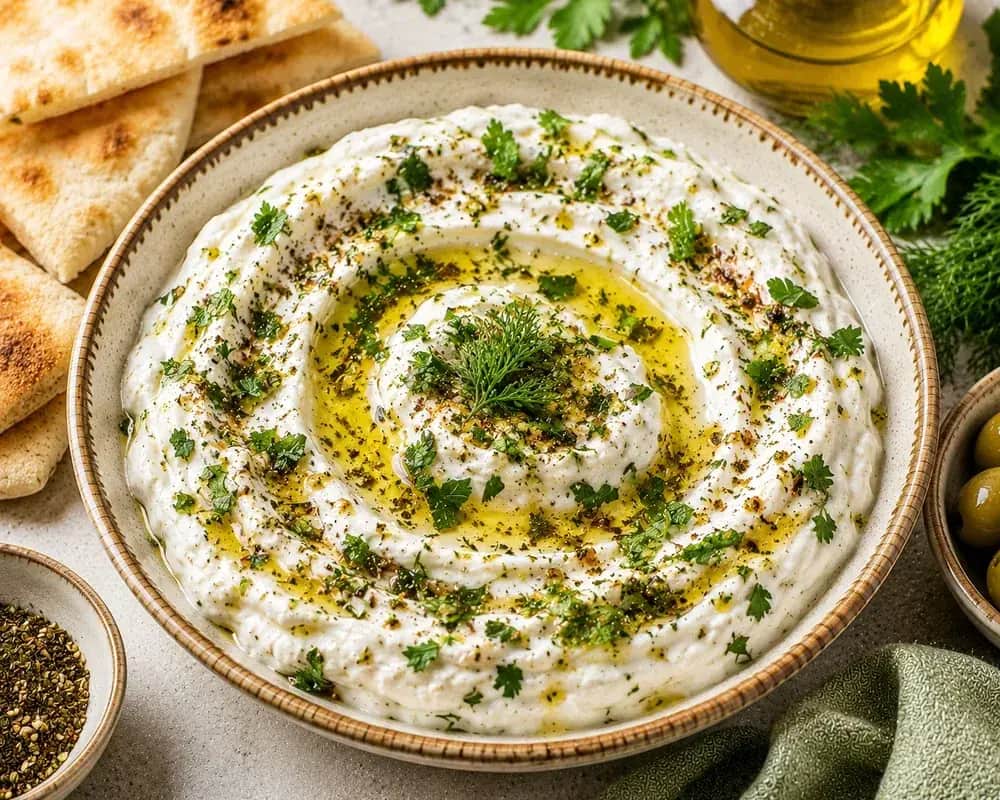
Herbed Labneh Dip Recipe — Lebanese Labneh with Fresh Herbs & Za'atar
A creamy labneh dip seasoned with fresh herbs, olive oil, garlic, and Mediterranean spices. Strained yogurt gives labneh its thick texture and tangy flavor, making it easy to spread across warm pita or serve as part of a mezze table.
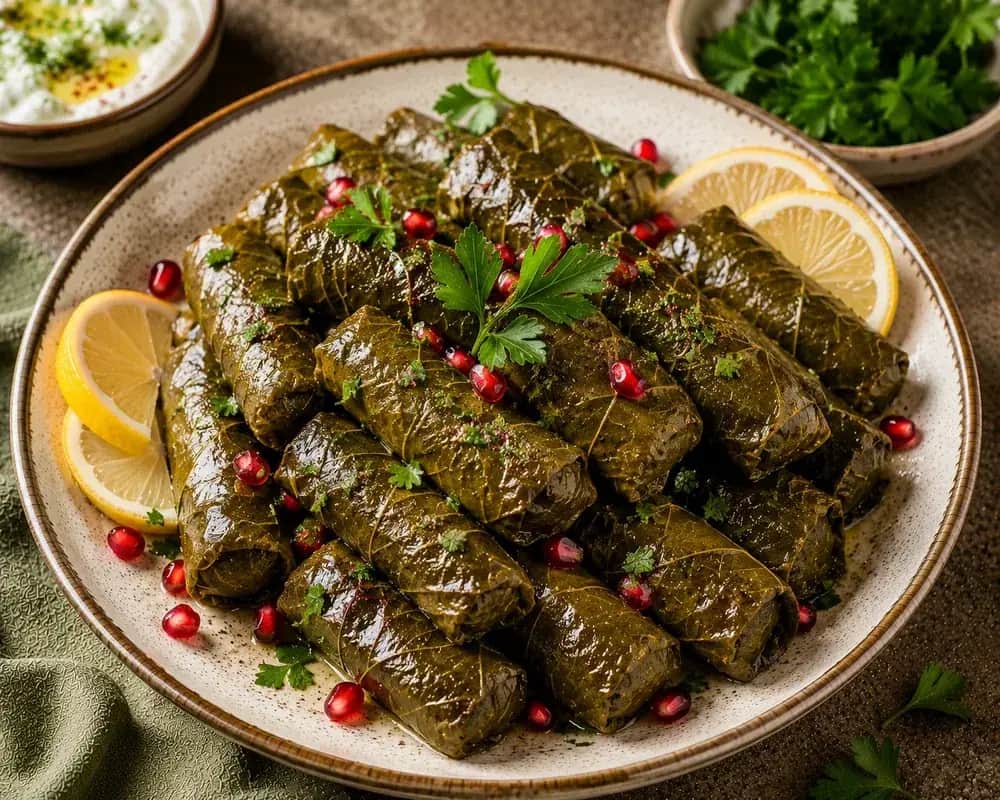
Warak Enab Recipe — Lebanese Stuffed Grape Leaves
Lebanese stuffed grape leaves filled with seasoned rice, herbs, vegetables, and aromatic spices. The rolls simmer gently until the grape leaves are tender and the rice is fully cooked, making them a natural addition to a mezze table.