
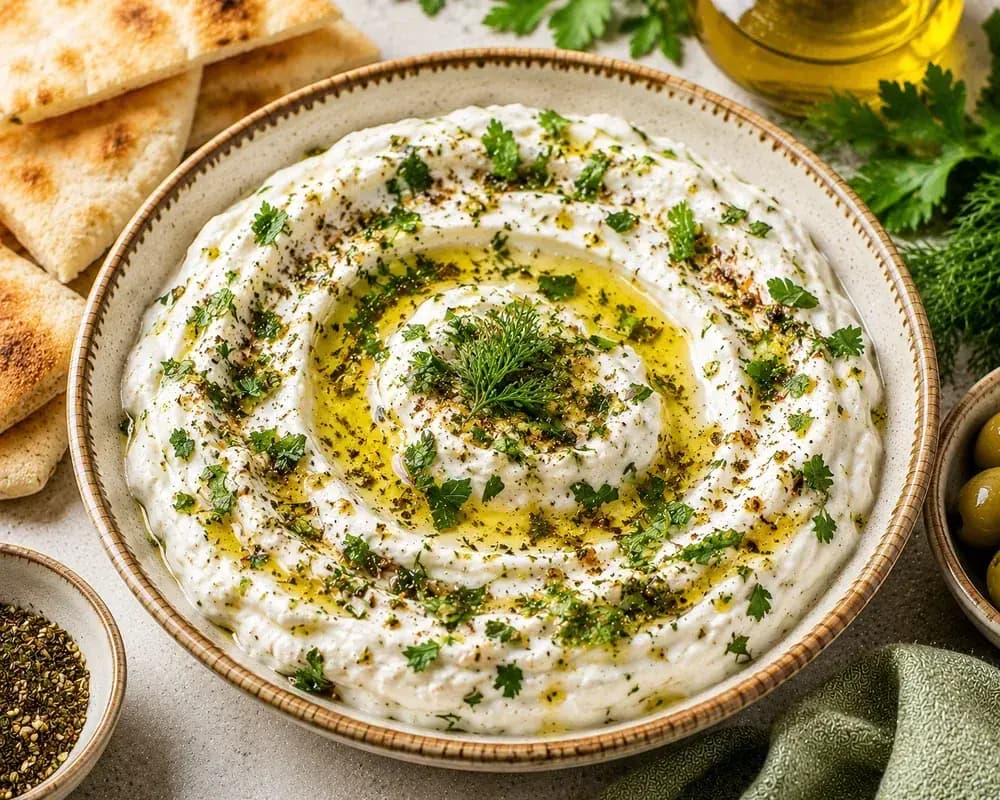
Herbed Labneh Dip Recipe — Lebanese Labneh with Fresh Herbs & Za'atar
A creamy labneh dip seasoned with fresh herbs, olive oil, garlic, and Mediterranean spices. Strained yogurt gives labneh its thick texture and tangy flavor, making it easy to spread across warm pita or serve as part of a mezze table.
Prep Time
10 mins
Cook Time
0 mins
Total Time
10 mins
Servings
6
A TASTE OF TRADITION
The Story Behind This Recipe
Labneh is one of the most recognizable foods of the Levant, and in Lebanon it is a familiar part of the everyday table as well as a beloved mezze. Straining yogurt gives labneh its thick, creamy texture and pleasantly tangy flavor, making it well suited to spreading, dipping, and finishing with olive oil and herbs. This herbed version keeps that simple Lebanese spirit while adding parsley, mint, dill, garlic, and lemon for a fresh, aromatic finish.
Cultural & Culinary Context
In Lebanese food culture, labneh is commonly enjoyed at breakfast and as part of mezze alongside bread, olives, vegetables, and other small dishes. Its preparation is rooted in the practical tradition of straining yogurt to preserve it in a thicker, more concentrated form. Homemade labneh is especially useful for cooks who cannot find it in local markets because it requires only plain yogurt, salt, and time to strain. The finished herbed dip reflects the Lebanese preference for balancing creamy dairy with fresh herbs, citrus, olive oil, and savory seasonings.
What Makes It Mediterranean?
The dish fits naturally within the broader Mediterranean food tradition through its reliance on cultured dairy, fresh herbs, extra virgin olive oil, lemon, and simple seasonal accompaniments. Rather than relying on heavy sauces, the flavor comes from the quality and balance of a few familiar ingredients.
Mediterranean Influences
- 🌿Extra virgin olive oil is used as both a finishing ingredient and a source of rich flavor.
- 🌿Fresh parsley, mint, and dill provide brightness and aroma.
- 🌿Lemon adds acidity that balances the creamy labneh.
- 🌿Za'atar contributes a traditional Levantine herbal and savory character.
- 🌿The dip is served with vegetables, pita, olives, and other mezze-style foods.
- 🌿The recipe emphasizes simple, minimally processed ingredients.
Ingredients
- 2 cups plain full-fat yogurt (For homemade labneh only. Use plain yogurt without sugar or flavoring and strain it several hours ahead.)
- 0.5 tsp sea salt (For homemade labneh only. Mix with the yogurt before straining.)
- 2 cups labneh (For the finished dip. Use ready-made labneh or the homemade labneh prepared from the ingredients above.)
- 2 tbsp fresh parsley (Finely chopped.)
- 1 tbsp fresh mint (Finely chopped, with extra leaves for garnish.)
- 1 tbsp fresh dill (Finely chopped.)
- 1 clove garlic (Finely minced or grated.)
- 1 tsp lemon zest (Zest the lemon before squeezing it.)
- 1 tbsp fresh lemon juice (Add gradually because the acidity of labneh varies.)
- 2 tbsp extra virgin olive oil (For finishing and serving.)
- 0.5 tsp sea salt (For the finished dip. Adjust according to the saltiness of the labneh.)
- 0.25 tsp black pepper
- 1 tsp za'atar (For finishing.)
- 1 fresh mint leaves (For garnish.)
Instructions
- 1
If making labneh from scratch, begin several hours ahead. Stir the plain yogurt with 1/2 teaspoon sea salt, place it in a clean cheesecloth- or muslin-lined strainer over a bowl, cover, and refrigerate while it drains until very thick and creamy. The straining time is not included in the 10-minute preparation time for the finished dip.
- 2
When the homemade labneh is ready, transfer the thick yogurt to a clean bowl and stir briefly until smooth. Save or discard the strained whey as preferred. If using ready-made labneh, simply place it in the mixing bowl.
- 3
Add the finely chopped parsley, mint, dill, garlic, and lemon zest.
- 4
Add the lemon juice and black pepper and mix gently until the herbs are evenly distributed. Add the lemon juice gradually if your labneh is already strongly tangy.
- 5
Taste the mixture before adding more salt. Labneh varies in saltiness, so adding salt without tasting can make the finished dip too salty.
- 6
Transfer the herbed labneh to a shallow serving bowl and spread it into an even layer.
- 7
Use the back of a spoon to make a shallow swirl across the surface. Drizzle with extra virgin olive oil.
- 8
Sprinkle with za'atar and garnish with fresh mint leaves. Serve immediately with warm pita, fresh vegetables, or as part of a Lebanese mezze platter.
SET YOURSELF UP FOR SUCCESS
Before You Cook
👨🍳 Keep In Mind
- •If you are making labneh from yogurt, start several hours ahead or prepare it the day before. The yogurt needs time to drain, and this hands-off time is separate from the 10-minute preparation time of the finished dip.
- •Use plain full-fat yogurt without added sugar or flavorings for homemade labneh. A thicker yogurt will generally reach the desired consistency more quickly.
- •Have clean cheesecloth or muslin and a strainer ready for the homemade labneh.
- •Wash and dry the herbs thoroughly before chopping. Excess water can loosen the finished labneh.
- •Taste your labneh before seasoning because commercial and homemade versions can differ noticeably in saltiness and acidity.
💡 Helpful Tips
- •For the creamiest homemade labneh, allow the yogurt to drain until it is thick enough to hold a spoon mark rather than stopping while it is still loose.
- •Grate or mince the garlic very finely so that there are no harsh large pieces in the dip.
- •Add lemon juice gradually. Too much acid at once can make the dip sharper than intended.
- •Do not aggressively beat the labneh after straining. Gentle mixing keeps its thick, creamy texture.
- •Chop the herbs finely so they distribute evenly throughout the dip.
- •For a beautiful Lebanese-style presentation, spread the labneh in a shallow bowl and make a spoon swirl before adding olive oil and za'atar.
👀 How Do I Know It's Done?
- ✓Homemade labneh is ready when it is thick enough to spread and hold its shape without immediately flowing back together.
- ✓The herbed mixture is ready when the garlic, herbs, lemon, and seasoning taste balanced rather than dominated by one ingredient.
- ✓The final dip is ready to serve when it holds a spoon swirl and can be scooped with pita without becoming watery.
- ✓If the finished labneh still looks loose, chill it before serving rather than immediately adding more dry ingredients.
Tweak It
Make This Recipe Work for You
Adapt the recipe to your ingredients, dietary needs, budget, time, serving size, or meal-prep plans.
🔄 Ingredient Substitutions
Using dried herbs
Fresh herbs give the best texture and aroma, but small amounts of dried parsley, mint, or dill can be used when fresh herbs are unavailable. Add them gradually because dried herbs are more concentrated.
Milder garlic flavor
Use half a garlic clove or let the minced garlic sit with the lemon juice for a few minutes before mixing it into the labneh for a softer flavor.
Making labneh with available yogurt
If traditional labneh is unavailable, plain full-fat yogurt can be strained at home. The longer it drains, the thicker the final labneh becomes.
🌱 Dietary Adjustments
Vegan version
Traditional labneh is dairy-based, so it is not vegan. A plant-based yogurt can be strained to make a labneh-style dip, although its flavor and texture will differ from traditional Lebanese labneh.
Lower-sodium version
Use unsalted or lightly salted labneh and add the final salt gradually after tasting. Za'atar can also vary in salt content, so check the blend before adding extra salt.
💰 Budget-Friendly Options
Keep the herb mix simple
If buying several fresh herbs is expensive, use parsley as the main herb and add whichever of mint or dill is already available. The dip will still have a fresh Lebanese-style character.
⏱️ Time-Saving Options
Use ready-made labneh
When labneh is available, skip the straining stage and the finished dip can be prepared in about 10 minutes.
👨👩👧👦 Serving Adjustments
Smaller batch
For a small mezze spread, halve the ingredients while keeping the herb and lemon adjustments gradual.
🥡 Meal Prep
Prepare the labneh ahead
Homemade labneh can be strained ahead of time and refrigerated so the finished herbed dip can be mixed quickly when needed.
RECIPE RESCUE
🧩 What Do You Need Help With?
Choose the problem you're facing and get a recipe-specific solution instead of a generic cooking tip.
WHAT IF?
🔄 What If...?
Choose your situation and we'll show you a practical pathway for making this recipe work.
STORAGE & LEFTOVERS
🥡 Storage & Leftovers
Keep the finished herbed labneh covered in the refrigerator.
For the freshest flavor and texture, add the final olive oil, za'atar, and fresh mint garnish close to serving when possible.
If storing homemade labneh before making the dip, keep it refrigerated in a clean covered container.
Discard the dip if it develops an unusual odor, mold, or other clear signs of spoilage.
Best Storage Time
For best quality, use the finished herbed labneh within a few days and keep it continuously refrigerated.
How to Store
Use a clean airtight container or a covered shallow serving bowl.
SERVING & PAIRING
🍽️ Serving & Pairing
Serve the herbed labneh as part of a Lebanese mezze spread or as a simple dip with warm pita and crisp vegetables. The cool, tangy labneh pairs especially well with cucumber, carrots, radishes, tomatoes, olives, and other fresh Mediterranean accompaniments.
What Goes Well With It?
RECIPE FAQ
❓ Frequently Asked Questions
How do you make herbed labneh dip?
To make herbed labneh dip, start with 2 cups thick labneh, either store-bought or homemade from strained plain full-fat yogurt. Mix the labneh gently with 2 tablespoons finely chopped parsley, 1 tablespoon chopped mint, 1 tablespoon chopped dill, 1 finely minced garlic clove, 1 teaspoon lemon zest, 1 tablespoon fresh lemon juice, and 1/4 teaspoon black pepper. Taste before adding the additional 1/2 teaspoon sea salt because labneh and za'atar can vary in saltiness. Spread the mixture into a shallow serving bowl, create a spoon swirl, drizzle with 2 tablespoons extra virgin olive oil, sprinkle with 1 teaspoon za'atar, and garnish with fresh mint leaves. Serve with warm pita, fresh vegetables, or as part of a Lebanese mezze platter.
Can I use store-bought labneh?
Yes. Store-bought labneh is exactly what makes this a quick 10-minute recipe. The homemade-labneh instructions are provided for cooks who cannot easily find labneh in their local market.
How long does homemade labneh take?
The active preparation is very short, but the yogurt needs several hours to drain. Most of that time is hands-off and the yogurt should remain refrigerated while it strains.
Why is my homemade labneh still runny?
It probably needs more draining. Continue straining it under refrigeration until it becomes thick enough to spread and hold its shape.
Can I use low-fat yogurt?
You can, but full-fat plain yogurt generally produces a richer, creamier labneh. Lower-fat yogurt may produce a thinner or less luxurious texture.
Is herbed labneh vegetarian?
Yes. This recipe is vegetarian because its main ingredients are dairy, herbs, vegetables, lemon, olive oil, and seasonings.
Is traditional labneh vegan?
No. Traditional labneh is made from dairy yogurt. A separate plant-based strained-yogurt version can be prepared for a vegan alternative, but its flavor and texture will differ.
Can I make the dip without dill?
Yes. Parsley and mint provide enough freshness to make a delicious dip even without dill.
Why should I taste before adding salt?
Labneh varies in saltiness, and za'atar blends can also contain salt. Tasting first prevents the finished dip from becoming unnecessarily salty.
What is the best way to serve labneh?
Spread it in a shallow bowl, make a spoon swirl, drizzle with extra virgin olive oil, sprinkle with za'atar, and serve with warm pita and fresh vegetables.
Explore More
Go deeper into the cuisine
Learn more about the ingredients, traditions, and cooking approaches connected to this recipe.
You May Also Like
More delicious recipes from the Mezze
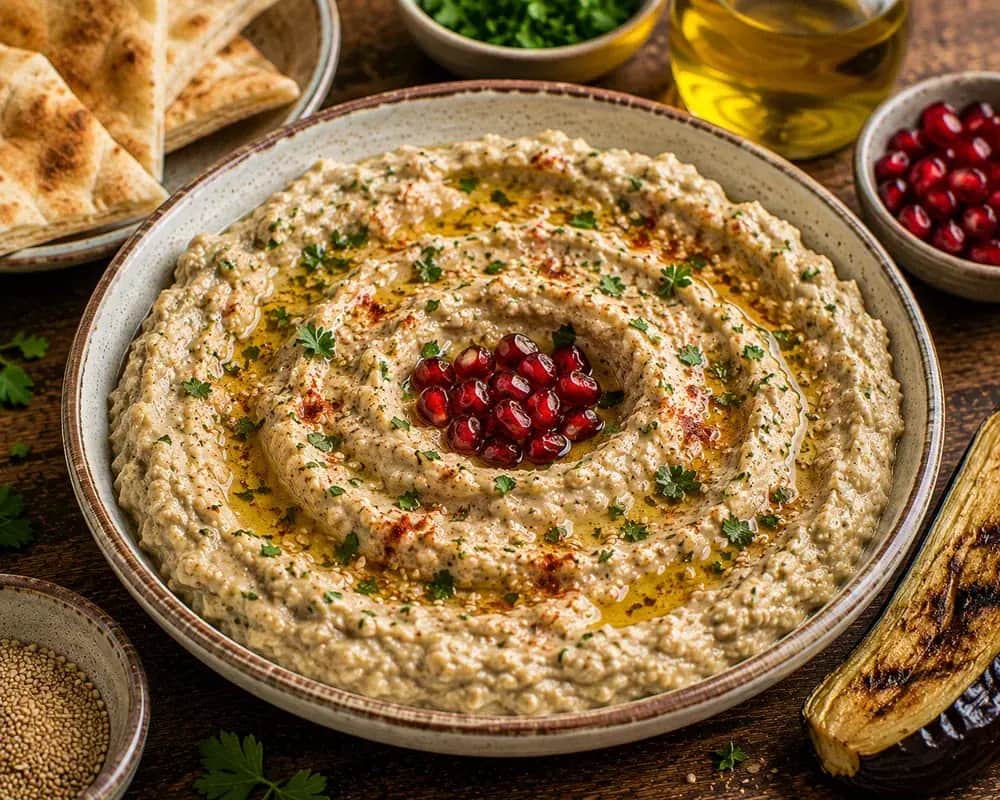
Classic Baba Ganoush Recipe
A classic Baba Ganoush recipe made with smoky roasted eggplant, tahini, garlic, fresh lemon juice, and extra virgin olive oil. This creamy Mediterranean mezze is rich, flavorful, and naturally plant-based.
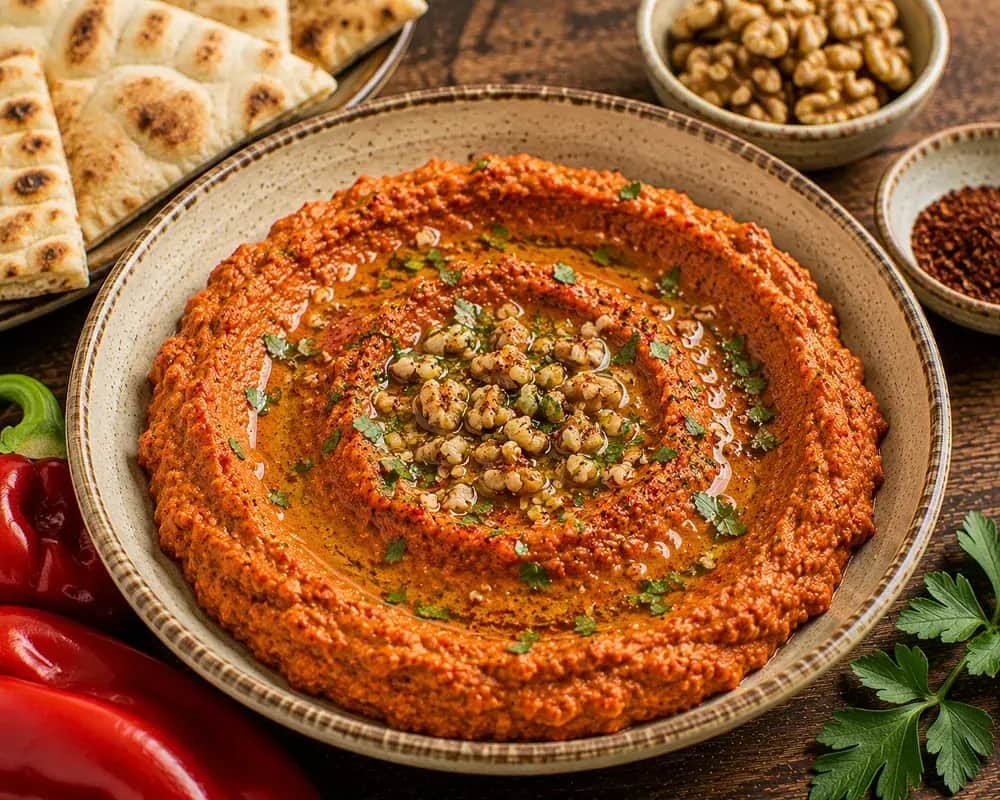
Muhammara Recipe — Aleppine Syrian Roasted Red Pepper & Walnut Dip
This Muhammara recipe is a traditional Aleppine Syrian roasted red pepper and walnut dip made with roasted red peppers, toasted walnuts, pomegranate molasses, extra virgin olive oil, garlic, cumin, and warm spices. Thick, smoky, sweet-tart, and richly textured, this easy Levantine mezze is perfect with warm pita, vegetables, and other shared dishes.
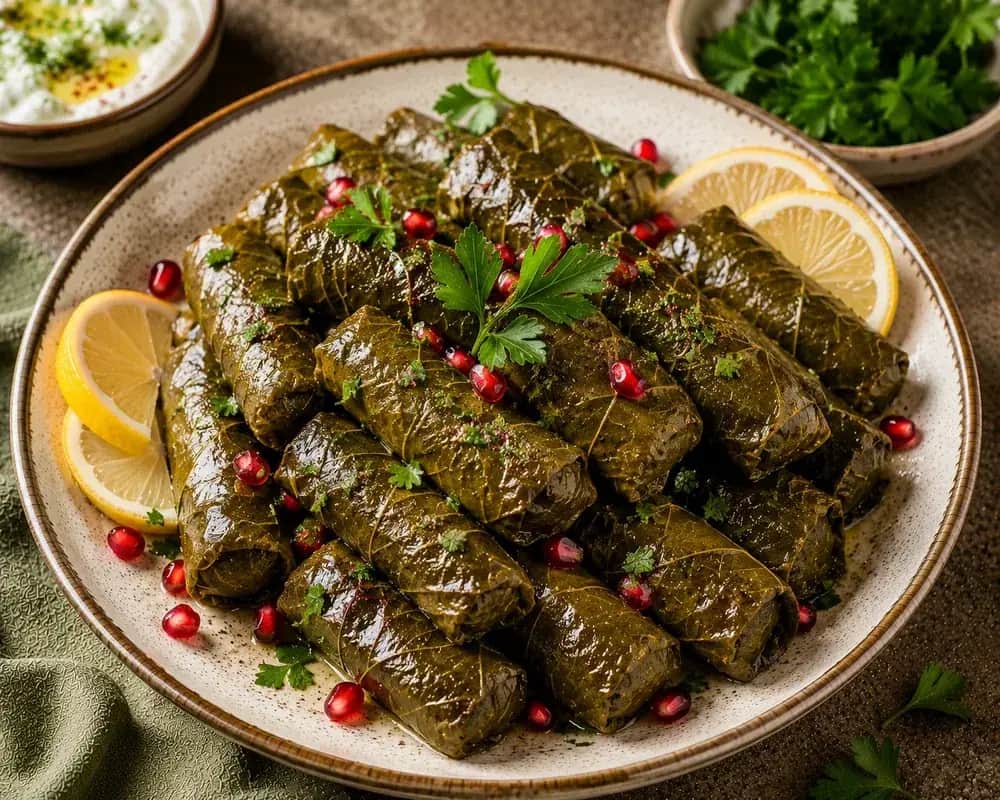
Warak Enab Recipe — Lebanese Stuffed Grape Leaves
Lebanese stuffed grape leaves filled with seasoned rice, herbs, vegetables, and aromatic spices. The rolls simmer gently until the grape leaves are tender and the rice is fully cooked, making them a natural addition to a mezze table.