
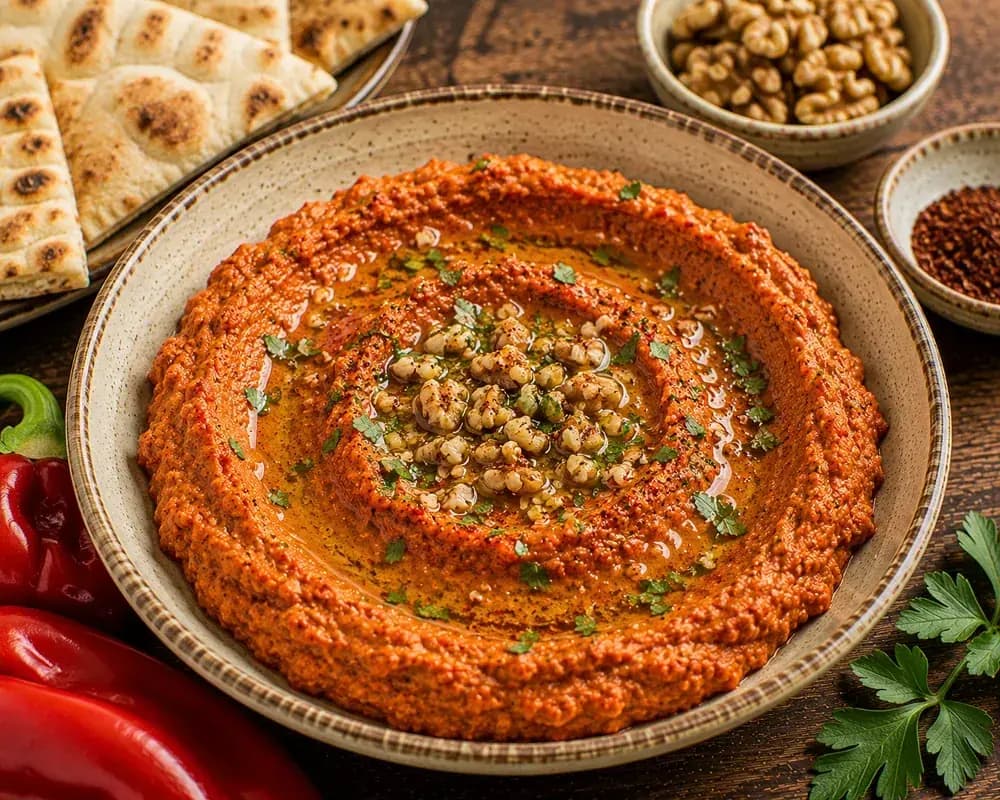
Muhammara Recipe — Aleppine Syrian Roasted Red Pepper & Walnut Dip
This Muhammara recipe is a traditional Aleppine Syrian roasted red pepper and walnut dip made with roasted red peppers, toasted walnuts, pomegranate molasses, extra virgin olive oil, garlic, cumin, and warm spices. Thick, smoky, sweet-tart, and richly textured, this easy Levantine mezze is perfect with warm pita, vegetables, and other shared dishes.
Prep Time
15 mins
Cook Time
25 mins
Total Time
40 mins
Servings
6
A TASTE OF TRADITION
The Story Behind This Recipe
Muhammara is one of the dishes most strongly associated with Aleppine cuisine in northern Syria. Its distinctive deep-red color comes from roasted red peppers, while walnuts provide richness and a pleasantly textured body. Pomegranate molasses adds the sweet-tart flavor that makes the dip particularly recognizable. Although versions of Muhammara are now enjoyed throughout the Levant and beyond, Aleppo remains its best-known culinary home.
Cultural & Culinary Context
Muhammara is especially well suited to the Syrian and wider Levantine tradition of mezze, where several small dishes are placed on the table for everyone to share. It can sit alongside hummus, baba ghanoush, olives, pickles, salads, fresh vegetables, and warm bread. The dish contributes a different flavor profile to the table: smoky roasted pepper, nutty walnut, aromatic garlic, warm cumin, and bright pomegranate acidity.
What Makes It Mediterranean?
Muhammara reflects the eastern Mediterranean approach to building flavor from vegetables, nuts, olive oil, herbs, spices, and fruit-based acidity. Roasting concentrates the natural sweetness of the peppers, toasting develops the walnuts, and pomegranate molasses supplies a distinctive sweet-tart balance. The recipe is simple in technique but layered in flavor, which is characteristic of many Levantine dishes.
Mediterranean Influences
- 🌿Roasted red peppers form the vegetable foundation.
- 🌿Extra virgin olive oil provides richness and is also used as a finishing ingredient.
- 🌿Walnuts add plant-based richness and texture.
- 🌿Pomegranate molasses contributes fruit-based acidity and sweetness.
- 🌿Garlic and cumin provide aromatic depth.
- 🌿Fresh parsley adds a bright herbal finish.
- 🌿The dip is naturally suited to a shared mezze meal with bread and vegetables.
Ingredients
- 3 large red bell peppers (Choose firm, fully ripe peppers with smooth skins. Riper peppers generally produce a sweeter and more flavorful dip.)
- 1 cup walnuts (Use fresh walnuts and toast them lightly. Remove them from the pan as soon as they become fragrant to avoid bitterness.)
- 0.3333333333333333 cup whole wheat breadcrumbs (Use fine, dry breadcrumbs. They help absorb excess moisture and give the dip its thick, spreadable consistency.)
- 2 tbsp pomegranate molasses (Brands vary in sweetness and acidity, so taste after blending before adding more.)
- 2 tbsp extra virgin olive oil (Choose a good-quality olive oil because its flavor remains noticeable in the finished dip.)
- 2 cloves garlic (Fresh garlic provides the savory aromatic backbone. Reduce slightly if your garlic is particularly strong.)
- 1 tsp ground cumin (Adds warm earthy depth without overpowering the roasted pepper.)
- 0.5 tsp smoked paprika (Adds additional smoky depth. Use a mild paprika if you prefer the roasted pepper flavor to dominate.)
- 0.25 tsp crushed red pepper flakes (Optional. Omit for a mild Muhammara or increase gradually if you prefer more heat.)
- 0.5 tsp sea salt (Start with this amount and adjust after blending.)
- 0.25 tsp black pepper
- 1 tbsp fresh parsley, chopped (Reserve some for the final garnish.)
- 1 tbsp pomegranate seeds (Optional garnish that adds freshness, color, and a pleasant burst of acidity.)
Instructions
- 1
Preheat the oven to 450°F (230°C). Place a rack near the upper-middle position so the peppers can blister and char effectively.
- 2
Place the whole red peppers on a baking tray. Roast for 20–25 minutes, turning every 7–8 minutes, until the skins are heavily blistered and blackened in several places and the peppers are soft.
- 3
Immediately transfer the hot peppers to a heatproof bowl and cover tightly, or place them in a sealed heat-safe container. Let them steam for about 10 minutes so the skins loosen.
- 4
Peel away the blackened skins, remove the stems and seeds, and allow the roasted pepper flesh to drain for a few minutes. Do not rinse the peppers because water can wash away some of their roasted flavor.
- 5
While the peppers roast, toast the walnuts in a dry skillet over medium heat for 3–4 minutes, stirring frequently. Remove them as soon as they smell fragrant and allow them to cool.
- 6
Add the roasted peppers, toasted walnuts, breadcrumbs, pomegranate molasses, olive oil, garlic, cumin, smoked paprika, salt, black pepper, and optional red pepper flakes to a food processor.
- 7
Pulse several times, then blend until cohesive and spreadable while keeping some visible texture from the walnuts and peppers. Scrape down the sides as needed.
- 8
Taste the mixture before serving. Add a little more pomegranate molasses for brightness, olive oil for richness, or salt if the flavor needs more definition. If the dip is too loose, add a small amount of breadcrumbs and pulse again.
- 9
Transfer the Muhammara to a serving bowl and let it rest for several minutes. This gives the breadcrumbs time to absorb moisture and allows the flavors to settle.
- 10
Create a shallow swirl with the back of a spoon. Drizzle with extra virgin olive oil and finish with chopped parsley, walnuts, and optional pomegranate seeds. Serve with warm pita or whole wheat flatbread.
SET YOURSELF UP FOR SUCCESS
Before You Cook
👨🍳 Keep In Mind
- •Choose ripe red peppers with firm flesh and smooth skins.
- •Have a heatproof bowl or covered container ready before the peppers come out of the oven.
- •Measure the pomegranate molasses before starting because its sweetness and acidity can vary considerably between brands.
- •Have a food processor ready; it gives you better control over the final texture than a high-speed blender.
- •Keep the walnuts nearby so they can be toasted while the peppers roast.
- •If you want a completely vegan and dairy-free mezze table, check packaged breadcrumbs for hidden dairy ingredients.
💡 Helpful Tips
- •Do not rely only on the roasting time. The peppers are ready when the skins are heavily blistered and the flesh has softened.
- •Turn the peppers several times during roasting so they char more evenly.
- •Steam the peppers immediately after roasting to make peeling easier.
- •Do not rinse peeled peppers because this can remove some of the concentrated roasted flavor.
- •Let excess liquid drain from the peppers before blending so the dip does not become watery.
- •Toast walnuts gently and stir frequently because they can burn quickly.
- •Allow toasted walnuts to cool slightly before processing.
- •Pulse the food processor before continuous blending so you can control the texture.
- •Avoid adding water to loosen the mixture. A small amount of olive oil is a better choice.
- •Let the finished dip rest briefly before judging its final thickness because the breadcrumbs continue absorbing moisture.
- •Taste after blending. Pomegranate molasses, garlic, and seasoning can vary considerably in strength.
👀 How Do I Know It's Done?
- ✓The pepper skins peel away easily after steaming.
- ✓The roasted pepper flesh is completely tender.
- ✓The walnuts are fragrant but not bitter.
- ✓The food processor mixture is cohesive and spreadable.
- ✓The dip holds its shape instead of running across the serving plate.
- ✓The texture remains slightly coarse rather than completely smooth.
- ✓The finished flavor balances roasted sweetness, walnut richness, pomegranate acidity, garlic, and warm spices.
Tweak It
Make This Recipe Work for You
Adapt the recipe to your ingredients, dietary needs, budget, time, serving size, or meal-prep plans.
🔄 Ingredient Substitutions
Gluten-free breadcrumbs
Replace the whole wheat breadcrumbs with fine certified gluten-free breadcrumbs if needed. Add them gradually because different brands absorb moisture differently.
Alternative nuts
Walnuts are an important part of Muhammara's characteristic flavor, but almonds can be used for a different variation when walnuts are unavailable. The flavor will be milder and less earthy.
Adjust the pomegranate molasses
If your pomegranate molasses is particularly concentrated or acidic, begin with slightly less and add more after tasting.
🌱 Dietary Adjustments
Vegetarian
This recipe is naturally vegetarian and contains no meat, poultry, fish, or animal-derived ingredients.
Vegan
This recipe is naturally vegan. Check the breadcrumbs if using a packaged product to make sure they contain no dairy or egg ingredients.
Gluten-free
Use certified gluten-free breadcrumbs and gluten-free bread for serving. The peppers, walnuts, olive oil, garlic, spices, and pomegranate molasses are naturally gluten-free.
💰 Budget-Friendly Options
Stretch the walnuts
Reduce the walnuts slightly while keeping enough to provide the characteristic nutty flavor and texture. Avoid removing them completely because they are a defining part of Muhammara.
⏱️ Time-Saving Options
Use prepared roasted peppers
When time is limited, use plain roasted red peppers from a jar. Drain them very well and pat them dry before blending so the dip does not become watery.
👨👩👧👦 Serving Adjustments
Make a larger batch
Double all ingredients for a larger gathering. If your food processor is small, blend in two batches rather than overfilling it.
🥡 Meal Prep
Prepare the dip ahead
Muhammara can be prepared in advance and refrigerated in a sealed container. The flavors often become more integrated after resting, although the texture may become slightly thicker.
RECIPE RESCUE
🧩 What Do You Need Help With?
Choose the problem you're facing and get a recipe-specific solution instead of a generic cooking tip.
WHAT IF?
🔄 What If...?
Choose your situation and we'll show you a practical pathway for making this recipe work.
STORAGE & LEFTOVERS
🥡 Storage & Leftovers
Transfer the finished Muhammara to a clean airtight container.
Refrigerate promptly after preparation.
Use a clean spoon each time you serve it.
If the dip thickens in the refrigerator, stir it well before serving.
Add the final parsley, walnut, pomegranate, and olive oil garnish shortly before serving for the best appearance.
Do not leave the dip at room temperature for extended periods.
Best Storage Time
For best quality, enjoy homemade Muhammara within 4 days when properly refrigerated.
How to Store
An airtight glass container or clean food-safe container with a secure lid.
SERVING & PAIRING
🍽️ Serving & Pairing
Serve Muhammara in a shallow bowl or wide serving dish. Use the back of a spoon to create a gentle swirl, drizzle with extra virgin olive oil, and finish with parsley, walnuts, and pomegranate seeds. Serve at room temperature or slightly cool with warm pita or whole wheat flatbread as part of a shared Levantine mezze.
What Goes Well With It?
RECIPE FAQ
❓ Frequently Asked Questions
How do you make Muhammara?
To make Muhammara, roast 3 large red bell peppers at 450°F (230°C) until the skins are heavily blistered and charred and the flesh is tender. Cover the hot peppers and let them steam for about 10 minutes, then peel away the skins and remove the stems and seeds. Meanwhile, lightly toast 1 cup of walnuts in a dry skillet and let them cool. Add the roasted peppers, toasted walnuts, 1/3 cup whole wheat breadcrumbs, 2 tablespoons pomegranate molasses, 2 tablespoons extra virgin olive oil, 2 cloves garlic, 1 teaspoon cumin, 1/2 teaspoon smoked paprika, salt, black pepper, and optional red pepper flakes to a food processor. Pulse and blend until thick and spreadable while keeping some visible walnut and pepper texture. Taste and adjust the pomegranate molasses, olive oil, or seasoning, then let the dip rest briefly before serving with warm pita or whole wheat flatbread.
Where does Muhammara come from?
Muhammara is especially associated with Aleppo in northern Syria and is widely recognized as an Aleppine dish. Variations are now enjoyed throughout the Levant and in many other places.
What does the name Muhammara mean?
The name is connected with an Arabic root associated with redness, referring to the deep red color of the roasted pepper-based dip.
Is Muhammara vegan?
Yes. This recipe is naturally vegan because it contains no meat, dairy, eggs, or other animal-derived ingredients. Check packaged breadcrumbs if following a strict vegan diet.
Is Muhammara the same as a roasted red pepper sauce?
Not exactly. Muhammara is a thick Levantine dip built around roasted red peppers, walnuts, pomegranate molasses, olive oil, garlic, and spices. Its walnut texture and sweet-tart pomegranate flavor distinguish it from a simple pepper sauce.
Why are the walnuts toasted?
Lightly toasting the walnuts intensifies their aroma and gives the dip a deeper nutty flavor. They should be toasted gently because burnt walnuts become noticeably bitter.
Can I make Muhammara gluten-free?
Yes. Replace the whole wheat breadcrumbs with certified gluten-free breadcrumbs and serve it with gluten-free bread or naturally gluten-free vegetables.
Can I make Muhammara ahead of time?
Yes. It is well suited to advance preparation. Refrigerate it in a sealed container and let it sit briefly before serving. The texture may become slightly thicker after chilling.
Should Muhammara be completely smooth?
No. A cohesive but slightly textured consistency is desirable. Small pieces of walnut and roasted pepper give the dip character and make it more satisfying to spread.
What makes Muhammara different from hummus?
Hummus is based primarily on chickpeas and tahini, while Muhammara is based on roasted red peppers and walnuts with pomegranate molasses. Muhammara therefore has a smokier, fruitier, and more nutty flavor.
How should Muhammara be served?
It is particularly good as part of a shared Levantine mezze with warm bread, hummus, baba ghanoush, olives, pickles, salads, and fresh vegetables. It can also accompany grilled foods.
Explore More
Go deeper into the cuisine
Learn more about the ingredients, traditions, and cooking approaches connected to this recipe.
You May Also Like
More delicious recipes from the Mezze
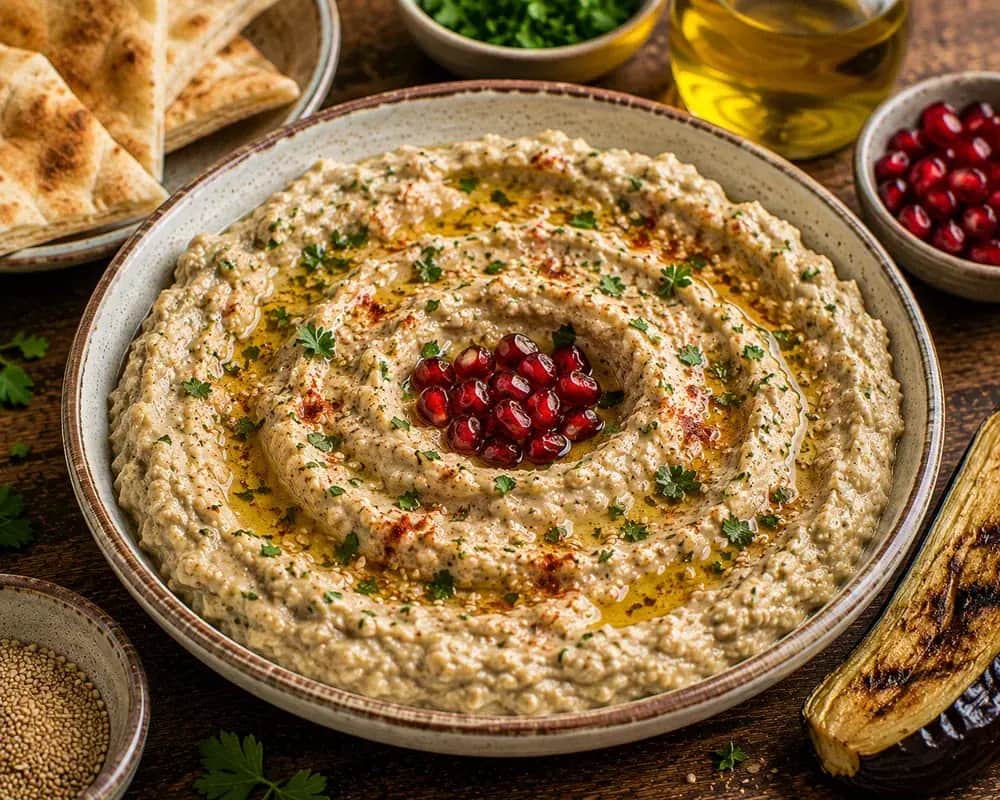
Classic Baba Ganoush Recipe
A classic Baba Ganoush recipe made with smoky roasted eggplant, tahini, garlic, fresh lemon juice, and extra virgin olive oil. This creamy Mediterranean mezze is rich, flavorful, and naturally plant-based.
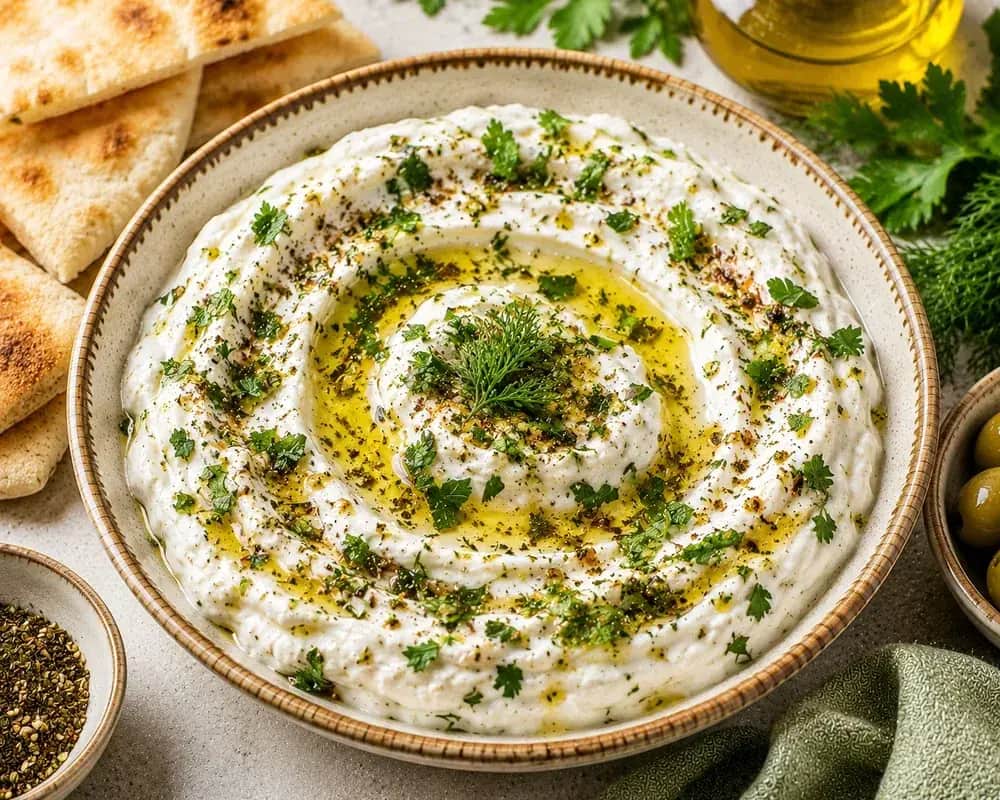
Herbed Labneh Dip Recipe — Lebanese Labneh with Fresh Herbs & Za'atar
A creamy labneh dip seasoned with fresh herbs, olive oil, garlic, and Mediterranean spices. Strained yogurt gives labneh its thick texture and tangy flavor, making it easy to spread across warm pita or serve as part of a mezze table.
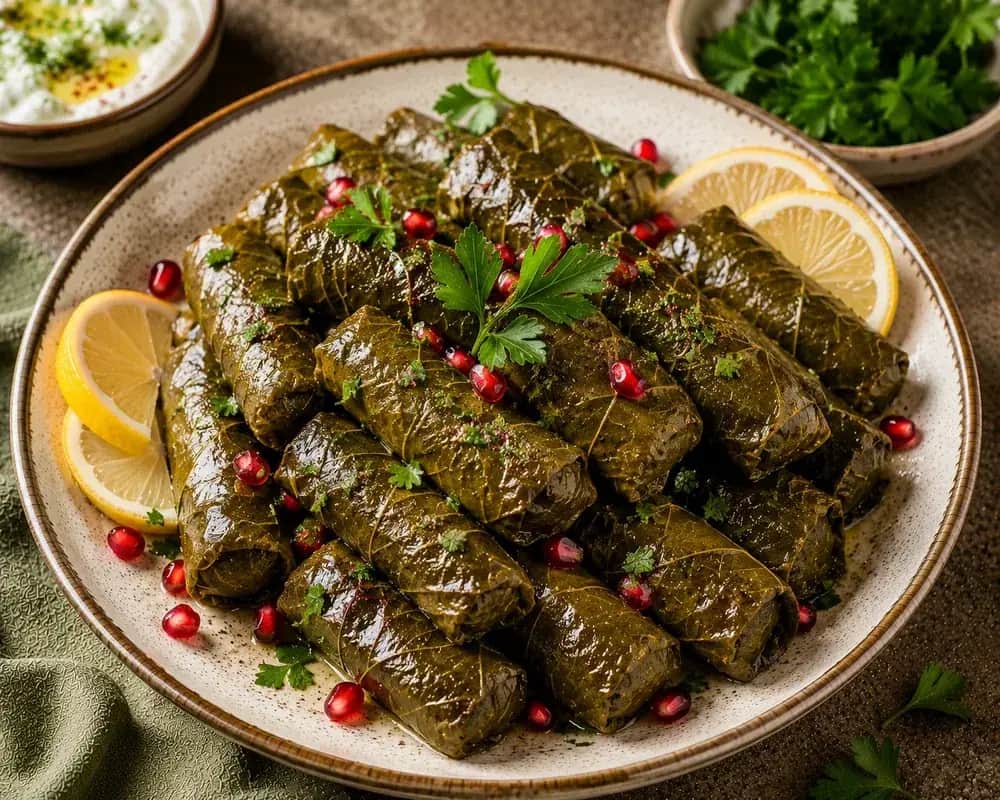
Warak Enab Recipe — Lebanese Stuffed Grape Leaves
Lebanese stuffed grape leaves filled with seasoned rice, herbs, vegetables, and aromatic spices. The rolls simmer gently until the grape leaves are tender and the rice is fully cooked, making them a natural addition to a mezze table.