
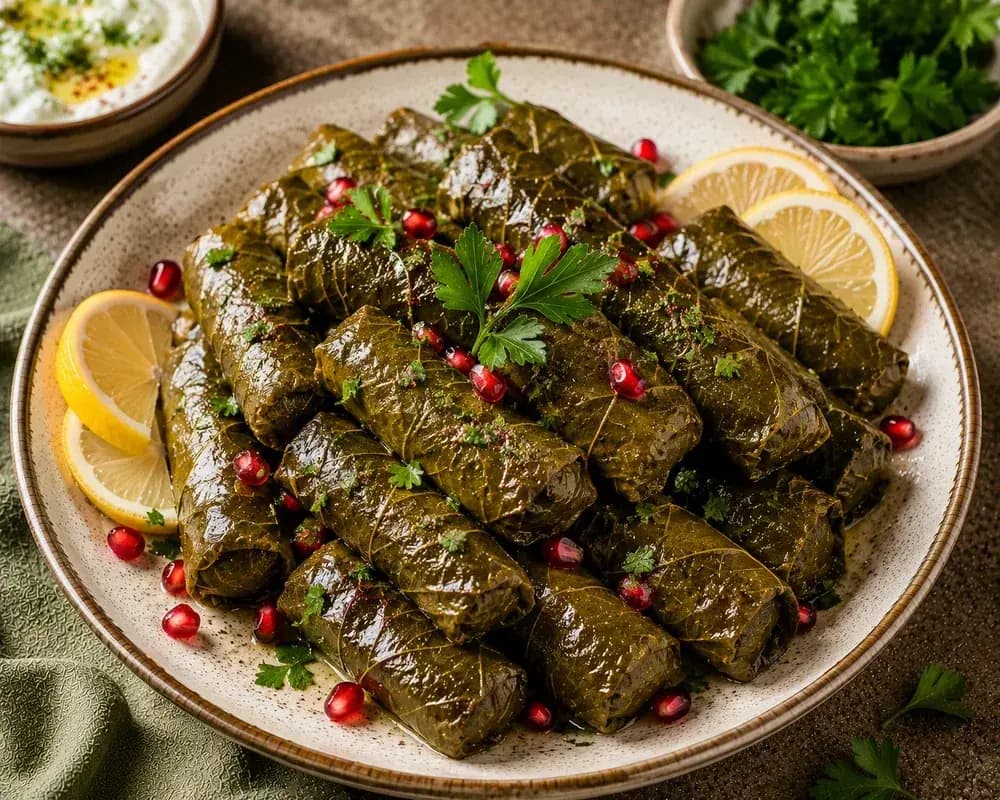
Warak Enab Recipe — Lebanese Stuffed Grape Leaves
Lebanese stuffed grape leaves filled with seasoned rice, herbs, vegetables, and aromatic spices. The rolls simmer gently until the grape leaves are tender and the rice is fully cooked, making them a natural addition to a mezze table.
Prep Time
45 mins
Cook Time
50 mins
Total Time
95 mins
Servings
6
A TASTE OF TRADITION
The Story Behind This Recipe
Warak Enab turns simple grape leaves, rice, tomatoes, and fresh herbs into one of the most recognizable dishes of the Levant. The careful rolling and slow simmering create tender little parcels with a bright lemony flavor and fragrant herbal filling.
Cultural & Culinary Context
Stuffed grape leaves are prepared in many forms throughout the Levant and Eastern Mediterranean. In Lebanese cooking, Warak Enab is commonly enjoyed as part of a mezze spread and is valued for its combination of herbs, rice, lemon, and olive oil.
What Makes It Mediterranean?
The recipe brings together extra virgin olive oil, fresh herbs, vegetables, lemon, rice, and aromatic spices. These simple ingredients create a flavorful dish without relying on heavy sauces or rich dairy ingredients.
Mediterranean Influences
- 🌿Extra virgin olive oil is used as the main added fat.
- 🌿Fresh parsley, mint, dill, tomatoes, onion, and lemon provide brightness and freshness.
- 🌿Warm spices add depth without requiring a heavy sauce.
- 🌿The dish is naturally plant-based and dairy-free.
- 🌿It is designed to be enjoyed as part of a mezze-style meal.
Ingredients
- 1 jar (16 oz) grape leaves, rinsed and drained (Rinse thoroughly to remove excess brine. If the leaves are particularly salty, soak them briefly in fresh water before draining.)
- 1 cup short-grain rice, rinsed (Use uncooked short-grain rice. It expands during cooking, so do not overfill the grape leaves.)
- 2 medium tomatoes, finely diced (Use ripe tomatoes and finely dice them so their juices distribute evenly through the filling.)
- 1 small onion, finely chopped
- 1 cup fresh parsley, finely chopped
- 0.25 cup fresh mint, chopped
- 2 tbsp fresh dill, chopped
- 3 tbsp extra virgin olive oil (Use a good-quality olive oil because its flavor carries through the filling and cooking broth.)
- 2 tbsp fresh lemon juice
- 1 tsp ground allspice
- 0.5 tsp ground cinnamon
- 1 tsp sea salt (Adjust according to how salty the preserved grape leaves and vegetable broth are.)
- 0.5 tsp black pepper
- 2 cups vegetable broth (Use a low-sodium broth if the grape leaves are already salty.)
- 1 lemon, sliced for serving
Instructions
- 1
Rinse the grape leaves thoroughly under cool running water to remove excess brine. Drain them well and trim away any tough stems without tearing the leaves.
- 2
If the leaves taste very salty or feel unusually firm, place them in fresh water for a short soak, then drain and gently pat them dry.
- 3
In a large bowl, combine the rinsed uncooked rice, diced tomatoes, onion, parsley, mint, dill, olive oil, lemon juice, allspice, cinnamon, salt, and black pepper. Mix until the rice and herbs are evenly distributed.
- 4
Choose a tender grape leaf and place it shiny-side down with the veined side facing upward. Keep the stem end closest to you.
- 5
Place about one tablespoon of filling near the lower center of the leaf. Do not add more filling simply to make a larger roll because the rice needs room to expand.
- 6
Fold the bottom edge over the filling, fold both sides toward the center, and roll the leaf forward into a compact cylinder. Roll firmly enough to hold the filling but do not make the roll extremely tight.
- 7
Continue rolling until all the filling is used. If a grape leaf tears, patch it with another leaf or use the damaged leaf as a liner in the cooking pot.
- 8
Line the bottom of a large heavy pot with a few extra grape leaves if available. Arrange the stuffed grape leaves seam-side down in snug rows so they support one another during cooking.
- 9
Pour the vegetable broth gently around the rolls. The liquid should come partway up the sides of the rolls rather than completely submerging them.
- 10
Place a heatproof plate upside down over the grape leaves. The weight keeps the rolls from floating, opening, or shifting while they simmer.
- 11
Bring the liquid to a gentle simmer over medium heat, then reduce the heat to low. Cover the pot and cook gently for 45–50 minutes.
- 12
Begin checking near the end of cooking. The grape leaves should be tender and the rice inside should be fully cooked and soft. If the liquid disappears before the rice is tender, add a small amount of hot water or broth and continue cooking.
- 13
Turn off the heat and leave the pot covered for about 10 minutes. This resting period allows the rice to finish absorbing the liquid and makes the rolls easier to handle.
- 14
Carefully remove the plate and transfer the grape leaves to a serving platter. Serve warm or at room temperature with fresh lemon slices and an optional drizzle of extra virgin olive oil.
SET YOURSELF UP FOR SUCCESS
Before You Cook
👨🍳 Keep In Mind
- •Read the grape-leaf label and check how salty the preserved leaves are before deciding whether they need soaking.
- •Rinse the rice thoroughly so excess surface starch does not make the filling unnecessarily sticky.
- •Finely chop the vegetables and herbs so the filling is easy to portion and roll.
- •Prepare a large heavy pot before you begin rolling because the rolls should be arranged snugly as soon as they are ready.
- •Keep a few damaged or extra grape leaves aside to line the bottom of the pot.
- •Have a heatproof plate ready to place over the rolls during simmering.
💡 Helpful Tips
- •Do not overfill the grape leaves. The uncooked rice expands substantially as it absorbs liquid.
- •Roll firmly but leave a little room inside each parcel for the rice to expand.
- •Place the rolls seam-side down so they are less likely to open during cooking.
- •Pack the rolls close together rather than leaving large gaps between them.
- •Use a gentle simmer instead of a vigorous boil. Strong bubbling can cause the leaves to split or the rolls to shift.
- •If the leaves are salty, use low-sodium vegetable broth and adjust the added salt.
- •Let the finished rolls rest before serving. They become easier to handle and the filling settles as it cools slightly.
- •Taste one roll before serving the entire batch so you can check both the rice texture and seasoning.
👀 How Do I Know It's Done?
- ✓The grape leaves are tender and easy to cut.
- ✓The rice inside the center of the roll is fully cooked and soft.
- ✓The filling is moist but not watery.
- ✓The rolls hold their shape when lifted carefully from the pot.
- ✓The lemon, herb, and warm-spice flavors are balanced rather than dominated by salt.
Tweak It
Make This Recipe Work for You
Adapt the recipe to your ingredients, dietary needs, budget, time, serving size, or meal-prep plans.
🔄 Ingredient Substitutions
Using another rice
Short-grain rice is recommended because its texture works well in the filling. If using a different rice, expect the cooking time and liquid absorption to vary and test one roll before serving the whole batch.
Adjust the fresh herbs
Parsley provides the main herbal base, while mint and dill add distinctive freshness. If necessary, adjust the mint or dill according to availability while keeping the total herb mixture balanced.
Use water instead of broth
Water can replace vegetable broth, although broth adds more savory flavor. If using water, taste the filling carefully and adjust the seasoning before rolling.
Adjust the lemon flavor
For a more pronounced lemon flavor, add extra fresh lemon juice at the table rather than making the cooking liquid excessively acidic.
🌱 Dietary Adjustments
Vegan
The recipe is naturally vegan because it contains rice, vegetables, herbs, olive oil, grape leaves, spices, and vegetable broth without animal products.
Vegetarian
The recipe is naturally vegetarian and works well as part of a meat-free mezze spread.
Dairy-free
The recipe contains no dairy ingredients.
Gluten-free
The basic ingredients are naturally gluten-free, but check packaged grape leaves and vegetable broth for added ingredients or cross-contact if gluten-free preparation is important.
💰 Budget-Friendly Options
Use seasonal herbs
Fresh parsley is the main herb in the filling. When mint or dill is expensive or unavailable, adjust their amounts while keeping parsley as the primary fresh herb.
Use homemade vegetable broth
A simple homemade vegetable broth can be used instead of packaged broth and is a useful way to make the dish from pantry and vegetable scraps.
⏱️ Time-Saving Options
Prepare the filling ahead
The rice, vegetables, herbs, oil, lemon, and spices can be mixed shortly before rolling. Keep the mixture covered while preparing the grape leaves.
Create a rolling station
Arrange the rinsed leaves, filling bowl, pot, and a clean work surface together before starting. This makes the rolling process much faster and more organized.
👨👩👧👦 Serving Adjustments
Make a smaller batch
Halve the ingredients for approximately three servings. Use a smaller pot so the rolls remain snug during cooking.
Make a larger batch
Double the ingredients for a larger gathering, but use a sufficiently large pot or cook in two pots rather than stacking the rolls too deeply.
🥡 Meal Prep
Prepare ahead
Warak Enab can be prepared ahead and served warm or at room temperature, making it especially convenient for mezze spreads and gatherings.
Pack for lunch
Once cooled, the rolls can be packed into a sealed food container with lemon wedges for a convenient plant-based lunch.
RECIPE RESCUE
🧩 What Do You Need Help With?
Choose the problem you're facing and get a recipe-specific solution instead of a generic cooking tip.
WHAT IF?
🔄 What If...?
Choose your situation and we'll show you a practical pathway for making this recipe work.
STORAGE & LEFTOVERS
🥡 Storage & Leftovers
Allow the cooked grape leaves to cool before transferring them to a sealed food container.
Refrigerate leftovers promptly rather than leaving cooked rice at room temperature for an extended period.
Store the rolls in a shallow airtight container so they cool evenly.
Keep fresh lemon wedges separate until serving.
Reheat gently with a small splash of water or broth if you want to serve them warm again.
Best Storage Time
For best quality, refrigerate cooked Warak Enab and enjoy within 3–4 days.
How to Store
Use a shallow airtight food-safe container with a secure lid.
SERVING & PAIRING
🍽️ Serving & Pairing
Serve Warak Enab warm, at room temperature, or chilled as part of a Lebanese mezze spread. Fresh lemon wedges and a small drizzle of extra virgin olive oil bring out the herbs and balance the savory rice filling.
What Goes Well With It?
RECIPE FAQ
❓ Frequently Asked Questions
How do you make traditional Lebanese Warak Enab?
To make traditional Lebanese Warak Enab, rinse and drain the preserved grape leaves, then mix uncooked short-grain rice with finely diced tomatoes, onion, parsley, mint, dill, olive oil, lemon juice, allspice, cinnamon, salt, and black pepper. Place about one tablespoon of filling on each leaf, fold the bottom and sides inward, and roll into a compact cylinder without over-tightening. Arrange the rolls seam-side down in a snug pot, add vegetable broth partway up the sides, place a heatproof plate over the rolls, and gently simmer covered for 45–50 minutes, or until the grape leaves are tender and the rice is fully cooked. Let the rolls rest for about 10 minutes before serving warm, at room temperature, or chilled with fresh lemon.
Why is my rice filling still raw?
The rice needs enough moisture and time to cook inside the grape leaves. If it remains firm, add a small amount of hot water or broth and continue simmering gently until tender.
How much filling should I put in each grape leaf?
About one tablespoon is a useful starting point. The rice expands during cooking, so overfilling can cause the leaves to split or open.
Which side of the grape leaf should face up?
Place the shiny side down with the veined side facing upward when filling. This gives you a convenient surface for folding and rolling.
Why do I need a plate on top of the grape leaves?
The heatproof plate acts as a gentle weight that keeps the rolls submerged and prevents them from floating, shifting, or opening during simmering.
Can I use fresh grape leaves?
Yes, if they are suitable for cooking. Fresh leaves generally need blanching first to soften them enough for rolling.
Can Warak Enab be made ahead?
Yes. It can be cooked ahead and served warm, at room temperature, or chilled, which makes it particularly convenient for mezze gatherings.
Is Warak Enab vegan?
Yes. This version contains rice, vegetables, herbs, olive oil, grape leaves, spices, and vegetable broth and contains no animal products.
Why are my grape leaves too salty?
Preserved grape leaves can vary in saltiness. Rinse them thoroughly and soak very salty leaves briefly in fresh water before using them. Low-sodium broth also helps control the final salt level.
Can I freeze stuffed grape leaves?
For the best texture, refrigeration is preferred. If freezing is necessary, cool the cooked rolls completely, pack them carefully in an airtight freezer-safe container, and thaw them gradually before reheating.
How do I stop the rolls from opening?
Avoid overfilling, roll them firmly but not extremely tightly, place them seam-side down, pack them snugly in the pot, and use a heatproof plate to keep them in place while they simmer.
Explore More
Go deeper into the cuisine
Learn more about the ingredients, traditions, and cooking approaches connected to this recipe.
You May Also Like
More delicious recipes from the Mezze
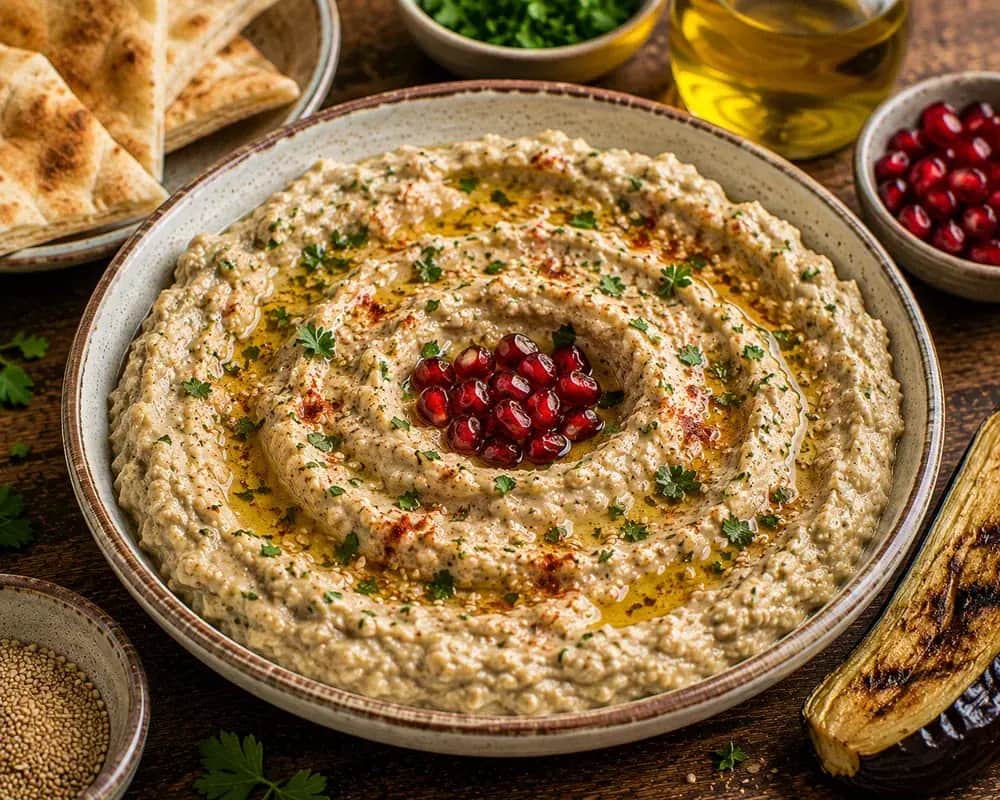
Classic Baba Ganoush Recipe
A classic Baba Ganoush recipe made with smoky roasted eggplant, tahini, garlic, fresh lemon juice, and extra virgin olive oil. This creamy Mediterranean mezze is rich, flavorful, and naturally plant-based.
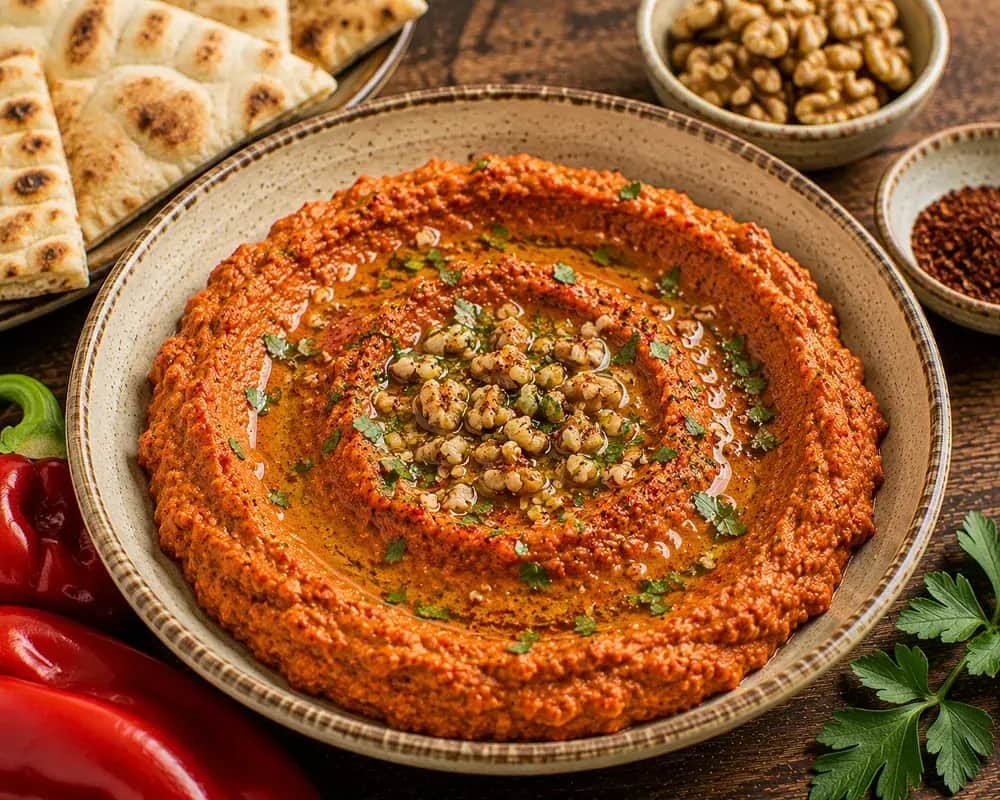
Muhammara Recipe — Aleppine Syrian Roasted Red Pepper & Walnut Dip
This Muhammara recipe is a traditional Aleppine Syrian roasted red pepper and walnut dip made with roasted red peppers, toasted walnuts, pomegranate molasses, extra virgin olive oil, garlic, cumin, and warm spices. Thick, smoky, sweet-tart, and richly textured, this easy Levantine mezze is perfect with warm pita, vegetables, and other shared dishes.
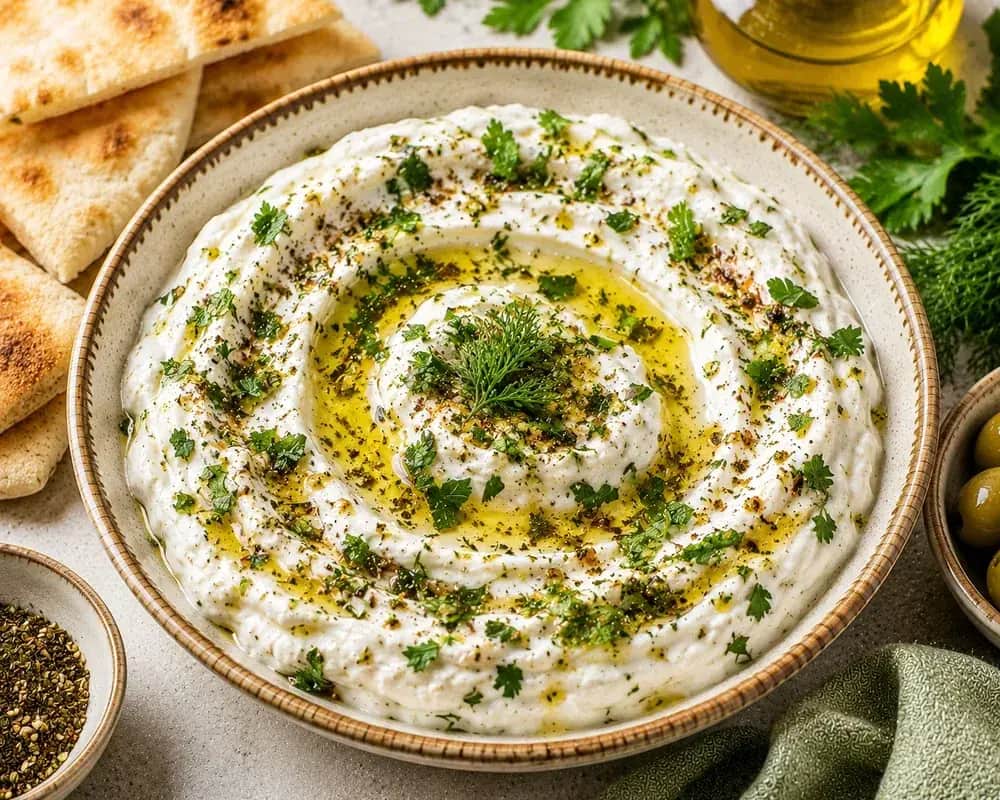
Herbed Labneh Dip Recipe — Lebanese Labneh with Fresh Herbs & Za'atar
A creamy labneh dip seasoned with fresh herbs, olive oil, garlic, and Mediterranean spices. Strained yogurt gives labneh its thick texture and tangy flavor, making it easy to spread across warm pita or serve as part of a mezze table.