
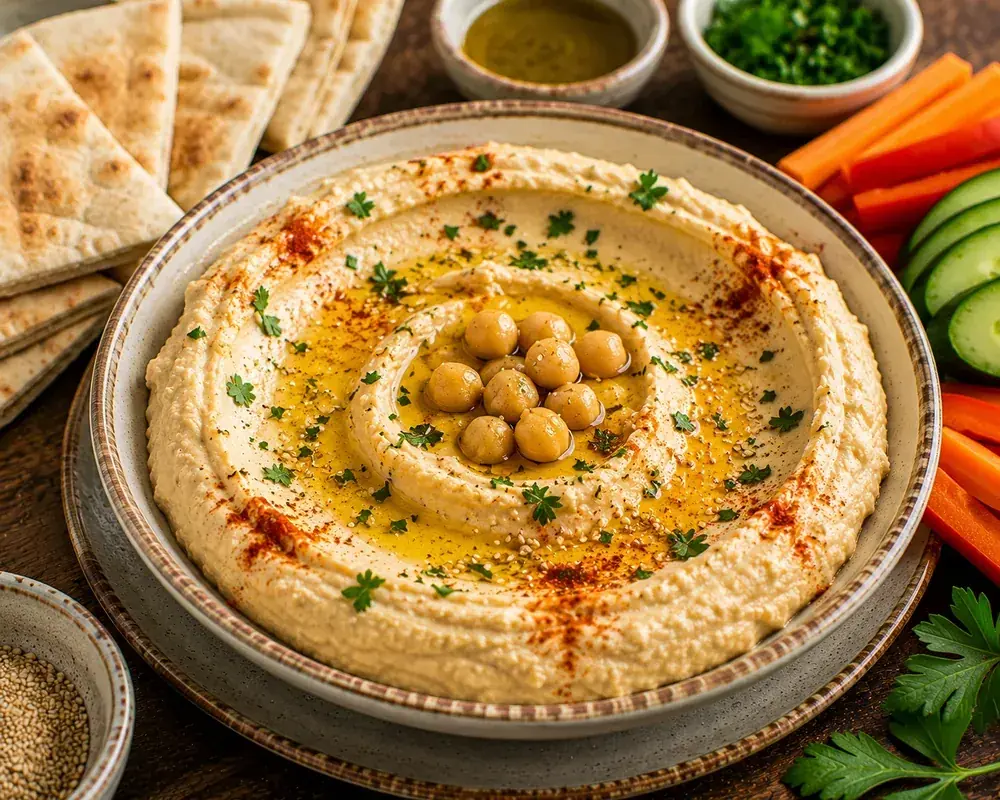
Classic Hummus Recipe — Palestinian Hummus bi-Tahini
A classic Palestinian hummus bi-tahini made with exceptionally tender chickpeas, creamy tahini, fresh lemon juice, garlic, cumin, and extra virgin olive oil. The finished hummus is smooth, light, and balanced, with warm Arabic bread for serving.
Prep Time
20 mins
Cook Time
60 mins
Total Time
80 mins
Servings
4
A TASTE OF TRADITION
The Story Behind This Recipe
Hummus is one of the foods most strongly associated with the Levant, but its exact ancient origin cannot be assigned confidently to a single modern country. What can be said with much greater confidence is that hummus bi-tahini has become deeply embedded in Palestinian food culture. It appears as a familiar breakfast and mezze food, served communally with bread and surrounded by other simple dishes. This Palestinian-style version focuses on the qualities that make the dish so satisfying: exceptionally tender chickpeas, good sesame tahini, fresh lemon, garlic, olive oil, and a texture smooth enough to spread across a plate.
Cultural & Culinary Context
In Palestinian food culture, hummus belongs to the tradition of shared dishes that can move easily between breakfast, mezze, and family meals. A bowl of hummus is rarely thought of only as a dip in the modern Western sense. It can be part of a larger table with warm Arabic bread, olives, pickles, fresh vegetables, falafel, beans, eggs, and other mezze. The pleasure comes partly from the food itself and partly from placing a generous dish in the center of the table for everyone to share.
What Makes It Mediterranean?
The dish reflects several defining elements of the eastern Mediterranean food tradition: chickpeas and sesame as plant-based staples, fresh lemon for acidity, garlic and cumin for aromatic depth, and extra virgin olive oil as both a flavor and finishing ingredient. The ingredients are simple, but the balance between them is important. A good hummus should allow the earthy chickpeas, nutty tahini, bright lemon, gentle garlic, and olive oil to remain recognizable without any one component overwhelming the others.
Mediterranean Influences
- 🌿Chickpeas are used as the central plant-based ingredient.
- 🌿Tahini provides the rich sesame character associated with many Levantine preparations.
- 🌿Fresh lemon juice provides acidity and keeps the rich sesame flavor balanced.
- 🌿Garlic and cumin provide traditional savory and aromatic depth.
- 🌿Extra virgin olive oil is used as an important finishing ingredient.
- 🌿The dish is naturally plant-based and pairs naturally with bread, vegetables, olives, and other mezze.
- 🌿Its communal presentation reflects the shared-table tradition of eastern Mediterranean meals.
Ingredients
- 1 cup dried chickpeas (Choose fresh, good-quality chickpeas. Very old chickpeas may require much longer cooking and can remain firm even after extended simmering.)
- 1 tsp baking soda (Helps soften the chickpeas and their skins during soaking and cooking. Use the specified amount rather than adding extra, which can affect flavor.)
- 0.5 cup tahini (Use smooth, pourable sesame tahini. Stir the tahini thoroughly in its container before measuring because sesame solids settle at the bottom.)
- 0.25 cup fresh lemon juice (Freshly squeezed lemon gives the best brightness. Start slightly below the full amount if your lemons are particularly acidic, then adjust after blending.)
- 2 cloves fresh garlic (Fresh garlic provides the characteristic savory bite. Very strong garlic can dominate hummus, so adjust according to the cloves you have.)
- 0.5 tsp ground cumin (Adds warm depth while allowing the chickpea, tahini, and lemon flavors to remain prominent.)
- 1 tsp sea salt (Start with slightly less if your tahini contains salt, then adjust after blending.)
- 0.75 cup cold water (Add gradually rather than all at once. The exact amount depends on how much moisture remains in the cooked chickpeas and the consistency of the tahini.)
- 2 tbsp extra virgin olive oil (Used primarily as a finishing oil. Choose a good-quality olive oil because its flavor remains noticeable on the finished hummus.)
- 0.25 tsp paprika (Optional garnish that adds color and a mild peppery warmth.)
- 1 tbsp fresh parsley (Optional garnish. Finely chop it shortly before serving for the freshest flavor and appearance.)
Instructions
- 1
Spread the dried chickpeas over a tray or plate and remove any stones, damaged beans, or debris. Rinse the chickpeas thoroughly under cold water.
- 2
Place the chickpeas in a large bowl, cover them generously with fresh water, and stir in the baking soda. Leave them to soak for 6–8 hours or overnight. They should become visibly swollen and soft enough to press more easily between your fingers.
- 3
Drain the soaked chickpeas and rinse them very thoroughly to remove the soaking water and excess baking soda. Transfer them to a large saucepan and cover with several centimeters of fresh water.
- 4
Bring the chickpeas to a boil, then reduce to a steady simmer. Skim off foam that rises to the surface during the early stages of cooking.
- 5
Continue simmering until the chickpeas are exceptionally tender. A properly cooked chickpea for silky hummus should be easy to crush completely between two fingers without resistance.
- 6
Check the saucepan occasionally and add more hot water if necessary to keep the chickpeas submerged. Cooking time varies with the age and variety of the chickpeas, so tenderness is more important than a fixed cooking time.
- 7
Drain the chickpeas, reserving some of their cooking liquid in case you need it later. Gently rub or rinse them to remove as many loose skins as practical. Removing the skins is optional, but it can noticeably improve the final smoothness.
- 8
While the chickpeas are still warm, transfer them to a food processor. Add the garlic, lemon juice, cumin, and salt. Process until the chickpeas form a coarse, even paste.
- 9
Add the tahini and process again. The mixture may become temporarily thicker as the tahini combines with the lemon and chickpeas; this is normal.
- 10
With the food processor running, gradually add cold water. Continue blending until the hummus becomes pale, smooth, light, and spoonable. Add the water slowly so you can stop as soon as the desired consistency is reached.
- 11
Taste the hummus. Adjust the lemon juice if it needs more brightness, salt if it tastes flat, tahini if it needs more sesame richness, or a small amount of cold water if the consistency is still too thick.
- 12
Blend for another 1–2 minutes after the final seasoning adjustment. This extra processing helps create a smoother and lighter texture.
- 13
Transfer the hummus to a shallow serving plate or bowl. Use the back of a spoon to spread it outward and form a shallow well in the center.
- 14
Pour the extra virgin olive oil into the well and lightly over the surface. Finish with paprika, chopped parsley, and a few whole cooked chickpeas if desired.
- 15
Serve with warm Arabic bread. Hummus can also be placed at the center of a Palestinian-style mezze table alongside fresh vegetables, olives, pickles, and other shared dishes.
SET YOURSELF UP FOR SUCCESS
Before You Cook
👨🍳 Keep In Mind
- •Plan ahead for soaking the dried chickpeas. An overnight soak is the easiest option for a reliable result.
- •Inspect the dried chickpeas before soaking and remove stones or damaged beans.
- •Use a large enough soaking bowl because chickpeas expand significantly.
- •Stir the tahini in its container before measuring so the sesame solids and oil are evenly distributed.
- •Taste your tahini before making the hummus. Some brands are naturally more bitter, salty, or intense than others.
- •Juice the lemons shortly before cooking. Fresh lemon gives a cleaner flavor than bottled lemon juice.
- •Have cold water ready beside the food processor because the final texture is adjusted gradually during blending.
💡 Helpful Tips
- •Do not judge chickpea doneness by the clock alone. For exceptionally smooth hummus, the chickpeas should be much softer than chickpeas intended for a salad.
- •If a chickpea can still hold its shape when pressed firmly between two fingers, continue cooking.
- •Do not discard all the chickpea cooking liquid until the hummus is finished. A small amount can be useful if you need additional moisture.
- •Warm chickpeas blend particularly well and help the tahini and lemon incorporate smoothly.
- •Add cold water slowly. Adding too much at once can turn the hummus thinner than intended.
- •Blend longer than you think is necessary. Hummus becomes noticeably smoother as the food processor continues working.
- •Taste after blending rather than trying to predict the final balance from the raw ingredients.
- •If the hummus tastes heavy, more lemon can brighten it. If it tastes sharp, additional tahini and chickpeas can soften the acidity.
- •Use olive oil primarily as a finishing element rather than relying on a large amount inside the food processor.
- •Serve the hummus on a shallow plate rather than in a deep bowl. The wider surface makes it easier to create the traditional spooned presentation and distribute the olive oil.
👀 How Do I Know It's Done?
- ✓Every chickpea is soft enough to crush completely between two fingers.
- ✓The hummus has no noticeable gritty chickpea texture.
- ✓The tahini, lemon, garlic, and chickpea flavors are balanced rather than dominated by one ingredient.
- ✓The texture is creamy and spreadable, but not watery.
- ✓A spoon can create a shallow well in the center without the hummus immediately collapsing into liquid.
- ✓The finished surface looks smooth and slightly glossy.
- ✓The hummus tastes fresh and balanced before the olive oil and garnishes are added.
Tweak It
Make This Recipe Work for You
Adapt the recipe to your ingredients, dietary needs, budget, time, serving size, or meal-prep plans.
🔄 Ingredient Substitutions
Using canned chickpeas
For a faster version, use well-rinsed canned chickpeas. Simmer them in fresh water for 15–20 minutes before blending if possible; this softens them and improves the final texture compared with blending them directly from the can.
Adjusting the lemon
If your lemons are unusually acidic, start with less juice and add more after blending. The goal is brightness without making the hummus sharply sour.
Adjusting the garlic
Use one clove instead of two if you prefer a gentler garlic flavor. Strong raw garlic becomes more noticeable as the hummus rests.
🌱 Dietary Adjustments
Naturally vegan
The recipe contains no animal-derived ingredients, so the hummus itself is naturally vegan.
Naturally gluten-free hummus
The hummus ingredients are naturally gluten-free. If you need the complete serving to be gluten-free, serve it with certified gluten-free bread or fresh vegetables instead of conventional Arabic bread.
💰 Budget-Friendly Options
Budget-friendly preparation
Dried chickpeas are usually more economical than prepared chickpeas. Buying tahini and olive oil in larger containers can also reduce the cost per batch when hummus is prepared regularly.
⏱️ Time-Saving Options
Cook chickpeas in advance
Cook a larger batch of chickpeas and freeze them in recipe-sized portions. Thaw a portion before blending so the hummus can be prepared much faster on another day.
👨👩👧👦 Serving Adjustments
Double the recipe
Double all ingredients for approximately eight servings. Use a sufficiently large food processor and blend in batches if the processor bowl is too small to move the mixture freely.
🥡 Meal Prep
Prepare hummus ahead
Hummus is well suited to meal preparation. Store it in a clean airtight container and add the final olive oil garnish shortly before serving for the freshest presentation.
RECIPE RESCUE
🧩 What Do You Need Help With?
Choose the problem you're facing and get a recipe-specific solution instead of a generic cooking tip.
WHAT IF?
🔄 What If...?
Choose your situation and we'll show you a practical pathway for making this recipe work.
STORAGE & LEFTOVERS
🥡 Storage & Leftovers
Transfer finished hummus to a clean airtight container.
Refrigerate promptly rather than leaving it at room temperature for extended periods.
Keep the serving spoon clean and avoid repeatedly dipping used bread directly into the storage container.
If the hummus thickens in the refrigerator, stir in a small amount of cold water before serving.
Add fresh olive oil and garnishes immediately before serving for the best presentation.
If preparing for several meals, divide the hummus into individual containers to reduce repeated opening and handling.
Best Storage Time
For best quality, consume refrigerated homemade hummus within 4 days.
How to Store
Use a clean airtight glass or food-safe container with a well-fitting lid. A shallow container can make it easier to portion the hummus without repeatedly disturbing the remaining batch.
SERVING & PAIRING
🍽️ Serving & Pairing
Serve the hummus at the center of the table on a shallow plate. Spread it outward with the back of a spoon, make a shallow well in the center, and fill the well with extra virgin olive oil. Finish with paprika, parsley, and a few whole chickpeas if desired. Warm Arabic bread is the classic companion, allowing everyone to share directly from the central plate.
What Goes Well With It?
RECIPE FAQ
❓ Frequently Asked Questions
Is this an authentic Palestinian hummus recipe?
It is a Palestinian-style hummus bi-tahini preparation designed around ingredients and serving traditions strongly associated with Palestinian food culture. Hummus itself has deep roots across the Levant, so it would be inaccurate to claim that one modern country has an uncontested exclusive origin for the dish.
What does hummus bi-tahini mean?
Hummus bi-tahini means hummus prepared with tahini, the smooth sesame paste that gives the dish its characteristic nutty richness. The chickpeas, tahini, lemon, garlic, and seasoning are blended into the creamy base.
Why should the chickpeas be cooked so much?
Extremely tender chickpeas are one of the most important factors in smooth hummus. Chickpeas can be tender enough for a salad yet still too firm to produce a silky hummus. They should crush completely between two fingers.
Do I have to remove the chickpea skins?
No. It is optional. Removing loose skins can improve smoothness, but properly overcooked chickpeas can still produce excellent hummus without painstakingly peeling every chickpea.
Why did my hummus become thick after refrigeration?
Chickpeas and tahini continue to absorb and bind moisture as hummus chills. Stir in a small amount of cold water until the desired consistency returns.
Can I use canned chickpeas?
Yes. Rinse them thoroughly and, for a smoother result, simmer them in fresh water for about 15–20 minutes before blending. The flavor and texture can be improved further by making sure they are very soft.
How do I make hummus less bitter?
First check the tahini itself. Some tahini is naturally stronger than others. Balance gradually with fresh lemon, additional chickpeas, or a little more tahini. If the tahini tastes stale or unpleasant on its own, replacing it is the better solution.
How do I make hummus smoother?
Cook the chickpeas until they are extremely soft, remove loose skins if practical, blend thoroughly, add cold water gradually, and continue processing after the hummus appears smooth. These steps usually make a much bigger difference than adding extra oil.
Is Palestinian hummus served for breakfast?
Yes. Hummus is part of the broader Palestinian breakfast and mezze tradition and can be served with Arabic bread and other savory foods. It is also suitable for lunch, dinner, and communal mezze tables.
Is this hummus vegan?
Yes. The recipe contains chickpeas, tahini, lemon, garlic, cumin, salt, water, olive oil, and optional plant-based garnishes, so the hummus itself is naturally vegan.
How do I make classic hummus from dried chickpeas?
Soak the dried chickpeas, cook them until exceptionally tender, then blend them with tahini, fresh lemon juice, garlic, cumin, salt, and gradually added cold water until smooth and creamy.
What makes homemade hummus creamy and smooth?
The most important factors are exceptionally tender chickpeas, good-quality tahini, gradual addition of cold water, and thorough blending. Removing loose chickpea skins can further improve the texture.
Explore More
Go deeper into the cuisine
Learn more about the ingredients, traditions, and cooking approaches connected to this recipe.
Related from Healthy Mezze
Lebanon: A Culture Told Through Food, Family & the Land
From ancient coastal cities and mountain villages to olive groves, family kitchens and generous mezze tables, Lebanese heritage is deeply connected to the way people grow, prepare, share and remember food.
Palestine: A Heritage of Food, Family, Olive Trees and Resilience
From olive harvests and freshly baked bread to embroidered dresses and meals shared around the family table, Palestinian heritage lives in everyday traditions passed from one generation to the next.
You May Also Like
More delicious recipes from the Dips & Sauces
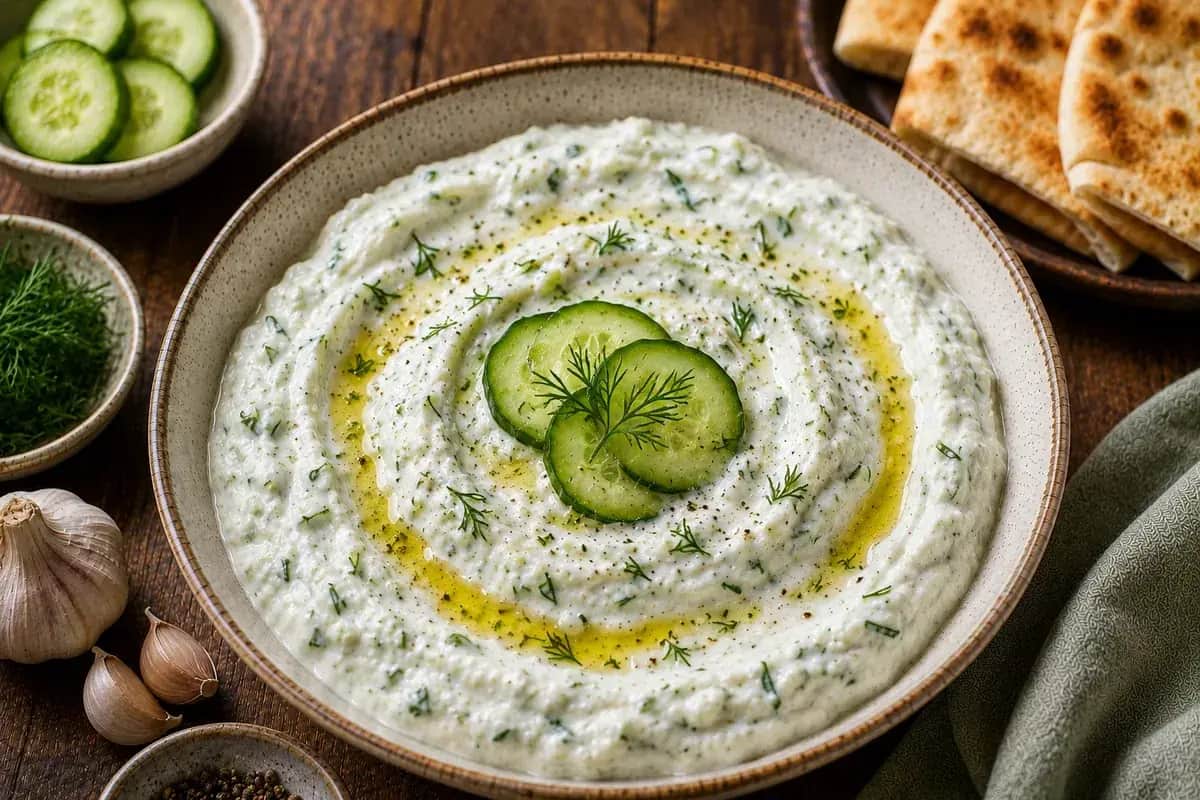
Creamy Tzatziki Sauce Recipe
A creamy tzatziki sauce recipe made with thick Greek yogurt, cucumber, garlic, fresh dill, optional mint, lemon juice, and extra virgin olive oil. This Lebanese-style yogurt sauce is cool, tangy, refreshing, and perfect with grilled chicken, shawarma, falafel, vegetables, wraps, warm pita, and mezze.
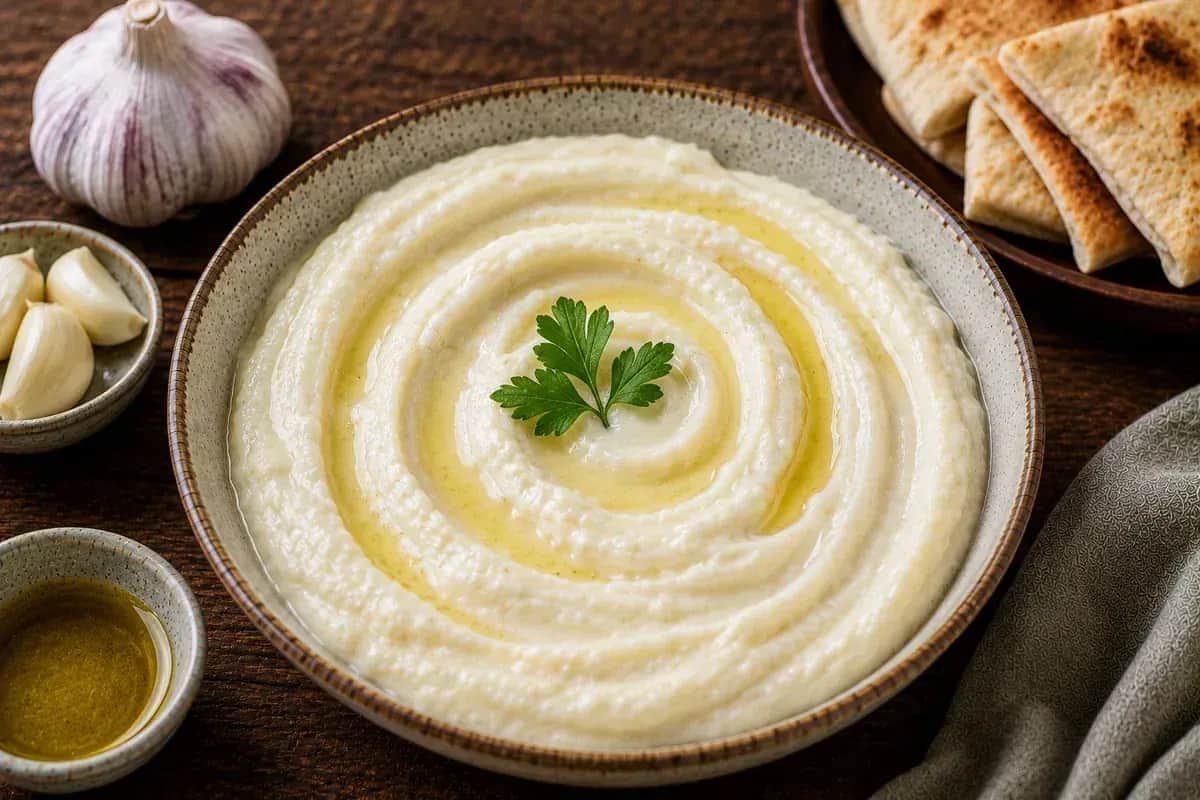
Classic Toum Recipe (Lebanese Garlic Sauce)
A Lebanese toum made with fresh garlic, lemon juice, avocado oil, aquafaba, and sea salt. The sauce is intensely garlicky, bright with lemon, and remarkably light and fluffy, making it a classic accompaniment to shawarma, grilled meats, potatoes, sandwiches, and mezze.
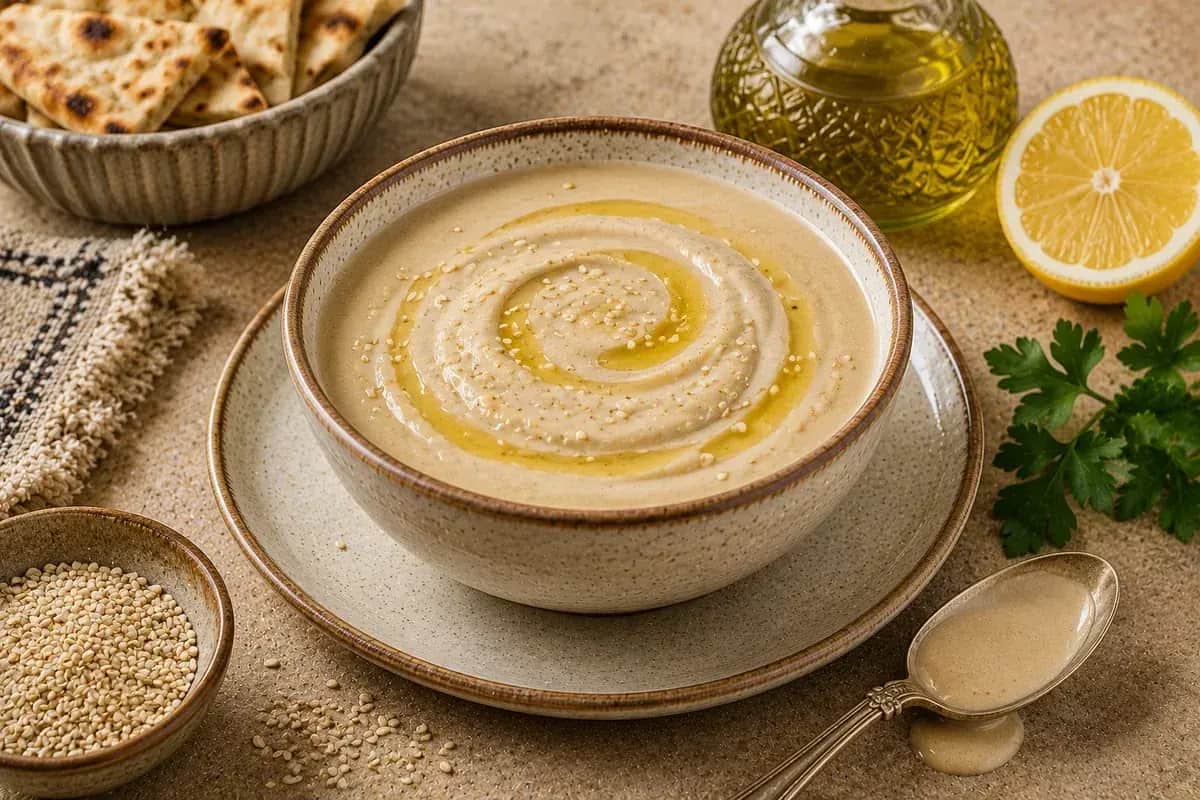
Classic Tahini Sauce Recipe
A classic tahini sauce made with sesame tahini, fresh lemon juice, garlic, parsley, olive oil, and cold water. This Lebanese-style sauce becomes smooth and pourable as the tahini is gradually loosened, making it a natural companion to falafel, shawarma, grilled foods, vegetables, and mezze.