
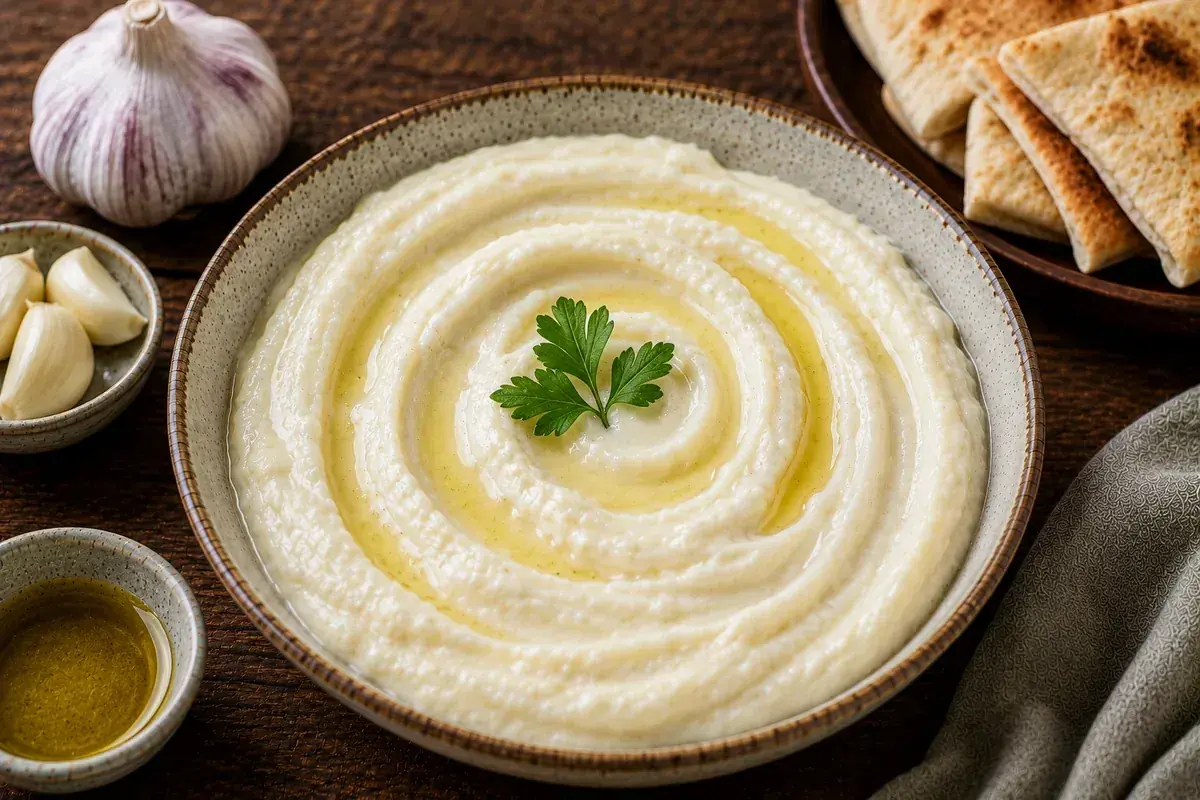
Classic Toum Recipe (Lebanese Garlic Sauce)
A Lebanese toum made with fresh garlic, lemon juice, avocado oil, aquafaba, and sea salt. The sauce is intensely garlicky, bright with lemon, and remarkably light and fluffy, making it a classic accompaniment to shawarma, grilled meats, potatoes, sandwiches, and mezze.
Prep Time
15 mins
Cook Time
0 mins
Total Time
15 mins
Servings
12
A TASTE OF TRADITION
The Story Behind This Recipe
Toum is a beloved Lebanese garlic sauce known for its striking white color, intense garlic aroma, bright lemon flavor, and remarkably airy texture. It is traditionally made by turning garlic, salt, lemon juice, and oil into a stable emulsion. Although simple in ingredients, the technique is what makes toum special: the oil must be incorporated gradually until the mixture transforms into a thick, fluffy sauce.
Cultural & Culinary Context
Toum is deeply associated with Lebanese cuisine and is especially familiar on Lebanese restaurant tables alongside chicken shawarma and grilled meats. It is also served with potatoes, kebabs, sandwiches, and other mezze-style foods. Its bold garlic flavor makes it an ideal contrast to smoky grilled foods and richly seasoned dishes.
What Makes It Mediterranean?
Toum reflects several hallmarks of the Eastern Mediterranean food tradition: fresh garlic, citrus, plant-based ingredients, olive-oil-style emulsion techniques, and sauces designed to accompany shared meals. While this recipe uses avocado oil for its lighter flavor and nutritional profile, the preparation remains rooted in the Lebanese tradition of creating a creamy garlic emulsion to serve alongside grilled and roasted foods.
Mediterranean Influences
- 🌿Fresh garlic is used as a central flavor rather than relying on processed seasoning.
- 🌿Fresh lemon juice provides the bright acidity characteristic of many Eastern Mediterranean sauces.
- 🌿The sauce is plant-based and naturally dairy-free.
- 🌿Toum is traditionally served as part of a shared table with grilled meats, vegetables, bread, and mezze.
- 🌿Its strong, fresh flavors complement simple grilled and roasted ingredients rather than masking them.
Ingredients
- 10 garlic cloves, peeled
- 0.25 cup aquafaba (liquid from canned chickpeas)
- 1 tsp sea salt
- 2 tbsp fresh lemon juice
- 0.75 cup avocado oil
- 1 tbsp ice water, if needed
Instructions
- 1
Peel the 10 garlic cloves. If any cloves have a visible green sprout in the center, remove it because mature sprouted garlic can have a noticeably bitter flavor. Add the garlic and 1 teaspoon sea salt to a food processor.
- 2
Process the garlic and salt in short pulses until the garlic is extremely finely minced. Stop occasionally to scrape down the sides so all the garlic is processed evenly. A fine garlic paste gives the finished toum a smoother texture.
- 3
Add 1/4 cup aquafaba and process until the garlic mixture becomes smooth and evenly combined. The aquafaba provides moisture and helps support the creamy emulsion.
- 4
With the food processor running, begin adding the 3/4 cup avocado oil in a very thin, slow, steady stream. Do not pour the oil quickly. The beginning of the emulsion is the most delicate stage, so patience here is essential.
- 5
As the mixture becomes thicker and creamier, continue adding the oil gradually while alternating with small additions of the 2 tablespoons fresh lemon juice. Keep the processor running between additions and avoid adding large amounts of oil or lemon juice at once.
- 6
Continue processing until the toum is pale, thick, fluffy, and creamy. Properly emulsified toum should resemble a smooth, airy garlic mayonnaise and should be thick enough to hold its shape rather than flowing like a liquid dressing.
- 7
If the toum becomes too thick while processing, add ice water 1 teaspoon at a time and process briefly after each addition. Stop as soon as the sauce becomes smooth and spreadable because excessive water can weaken the emulsion.
- 8
Taste the finished toum and make small adjustments only if necessary. A little additional lemon juice can brighten the flavor, while a small amount of salt can balance excessive sharpness. Avoid making large adjustments once the emulsion is established.
- 9
Transfer the toum to a clean airtight container and refrigerate for at least 1 hour before serving. Chilling allows the texture to stabilize and gives the strong raw garlic flavor time to mellow slightly.
SET YOURSELF UP FOR SUCCESS
Before You Cook
👨🍳 Keep In Mind
- •Use fresh, firm garlic cloves for the cleanest flavor. Remove any green center from visibly sprouted cloves if present.
- •Measure all ingredients before starting because the oil and lemon juice need to be added gradually while the food processor is running.
- •Use room-temperature garlic and aquafaba when possible. Very cold ingredients can make the emulsion behave less predictably.
- •Use a food processor with a stable lid and enough capacity to safely process the mixture without overfilling it.
- •Keep 1 tablespoon ice water available, but do not add it unless the sauce becomes excessively thick.
💡 Helpful Tips
- •The slow addition of oil is the most important part of the recipe. A fast pour can overwhelm the garlic mixture and cause the emulsion to separate.
- •Do not worry if the mixture changes texture as the oil is incorporated. It should gradually become thicker, paler, and creamier.
- •Freshly squeezed lemon juice gives a cleaner flavor than bottled lemon juice.
- •If the garlic flavor tastes extremely aggressive immediately after preparation, refrigerate the toum before judging the final flavor. It will mellow as it rests.
- •For a stronger garlic flavor, use fresh garlic rather than increasing the salt or lemon juice.
- •For dipping, keep the finished sauce thick and fluffy. For drizzling, loosen it slightly with a very small amount of cold water.
👀 How Do I Know It's Done?
- ✓The sauce should be pale, thick, smooth, and fluffy.
- ✓It should hold soft peaks rather than immediately running off a spoon.
- ✓There should be no visible layer of oil separating from the sauce.
- ✓The garlic should be evenly distributed without noticeable large pieces.
- ✓After chilling for at least 1 hour, the sauce should remain creamy and spreadable.
Tweak It
Make This Recipe Work for You
Adapt the recipe to your ingredients, dietary needs, budget, time, serving size, or meal-prep plans.
🔄 Ingredient Substitutions
Use Another Neutral Oil
A mild neutral oil can be used instead of avocado oil if preferred. Choose an oil with a clean flavor so it does not overpower the garlic and lemon.
Use Homemade Aquafaba
Aquafaba from properly cooked chickpeas can be used instead of canned chickpea liquid. Strain it well before measuring the required 1/4 cup.
🌱 Dietary Adjustments
Naturally Vegan
This toum contains no dairy, eggs, or animal-derived ingredients and is suitable for a vegan diet.
Naturally Dairy-Free
No milk, yogurt, butter, or other dairy ingredients are used.
⏱️ Time-Saving Options
Prepare Ahead
Make the toum at least 1 hour before serving so it has time to chill and stabilize. It can also be prepared in advance for meals throughout the week.
🥡 Meal Prep
Make a Batch for the Week
Prepare the full batch and store it in a clean airtight container in the refrigerator. Use it throughout the week with shawarma, grilled vegetables, sandwiches, potatoes, and mezze.
RECIPE RESCUE
🧩 What Do You Need Help With?
Choose the problem you're facing and get a recipe-specific solution instead of a generic cooking tip.
WHAT IF?
🔄 What If...?
Choose your situation and we'll show you a practical pathway for making this recipe work.
STORAGE & LEFTOVERS
🥡 Storage & Leftovers
Transfer the finished toum to a clean airtight container and refrigerate promptly.
Keep the container covered and use a clean utensil whenever serving.
If the toum becomes thicker after refrigeration, gently stir it before serving.
If needed, loosen only the portion you are serving with a very small amount of cold water.
Best Storage Time
Use within 5 days for best quality.
How to Store
Clean airtight container in the refrigerator.
SERVING & PAIRING
🍽️ Serving & Pairing
Serve chilled or cool as a creamy garlic accompaniment. Toum is especially well suited to foods with smoky, roasted, or grilled flavors and works beautifully as part of a Lebanese or Eastern Mediterranean mezze spread.
What Goes Well With It?
RECIPE FAQ
❓ Frequently Asked Questions
How do you make classic toum?
To make classic toum, first process fresh garlic with sea salt until it becomes a very fine paste. Add aquafaba and blend until smooth, then slowly drizzle in avocado oil while the food processor is running. Gradually alternate the remaining oil with fresh lemon juice until the mixture becomes pale, thick, fluffy, and creamy. If needed, add ice water 1 teaspoon at a time to adjust the consistency, then refrigerate the toum for at least 1 hour before serving.
Why is my toum bitter?
The most common cause is strongly bitter or sprouted garlic. Remove any visible green center from older cloves before processing. Also avoid adding excessive garlic beyond the recipe quantity.
Why did my toum separate?
The oil was probably added too quickly or too much liquid was added at once. Toum depends on a stable emulsion, so the oil should be incorporated in a very thin stream and the lemon juice should be added gradually.
How thick should toum be?
Finished toum should be pale, fluffy, creamy, and thick enough to hold soft peaks. It should resemble a thick garlic mayonnaise rather than a pourable dressing.
Can I make toum ahead of time?
Yes. Preparing it at least 1 hour ahead is recommended because chilling helps stabilize the texture and allows the strong fresh garlic flavor to mellow.
Can I make the toum thinner for drizzling?
Yes. Take the portion you intend to drizzle and loosen it with a very small amount of cold water, adding it gradually until the desired consistency is reached.
Is this toum vegan?
Yes. This version uses garlic, aquafaba, lemon juice, avocado oil, salt, and optional ice water, so it contains no animal-derived ingredients.
Explore More
Go deeper into the cuisine
Learn more about the ingredients, traditions, and cooking approaches connected to this recipe.
You May Also Like
More delicious recipes from the Dips & Sauces
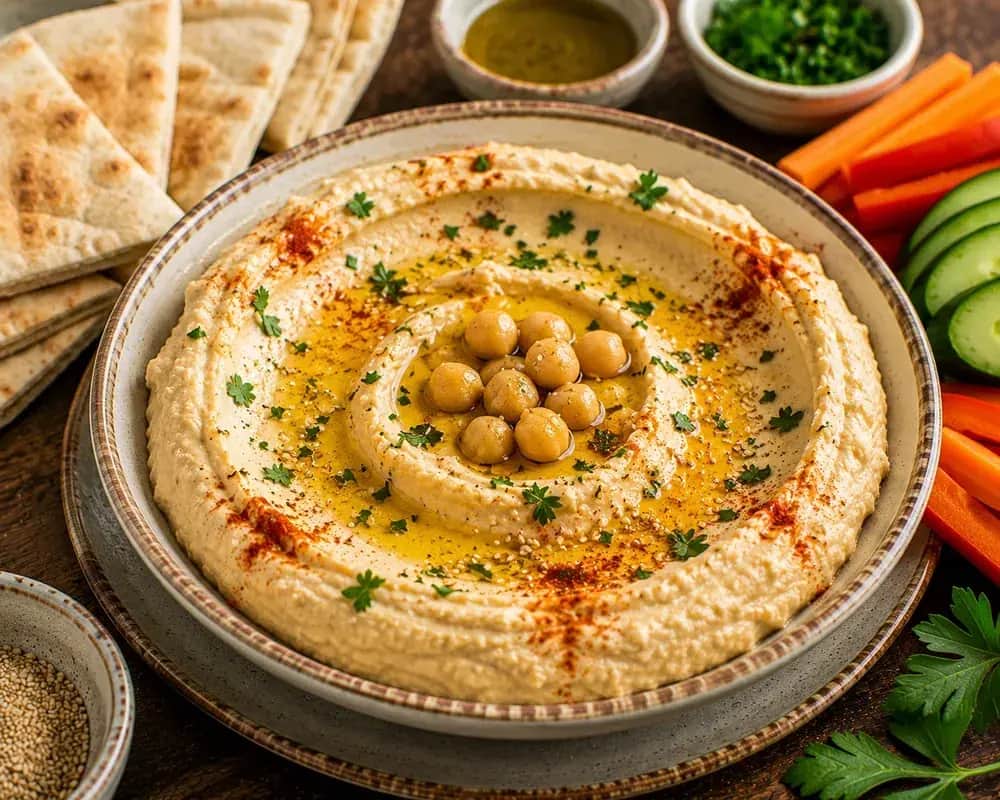
Classic Hummus Recipe — Palestinian Hummus bi-Tahini
A classic Palestinian hummus bi-tahini made with exceptionally tender chickpeas, creamy tahini, fresh lemon juice, garlic, cumin, and extra virgin olive oil. The finished hummus is smooth, light, and balanced, with warm Arabic bread for serving.
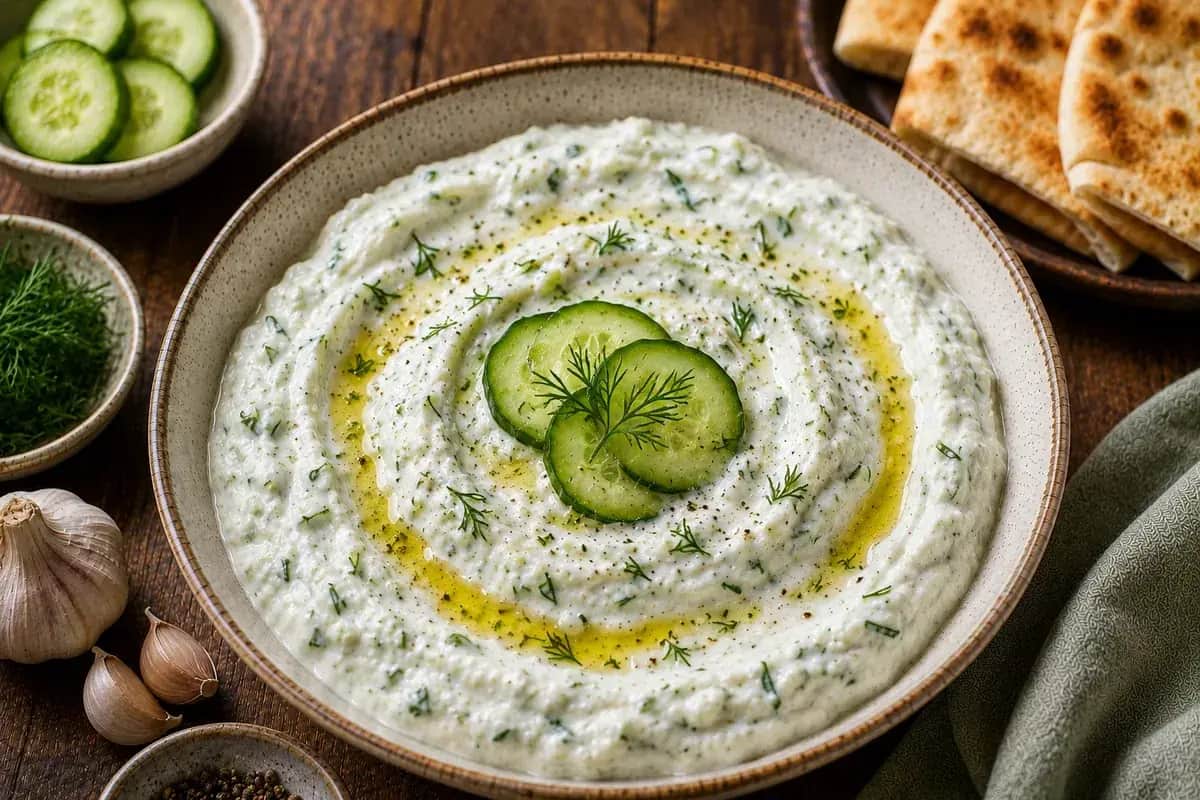
Creamy Tzatziki Sauce Recipe
A creamy tzatziki sauce recipe made with thick Greek yogurt, cucumber, garlic, fresh dill, optional mint, lemon juice, and extra virgin olive oil. This Lebanese-style yogurt sauce is cool, tangy, refreshing, and perfect with grilled chicken, shawarma, falafel, vegetables, wraps, warm pita, and mezze.
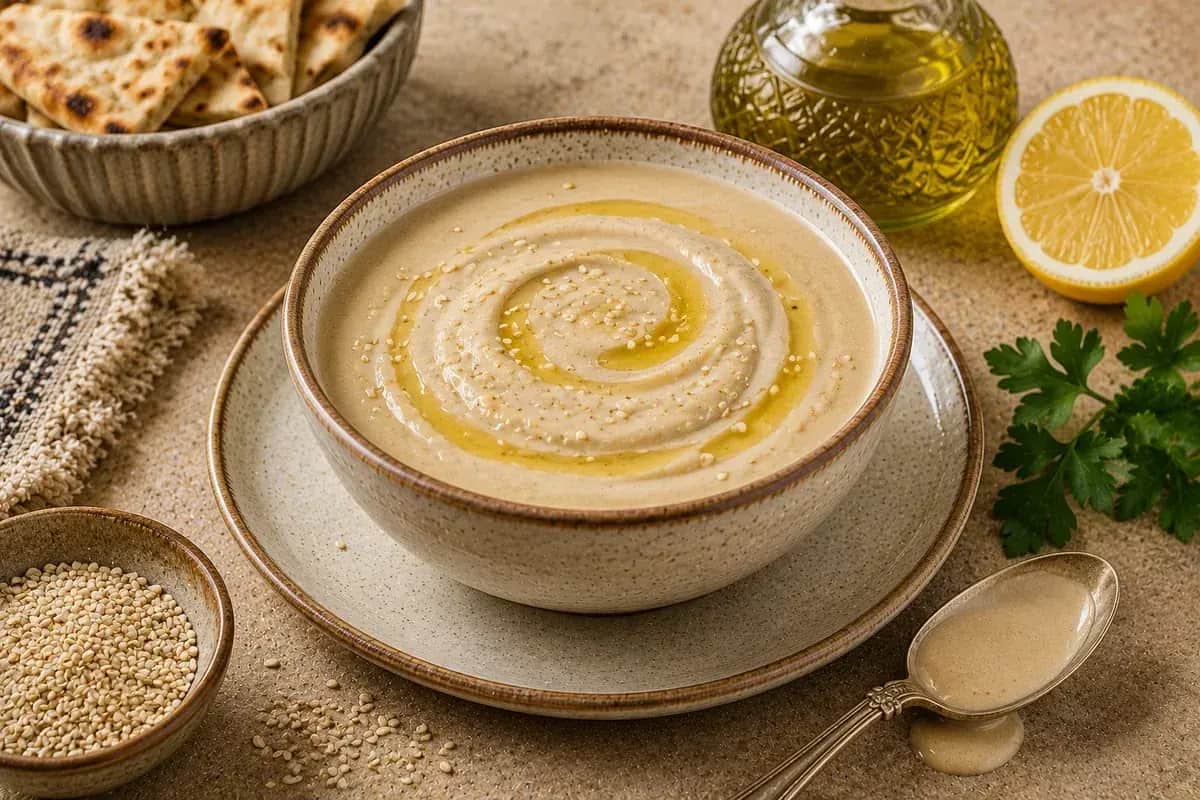
Classic Tahini Sauce Recipe
A classic tahini sauce made with sesame tahini, fresh lemon juice, garlic, parsley, olive oil, and cold water. This Lebanese-style sauce becomes smooth and pourable as the tahini is gradually loosened, making it a natural companion to falafel, shawarma, grilled foods, vegetables, and mezze.