
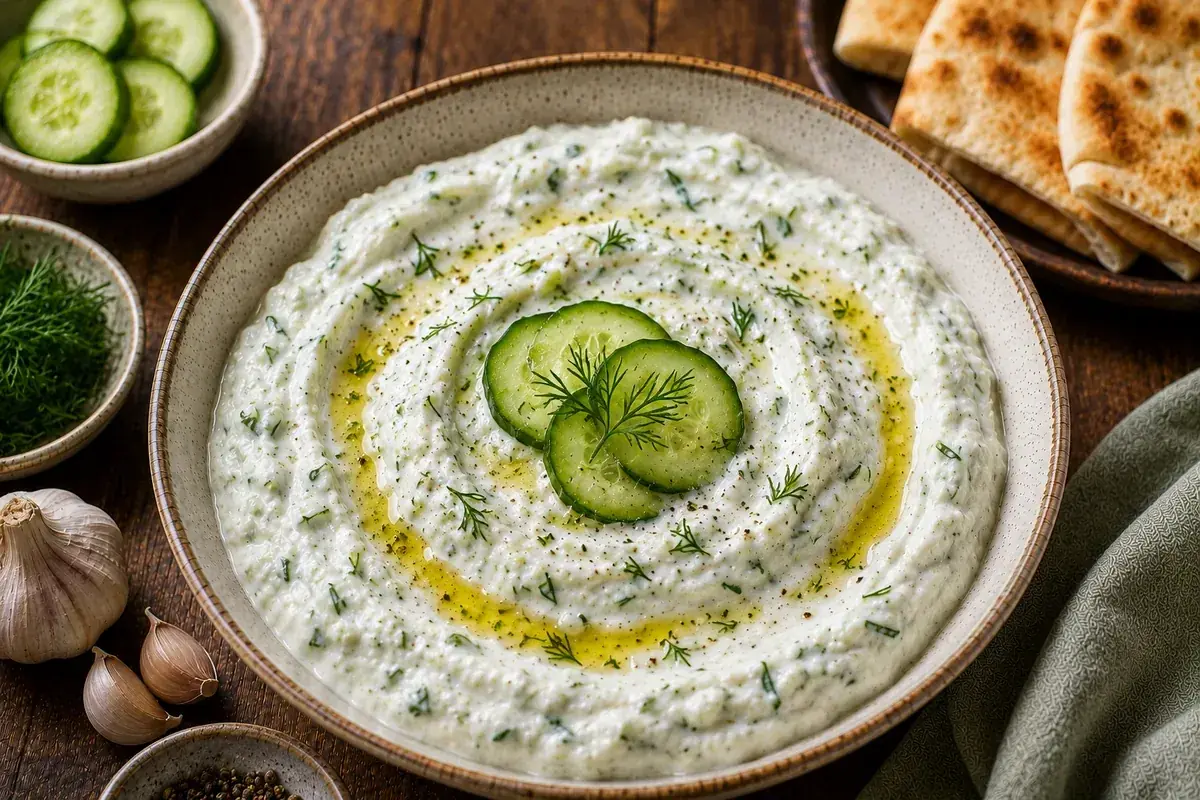
Creamy Tzatziki Sauce Recipe
A creamy tzatziki sauce recipe made with thick Greek yogurt, cucumber, garlic, fresh dill, optional mint, lemon juice, and extra virgin olive oil. This Lebanese-style yogurt sauce is cool, tangy, refreshing, and perfect with grilled chicken, shawarma, falafel, vegetables, wraps, warm pita, and mezze.
Prep Time
15 mins
Cook Time
0 mins
Total Time
15 mins
Servings
6
A TASTE OF TRADITION
The Story Behind This Recipe
Few things capture the refreshing side of Mediterranean and Levantine cooking better than a bowl of cool yogurt combined with crisp cucumber, garlic, herbs, lemon, and olive oil. This Lebanese-style tzatziki is built around that simple idea: creamy yogurt provides the base, cucumber brings freshness, garlic adds depth, herbs provide fragrance, and lemon and olive oil bring the flavors together. It is simple enough for an everyday meal but naturally at home on a generous mezze table.
Cultural & Culinary Context
Across the Eastern Mediterranean and Levant, yogurt has long been an important part of everyday cooking, valued for its cooling character, richness, and versatility. Lebanese cuisine includes cucumber-and-yogurt preparations such as khyar bi laban, while neighboring Mediterranean cuisines have their own closely related yogurt, cucumber, garlic, and herb sauces. The Greek preparation known internationally as tzatziki belongs to this wider family of cool yogurt-based accompaniments. Here it is presented as Lebanese-style, recognizing that Lebanese and Greek preparations have their own traditions and variations.
What Makes It Mediterranean?
The recipe reflects the shared culinary language of the Mediterranean: thick yogurt, fresh vegetables, garlic, herbs, lemon, and extra virgin olive oil are combined without heavy cooking or complicated techniques. The result is fresh, creamy, tangy, and herbaceous, with the cucumber providing a cooling contrast to grilled and roasted foods. Its role as a sauce, dip, and mezze accompaniment also reflects the Mediterranean habit of serving several complementary dishes together so that diners can combine flavors at the table.
Mediterranean Influences
- 🌿Extra virgin olive oil adds a fruity, savory richness and is a defining ingredient in many Mediterranean kitchens.
- 🌿Fresh lemon juice provides the bright acidity that balances the richness of yogurt.
- 🌿Cucumber contributes freshness and a cooling contrast to grilled and roasted foods.
- 🌿Garlic gives the sauce savory depth without requiring a heavy cooking process.
- 🌿Fresh dill and optional mint provide the aromatic herbal character common to many Mediterranean and Levantine preparations.
- 🌿The sauce is naturally suited to mezze, where small dishes and accompaniments are shared alongside bread, vegetables, grilled foods, and other dips.
Ingredients
- 2 cups low-fat Greek yogurt (Use thick plain yogurt; Greek-style yogurt gives the sauce its creamy body.)
- 1 medium cucumber (Grated and squeezed very dry to prevent a watery sauce.)
- 2 cloves garlic (Minced very finely for even distribution and a smooth texture.)
- 1 tbsp fresh dill (Finely chopped.)
- 1 tbsp fresh mint (Finely chopped; optional, but especially good for a fresh Levantine-style flavor.)
- 1 tbsp extra virgin olive oil (Use a good-quality olive oil because its flavor remains noticeable in the finished sauce.)
- 1 tbsp fresh lemon juice (Add gradually if you prefer a milder or sharper acidity.)
- 0.5 tsp sea salt (Start with this amount and adjust after the sauce has rested.)
- 0.25 tsp black pepper
Instructions
- 1
Grate the cucumber using the large holes of a box grater.
- 2
Transfer the grated cucumber to a clean kitchen towel and squeeze firmly until most of the excess liquid has been removed. This step is essential for a thick sauce.
- 3
Place the Greek yogurt in a mixing bowl and make sure it is cold and thick before continuing.
- 4
Add the squeezed cucumber, minced garlic, chopped dill, optional mint, extra virgin olive oil, lemon juice, sea salt, and black pepper.
- 5
Stir thoroughly until the cucumber and herbs are evenly distributed and the sauce has a smooth, creamy consistency.
- 6
Cover the bowl and refrigerate for at least 30 minutes. This resting time allows the garlic, herbs, lemon, and yogurt to develop a more balanced flavor.
- 7
Taste the chilled sauce before serving. Adjust the salt, lemon juice, garlic, or herbs in small amounts if necessary.
- 8
Transfer the tzatziki to a serving bowl, drizzle lightly with extra virgin olive oil, and garnish with a little fresh dill if desired.
- 9
Serve chilled with warm pita bread, fresh vegetables, grilled meats, shawarma, kebabs, falafel, or wraps.
SET YOURSELF UP FOR SUCCESS
Before You Cook
👨🍳 Keep In Mind
- •Use thick plain Greek yogurt or Greek-style yogurt. A thinner yogurt will produce a looser sauce.
- •Grate the cucumber immediately before preparing the sauce so it is easy to drain thoroughly.
- •Have a clean kitchen towel ready for squeezing the cucumber. A fine-mesh strainer can also be used, but pressing out the liquid is faster.
- •Finely mince the garlic so that strong pieces do not remain concentrated in one bite.
- •Chop the dill and optional mint shortly before mixing so their fresh aromas remain noticeable.
- •Keep the yogurt chilled and refrigerate the finished sauce before serving.
💡 Helpful Tips
- •The most important step is squeezing the cucumber very dry. Excess cucumber water is the main reason yogurt sauces become thin.
- •Do not add all of the lemon juice blindly if your yogurt is already quite tangy. Add it gradually and taste.
- •Garlic becomes more noticeable as the sauce rests, so avoid adding a large amount immediately if you are unsure how strong you want it.
- •Use a flavorful extra virgin olive oil because a small drizzle on top can noticeably improve the finished sauce.
- •For a smoother sauce, grate the cucumber finely. For more texture, use a slightly coarser grate.
- •Let the sauce rest for at least 30 minutes before serving. The flavor immediately after mixing can taste sharper and less integrated.
- •If serving to guests, taste again after chilling because cold temperatures can slightly mute acidity and seasoning.
👀 How Do I Know It's Done?
- ✓The cucumber has been squeezed until very little liquid remains.
- ✓The ingredients are evenly mixed and the sauce is thick enough to scoop with pita.
- ✓The flavor is balanced between creamy yogurt, fresh cucumber, garlic, herbs, lemon, salt, and olive oil.
- ✓The garlic tastes integrated rather than harsh and raw.
- ✓After at least 30 minutes of chilling, the sauce remains thick without a noticeable layer of water separating from the yogurt.
Tweak It
Make This Recipe Work for You
Adapt the recipe to your ingredients, dietary needs, budget, time, serving size, or meal-prep plans.
🔄 Ingredient Substitutions
Use thick plain yogurt
If Greek yogurt is unavailable, use thick plain strained yogurt. If the yogurt is naturally thin, strain it before making the sauce so the final texture remains creamy.
Adjust the fresh herbs
If dill is unavailable, increase the mint slightly or use another mild fresh herb that suits your meal. Keep the overall herb quantity moderate so it does not overpower the yogurt.
Adjust the acidity
Reduce the lemon juice slightly for a milder sauce, or add it gradually after chilling if you prefer a brighter, sharper flavor.
🌱 Dietary Adjustments
Vegetarian
The recipe is naturally vegetarian and contains no meat or fish.
Gluten-free
The sauce itself is naturally gluten-free when all packaged ingredients are suitable for a gluten-free diet. Serve it with gluten-free bread or vegetables if needed.
Vegan variation
Use an unsweetened thick plant-based yogurt with a neutral flavor. Choose one that can hold a thick dip-like consistency after mixing.
💰 Budget-Friendly Options
Use regular plain yogurt
A less expensive plain yogurt can work if it is strained until thick. This preserves the creamy texture without requiring premium Greek yogurt.
Use the herbs you already have
Use dill alone or mint alone rather than buying several herbs specifically for this sauce. The yogurt, cucumber, garlic, and lemon remain the core flavor combination.
⏱️ Time-Saving Options
Drain the cucumber quickly
Grate the cucumber directly into a clean kitchen towel, gather the towel around it, and squeeze firmly over the sink. This is faster than waiting for the cucumber to drain naturally.
Prepare the sauce ahead
Make the sauce several hours before serving and refrigerate it. The resting period improves the flavor and removes the need to prepare it immediately before the meal.
👨👩👧👦 Serving Adjustments
Make a smaller batch
Halve all ingredients for a smaller meal. Drain the cucumber just as thoroughly because the texture depends on the cucumber-to-yogurt balance.
Make a larger batch
Double the ingredients for a gathering. Mix the larger batch thoroughly, then adjust lemon, salt, and garlic gradually after chilling.
🥡 Meal Prep
Prepare ahead for mezze
Prepare the complete sauce in advance, keep it covered and refrigerated, and garnish with olive oil and fresh herbs shortly before serving.
Prepare the components separately
For maximum freshness, grate and squeeze the cucumber ahead of time and keep it refrigerated separately from the yogurt. Mix the sauce closer to serving.
RECIPE RESCUE
🧩 What Do You Need Help With?
Choose the problem you're facing and get a recipe-specific solution instead of a generic cooking tip.
WHAT IF?
🔄 What If...?
Choose your situation and we'll show you a practical pathway for making this recipe work.
STORAGE & LEFTOVERS
🥡 Storage & Leftovers
Transfer the finished sauce to a clean airtight container as soon as preparation is complete.
Refrigerate promptly and keep the container covered whenever the sauce is not being served.
Use a clean spoon each time you portion the sauce to help maintain freshness.
If a small amount of liquid separates during storage, stir the sauce gently before serving.
If preparing for a gathering, keep the sauce refrigerated until close to serving time and return leftovers to the refrigerator promptly.
Best Storage Time
Best enjoyed within 2–3 days for the freshest cucumber and herb flavor.
How to Store
Airtight glass or food-safe container.
SERVING & PAIRING
🍽️ Serving & Pairing
Serve the chilled sauce as part of a Lebanese-style mezze spread or as a fresh accompaniment to grilled and roasted foods. A small drizzle of extra virgin olive oil and a few fresh herbs make a simple serving bowl especially inviting.
What Goes Well With It?
RECIPE FAQ
❓ Frequently Asked Questions
How do you make creamy tzatziki sauce?
To make creamy tzatziki sauce, grate a fresh cucumber and squeeze it very firmly in a clean kitchen towel to remove as much excess water as possible. Mix the drained cucumber with thick Greek yogurt, finely minced garlic, fresh dill, optional mint, lemon juice, extra virgin olive oil, salt, and black pepper. Refrigerate the sauce for at least 30 minutes so the flavors can develop, then taste and adjust the seasoning before serving chilled.
Is this traditional Greek tzatziki?
This recipe is intentionally presented as Lebanese-style tzatziki. It belongs to the broader Mediterranean and Levantine family of cool yogurt-and-cucumber sauces, while the name tzatziki is most strongly associated internationally with the Greek preparation. Lebanese cuisine has its own cucumber-and-yogurt traditions, including khyar bi laban, so this recipe should not be presented as an identical traditional Greek recipe.
Why is my tzatziki watery?
The most common reason is excess water from the cucumber. Grate the cucumber and squeeze it very firmly in a clean kitchen towel before adding it to the yogurt. Using thick Greek yogurt also makes a major difference.
Do I have to peel the cucumber?
No. A fresh cucumber with a thin, tender skin can be used without peeling. If the skin is particularly thick or bitter, peeling it can produce a smoother and more delicate sauce.
Can I use regular yogurt instead of Greek yogurt?
Yes, provided the yogurt is thick enough. If regular yogurt is thin, strain it first until it reaches a thick, creamy consistency. Otherwise the cucumber can make the finished sauce too loose.
Can I skip the mint?
Yes. Mint is optional in this recipe. Dill provides the primary herbal character, while mint adds an additional cool and fresh note.
Can I make the tzatziki ahead of time?
Yes. Making it ahead is actually helpful because the garlic, herbs, lemon, and yogurt have time to blend. Prepare it at least 30 minutes before serving and keep it covered and refrigerated.
Why does the garlic taste stronger after resting?
Raw garlic continues to release and distribute its strong flavor after it is mixed into the yogurt. This is normal. If you are sensitive to garlic, start with less and adjust after the sauce has chilled.
How can I make the sauce thicker?
Start with thicker yogurt and squeeze the cucumber extremely well. If the finished sauce is still loose, refrigerating it in a fine-mesh strainer for a short period can remove additional liquid.
Can I make this recipe vegan?
Yes. Use an unsweetened thick plant-based yogurt with a neutral flavor. The plant-based yogurt should be thick enough to function as a dip rather than a pourable yogurt.
What should I serve with Lebanese-style tzatziki?
It works especially well with warm pita, grilled chicken, shawarma, kebabs, falafel, roasted vegetables, fresh cucumber and tomato, wraps, and other mezze dishes.
Can I use tzatziki as a salad dressing?
Yes. Thin a small portion with a teaspoon of water or additional lemon juice until it becomes pourable. It works especially well with cucumber, tomato, lettuce, fresh herbs, and Mediterranean grain bowls.
How long does homemade tzatziki keep?
For the best quality, use it within 2–3 days and keep it continuously refrigerated in a clean airtight container. Stir gently if a little liquid separates during storage.
Explore More
Go deeper into the cuisine
Learn more about the ingredients, traditions, and cooking approaches connected to this recipe.
You May Also Like
More delicious recipes from the Dips & Sauces

Classic Hummus Recipe — Palestinian Hummus bi-Tahini
A classic Palestinian hummus bi-tahini made with exceptionally tender chickpeas, creamy tahini, fresh lemon juice, garlic, cumin, and extra virgin olive oil. The finished hummus is smooth, light, and balanced, with warm Arabic bread for serving.
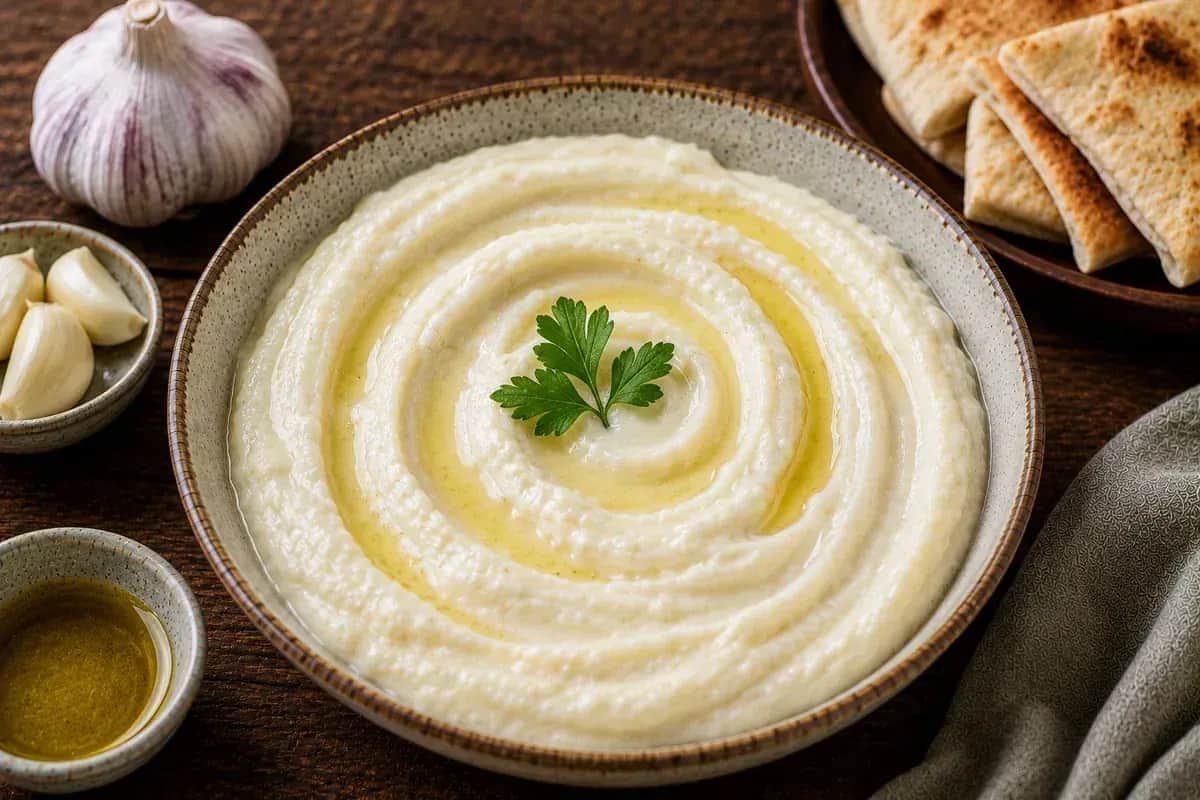
Classic Toum Recipe (Lebanese Garlic Sauce)
A Lebanese toum made with fresh garlic, lemon juice, avocado oil, aquafaba, and sea salt. The sauce is intensely garlicky, bright with lemon, and remarkably light and fluffy, making it a classic accompaniment to shawarma, grilled meats, potatoes, sandwiches, and mezze.
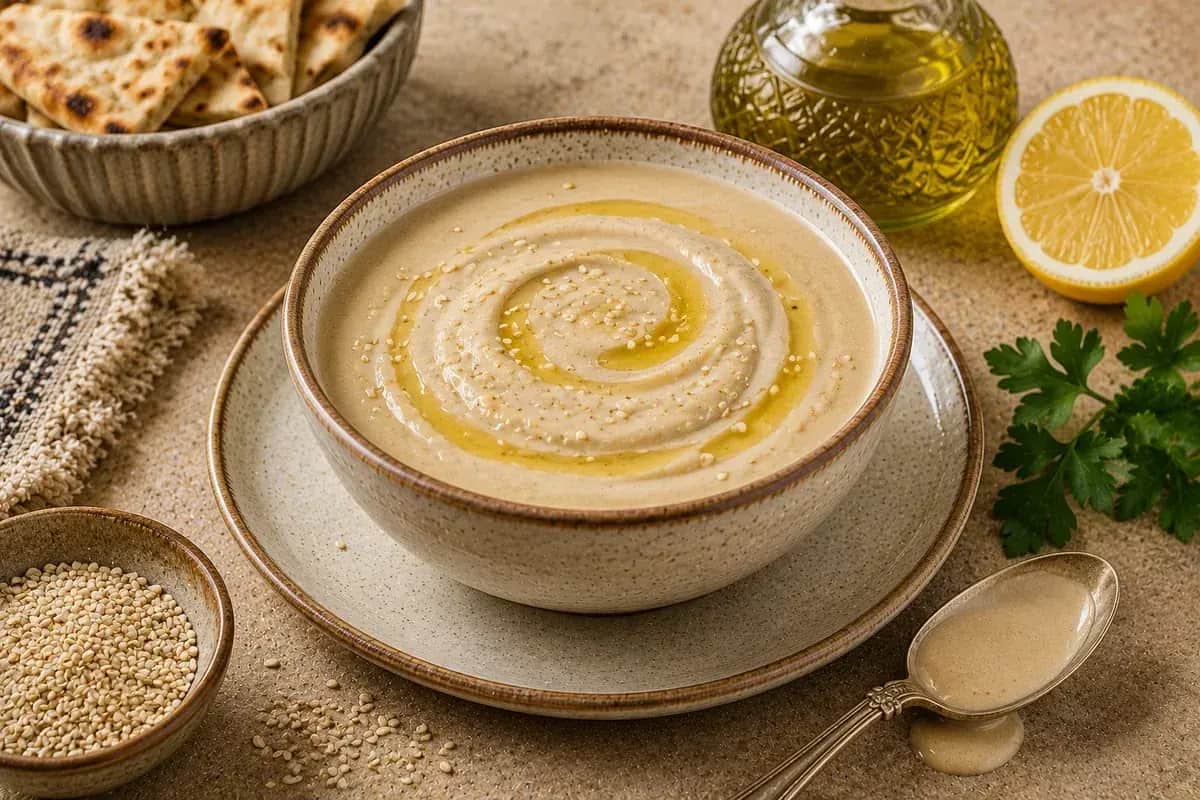
Classic Tahini Sauce Recipe
A classic tahini sauce made with sesame tahini, fresh lemon juice, garlic, parsley, olive oil, and cold water. This Lebanese-style sauce becomes smooth and pourable as the tahini is gradually loosened, making it a natural companion to falafel, shawarma, grilled foods, vegetables, and mezze.