
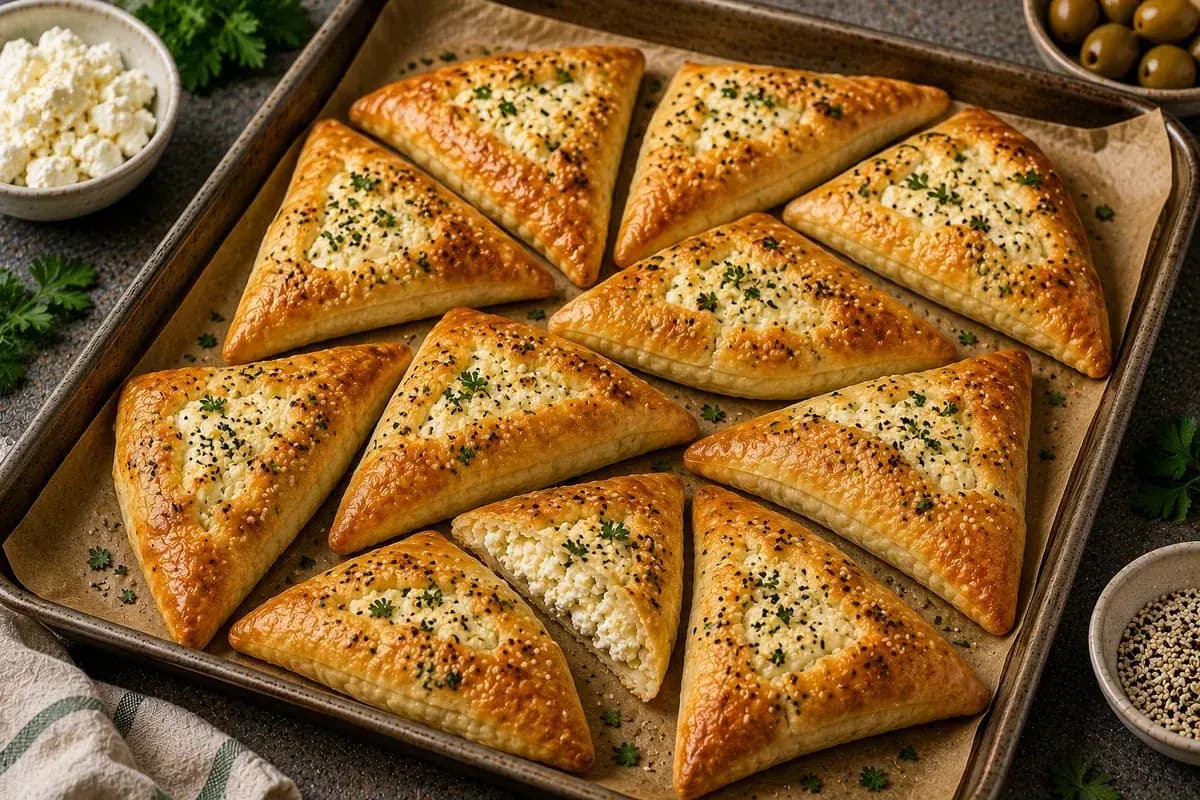
Lebanese Cheese Fatayer Recipe
A Lebanese cheese fatayer recipe made with soft whole wheat dough, Akkawi cheese, reduced-fat mozzarella, feta, fresh parsley, oregano, and nigella seeds. The pastries bake into a golden crust around a warm, savory cheese filling and can be served for breakfast, mezze, snacks, or a light meal.
Prep Time
35 mins
Cook Time
22 mins
Total Time
57 mins
Servings
12
A TASTE OF TRADITION
The Story Behind This Recipe
Cheese Fatayer are a classic example of how a simple dough and carefully balanced filling can become a deeply satisfying Levantine pastry. The combination of soft baked dough, savory cheese, fresh parsley, oregano, and nigella seeds gives these pastries their distinctive character. The traditional triangular shape also makes them practical for sharing, serving as mezze, or packing for a meal away from home.
Cultural & Culinary Context
Fatayer are associated with the Levant and are widely enjoyed as bakery foods, breakfast pastries, snacks, mezze, and family-table dishes. Cheese versions vary between homes and bakeries depending on local ingredients and preferred cheese blends. Akkawi is particularly well suited to this style of pastry because it is a mild, semi-soft brined cheese with a pleasantly springy texture. Because it is preserved in brine, it can be salty and is often soaked before cooking to reduce excess salt.
What Makes It Mediterranean?
The recipe fits naturally within a Mediterranean-inspired way of eating through its use of extra virgin olive oil, whole wheat flour, fresh parsley, herbs, and a traditional Levantine cheese. Baking rather than deep-frying keeps the preparation straightforward, while fresh vegetables and salads make natural accompaniments to the rich cheese filling.
Mediterranean Influences
- 🌿Extra virgin olive oil is used in the dough for tenderness and flavor.
- 🌿Whole wheat flour adds a wholesome whole-grain component.
- 🌿Fresh parsley provides brightness and herbal freshness.
- 🌿Oregano adds a warm Mediterranean herb note.
- 🌿Nigella seeds contribute a distinctive Middle Eastern aroma.
- 🌿Akkawi gives the filling a traditional Levantine character.
- 🌿The pastries are baked and work naturally as part of a mezze-style spread.
- 🌿Fresh vegetables and salads provide a bright contrast to the savory cheese filling.
Ingredients
- 2 cups whole wheat flour (Finely milled whole wheat flour gives the dough a more tender texture.)
- 1 cup all-purpose flour (Balances the whole wheat flour and helps keep the pastry soft and workable.)
- 2.25 tsp instant yeast (Can be mixed directly with the dry ingredients.)
- 1 tsp sugar (Helps support yeast activity while adding only a small amount of sweetness.)
- 1 tsp sea salt (Keep the dough moderately seasoned because Akkawi and feta can already be salty.)
- 1 cup warm water (Use warm rather than hot water so the yeast remains active.)
- 2 tbsp extra virgin olive oil (Adds tenderness to the dough and contributes a subtle Mediterranean flavor.)
- 1 cup Akkawi cheese (A mild, semi-soft Levantine brined cheese. Soak in cold water if salty, then drain extremely well and crumble.)
- 1 cup reduced-fat mozzarella (Shredded; provides a mild flavor and smooth melting texture.)
- 2 tbsp low-fat feta cheese (Crumbled; adds tang and savory depth to the cheese mixture.)
- 0.25 cup fresh parsley (Finely chopped and dried well before mixing so excess moisture does not loosen the filling.)
- 1 tsp nigella seeds (Also called black seed; they add an earthy, slightly peppery Middle Eastern bakery aroma.)
- 1 tsp dried oregano (Adds a warm herbal note that complements the cheese.)
- 1 large egg (Lightly beaten and brushed over the exposed dough before baking.)
Instructions
- 1
Prepare the Akkawi cheese first. If it is noticeably salty, place it in cold water and soak it to remove some of the excess salt. Change the water as needed according to the cheese's saltiness, then drain it very thoroughly and crumble it.
- 2
Combine the whole wheat flour, all-purpose flour, instant yeast, sugar, and sea salt in a large mixing bowl.
- 3
Add the warm water and olive oil gradually while mixing until a soft dough forms.
- 4
Transfer the dough to a lightly floured surface and knead for 8–10 minutes until smooth and elastic. The dough should feel soft and slightly tacky rather than stiff or dry.
- 5
Place the dough in a lightly oiled bowl, cover it, and leave it in a warm, draft-free place for about 1 hour, or until visibly puffy and approximately doubled in volume.
- 6
While the dough rises, combine the well-drained Akkawi, shredded mozzarella, crumbled feta, chopped parsley, oregano, and nigella seeds.
- 7
Taste a small amount of the cheese mixture before adding any additional salt. Akkawi and feta vary in saltiness, so additional salt may not be necessary.
- 8
Preheat the oven to 200°C (400°F) and line a large baking tray with parchment paper.
- 9
Gently press down the risen dough to release excess gas, then divide it into 12 equal portions.
- 10
Shape each portion into a smooth ball and let the dough balls rest for about 5 minutes. This short rest relaxes the dough and makes rolling easier.
- 11
Roll each dough ball into a circle approximately 13 cm (5 inches) wide. Keep the dough strong enough around the edges to hold the filling securely.
- 12
Place approximately 2 tablespoons of cheese filling in the center of each dough circle. Avoid overfilling because excess filling can force the seams open during baking.
- 13
Bring three sections of dough toward the center and pinch the seams firmly to create the traditional triangular fatayer shape.
- 14
Inspect each pastry and close any visible gaps before placing it on the baking tray.
- 15
Arrange the shaped fatayer on the parchment-lined tray with space between them.
- 16
Brush the exposed dough lightly with beaten egg. Avoid allowing excess egg wash to collect around the seams.
- 17
Bake for 20–22 minutes, or until the pastries are puffed and evenly golden and the cheese filling is hot and melted.
- 18
Remove from the oven and allow the fatayer to rest for several minutes because the melted cheese will be extremely hot.
- 19
Serve warm for the softest dough and most melted filling, or allow them to cool to room temperature for a slightly firmer pastry texture.
SET YOURSELF UP FOR SUCCESS
Before You Cook
👨🍳 Keep In Mind
- •Check the saltiness of your Akkawi before preparing the filling because different brands and batches can vary considerably.
- •If the Akkawi is salty, soak it in cold water and change the water as needed, then drain it very thoroughly.
- •Do not leave excess water in the cheese. A wet filling can make the dough difficult to seal and may cause the pastries to open.
- •Finely chop and dry the parsley before adding it to the cheese mixture.
- •Measure the ingredients before starting so the dough can be mixed without interruptions.
- •Prepare the parchment-lined baking tray before shaping the pastries.
- •Preheat the oven fully to 200°C (400°F) before the shaped fatayer are ready.
💡 Helpful Tips
- •Keep the dough soft rather than stiff. Too much additional flour can make the finished fatayer dense.
- •Knead until the dough becomes smooth and elastic so it can stretch around the filling without tearing.
- •Give the dough balls a short rest if they keep shrinking back while being rolled.
- •Keep the rolled circles strong enough around the edges to support the filling.
- •Do not overfill the fatayer. About 2 tablespoons gives a generous filling while leaving enough dough for secure seams.
- •Pinch each seam firmly and check for gaps before applying the egg wash.
- •Taste the cheese mixture before adding salt because the Akkawi and feta may already provide enough seasoning.
- •Use a light egg wash for an attractive golden surface without making the pastry heavy.
- •Leave space between the fatayer on the baking tray so heat can circulate around each pastry.
- •Allow the finished pastries to rest briefly before eating because melted cheese retains a great deal of heat.
👀 How Do I Know It's Done?
- ✓The pastry surface should be evenly golden rather than pale.
- ✓The dough should feel lightly firm on the outside while remaining tender inside.
- ✓The bottom should be cooked through and lightly browned rather than soft and doughy.
- ✓The triangular seams should remain mostly closed during baking.
- ✓The cheese filling should be fully heated and melted.
- ✓If you carefully lift a fatayer from the tray, it should hold its shape without collapsing.
Tweak It
Make This Recipe Work for You
Adapt the recipe to your ingredients, dietary needs, budget, time, serving size, or meal-prep plans.
🔄 Ingredient Substitutions
If Akkawi is unavailable
Use mozzarella as the main replacement and add a small amount of feta for tang and savory depth. The result will still be delicious and melty, although it will not have the same traditional Akkawi flavor.
If you do not have parsley
Use a smaller amount of fresh cilantro for a stronger herbal character, or add a little finely chopped fresh mint for a cooler, brighter flavor.
For a softer pastry
Replace part of the whole wheat flour with additional all-purpose flour. The pastry will become lighter and softer, although it will contain less whole-grain fiber.
Adjust the cheese blend
Increase mozzarella for a milder, stretchier filling or use slightly more feta for additional tang. Taste before adding salt because the cheeses can vary in saltiness.
🌱 Dietary Adjustments
Vegetarian
The recipe is vegetarian as written because the filling contains cheese, herbs, and nigella seeds rather than meat.
Reduce the saltiness
Soak and thoroughly drain the Akkawi, avoid automatically adding salt to the filling, and taste the combined cheeses before seasoning.
💰 Budget-Friendly Options
Make the cheese filling more economical
Use Akkawi for its distinctive flavor and combine it with a larger proportion of mozzarella rather than relying on several specialty cheeses.
Keep the meal affordable
Serve the fatayer with simple seasonal cucumber, tomatoes, olives, and a basic salad rather than preparing several elaborate side dishes.
⏱️ Time-Saving Options
Prepare the filling ahead
Soak, drain, crumble, and combine the cheeses with the herbs ahead of time. Keep the covered filling refrigerated until you are ready to shape the pastries.
Prepare the dough ahead
Prepare the dough earlier in the day and keep it covered until you are ready to divide and shape it.
Shape the whole batch together
Roll all 12 dough portions, fill them, and pinch the seams before beginning the egg wash. This creates a faster and more organized workflow.
👨👩👧👦 Serving Adjustments
Make a smaller batch
Halve the ingredients to make approximately 6 fatayer. Keep the dough portions and filling ratio consistent so the pastries bake evenly.
Make a larger batch
Double the ingredients for a gathering. Use multiple trays rather than overcrowding one tray, and rotate the trays if your oven has uneven hot spots.
🥡 Meal Prep
Prepare for several days
Bake the fatayer, allow them to cool completely, then refrigerate them in a covered container and reheat individual portions when needed.
Freeze for later
Cool the baked fatayer completely and freeze them in an airtight freezer-safe container or bag. Place parchment between layers so individual pastries are easier to separate.
Reheat for better texture
Use a preheated oven or air fryer when possible. This warms the cheese while helping restore some of the pastry's exterior texture.
RECIPE RESCUE
🧩 What Do You Need Help With?
Choose the problem you're facing and get a recipe-specific solution instead of a generic cooking tip.
WHAT IF?
🔄 What If...?
Choose your situation and we'll show you a practical pathway for making this recipe work.
STORAGE & LEFTOVERS
🥡 Storage & Leftovers
Allow baked fatayer to cool to room temperature before storing.
Place them in an airtight container and refrigerate promptly.
For best texture, consume refrigerated fatayer within 3–4 days.
Reheat in a preheated oven or air fryer to restore some of the pastry's exterior texture.
Avoid overheating because the cheese can become extremely hot while the pastry dries out.
For longer storage, freeze completely cooled fatayer in an airtight freezer-safe container or bag.
Place parchment between layers when freezing so individual pastries are easier to separate.
Thaw refrigerated or reheat carefully from frozen until the center is hot.
Best Storage Time
Refrigerated: best within 3–4 days. Frozen: best quality within approximately 2–3 months.
How to Store
Use an airtight container for refrigeration or a freezer-safe airtight bag or container for longer storage.
SERVING & PAIRING
🍽️ Serving & Pairing
Serve Cheese Fatayer warm or at room temperature as breakfast, mezze, a snack, or a light meal. The savory cheese filling pairs especially well with fresh vegetables, olives, labneh, hummus, and bright Mediterranean salads.
What Goes Well With It?
RECIPE FAQ
❓ Frequently Asked Questions
How do you make Lebanese cheese fatayer?
To make Lebanese cheese fatayer, first prepare a soft dough with whole wheat flour, all-purpose flour, instant yeast, sugar, salt, warm water, and extra virgin olive oil. Let the dough rise until puffy, then divide it into 12 portions and roll each into a small circle. Fill the center with well-drained Akkawi cheese, mozzarella, feta, parsley, oregano, and nigella seeds. Bring three sections of dough toward the center and pinch the seams firmly to create the traditional triangular shape. Brush the exposed dough lightly with beaten egg and bake at 200°C (400°F) for about 20–22 minutes, until golden and the cheese is hot and melted.
What is Akkawi cheese?
Akkawi is a mild, semi-soft brined cheese traditionally associated with the Levant, including Lebanon. It has a pale color, smooth slightly springy texture, and mild milky flavor. Because it is preserved in brine, it can be quite salty. It is commonly soaked in water and drained before cooking to reduce excess salt.
Why do I need to soak Akkawi cheese?
Soaking helps remove some of the salt absorbed from the brine. The required time varies according to the cheese's saltiness. Taste a small piece after soaking and continue with fresh water if it is still too salty.
Can I use Akkawi without soaking it?
Only if the particular Akkawi you have is already low in salt and the package instructions indicate that soaking is unnecessary. For traditionally brined Akkawi, soaking is useful for controlling the salt level of the finished filling.
What can I use instead of Akkawi?
A combination of mozzarella and a small amount of feta is a practical substitute. It provides mild melting quality and tang, although it will not reproduce the exact flavor and texture of Akkawi.
Why did my Cheese Fatayer open while baking?
The most common reasons are overfilling, insufficiently pinched seams, or excess moisture in the filling. Drain the Akkawi thoroughly, use a moderate amount of filling, and check every seam carefully before baking.
Why is my dough difficult to roll?
If the dough repeatedly shrinks back, it probably needs a short rest so the gluten can relax. Cover the dough and let it rest for several minutes before rolling again.
Can I prepare Cheese Fatayer ahead of time?
Yes. You can prepare the filling and dough ahead, or bake the pastries in advance and refrigerate them. Reheat them in an oven or air fryer for a better pastry texture.
Can I freeze Cheese Fatayer?
Yes. Cool the baked fatayer completely, then freeze them in an airtight freezer-safe container or bag. Separate layers with parchment so individual pastries are easier to remove.
Are Cheese Fatayer vegetarian?
Yes. This recipe is vegetarian because the filling contains cheese, herbs, and nigella seeds rather than meat. If preparing them for someone with strict dietary requirements, check the cheese labels and other ingredients for suitability.
What should I serve with Cheese Fatayer?
Fresh vegetables, olives, labneh, hummus, tabbouleh, fattoush, and yogurt-based dips all work well. These accompaniments add freshness and acidity that balance the rich savory cheese filling.
Can I make the dough entirely with whole wheat flour?
Yes, but the pastry will generally be denser and more rustic. The combination of whole wheat and all-purpose flour provides additional whole-grain content while maintaining a softer, more workable dough.
How do I know the fatayer are fully baked?
The pastries should be evenly golden, the bottoms should be cooked rather than doughy, the seams should remain secure, and the cheese filling should be fully hot and melted.
Explore More
Go deeper into the cuisine
Learn more about the ingredients, traditions, and cooking approaches connected to this recipe.
You May Also Like
More delicious recipes from the Mezze
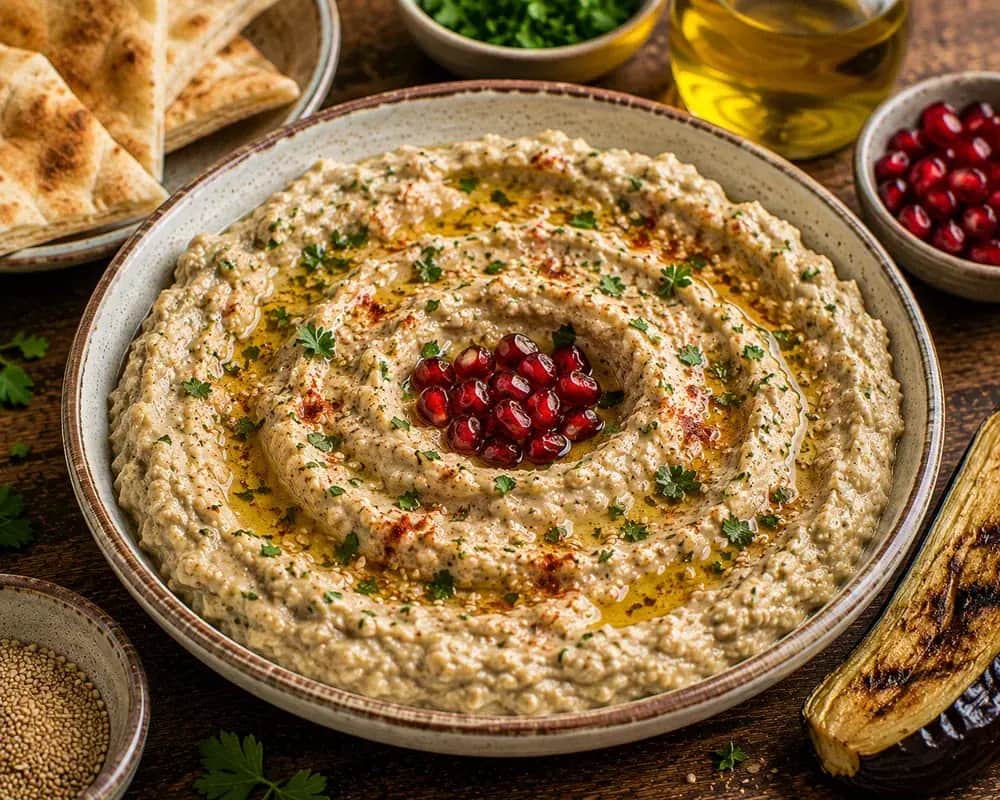
Classic Baba Ganoush Recipe
A classic Baba Ganoush recipe made with smoky roasted eggplant, tahini, garlic, fresh lemon juice, and extra virgin olive oil. This creamy Mediterranean mezze is rich, flavorful, and naturally plant-based.
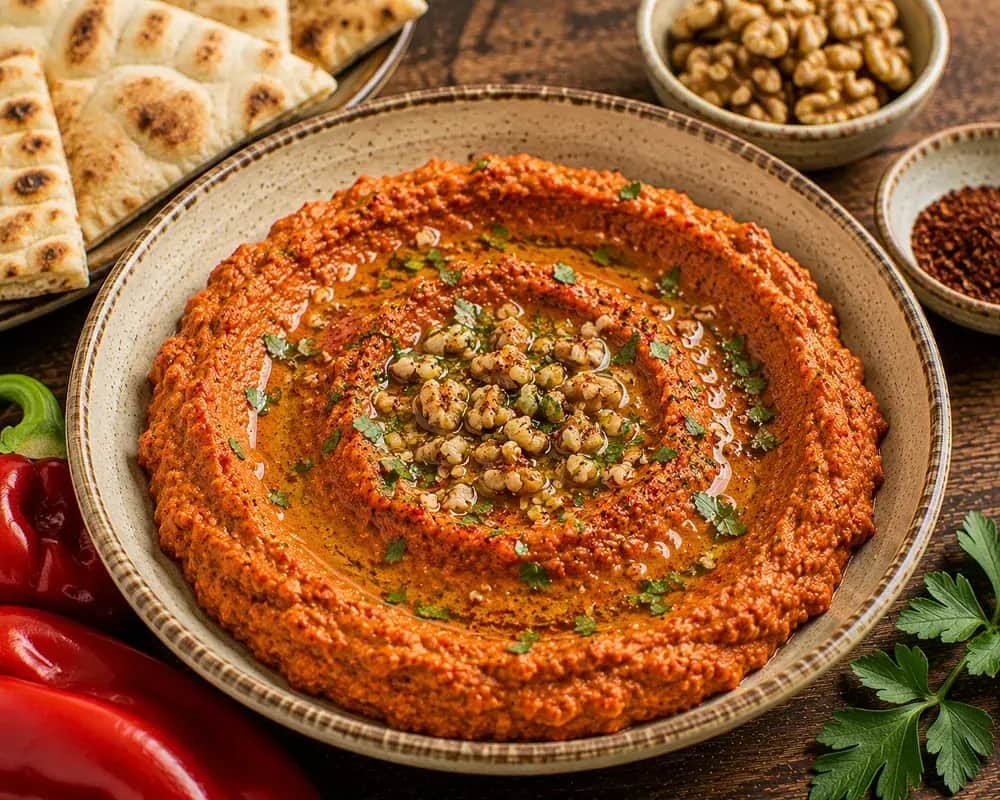
Muhammara Recipe — Aleppine Syrian Roasted Red Pepper & Walnut Dip
This Muhammara recipe is a traditional Aleppine Syrian roasted red pepper and walnut dip made with roasted red peppers, toasted walnuts, pomegranate molasses, extra virgin olive oil, garlic, cumin, and warm spices. Thick, smoky, sweet-tart, and richly textured, this easy Levantine mezze is perfect with warm pita, vegetables, and other shared dishes.
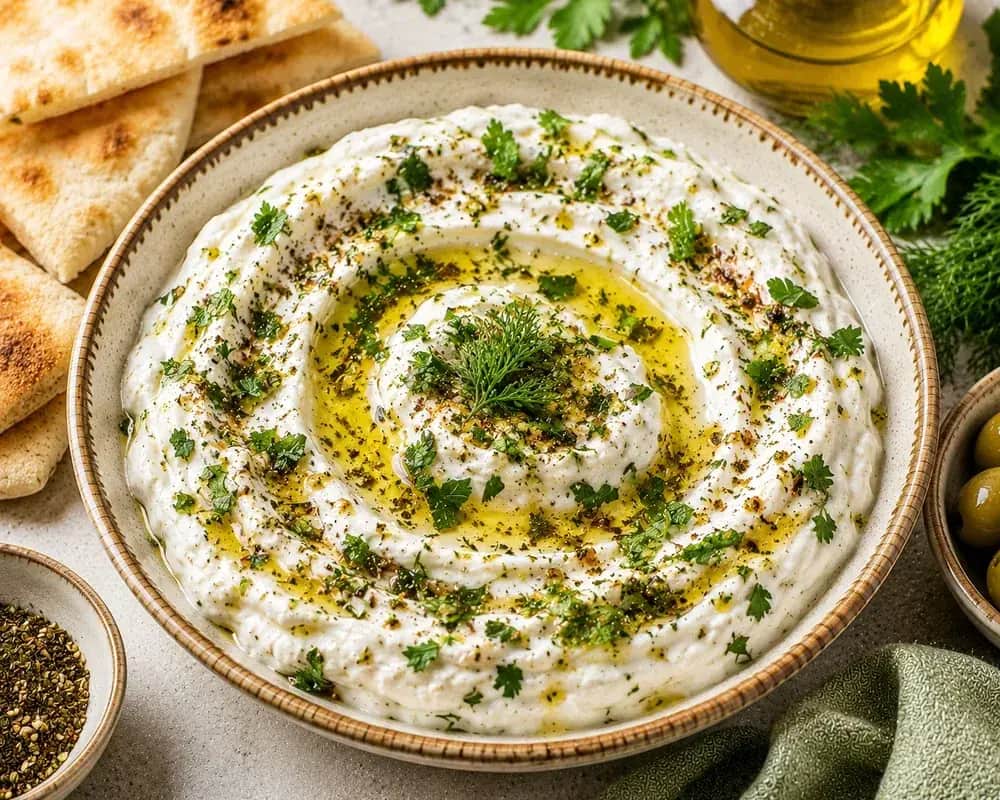
Herbed Labneh Dip Recipe — Lebanese Labneh with Fresh Herbs & Za'atar
A creamy labneh dip seasoned with fresh herbs, olive oil, garlic, and Mediterranean spices. Strained yogurt gives labneh its thick texture and tangy flavor, making it easy to spread across warm pita or serve as part of a mezze table.