
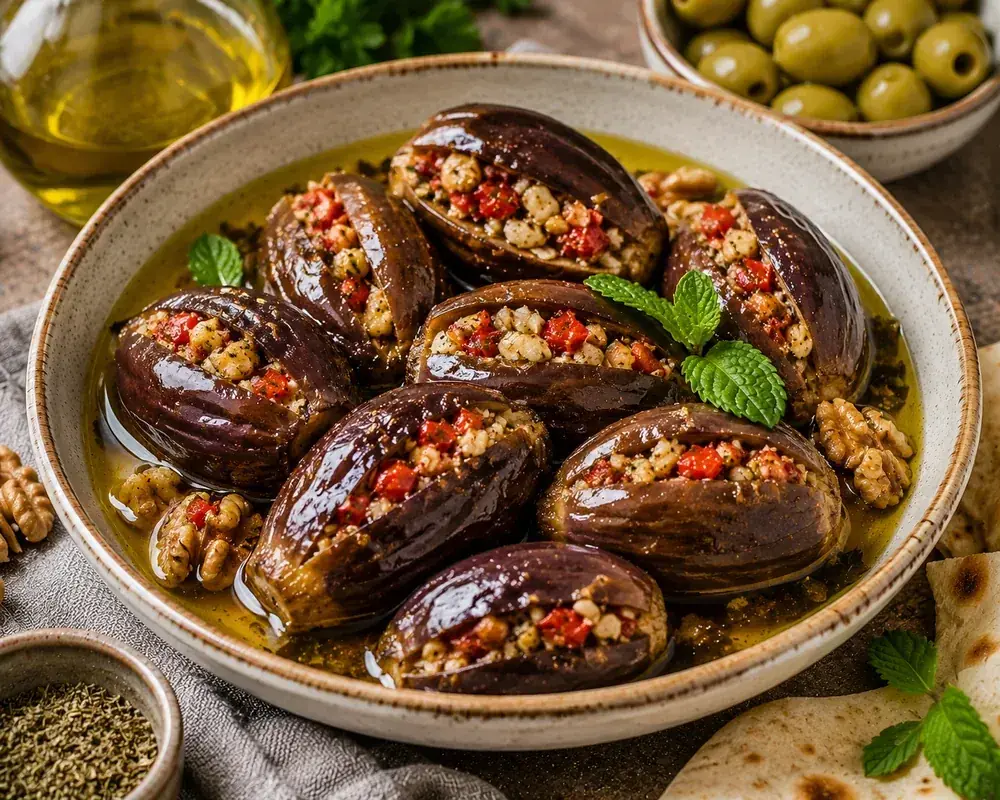
Makdous Recipe — Lebanese Stuffed Baby Eggplants with Walnuts & Garlic
A traditional-style Lebanese makdous made with small eggplants, walnuts, garlic, red pepper, and extra virgin olive oil. The eggplants are softened, filled with a savory nut mixture, and left to mature until the flavors become rich and tangy.
Prep Time
30 mins
Cook Time
20 mins
Total Time
50 mins
Servings
6
A TASTE OF TRADITION
The Story Behind This Recipe
Makdous is a distinctive Levantine eggplant dish in which small, tender eggplants are opened and filled with a deeply flavored mixture of walnuts, garlic, and pepper. It is not simply a stuffed vegetable; it is part of a broader food tradition in which seasonal produce is carefully prepared, seasoned, and preserved or rested so that its flavors become deeper over time. Today, makdous remains a familiar sight on home mezze tables throughout the Levant.
Cultural & Culinary Context
Makdous is strongly associated with the Levant, especially Syria and Lebanon, and is also enjoyed in neighboring Jordan and Palestine. It has long been connected with home preparation and seasonal preserving, when small eggplants are plentiful. Families have their own preferred balances of walnuts, garlic, chili, salt, and oil, so the exact style can vary from one household to another. In Lebanese and Syrian food culture, makdous is commonly served as part of a larger mezze selection rather than as a stand-alone main course.
What Makes It Mediterranean?
The ingredients reflect the wider Mediterranean and Eastern Mediterranean pantry: eggplant, extra virgin olive oil, walnuts, garlic, fresh herbs, and pomegranate. These foods bring together vegetables, nuts, aromatic plants, fruit acidity, and olive oil in a way that is characteristic of Levantine cooking. The combination is particularly effective because the mild eggplant provides a soft base for the richer walnuts, fragrant garlic, warm spice, and bright pomegranate molasses.
Mediterranean Influences
- 🌿Extra virgin olive oil is used as the principal added fat.
- 🌿Eggplant is the central vegetable and absorbs the surrounding flavors beautifully.
- 🌿Walnuts provide a traditional plant-based source of richness and texture.
- 🌿Fresh parsley adds brightness and herbal freshness.
- 🌿Garlic is used as a major aromatic rather than a background seasoning.
- 🌿Pomegranate molasses provides the sweet-acidic contrast common in Levantine cuisine.
- 🌿The dish is designed to be served as part of a communal mezze table with vegetables, bread, dips, and other small plates.
Ingredients
- 12 baby eggplants (Choose small, firm eggplants that are similar in size. Avoid very soft or heavily bruised eggplants because they can break apart during cooking and stuffing.)
- 1 cup walnuts, finely chopped (Finely chop rather than grind completely. A little texture makes the filling more pleasant and prevents it from becoming a paste.)
- 3 garlic cloves, minced (Fresh garlic gives the filling its characteristic savory Levantine flavor.)
- 0.25 cup fresh parsley, finely chopped (Use tender fresh leaves and chop them finely so they distribute evenly through the filling.)
- 1 tbsp pomegranate molasses (Choose a good-quality pomegranate molasses. Its sweetness and acidity can vary, so taste the filling before stuffing if needed.)
- 1 tbsp extra virgin olive oil (This amount enriches the filling without making the finished makdous excessively oily.)
- 1 tsp ground cumin
- 0.5 tsp Aleppo pepper or mild chili flakes (Aleppo pepper gives the most characteristic Levantine flavor. Mild chili flakes can be used if Aleppo pepper is unavailable.)
- 0.5 tsp sea salt
- 0.25 tsp black pepper
- 1 extra parsley for garnish
Instructions
- 1
Trim the stems from the baby eggplants while keeping the tops intact. Rinse them thoroughly and place them in a large pot.
- 2
Cover the eggplants with water and bring to a gentle boil. Cook for 15–20 minutes, checking toward the end of the cooking time, until a knife or fork can enter the flesh easily but the eggplants still hold their shape.
- 3
Drain the eggplants thoroughly and let them cool completely. Do not try to stuff them while they are hot or very soft; warm eggplants are more likely to split when opened.
- 4
When the eggplants are completely cool, make one lengthwise slit in each one without cutting all the way through the opposite side. The slit should create a pocket for the filling while keeping the eggplant intact.
- 5
Combine the finely chopped walnuts, minced garlic, parsley, cumin, Aleppo pepper, sea salt, black pepper, olive oil, and pomegranate molasses in a bowl. Mix until the ingredients are evenly distributed and the walnuts are lightly coated.
- 6
Taste a small amount of the filling before stuffing. It should be savory, nutty, garlicky, mildly spicy, and pleasantly tangy. If necessary, adjust the balance carefully without making the mixture overly wet.
- 7
Gently open each eggplant and fill the pocket with the walnut mixture. Press the filling in lightly rather than packing it aggressively, because excessive pressure can tear the softened eggplant skin.
- 8
Arrange the stuffed eggplants on a serving platter with the filled openings facing upward. Keep them in a single relaxed layer so the filling remains visible and the eggplants are easy to serve.
- 9
If desired, drizzle the finished eggplants very lightly with additional extra virgin olive oil. Use only a small amount because the walnuts and olive oil in the filling already provide plenty of richness.
- 10
Cover and refrigerate for at least one hour before serving. Chilling gives the flavors time to develop and helps the eggplant and filling become more cohesive.
- 11
Before serving, garnish with fresh parsley and additional chopped walnuts. Serve chilled or cool as part of a Lebanese-style mezze spread.
SET YOURSELF UP FOR SUCCESS
Before You Cook
👨🍳 Keep In Mind
- •Choose baby eggplants that are firm, fresh, and similar in size so they finish cooking at approximately the same time.
- •Prepare the walnut filling while the cooked eggplants are cooling if you want to shorten the active preparation time.
- •Make sure the eggplants are completely cool before cutting and stuffing them. This is one of the easiest ways to prevent tearing.
- •Finely chop the walnuts, but do not turn them into a completely smooth paste. The filling should retain a pleasant nutty texture.
- •Have your serving platter ready before stuffing because the cooked eggplants are delicate and are easier to move before they are filled.
💡 Helpful Tips
- •Do not overboil the eggplants. They should be tender but still structurally strong enough to hold a filling.
- •Drain the eggplants very well. Excess water can dilute the filling and make the finished dish watery.
- •Allow the eggplants to cool completely before making the slit.
- •Keep the slit controlled and do not cut through the opposite side.
- •Do not compress the walnut filling too tightly into the eggplants.
- •Taste the filling before stuffing because pomegranate molasses varies in sweetness and acidity between brands.
- •For a more traditional Levantine flavor, use Aleppo pepper rather than a hotter chili.
- •Chilling is important. The dish tastes more integrated after resting in the refrigerator.
👀 How Do I Know It's Done?
- ✓The eggplants are properly cooked when the flesh is tender enough to pierce easily without becoming mushy.
- ✓The eggplants are ready for stuffing only after they have cooled completely and can be opened without tearing.
- ✓The filling is ready when the walnuts, herbs, garlic, spices, oil, and pomegranate molasses are evenly combined.
- ✓The finished makdous is ready to serve after at least one hour of chilling, when the eggplant and filling have become cohesive and the flavors have settled.
Tweak It
Make This Recipe Work for You
Adapt the recipe to your ingredients, dietary needs, budget, time, serving size, or meal-prep plans.
🔄 Ingredient Substitutions
No Aleppo Pepper?
Use mild chili flakes instead. Choose a mild variety because the goal is gentle warmth rather than a very hot filling.
Adjust the Walnut Texture
For a finer filling, chop the walnuts more finely. For a more rustic texture, leave some small pieces slightly larger.
Adjust the Pomegranate Molasses
If your pomegranate molasses is particularly tart, taste the filling before stuffing and use it carefully so the acidity does not overpower the walnuts and eggplant.
🌱 Dietary Adjustments
Naturally Vegan
The recipe is vegan as written and contains no meat, dairy, eggs, or other animal-derived ingredients.
Vegetarian
Makdous is naturally vegetarian and works especially well as part of a vegetable-rich mezze spread.
💰 Budget-Friendly Options
Make the Walnuts Go Further
Keep the walnut pieces finely chopped so a smaller amount provides texture throughout the filling without needing to increase the quantity.
⏱️ Time-Saving Options
Prepare the Filling Ahead
The walnut filling can be mixed while the eggplants cool, reducing the amount of active preparation time when assembling the dish.
👨👩👧👦 Serving Adjustments
Adjust the Batch Size
Scale the ingredient quantities proportionally when preparing a larger or smaller mezze spread. Keep the eggplants similar in size so cooking remains even.
🥡 Meal Prep
Prepare Ahead for Mezze
Makdous benefits from chilling, making it particularly convenient for preparing ahead of a mezze meal or gathering.
RECIPE RESCUE
🧩 What Do You Need Help With?
Choose the problem you're facing and get a recipe-specific solution instead of a generic cooking tip.
WHAT IF?
🔄 What If...?
Choose your situation and we'll show you a practical pathway for making this recipe work.
STORAGE & LEFTOVERS
🥡 Storage & Leftovers
Store prepared makdous covered in the refrigerator.
Keep the eggplants in a clean, sealed container or tightly covered serving dish.
Serve chilled or allow them to sit briefly at room temperature before serving if a less-cold texture is preferred.
Use clean utensils when serving to help maintain freshness.
Best Storage Time
Best enjoyed within 3–4 days when refrigerated properly.
How to Store
Store in a clean airtight container or a tightly covered glass dish in the refrigerator.
SERVING & PAIRING
🍽️ Serving & Pairing
Serve makdous cool or chilled as part of a Lebanese mezze spread. Arrange the stuffed eggplants naturally with the walnut filling visible and garnish with fresh parsley and additional walnuts.
What Goes Well With It?
RECIPE FAQ
❓ Frequently Asked Questions
How do you make Makdous?
To make Makdous, first trim and rinse 12 baby eggplants, then gently boil them for about 15–20 minutes until tender but still firm enough to hold their shape. Drain and cool them completely before making a lengthwise slit in each eggplant. Prepare the filling by combining 1 cup finely chopped walnuts, 3 minced garlic cloves, 1/4 cup chopped fresh parsley, 1 tablespoon pomegranate molasses, 1 tablespoon extra virgin olive oil, 1 teaspoon cumin, 1/2 teaspoon Aleppo pepper, 1/2 teaspoon sea salt, and 1/4 teaspoon black pepper. Gently fill each eggplant, arrange them on a platter, and refrigerate for at least one hour. Garnish with fresh parsley and additional walnuts before serving cool or chilled as part of a Lebanese-style mezze spread.
What is Makdous?
Makdous is a traditional Levantine stuffed eggplant preparation made from small eggplants filled with ingredients such as walnuts, garlic, chili, and olive oil. It is especially associated with Syrian and Lebanese home cooking and is commonly served as a mezze.
Which country is Makdous from?
Makdous is a Levantine dish with especially strong culinary associations with Syria and Lebanon. It is also part of food traditions in neighboring Jordan and Palestine, so it is more accurate to describe it as a regional Levantine specialty rather than assigning it exclusively to one modern country.
Is Makdous vegan?
Yes. This version is vegan as written because it contains baby eggplants, walnuts, garlic, parsley, spices, pomegranate molasses, and olive oil, with no meat, dairy, eggs, or other animal products.
Can I serve Makdous immediately after stuffing?
It can be eaten immediately, but chilling it for at least one hour is recommended. The resting time allows the eggplant and walnut filling to come together and gives the garlic, spices, and pomegranate molasses a more integrated flavor.
Why did my eggplants fall apart?
They were likely boiled for too long or handled while still hot. Makdous eggplants should be tender but structurally sound, then completely cooled before opening and stuffing.
Why is my Makdous watery?
The eggplants may not have drained sufficiently after boiling. Let them drain thoroughly and cool completely before stuffing. Also avoid adding unnecessary extra oil or liquid to the filling.
Can I make Makdous ahead of time?
Yes. Makdous is particularly well suited to preparing ahead because chilling improves the integration of its flavors. Keep it covered and refrigerated until serving.
What does Makdous taste like?
Makdous combines soft, mild eggplant with rich walnuts, aromatic garlic, herbal parsley, gentle chili warmth, and the sweet-tart character of pomegranate molasses. The overall flavor is savory, nutty, tangy, and distinctly Levantine.
Explore More
Go deeper into the cuisine
Learn more about the ingredients, traditions, and cooking approaches connected to this recipe.
You May Also Like
More delicious recipes from the Mezze
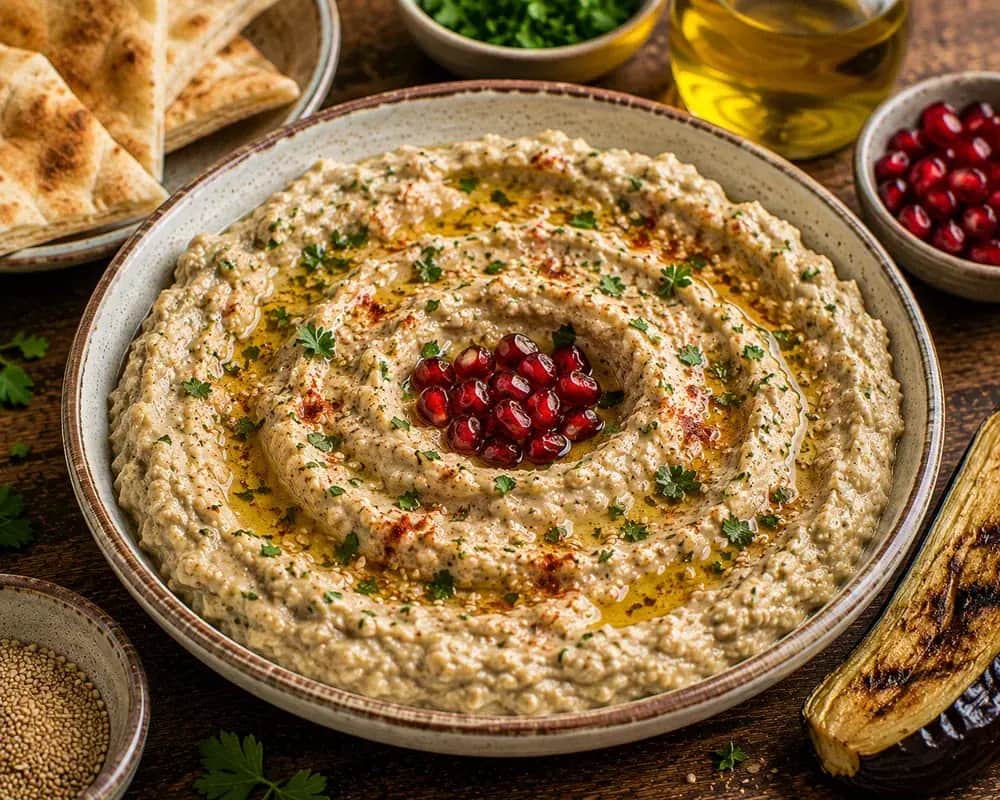
Classic Baba Ganoush Recipe
A classic Baba Ganoush recipe made with smoky roasted eggplant, tahini, garlic, fresh lemon juice, and extra virgin olive oil. This creamy Mediterranean mezze is rich, flavorful, and naturally plant-based.
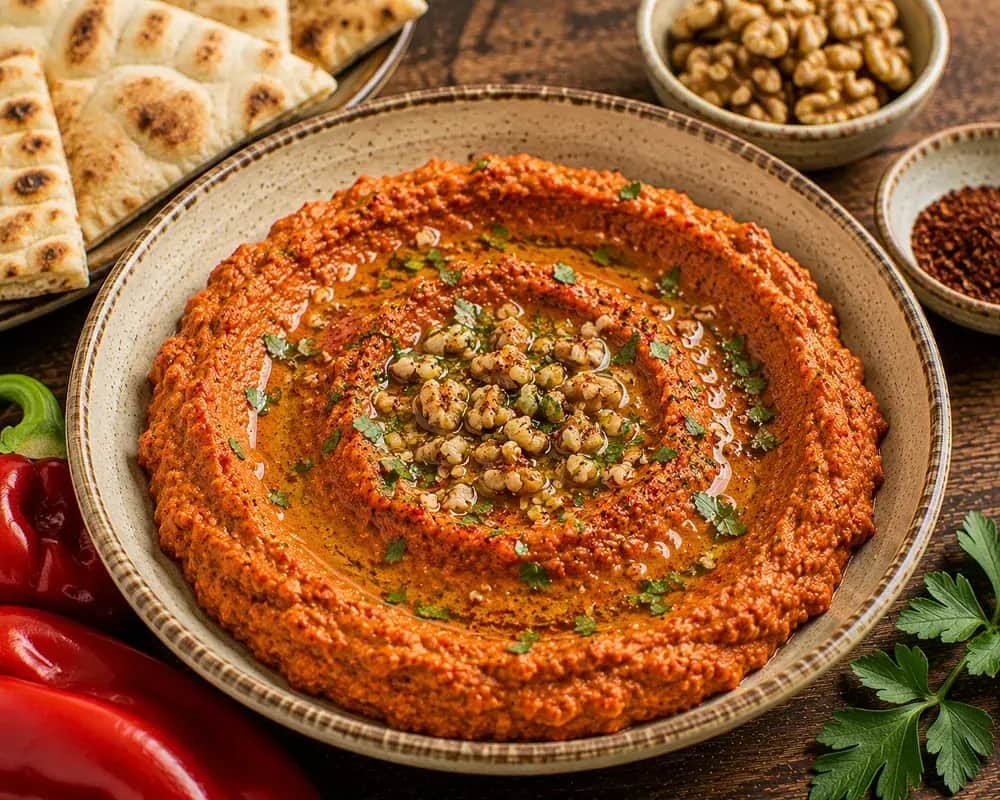
Muhammara Recipe — Aleppine Syrian Roasted Red Pepper & Walnut Dip
This Muhammara recipe is a traditional Aleppine Syrian roasted red pepper and walnut dip made with roasted red peppers, toasted walnuts, pomegranate molasses, extra virgin olive oil, garlic, cumin, and warm spices. Thick, smoky, sweet-tart, and richly textured, this easy Levantine mezze is perfect with warm pita, vegetables, and other shared dishes.
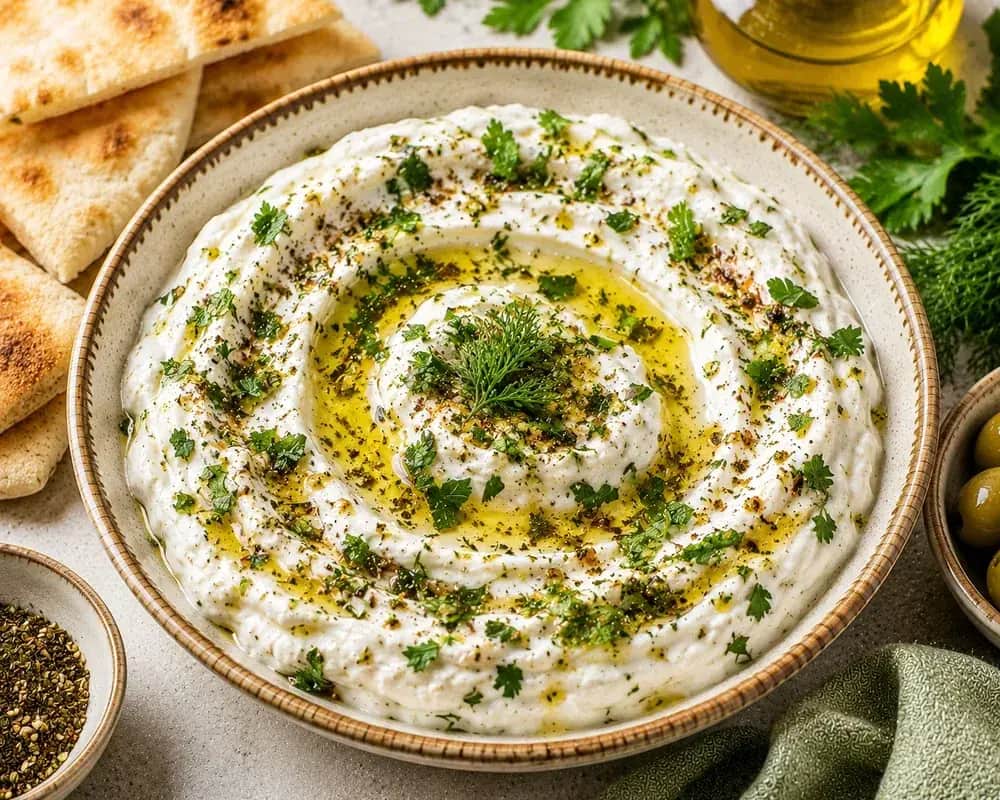
Herbed Labneh Dip Recipe — Lebanese Labneh with Fresh Herbs & Za'atar
A creamy labneh dip seasoned with fresh herbs, olive oil, garlic, and Mediterranean spices. Strained yogurt gives labneh its thick texture and tangy flavor, making it easy to spread across warm pita or serve as part of a mezze table.