
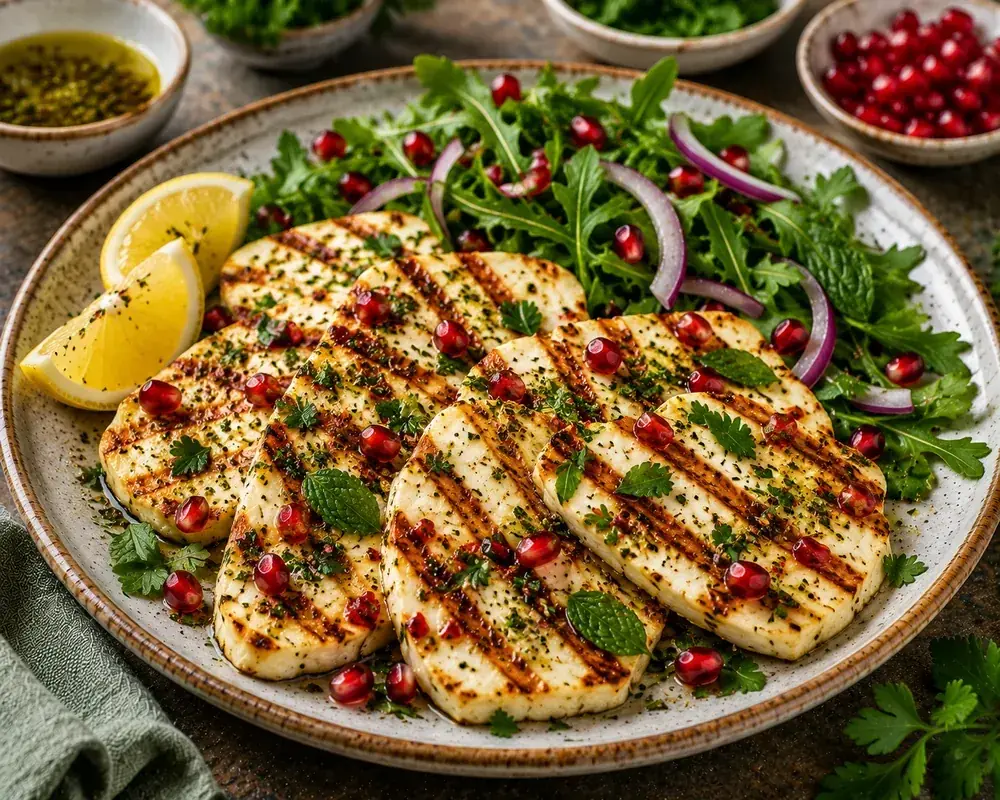
Grilled Halloumi with Herbs & Pomegranate Recipe — Mediterranean Mezze
This grilled halloumi with herbs and pomegranate recipe features golden halloumi with a crisp savory crust and soft center, finished with fresh parsley, mint, juicy pomegranate seeds, lemon, and extra virgin olive oil. An easy Mediterranean mezze recipe that balances salty grilled cheese with bright herbs, citrus, and naturally sweet-tart fruit.
Prep Time
10 mins
Cook Time
8 mins
Total Time
18 mins
Servings
4
A TASTE OF TRADITION
The Story Behind This Recipe
This grilled halloumi is designed around a simple but powerful Mediterranean contrast: salty, golden cheese paired with fresh herbs, bright lemon, and juicy pomegranate. The recipe takes only minutes to cook, making it ideal when you want a warm mezze dish without a complicated preparation.
Cultural & Culinary Context
Halloumi is a well-known cheese of the Eastern Mediterranean and is especially valued for its ability to hold its shape when heated. Grilling transforms the surface into a golden, savory crust while the center remains soft and springy. Serving grilled halloumi with herbs, citrus, fruit, vegetables, and other mezze creates the generous combination of contrasting flavors and textures associated with Mediterranean tables.
What Makes It Mediterranean?
The recipe combines grilled cheese with extra virgin olive oil, fresh herbs, lemon, pomegranate, and vegetable-based accompaniments. These ingredients create a balance between richness, acidity, freshness, and natural sweetness rather than relying on a heavy sauce.
Mediterranean Influences
- 🌿Extra virgin olive oil is used as a simple finishing and grilling ingredient.
- 🌿Fresh parsley and mint add brightness and herbal freshness.
- 🌿Fresh lemon provides acidity that balances the salty cheese.
- 🌿Pomegranate adds naturally sweet-tart fruit flavor and juicy texture.
- 🌿The dish works naturally as part of a shared mezze table.
- 🌿It pairs especially well with vegetables, hummus, olives, pita, and Mediterranean salads.
Ingredients
- 250 g halloumi cheese (Choose a fresh, good-quality halloumi block. Keep it refrigerated until you are ready to grill it.)
- 1 tbsp extra virgin olive oil (A light coating helps the cheese brown and prevents excessive sticking without making the dish greasy.)
- 2 tbsp fresh parsley, chopped (Adds freshness and a mild herbal flavor that balances the salty cheese.)
- 1 tbsp fresh mint, chopped (Mint adds a cool, refreshing contrast to the warm grilled cheese.)
- 0.25 cup pomegranate seeds (Their juicy sweet-tart flavor and crisp texture provide a bright contrast to the salty halloumi.)
- 1 tbsp fresh lemon juice (Fresh lemon cuts through the richness of the cheese and brings the flavors together.)
- 0.25 tsp black pepper (Adds gentle warmth. Additional salt is not necessary because halloumi is naturally salty.)
- 1 tsp sesame seeds (optional) (Add for a subtle toasted flavor and extra texture.)
- 1 lemon wedges for serving (Serve on the side so everyone can add fresh lemon to taste.)
Instructions
- 1
Remove the halloumi from its packaging and pat it dry thoroughly with paper towels. Removing surface moisture helps the cheese make better contact with the hot grill and develop a golden crust.
- 2
Slice the halloumi into pieces approximately 1 cm thick. Try to keep the slices similar in thickness so they brown at approximately the same rate.
- 3
Prepare the parsley, mint, pomegranate seeds, lemon juice, and serving platter before grilling. Halloumi is best served immediately while it is still warm and soft inside.
- 4
Heat a grill pan or outdoor grill over medium-high heat. Allow the surface to become properly hot before adding the cheese. A hot surface helps create grill marks quickly without requiring a long cooking time.
- 5
Lightly brush both sides of each halloumi slice with olive oil. Use only a thin coating because halloumi already contains fat and excessive oil can cause unnecessary smoking.
- 6
Place the halloumi on the hot grill with a little space between each slice. Do not overcrowd the surface because good contact with the hot grill is important for browning.
- 7
Leave the first side undisturbed for about 2–3 minutes. Look for distinct golden-brown grill marks and a lightly crisp surface before turning.
- 8
Carefully flip each piece and grill the second side for another 2–3 minutes. The cheese should be golden outside while remaining soft and pleasantly springy in the center.
- 9
Transfer the grilled halloumi directly to the prepared serving platter. Avoid leaving it on the hot pan after it has browned because continued heat can make the cheese tougher and chewier.
- 10
Scatter the chopped parsley and mint over the warm halloumi. Add the pomegranate seeds so their juicy sweet-tart flavor contrasts with the salty cheese.
- 11
Drizzle with fresh lemon juice and a small amount of extra virgin olive oil. Finish with black pepper and sesame seeds if using.
- 12
Serve immediately with lemon wedges and Mediterranean accompaniments such as warm pita, hummus, tomatoes, cucumber, olives, or a fresh salad.
SET YOURSELF UP FOR SUCCESS
Before You Cook
👨🍳 Keep In Mind
- •Keep the halloumi refrigerated until you are ready to prepare it.
- •Pat the cheese dry before grilling. Surface moisture can delay browning.
- •Slice the cheese evenly so all pieces cook at a similar rate.
- •Chop the herbs and prepare the pomegranate before turning on the grill.
- •Have the serving platter ready because grilled halloumi is best served immediately.
- •Do not add extra salt unless you have specifically chosen a very low-salt halloumi. Most halloumi is naturally quite salty.
- •Use a medium-high cooking temperature rather than maximum heat. Very high heat can brown the exterior too quickly before the center warms.
💡 Helpful Tips
- •Dry halloumi thoroughly before grilling for better browning.
- •Use a thin layer of olive oil rather than soaking the cheese.
- •Preheat the grill properly before adding the cheese.
- •Do not move the halloumi repeatedly while the first side is browning.
- •Turn the cheese once the first side has clear golden grill marks.
- •Keep the cooking time relatively short. Halloumi becomes firmer and chewier if it stays over high heat for too long.
- •Prepare the garnish before grilling so the cheese can go directly from the grill to the platter.
- •Add lemon after grilling rather than before. Fresh lemon is most effective as a finishing element.
- •Use pomegranate seeds generously enough to create a contrast with the salty cheese.
- •Serve immediately for the softest, most pleasant texture.
👀 How Do I Know It's Done?
- ✓Both sides have clear golden-brown grill marks.
- ✓The surface has a lightly crisp texture.
- ✓The center remains soft and springy when gently pressed.
- ✓The cheese is heated through but has not become hard or excessively chewy.
- ✓There is no need to cook halloumi until it melts; good halloumi should retain its shape.
- ✓Serve it as soon as it reaches the desired golden color for the best texture.
Tweak It
Make This Recipe Work for You
Adapt the recipe to your ingredients, dietary needs, budget, time, serving size, or meal-prep plans.
🔄 Ingredient Substitutions
Change the fresh herbs
Parsley and mint create a classic fresh combination, but cilantro, dill, or a small amount of fresh oregano can be used when available.
No fresh pomegranate
If fresh pomegranate is unavailable, use a small amount of dried cranberries for a different sweet-tart contrast, or simply increase the fresh herbs and lemon.
Skip the sesame seeds
The sesame seeds are optional. The dish remains flavorful without them, especially when the halloumi is well browned and finished with fresh lemon.
Use a skillet
A heavy non-stick or well-seasoned skillet can be used instead of a grill pan. Cook the slices in a single layer so they have enough contact with the hot surface.
🌱 Dietary Adjustments
Vegetarian
This recipe is vegetarian and provides a protein-rich cheese component for a mezze spread.
Lower-carb serving
Serve the halloumi with cucumber, tomato, leafy greens, olives, herbs, and pomegranate instead of a large bread portion.
Gluten-free
The basic halloumi recipe is naturally gluten-free. If serving with sauces, packaged seasonings, or bread, check their labels when strict gluten-free preparation is required.
Dairy-free
Halloumi is a dairy cheese, so this recipe cannot be made dairy-free while retaining the same ingredient. A plant-based grilling cheese can be used as an alternative if suitable for your dietary needs.
💰 Budget-Friendly Options
Use pomegranate when in season
Buying pomegranate during its peak season can provide better flavor and value. Remove the seeds in advance and keep them chilled for quick assembly.
Choose inexpensive fresh sides
Cucumber, tomato, parsley, lemon, and warm flatbread are simple accompaniments that can turn a small amount of halloumi into a generous mezze plate.
Serve as part of a mezze spread
Instead of making halloumi the entire meal, serve smaller portions alongside hummus, beans, salad, vegetables, and bread. This creates variety without requiring a large quantity of cheese.
⏱️ Time-Saving Options
Prepare the garnish first
Chop the herbs, measure the pomegranate, squeeze the lemon, and arrange the serving platter before heating the grill.
Use it as a last-minute mezze
Because the cheese needs only a few minutes of grilling, it can be prepared near serving time while other mezze dishes are already on the table.
Serve directly from the grill
Have the platter ready before cooking so the hot halloumi can be garnished immediately instead of cooling on the pan.
👨👩👧👦 Serving Adjustments
Make a smaller portion
Halve all ingredients for approximately two servings. Grill only the amount you plan to eat immediately for the best texture.
Prepare for a gathering
For a larger mezze table, multiply the ingredients as needed and grill in batches. Keep the serving platter ready so each batch can be garnished while warm.
🥡 Meal Prep
Prepare the herbs ahead
Wash and chop the parsley and mint ahead of time, then refrigerate them in a suitable container until serving.
Prepare the pomegranate
Pomegranate seeds can be removed ahead of time and refrigerated so the final dish takes only a few minutes to assemble.
Grill halloumi just before eating
For the best texture, prepare the garnishes ahead but grill the cheese close to serving time rather than fully cooking it hours in advance.
RECIPE RESCUE
🧩 What Do You Need Help With?
Choose the problem you're facing and get a recipe-specific solution instead of a generic cooking tip.
WHAT IF?
🔄 What If...?
Choose your situation and we'll show you a practical pathway for making this recipe work.
STORAGE & LEFTOVERS
🥡 Storage & Leftovers
Grilled halloumi is best eaten immediately because its texture becomes firmer and chewier as it cools.
If leftovers remain, allow them to cool appropriately and place them in a sealed food-safe container.
Refrigerate leftovers promptly rather than leaving them at room temperature for an extended period.
Store the cheese separately from fresh herbs and pomegranate when possible.
Reheat gently in a skillet or grill pan rather than aggressively microwaving it.
Do not repeatedly reheat the same portion because repeated heating can make the cheese increasingly firm.
Best Storage Time
For best quality, enjoy grilled halloumi immediately. Refrigerated leftovers should be used promptly and within 3–4 days.
How to Store
Store leftover halloumi in an airtight food-safe container. Keep herbs, pomegranate, and lemon separate when possible so the cheese does not become wet.
SERVING & PAIRING
🍽️ Serving & Pairing
Serve the halloumi immediately while it is warm and soft inside. The salty grilled cheese is especially good with fresh herbs, pomegranate, lemon, hummus, cucumber, tomato, olives, and warm pita. It works beautifully as a centerpiece on a shared mezze platter.
What Goes Well With It?
RECIPE FAQ
❓ Frequently Asked Questions
How do you make grilled halloumi with herbs and pomegranate?
To make grilled halloumi with herbs and pomegranate, pat the halloumi dry and slice it into pieces about 1 cm thick. Lightly brush the slices with extra virgin olive oil and grill them over medium-high heat for about 2–3 minutes per side until golden-brown grill marks develop. Transfer the hot halloumi to a serving platter, then finish with fresh parsley, mint, pomegranate seeds, lemon juice, olive oil, black pepper, and optional sesame seeds. Serve immediately with warm pita, hummus, salads, or other Mediterranean mezze.
Why does halloumi not melt like other cheeses?
Halloumi has a firm protein structure and a relatively high melting point, which allows it to hold its shape when grilled. Instead of melting into a puddle, it develops a golden surface while remaining soft and springy inside.
Should I soak halloumi before grilling?
It is not necessary for this recipe. Simply pat the cheese dry and grill it. Some halloumi varieties can be soaked to reduce saltiness, but the need depends on the specific cheese and your taste.
Why is my halloumi rubbery?
The most common reason is overcooking. Halloumi becomes progressively firmer and chewier the longer it remains over high heat. Grill it only until golden and serve immediately.
How thick should I slice halloumi?
Slices around 1 cm thick work well because they are thick enough to remain soft in the center while developing a golden grilled surface.
Do I need to add salt?
Usually no. Halloumi is naturally salty, so additional salt is generally unnecessary. Fresh lemon, herbs, and pomegranate provide better ways to balance its savory flavor.
Can I grill halloumi without oil?
Yes, depending on your grill surface and the cheese. A very light coating of olive oil can help with browning and reduce sticking, but halloumi does not need to be heavily oiled.
Can I use a frying pan instead of a grill?
Yes. A heavy non-stick or well-seasoned skillet can brown halloumi effectively. Cook the slices in a single layer over medium-high heat.
Can I prepare the halloumi ahead of time?
You can prepare the herbs, pomegranate, lemon, and serving platter ahead, but the halloumi itself is best grilled shortly before serving. Its texture is most enjoyable when freshly cooked.
Is grilled halloumi vegetarian?
This recipe is vegetarian. However, halloumi production methods can vary, so anyone following a strict dietary practice should check the specific cheese label.
What can I serve with grilled halloumi?
Warm pita, hummus, tabbouleh, fattoush, cucumber and tomato salad, olives, pickles, fresh herbs, and lemon all complement the salty richness of grilled halloumi.
Can I use frozen pomegranate seeds?
Yes. Thaw them and drain excess moisture before using. Fresh pomegranate generally provides the best crisp texture, but frozen seeds can be convenient.
How can I make halloumi less salty?
Some varieties can be briefly soaked in water before cooking to remove some surface salt. The exact approach depends on the cheese, so check the package instructions. You can also balance the finished dish with lemon, fresh herbs, cucumber, tomato, and pomegranate.
Explore More
Go deeper into the cuisine
Learn more about the ingredients, traditions, and cooking approaches connected to this recipe.
You May Also Like
More delicious recipes from the Mezze
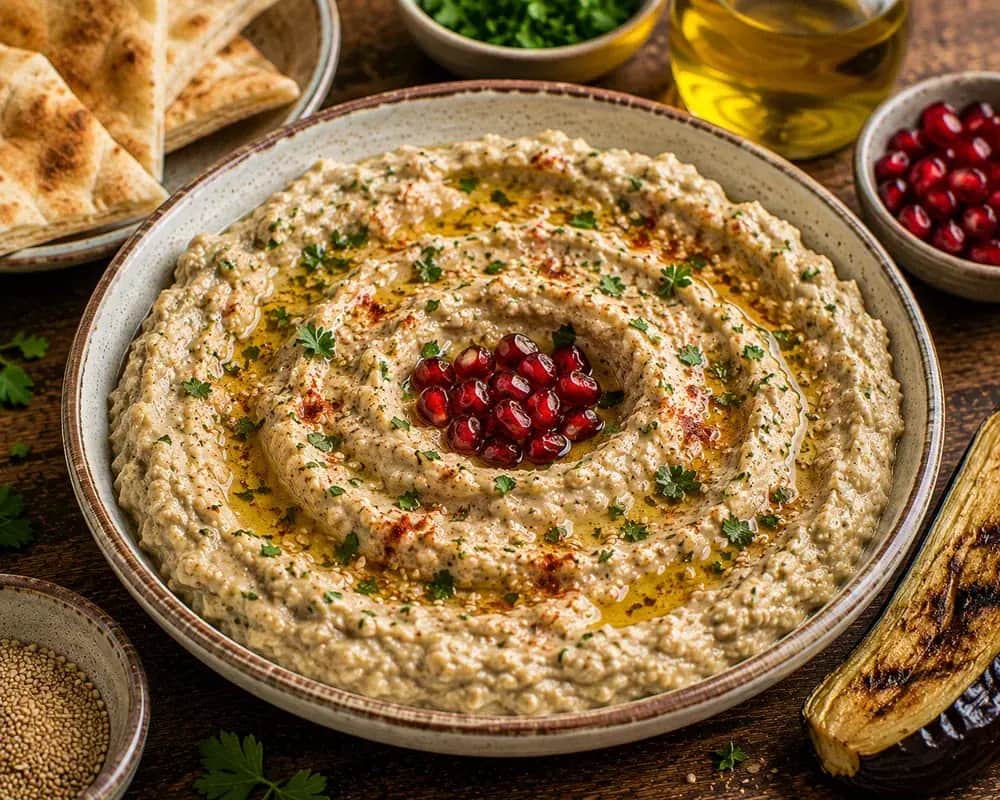
Classic Baba Ganoush Recipe
A classic Baba Ganoush recipe made with smoky roasted eggplant, tahini, garlic, fresh lemon juice, and extra virgin olive oil. This creamy Mediterranean mezze is rich, flavorful, and naturally plant-based.
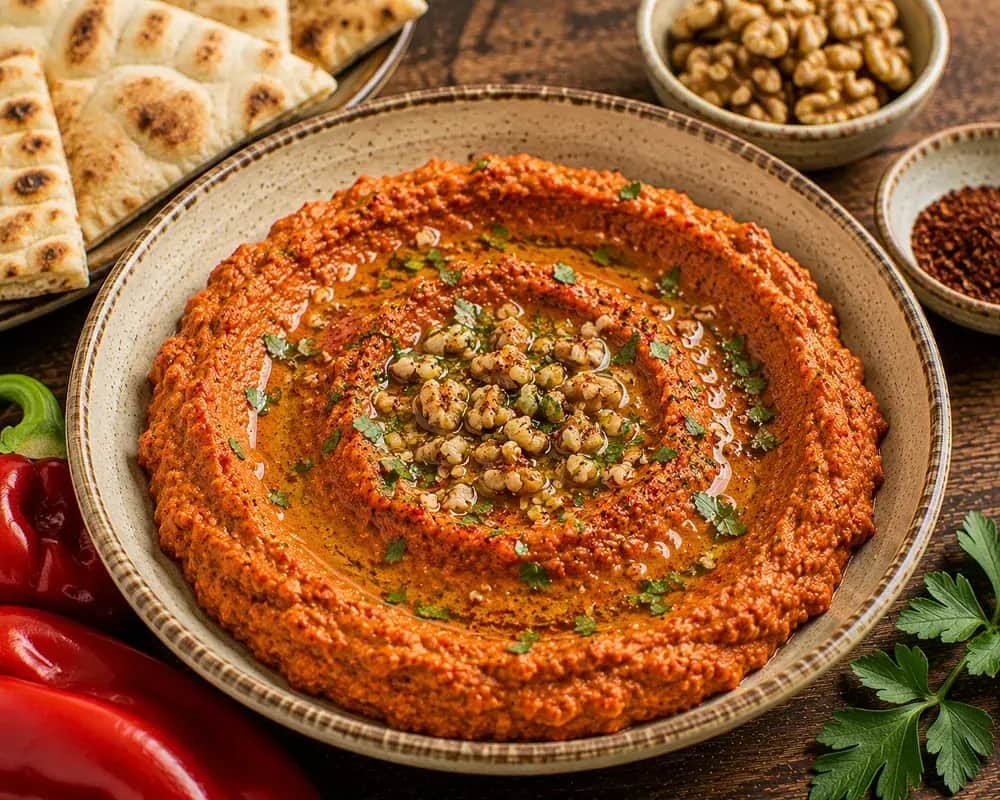
Muhammara Recipe — Aleppine Syrian Roasted Red Pepper & Walnut Dip
This Muhammara recipe is a traditional Aleppine Syrian roasted red pepper and walnut dip made with roasted red peppers, toasted walnuts, pomegranate molasses, extra virgin olive oil, garlic, cumin, and warm spices. Thick, smoky, sweet-tart, and richly textured, this easy Levantine mezze is perfect with warm pita, vegetables, and other shared dishes.
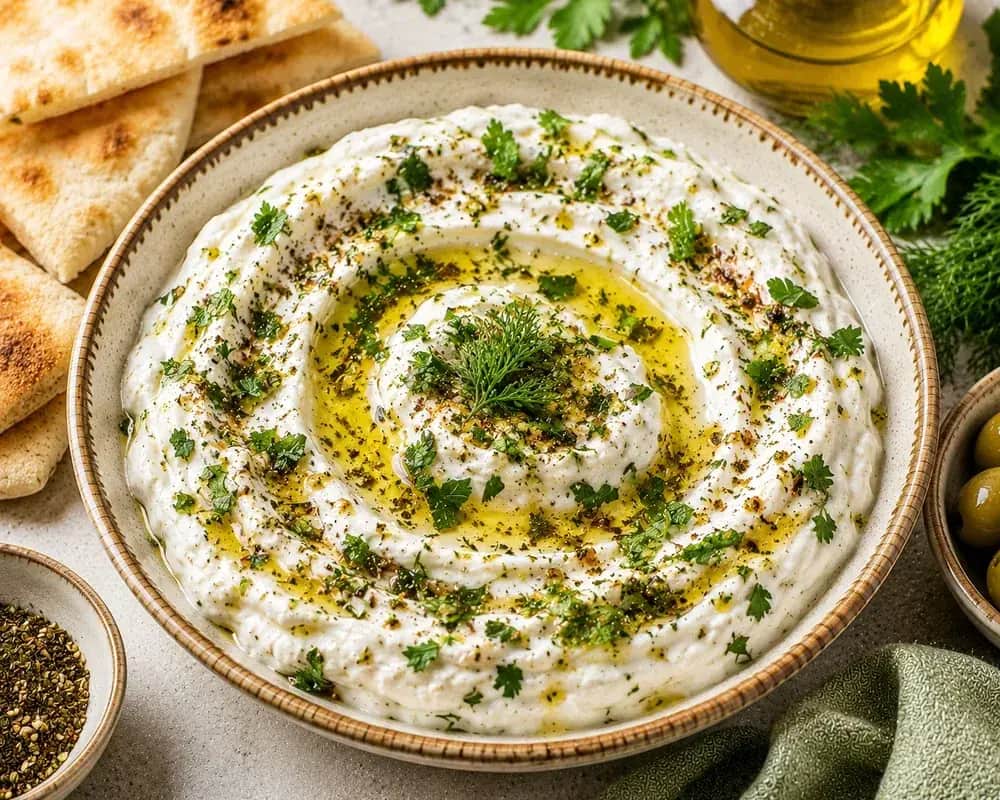
Herbed Labneh Dip Recipe — Lebanese Labneh with Fresh Herbs & Za'atar
A creamy labneh dip seasoned with fresh herbs, olive oil, garlic, and Mediterranean spices. Strained yogurt gives labneh its thick texture and tangy flavor, making it easy to spread across warm pita or serve as part of a mezze table.