
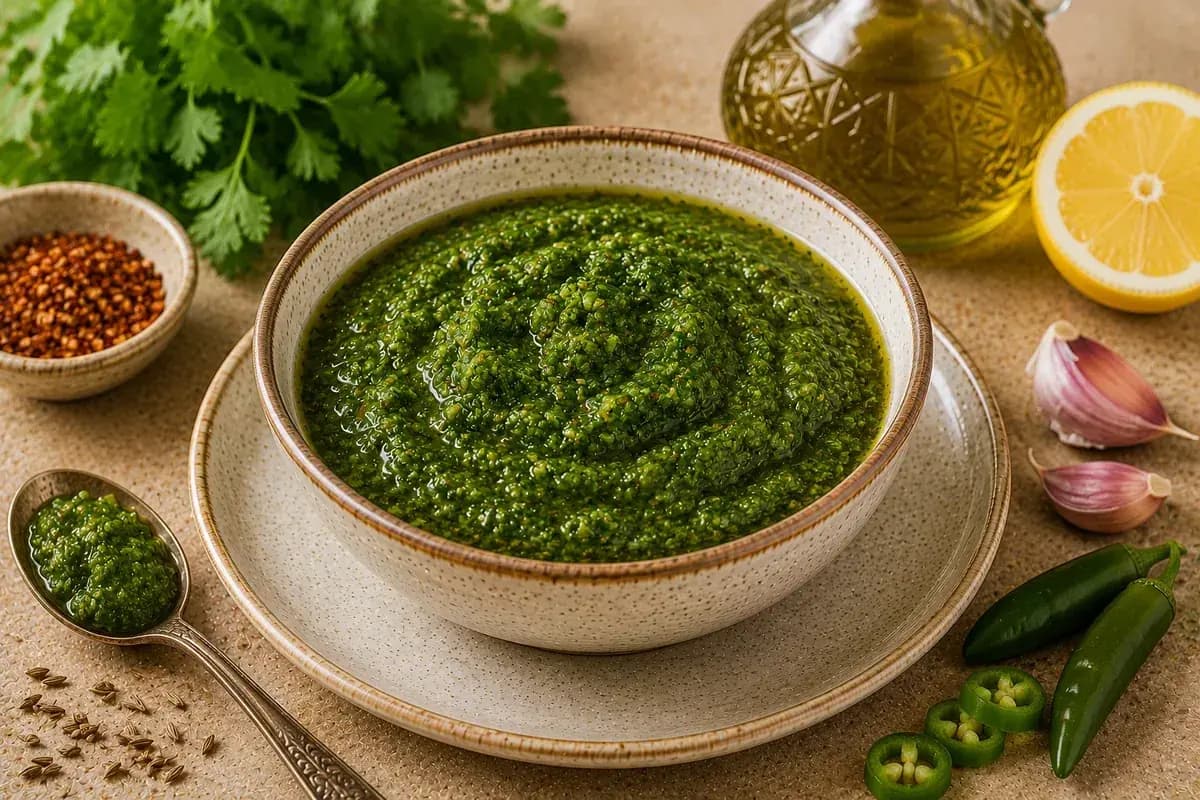
Green Zhoug Sauce Recipe — Authentic Yemeni Zhug (Schug)
This green zhoug sauce recipe, also known as zhug or schug, combines fresh cilantro, parsley, green chilies, garlic, cumin, coriander, cardamom, lemon juice, and extra virgin olive oil. A vibrant Yemeni hot sauce with fresh herbs and bold chili heat, it is quick to prepare and perfect with falafel, shawarma, grilled meats, eggs, roasted vegetables, sandwiches, wraps, and mezze.
Prep Time
15 mins
Cook Time
0 mins
Total Time
15 mins
Servings
10
A TASTE OF TRADITION
The Story Behind This Recipe
Zhoug is a fresh, fiery Yemeni sauce whose character comes from an unusually simple combination: green chilies, fresh herbs, garlic, citrus, spices, and olive oil. Unlike sauces that depend on long cooking, zhoug is prepared fresh so its herbs and chilies remain vivid and aromatic. The result is a condiment that can transform a simple meal with only a spoonful.
Cultural & Culinary Context
Zhoug has its roots in Yemen, where versions of the sauce have long been prepared as a fresh accompaniment to meals. It became particularly familiar internationally through Yemeni Jewish communities, including communities that migrated to Israel, where green zhoug became a popular accompaniment to breads, falafel, grilled foods, and other dishes. Spelling varies by region and language, including zhoug, zhug, and schug.
What Makes It Mediterranean?
Zhoug is Yemeni rather than originally Mediterranean, but it fits naturally into the broader Middle Eastern and eastern Mediterranean food landscape. Fresh herbs, garlic, lemon, cumin, coriander, olive oil, and mezze-style serving all connect it with flavors commonly enjoyed throughout the eastern Mediterranean. Its role as a bright condiment alongside grilled vegetables, legumes, breads, and meats makes it especially natural on a Mediterranean-inspired table.
Mediterranean Influences
- 🌿Extra virgin olive oil provides a familiar eastern Mediterranean flavor and fat source.
- 🌿Fresh herbs, garlic, lemon, cumin, and coriander are widely used across Middle Eastern and Mediterranean cuisines.
- 🌿Zhoug works naturally as part of a mezze-style meal alongside vegetables, legumes, breads, and grilled foods.
- 🌿Its fresh, uncooked preparation emphasizes herbs, citrus, and olive oil rather than heavy sauces.
Ingredients
- 2 cups fresh cilantro leaves (Wash thoroughly and dry very well. Tender stems can be included for extra flavor.)
- 1 cup fresh parsley leaves (Use fresh, dry leaves for the brightest color and best texture.)
- 2 green chilies (Remove the seeds for a milder sauce; keep some or all seeds for more heat.)
- 4 garlic cloves (Peel and roughly chop before processing.)
- 2 tbsp extra virgin olive oil (Use a good-quality olive oil because its flavor remains noticeable in the uncooked sauce.)
- 2 tbsp fresh lemon juice (Freshly squeezed lemon provides the best brightness.)
- 1 tsp ground cumin
- 1 tsp ground coriander
- 0.25 tsp ground cardamom
- 0.5 tsp sea salt (Adjust after blending according to taste.)
- 2 tbsp cold water (Use gradually and only as needed to loosen the sauce.)
Instructions
- 1
Wash the 2 cups of cilantro leaves and 1 cup of parsley leaves thoroughly. Dry them completely with a clean towel or salad spinner. Removing excess water is important because wet herbs can make the finished zhoug watery and dilute its flavor.
- 2
Prepare the 2 green chilies and 4 garlic cloves. Remove the chili seeds if you prefer less heat, then roughly chop the chilies and garlic. Keeping some seeds will produce a hotter sauce.
- 3
Add the cilantro, parsley, green chilies, garlic, 1 teaspoon cumin, 1 teaspoon ground coriander, 1/4 teaspoon cardamom, 2 tablespoons fresh lemon juice, 2 tablespoons extra virgin olive oil, and 1/2 teaspoon sea salt to a food processor.
- 4
Pulse several times rather than immediately running the processor continuously. Stop and scrape down the sides as needed. The goal is a finely chopped, textured herb sauce rather than a completely smooth purée.
- 5
Check the consistency. If the mixture is too thick to move easily, add cold water 1 tablespoon at a time, pulsing after each addition. Use up to 2 tablespoons, stopping as soon as the sauce becomes spoonable. Avoid adding all the water at once.
- 6
Taste the zhoug carefully and adjust the balance. Add a little more lemon juice if it needs brightness, a pinch of salt if it tastes flat, or additional chili if you want more heat. If the flavor is too sharp, a small additional splash of olive oil can soften the overall balance.
- 7
Transfer the finished zhoug to a clean serving bowl or airtight container. Refrigerate for at least 30 minutes before serving so the garlic, herbs, chilies, spices, lemon, and olive oil have time to meld.
- 8
Serve the zhoug cool or slightly chilled with falafel, shawarma, grilled meats, eggs, roasted vegetables, sandwiches, wraps, or other mezze. Stir gently before serving if some olive oil has separated.
SET YOURSELF UP FOR SUCCESS
Before You Cook
👨🍳 Keep In Mind
- •Wash the cilantro and parsley thoroughly and dry them completely. A salad spinner is especially useful, but a clean kitchen towel also works.
- •Taste or judge the heat of the green chilies before deciding whether to remove all, some, or none of the seeds.
- •Have the 2 tablespoons lemon juice, 2 tablespoons olive oil, and up to 2 tablespoons cold water measured before processing so you can adjust the texture without stopping for long.
- •Use a food processor with a relatively small bowl if possible. A very large processor can make a small batch difficult to chop evenly.
💡 Helpful Tips
- •Do not over-process the herbs. Zhoug should retain a finely chopped texture rather than becoming a completely smooth green purée.
- •Dry herbs produce a more concentrated sauce and help prevent excess water from separating later.
- •Add cold water gradually. The full 2 tablespoons may not be necessary.
- •Let the sauce rest for at least 30 minutes before judging its final flavor because the garlic and spices become more integrated during resting.
- •If you are sensitive to chili heat, remove the seeds and membranes from the chilies and begin with a smaller amount of chili before adding more.
👀 How Do I Know It's Done?
- ✓The herbs and chilies are finely chopped and evenly distributed.
- ✓There are no large pieces of garlic or chili remaining.
- ✓The sauce is spoonable but not watery.
- ✓The flavor has a clear balance of fresh herbs, chili heat, garlic, lemon, salt, and warm spices.
- ✓After resting for 30 minutes, the sauce tastes integrated rather than dominated by a single raw ingredient.
Tweak It
Make This Recipe Work for You
Adapt the recipe to your ingredients, dietary needs, budget, time, serving size, or meal-prep plans.
🔄 Ingredient Substitutions
Reduce the Cilantro
If you dislike a strong cilantro flavor, replace part of the 2 cups cilantro with additional parsley. The sauce will be milder and more parsley-forward while remaining green and herbaceous.
Adjust the Lemon
Use slightly less than 2 tablespoons lemon juice if your lemons are particularly sharp, then add more after blending if the sauce needs brightness.
🌱 Dietary Adjustments
Naturally Vegan
The recipe contains no meat, dairy, eggs, or other animal-derived ingredients.
Make It Milder
Remove the seeds and inner membranes from the green chilies and start with a smaller amount of chili. Add more only after tasting.
💰 Budget-Friendly Options
Use What You Have
Zhoug is flexible enough to use slightly less parsley or cilantro when needed. Keep the garlic, lemon, chili, and spice balance intact for the characteristic flavor.
⏱️ Time-Saving Options
Prepare the Herbs Ahead
Wash and thoroughly dry the herbs earlier in the day and refrigerate them wrapped loosely in a clean towel. This makes the final preparation very quick.
👨👩👧👦 Serving Adjustments
Make a Larger Batch
Double every ingredient for a larger batch, but process in batches if your food processor is too small. Keep the herb-to-chili balance consistent.
🥡 Meal Prep
Prepare Ahead
Zhoug is well suited to meal prep because its flavor develops as it rests. Store it refrigerated in an airtight container and stir before serving.
RECIPE RESCUE
🧩 What Do You Need Help With?
Choose the problem you're facing and get a recipe-specific solution instead of a generic cooking tip.
WHAT IF?
🔄 What If...?
Choose your situation and we'll show you a practical pathway for making this recipe work.
STORAGE & LEFTOVERS
🥡 Storage & Leftovers
Store zhoug in a clean airtight container in the refrigerator.
Use a clean spoon each time you serve it to reduce contamination.
Stir gently before serving because a small amount of olive oil may separate.
For best flavor and freshness, use within several days rather than keeping it for an extended period.
Best Storage Time
Best enjoyed within 4–5 days when properly refrigerated.
How to Store
A clean airtight glass jar or food-safe container.
SERVING & PAIRING
🍽️ Serving & Pairing
Serve zhoug cool or slightly chilled as a bright, spicy condiment. A small spoonful is enough to add fresh herb flavor, garlic, citrus, and chili heat to a meal.
What Goes Well With It?
RECIPE FAQ
❓ Frequently Asked Questions
How do you make green zhoug sauce?
To make green zhoug sauce, combine fresh cilantro, parsley, green chilies, garlic, cumin, coriander, cardamom, lemon juice, olive oil, and salt in a food processor. Pulse until the herbs and chilies are finely chopped but still textured. Add cold water gradually only if needed, then taste and adjust the lemon, salt, and chili. Refrigerate for at least 30 minutes before serving.
What is zhoug?
Zhoug, also spelled zhug or schug, is a fresh Yemeni hot sauce traditionally made with green chilies, cilantro, garlic, spices, and oil. It is served as a condiment rather than cooked into the main dish.
Is zhoug originally Yemeni?
Yes. Zhoug has Yemeni roots and is strongly associated with Yemeni cuisine. It later became widely known in other parts of the Middle East, including through Yemeni Jewish communities.
Is zhoug the same as chimichurri?
No. Both are fresh herb sauces, but zhoug is a Yemeni preparation centered on green chili, cilantro, garlic, and warm spices such as cumin and coriander. Chimichurri has South American roots and a different ingredient and flavor profile.
How can I make zhoug less spicy?
Remove the seeds and inner membranes from the green chilies and begin with less chili. You can add more after tasting, which gives you much better control over the heat.
Why did my zhoug become watery?
Wet herbs, too much added water, or excessive processing can make the sauce thin. Dry the herbs thoroughly and add cold water gradually, only when necessary.
Should zhoug be smooth?
Traditional-style zhoug is generally finely chopped or textured rather than completely smooth. Short pulses in a food processor help preserve the fresh herb texture.
Can I make zhoug ahead of time?
Yes. Resting the sauce for at least 30 minutes helps the garlic, herbs, chili, lemon, and spices become more integrated. Store it covered in the refrigerator.
What can I serve with zhoug?
Zhoug works especially well with falafel, hummus, shawarma, grilled meats, eggs, roasted vegetables, pita, sandwiches, wraps, and mezze dishes.
Explore More
Go deeper into the cuisine
Learn more about the ingredients, traditions, and cooking approaches connected to this recipe.
You May Also Like
More delicious recipes from the Dips & Sauces
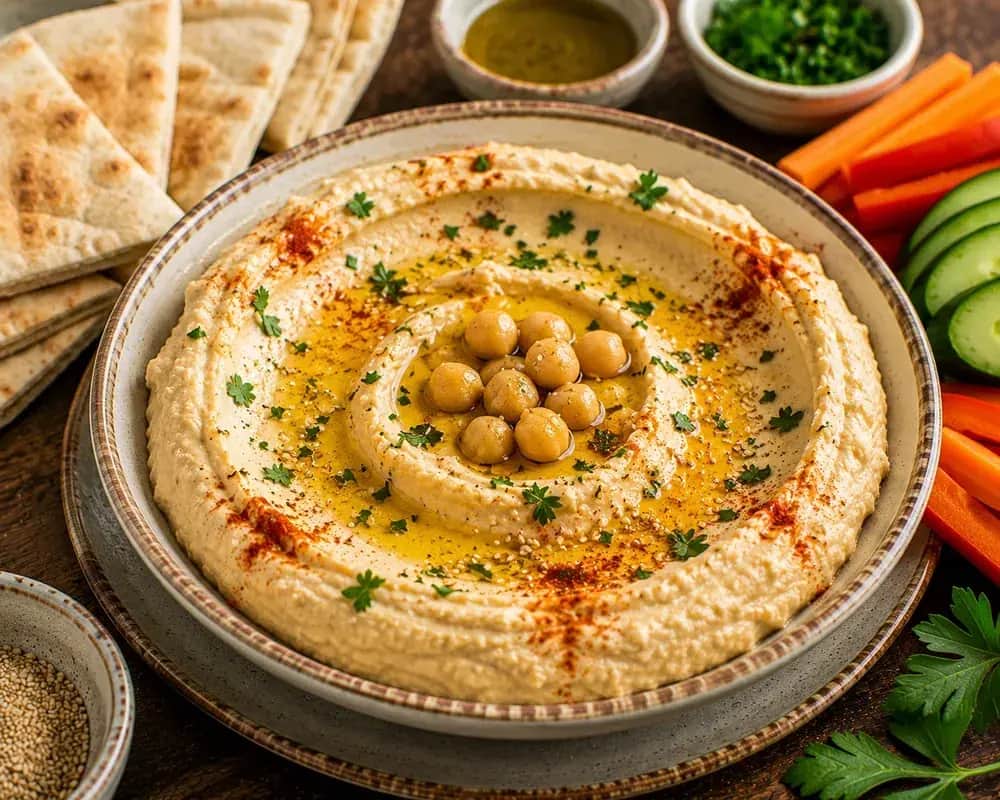
Classic Hummus Recipe — Palestinian Hummus bi-Tahini
A classic Palestinian hummus bi-tahini made with exceptionally tender chickpeas, creamy tahini, fresh lemon juice, garlic, cumin, and extra virgin olive oil. The finished hummus is smooth, light, and balanced, with warm Arabic bread for serving.
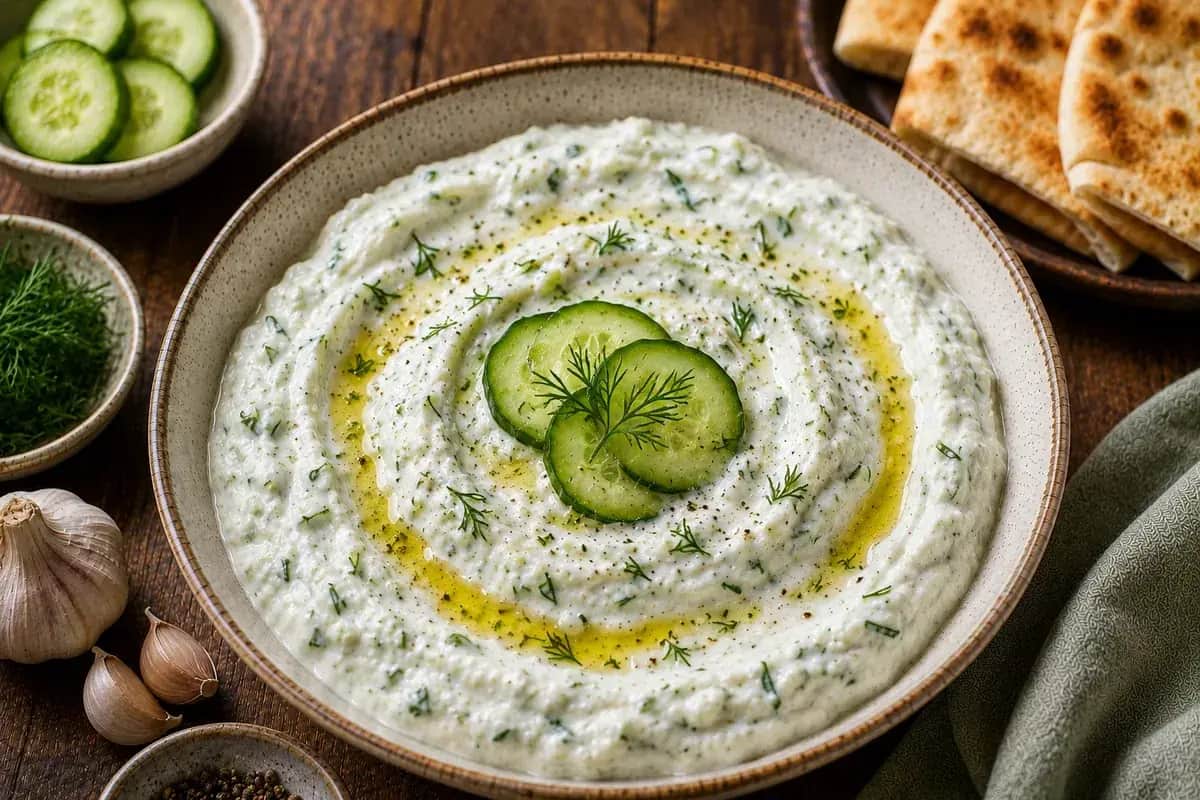
Creamy Tzatziki Sauce Recipe
A creamy tzatziki sauce recipe made with thick Greek yogurt, cucumber, garlic, fresh dill, optional mint, lemon juice, and extra virgin olive oil. This Lebanese-style yogurt sauce is cool, tangy, refreshing, and perfect with grilled chicken, shawarma, falafel, vegetables, wraps, warm pita, and mezze.
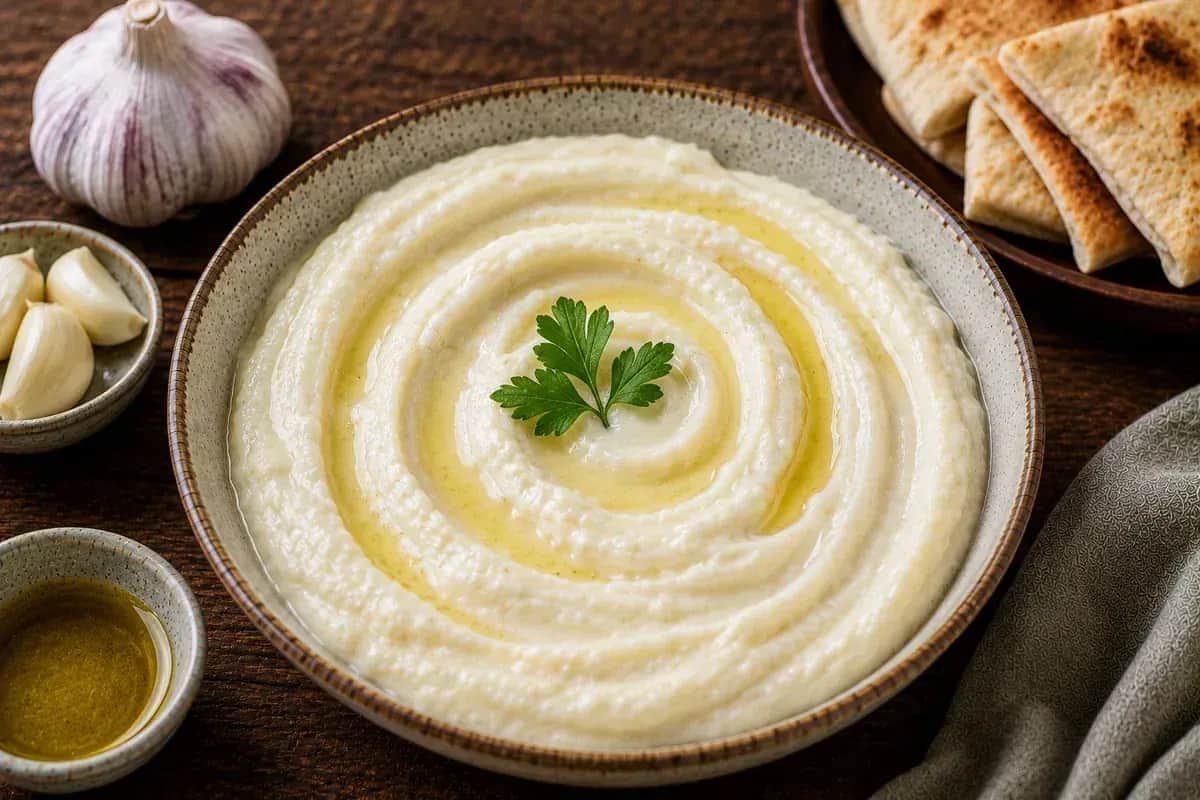
Classic Toum Recipe (Lebanese Garlic Sauce)
A Lebanese toum made with fresh garlic, lemon juice, avocado oil, aquafaba, and sea salt. The sauce is intensely garlicky, bright with lemon, and remarkably light and fluffy, making it a classic accompaniment to shawarma, grilled meats, potatoes, sandwiches, and mezze.