
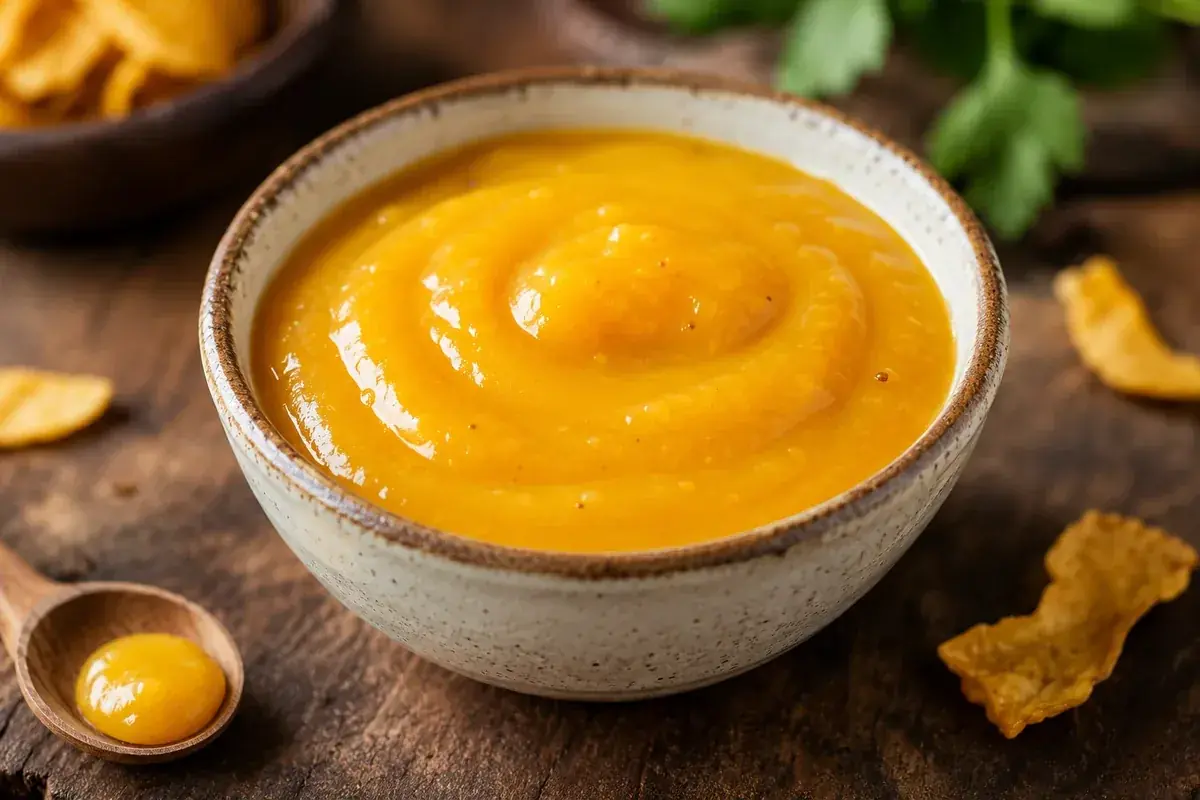
Authentic Amba Sauce Recipe — Iraqi Mango Condiment
An authentic amba sauce recipe for a bright, tangy Iraqi mango condiment made with pickled mango, turmeric, fenugreek, garlic, lemon juice, and warm spices.
Prep Time
10 mins
Cook Time
0 mins
Total Time
10 mins
Servings
10
A TASTE OF TRADITION
The Story Behind This Recipe
Amba is one of the most distinctive condiments in the Middle Eastern culinary landscape. Its defining ingredient is tangy pickled mango, combined with spices that create a flavor that is sour, savory, earthy, aromatic, and gently hot. Rather than being a sweet mango sauce, traditional-style amba is valued for its sharpness and spice.
Cultural & Culinary Context
Amba has deep roots in Iraqi Jewish cuisine and became closely associated with the food culture of Iraqi Jews who migrated to other parts of the Middle East. It is particularly well known today as an accompaniment to sabich, the eggplant-and-egg sandwich associated with Iraqi Jewish culinary traditions, and it is also widely enjoyed with shawarma, falafel, grilled foods, and sandwiches.
What Makes It Mediterranean?
Although amba is specifically associated with Iraqi culinary traditions, its use reflects a wider Middle Eastern and Mediterranean preference for bright condiments that balance rich foods. Pickling, herbs, citrus, olive oil, garlic, and aromatic spices are all important ways of building contrast and preserving flavor across the region's cuisines.
Mediterranean Influences
- 🌿Its sharp acidity provides the bright contrast often valued alongside grilled and roasted foods.
- 🌿Garlic and aromatic spices create a layered savory flavor.
- 🌿Extra virgin olive oil adds richness and connects the condiment to broader Mediterranean cooking traditions.
- 🌿Its role as a small, intensely flavored accompaniment reflects the wider Middle Eastern tradition of serving flavorful condiments alongside main dishes.
Ingredients
- 1 cup pickled mango (Use mango pieces packed in a tangy pickle. Drain lightly if the pickling liquid is especially salty or strong.)
- 2 garlic cloves (Use fresh garlic for the characteristic savory bite of the sauce.)
- 2 tbsp fresh lemon juice (Add gradually because the pickled mango already provides considerable acidity.)
- 2 tbsp extra virgin olive oil (Adds richness and helps round out the sharp acidity of the mango and lemon.)
- 2 tbsp water (Use as needed to loosen the sauce to a spoonable consistency.)
- 1 tsp ground turmeric (Provides the characteristic golden color and an earthy background flavor.)
- 1/2 tsp ground fenugreek (Use the measured amount carefully because fenugreek has a strong and distinctive aroma.)
- 1/2 tsp ground cumin (Adds warm, earthy depth to the mango and spices.)
- 1/4 tsp cayenne pepper (Adjust slightly according to the heat level you prefer.)
- 1/2 tsp salt (Start conservatively because pickled mango may already contain salt.)
- 2 tbsp fresh cilantro (Finely chopped and stirred in after blending for a fresh herbal finish.)
Instructions
- 1
Drain the pickled mango lightly. If it is packed in a particularly salty or strongly seasoned brine, briefly rinse it and drain well before using.
- 2
Add the pickled mango, garlic, lemon juice, extra virgin olive oil, water, turmeric, fenugreek, cumin, cayenne pepper, and salt to a food processor.
- 3
Blend until the mixture becomes a mostly smooth, spoonable sauce. Stop once or twice to scrape down the sides so the mango and spices are evenly incorporated.
- 4
Check the consistency. If the sauce is too thick, add a little more water gradually rather than adding all of it at once.
- 5
Taste the sauce before adding additional salt. Adjust the balance gradually with lemon juice, cayenne, or water depending on whether it needs more acidity, heat, or dilution.
- 6
Stir in the finely chopped fresh cilantro after blending. This preserves some of its fresh herbal character instead of completely pureeing it into the sauce.
- 7
Transfer the amba to a clean airtight jar or food-safe container.
- 8
Refrigerate for at least 30 minutes before serving. This resting time allows the garlic and spices to blend with the tangy mango and gives the flavor a more rounded character.
- 9
Stir the sauce before serving and taste it once more. If necessary, adjust the texture with a small splash of water or the acidity with a little lemon juice.
- 10
Serve as a condiment with shawarma, sabich, falafel, grilled meats, roasted vegetables, sandwiches, or other dishes that benefit from a bright, tangy, spicy finish.
SET YOURSELF UP FOR SUCCESS
Before You Cook
👨🍳 Keep In Mind
- •Taste the pickled mango before beginning so you know how salty, sour, and spicy its existing pickle is.
- •Measure the fenugreek carefully because its flavor is powerful and can dominate the sauce if overused.
- •Have a small amount of additional water and lemon juice ready so you can adjust the finished sauce gradually.
- •Use a food processor capable of breaking down the pickled mango into a smooth or mostly smooth sauce.
- •Prepare a clean airtight container before blending so the finished sauce can be refrigerated immediately.
💡 Helpful Tips
- •Do not add all the lemon juice or water automatically when adjusting the sauce. Pickled mango varies in acidity and moisture, so gradual adjustment gives you better control.
- •Taste before adding extra salt because pickled mango can already be quite salty.
- •Blend thoroughly enough to distribute the spices, but do not keep processing unnecessarily once the sauce reaches the desired consistency.
- •Stir the cilantro in after blending to preserve a fresher herbal character.
- •Resting the sauce in the refrigerator is important because the garlic and spices become more integrated with the mango over time.
- •Amba should taste noticeably tangy and aromatic rather than simply sweet like a fruit sauce.
👀 How Do I Know It's Done?
- ✓The mango and garlic have been broken down into a mostly smooth sauce.
- ✓The sauce can be spooned or drizzled without being either stiff or watery.
- ✓The flavor has a clear tangy mango character supported by garlic and warm spices.
- ✓The heat from cayenne is present but does not completely overpower the acidity and aromatics.
- ✓After resting, the spices taste integrated rather than harsh or disconnected.
Tweak It
Make This Recipe Work for You
Adapt the recipe to your ingredients, dietary needs, budget, time, serving size, or meal-prep plans.
🔄 Ingredient Substitutions
Adjust the mango texture
If the pickled mango is very firm, blend it longer and add water gradually until the sauce becomes spoonable.
Adjust the fresh herb
If cilantro is unavailable or not preferred, the sauce can be made without it rather than changing the core mango-and-spice profile.
🌱 Dietary Adjustments
Vegan
The recipe is naturally vegan and contains no meat, eggs, or dairy products.
Dairy-free
The sauce is naturally dairy-free and works well with dairy-free meals and sandwiches.
💰 Budget-Friendly Options
Use a small amount for maximum impact
Amba is intensely flavored, so a relatively small serving can add substantial acidity and spice to a simple meal.
Build meals around pantry staples
A jar of amba can turn simple beans, roasted vegetables, falafel, or grilled chicken into a more flavorful meal without requiring a complicated additional sauce.
⏱️ Time-Saving Options
Prepare it ahead
Make the sauce in advance and refrigerate it so the resting period happens before mealtime.
Prepare a batch
Amba is particularly useful as a make-ahead condiment because it can be portioned and used with several meals throughout the week.
👨👩👧👦 Serving Adjustments
Make a larger batch
When scaling the recipe, increase the ingredients proportionally and adjust the lemon juice, water, salt, and cayenne gradually after blending.
🥡 Meal Prep
Keep it ready for quick meals
Store the prepared sauce in a clean airtight container so a spoonful can quickly brighten sandwiches, bowls, roasted vegetables, falafel, or grilled proteins.
RECIPE RESCUE
🧩 What Do You Need Help With?
Choose the problem you're facing and get a recipe-specific solution instead of a generic cooking tip.
WHAT IF?
🔄 What If...?
Choose your situation and we'll show you a practical pathway for making this recipe work.
STORAGE & LEFTOVERS
🥡 Storage & Leftovers
Transfer the finished amba to a clean airtight container.
Keep it refrigerated when not serving.
Use a clean spoon each time you remove a portion.
Stir the sauce before serving because the ingredients may settle slightly during storage.
If the sauce develops an unusual smell, appearance, or mold, discard it rather than tasting it.
Best Storage Time
For best quality, use within about 1 week when refrigerated in a clean airtight container.
How to Store
Store the sauce in a clean glass jar or another airtight, food-safe container in the refrigerator.
SERVING & PAIRING
🍽️ Serving & Pairing
Serve amba in small amounts as a bold condiment alongside rich, grilled, roasted, or fried foods. Its tangy acidity and warm spices are particularly effective when paired with foods that need a bright contrast.
What Goes Well With It?
RECIPE FAQ
❓ Frequently Asked Questions
How do I make amba sauce?
To make amba sauce, blend pickled mango with garlic, lemon juice, olive oil, turmeric, fenugreek, cumin, cayenne, and salt until mostly smooth. Adjust the consistency and seasoning gradually, stir in fresh cilantro, then refrigerate the sauce for at least 30 minutes before serving.
What is amba sauce made of?
This amba sauce is made with pickled mango, garlic, lemon juice, extra virgin olive oil, turmeric, fenugreek, cumin, cayenne pepper, salt, water, and fresh cilantro. The combination creates its characteristic tangy, savory, aromatic flavor.
What is amba?
Amba is a tangy mango-based condiment associated with Iraqi Jewish cuisine and widely enjoyed across the Middle East. Pickled mango is combined with spices such as turmeric and fenugreek to create its characteristic sharp, savory, aromatic flavor.
Is amba sweet?
Traditional-style amba is primarily tangy, savory, and spicy rather than sweet like a conventional mango sauce. Its flavor comes from pickled mango, spices, garlic, and acidity.
What does amba taste like?
It is bright and sour from the pickled mango and lemon, earthy from turmeric and fenugreek, savory from garlic, and gently spicy from cayenne.
What is amba traditionally served with?
Amba is particularly associated with sabich and is also commonly enjoyed with shawarma, falafel, grilled meats, roasted vegetables, and sandwiches.
Can I make amba less spicy?
Yes. Reduce or omit the cayenne and add it gradually after blending if more heat is desired.
Why is fenugreek important in amba?
Fenugreek contributes a distinctive earthy and aromatic character that helps define the flavor of amba. Because it is strong, it should be measured carefully.
Can I prepare amba ahead of time?
Yes. Preparing it ahead is useful because resting allows the garlic and spices to integrate with the pickled mango. Refrigerate it in a clean airtight container until serving.
Explore More
Go deeper into the cuisine
Learn more about the ingredients, traditions, and cooking approaches connected to this recipe.
You May Also Like
More delicious recipes from the Dips & Sauces
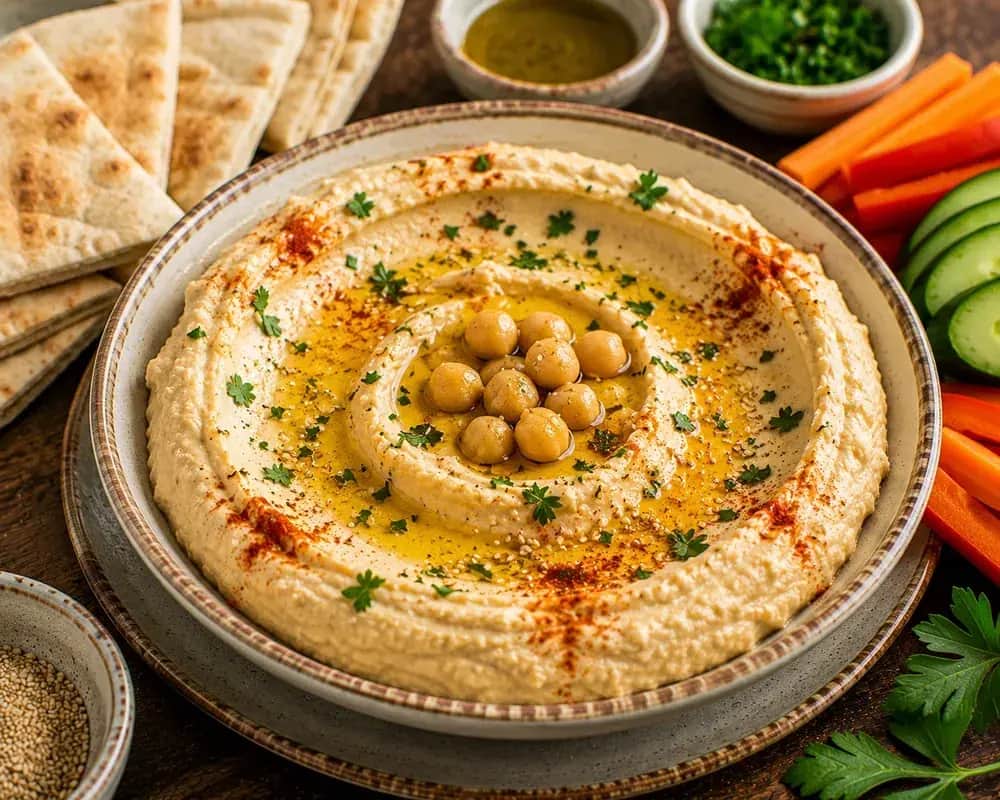
Classic Hummus Recipe — Palestinian Hummus bi-Tahini
A classic Palestinian hummus bi-tahini made with exceptionally tender chickpeas, creamy tahini, fresh lemon juice, garlic, cumin, and extra virgin olive oil. The finished hummus is smooth, light, and balanced, with warm Arabic bread for serving.
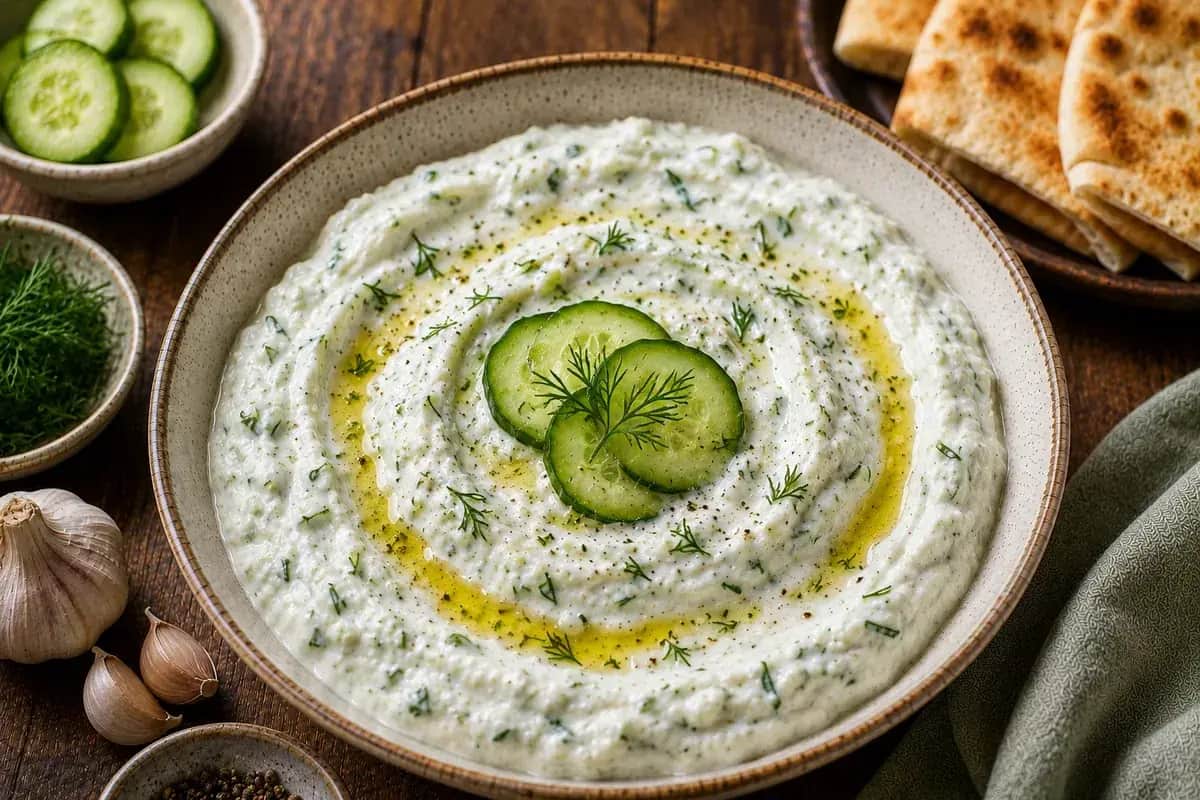
Creamy Tzatziki Sauce Recipe
A creamy tzatziki sauce recipe made with thick Greek yogurt, cucumber, garlic, fresh dill, optional mint, lemon juice, and extra virgin olive oil. This Lebanese-style yogurt sauce is cool, tangy, refreshing, and perfect with grilled chicken, shawarma, falafel, vegetables, wraps, warm pita, and mezze.
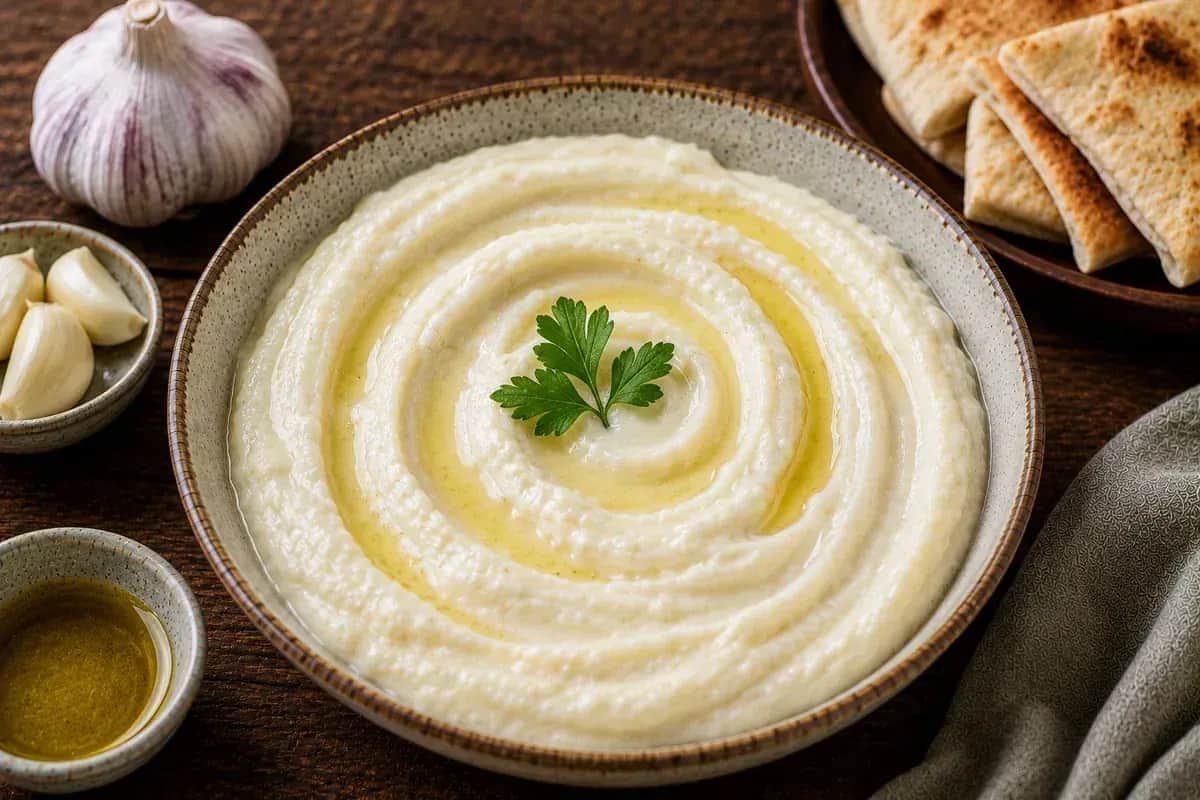
Classic Toum Recipe (Lebanese Garlic Sauce)
A Lebanese toum made with fresh garlic, lemon juice, avocado oil, aquafaba, and sea salt. The sauce is intensely garlicky, bright with lemon, and remarkably light and fluffy, making it a classic accompaniment to shawarma, grilled meats, potatoes, sandwiches, and mezze.