
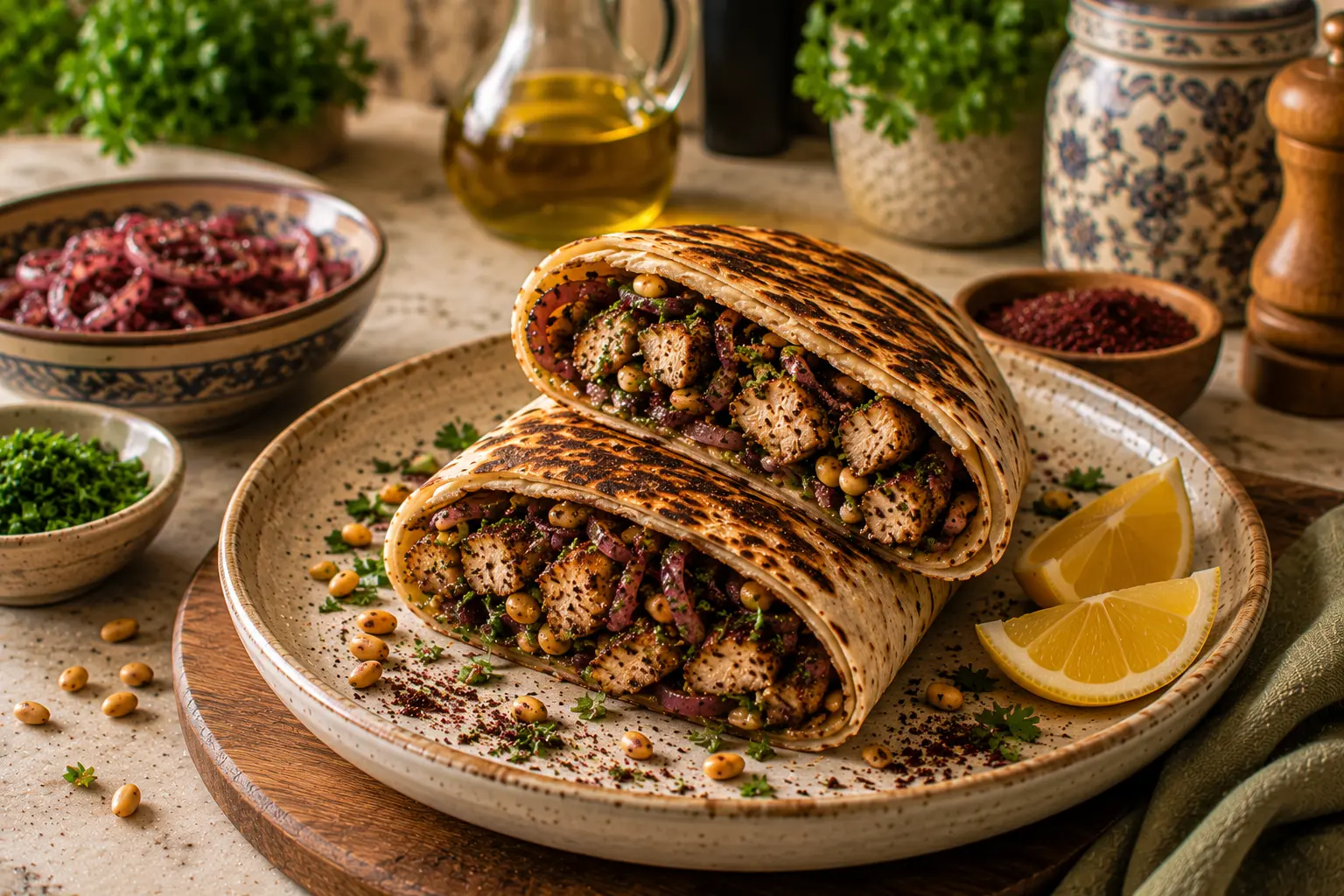
Palestinian Musakhan Chicken Pita Wrap Recipe
A Palestinian Musakhan chicken pita wrap made with sumac-seasoned chicken, soft sumac onions, extra virgin olive oil, toasted pine nuts, fresh parsley, and warm pita finished on the pan for a rustic taboon-style exterior. This version brings the defining flavors of Musakhan into a convenient pita wrap for everyday cooking.
Prep Time
25 mins
Cook Time
50 mins
Total Time
75 mins
Servings
2
A TASTE OF TRADITION
The Story Behind This Recipe
Musakhan is a deeply comforting Palestinian dish centered on chicken, onions, olive oil, sumac, and bread. This wrap version keeps the character of that traditional combination while presenting it in a practical format that is easy to prepare and eat.
Cultural & Culinary Context
Musakhan is strongly associated with Palestinian cuisine and is traditionally prepared with roasted or cooked chicken, large quantities of onions softened in olive oil, fragrant sumac, and taboon bread. It is especially connected with Palestinian home cooking and communal meals, where bread, chicken, onions, and olive oil come together as the centerpiece of the table. The combination of sumac and olive oil gives the dish its distinctive sharp, aromatic flavor.
What Makes It Mediterranean?
The recipe reflects the Eastern Mediterranean food tradition through its use of extra virgin olive oil, fresh herbs, onions, nuts, bread, and bright spices. Palestine sits within the Eastern Mediterranean culinary landscape, where simple ingredients are often transformed through slow cooking, olive oil, herbs, and spices rather than heavy sauces.
Mediterranean Influences
- 🌿Extra virgin olive oil is used as a principal cooking fat.
- 🌿Sumac provides acidity and brightness without relying heavily on added salt.
- 🌿Onions are slowly softened in olive oil to create a naturally sweet and aromatic base.
- 🌿Pine nuts add traditional Eastern Mediterranean texture and richness.
- 🌿Fresh parsley provides a bright herbal finish.
- 🌿Bread, vegetables, herbs, spices, and olive oil form a balanced Eastern Mediterranean-style meal.
Ingredients
- 300 g boneless skinless chicken breast (Cut into thin, even strips so the chicken cooks quickly and evenly.)
- 2 large pita breads (Use soft pita breads large enough to fold and roll around the filling.)
- 2 large yellow onions (Thinly sliced for the Musakhan-style onion topping.)
- 3 tbsp extra virgin olive oil (Use a good-quality olive oil because it is an important part of the Musakhan flavor.)
- 2 tbsp ground sumac (The signature tangy spice of Musakhan. Adjust slightly according to its strength and your preference.)
- 0.5 tsp ground cumin
- 0.5 tsp ground coriander
- 0.5 tsp paprika
- 0.5 tsp black pepper
- 0.5 tsp sea salt (Adjust after cooking because sumac varies in intensity.)
- 2 cloves garlic (Finely minced.)
- 2 tbsp pine nuts (Toast separately in a small dry pan until lightly golden.)
- 2 tbsp fresh parsley (Finely chopped.)
- 1 tbsp fresh lemon juice (Optional but useful for balancing the richness of the olive oil and sumac.)
Instructions
- 1
Prepare the chicken by patting it completely dry and cutting it into thin, evenly sized strips. Dry chicken browns better and helps prevent the pan from becoming watery.
- 2
Combine the chicken with the garlic, cumin, coriander, paprika, black pepper, salt, 1 tablespoon of extra virgin olive oil, and 1 teaspoon of sumac. Toss thoroughly so every piece is seasoned. Allow it to rest for at least 15 minutes while you prepare the onions.
- 3
Heat a large heavy skillet over medium-high heat. Add 1 tablespoon of extra virgin olive oil and allow it to become hot but not smoking. Spread the chicken into a single layer without overcrowding the pan.
- 4
Cook the chicken for about 3–5 minutes on the first side without constantly moving it, allowing it to develop a browned surface. Turn the pieces and continue cooking for another 3–5 minutes, adjusting the heat if necessary. The chicken should be fully cooked through, lightly browned, and no longer pink in the center. If using a thermometer, cook chicken to an internal temperature of 74°C (165°F).
- 5
Transfer the cooked chicken to a clean plate and let it rest for about 5 minutes. Do not wash the chicken pan because the browned bits left behind will add flavor to the onions.
- 6
Reduce the heat to medium. Add the remaining olive oil to the same pan, followed by the thinly sliced onions. Cook the onions slowly for about 8–12 minutes, stirring regularly, until they become very soft, glossy, and lightly golden. If they begin to brown too quickly, reduce the heat and add a small splash of water.
- 7
Add the remaining ground sumac to the softened onions and stir thoroughly. Cook for another 1–2 minutes so the sumac becomes fragrant and coats the onions with its characteristic tangy flavor. Taste and adjust the seasoning if necessary.
- 8
While the onions are cooking, heat a separate small dry skillet over medium-low heat. Add the pine nuts in a single layer and toast them for about 2–4 minutes, shaking or stirring frequently. Remove them immediately when lightly golden because pine nuts can burn very quickly.
- 9
Warm the pita breads briefly so they become soft and flexible. Do not overheat them or they may become dry and crack while wrapping.
- 10
Lay one warm pita flat. Place a generous portion of the cooked chicken slightly below the center, then add the sumac onions, toasted pine nuts, and fresh parsley. Add a small squeeze of lemon if desired.
- 11
Fold the lower edge of the pita over the filling, fold the sides inward, and roll it firmly into a compact wrap. Keep the filling tucked inside rather than overfilling the pita, which makes the final pan-grilling step much easier.
- 12
Heat a clean skillet or griddle over medium heat. Place the assembled wrap seam-side down and gently press it with a spatula. Cook for about 30–60 seconds, then rotate and roll the wrap onto another side. Continue turning it every 30–60 seconds until several sides develop toasted brown marks and the pita feels lightly crisp on the outside while remaining warm and pliable inside.
- 13
For the taboon-style finish, gently roll the wrap back and forth across the hot pan while applying light pressure with a spatula. Do not press so hard that the filling escapes. The goal is to create a rustic, lightly grilled exterior similar in character to bread exposed to a hot taboon surface.
- 14
Remove the wrap from the pan and let it rest for 1–2 minutes before serving. This short rest allows the filling to settle and makes the wrap easier to eat without the juices immediately escaping.
- 15
Serve warm with extra sumac, fresh parsley, lemon wedges, or a simple side salad. The wrap is best eaten shortly after the final pan-grilling step while the pita is still warm and lightly crisp.
SET YOURSELF UP FOR SUCCESS
Before You Cook
👨🍳 Keep In Mind
- •Cut the chicken into evenly sized strips so smaller pieces do not overcook while thicker pieces remain raw.
- •Pat the chicken dry before seasoning. Excess surface moisture prevents good browning.
- •Slice the onions thinly and evenly so they soften at the same rate.
- •Have the pine nuts ready because they toast very quickly and can burn within seconds.
- •Keep the cooked chicken separate from raw chicken equipment and surfaces.
- •Use a pita that is flexible enough to roll without cracking. Brief warming helps.
- •Do not overfill the pita. A compact wrap is much easier to pan-grill and rotate.
💡 Helpful Tips
- •Do not overcrowd the chicken pan. Cook in batches if necessary so the chicken browns instead of steaming.
- •Leave the chicken undisturbed for the first few minutes of cooking so it has a chance to brown.
- •Do not cook the onions over excessively high heat. Musakhan-style onions should become soft and glossy rather than burnt.
- •Sumac can vary in acidity and strength. Add gradually and taste before adding more.
- •Toast pine nuts separately over medium-low heat and keep them moving because they burn quickly.
- •Warm the pita just enough to make it flexible. A very hot dry pita becomes brittle.
- •During the final pan-grilling step, use medium heat. High heat can burn the pita before the filling is warmed.
- •The final rolling motion is not meant to flatten the wrap. Use gentle pressure to create toasted contact marks while keeping the filling intact.
👀 How Do I Know It's Done?
- ✓Chicken is done when the thickest pieces reach 74°C (165°F) internally and are fully opaque in the center.
- ✓The onions are ready when they are very soft, glossy, and lightly golden with no raw onion crunch.
- ✓Pine nuts are ready when lightly golden and fragrant. Remove them immediately because residual pan heat continues to brown them.
- ✓The final wrap is ready when the pita is warm, lightly crisp on the surface, and marked with toasted spots while the inside remains soft enough to bite through.
Tweak It
Make This Recipe Work for You
Adapt the recipe to your ingredients, dietary needs, budget, time, serving size, or meal-prep plans.
🔄 Ingredient Substitutions
Use boneless chicken thighs
Boneless skinless chicken thighs can replace breast meat and will remain especially juicy. Cut them into similarly sized strips and cook until they reach 74°C (165°F).
Replace pine nuts
Use toasted slivered almonds if pine nuts are unavailable. Toast them gently because thin almonds can also brown quickly.
Use another soft flatbread
A soft Arabic flatbread or another flexible flatbread can be used if pita is unavailable. Choose bread that can be folded and rolled without cracking.
🌱 Dietary Adjustments
Naturally dairy-free
The core Musakhan filling contains no dairy. Check the flatbread ingredients if strict dairy avoidance is required.
Lower-carbohydrate option
Serve the Musakhan chicken and sumac onions over a large salad instead of wrapping them in pita.
💰 Budget-Friendly Options
Reduce the pine nuts
Pine nuts are traditional but relatively expensive. Use a smaller amount or replace them with toasted sunflower seeds for a more economical version.
⏱️ Time-Saving Options
Prepare onions ahead
Slice the onions in advance and store them refrigerated in an airtight container so the cooking process is faster.
👨👩👧👦 Serving Adjustments
Double the recipe
For a larger batch, cook the chicken in batches rather than overcrowding the pan. Prepare the onions in a wide skillet so they have enough surface area to soften evenly.
🥡 Meal Prep
Prepare the filling ahead
The chicken and sumac onions can be prepared ahead and refrigerated separately. Reheat them before assembling and pan-grilling the pita.
RECIPE RESCUE
🧩 What Do You Need Help With?
Choose the problem you're facing and get a recipe-specific solution instead of a generic cooking tip.
WHAT IF?
🔄 What If...?
Choose your situation and we'll show you a practical pathway for making this recipe work.
STORAGE & LEFTOVERS
🥡 Storage & Leftovers
For the best texture, store the cooked chicken and sumac onions separately from the pita whenever possible.
Place cooled chicken and onions in airtight containers and refrigerate promptly.
Use refrigerated cooked chicken within 3–4 days.
Reheat the filling until steaming hot before assembling.
Assemble and pan-grill the pita just before serving for the best texture.
Avoid storing a fully assembled wrap for an extended period because the filling can soften the pita.
Best Storage Time
3–4 days for the cooked chicken and onion filling when properly refrigerated.
How to Store
Store the chicken and sumac onions separately in clean airtight containers in the refrigerator.
SERVING & PAIRING
🍽️ Serving & Pairing
Serve the Musakhan wrap warm immediately after the final pan-grilling step so the exterior remains lightly toasted while the chicken and sumac onions stay juicy.
What Goes Well With It?
RECIPE FAQ
❓ Frequently Asked Questions
How do you make a Palestinian Musakhan chicken pita wrap?
To make a Palestinian Musakhan chicken pita wrap, first season thin strips of chicken with garlic, cumin, coriander, paprika, black pepper, salt, olive oil, and sumac. Cook the chicken until browned and fully cooked, then soften thinly sliced onions in olive oil in the same pan and finish them with sumac. Toast the pine nuts separately, warm the pita, and fill it with the chicken, sumac onions, pine nuts, and fresh parsley. Fold and roll the pita into a compact wrap, then pan-grill it seam-side down over medium heat, rotating and gently rolling it until the exterior develops toasted brown marks. Rest briefly and serve warm with extra sumac, parsley, and lemon.
What is Musakhan?
Musakhan is a traditional Palestinian dish centered around chicken, onions cooked in olive oil, sumac, and bread, traditionally taboon bread. The combination of olive oil, tangy sumac, sweet softened onions, chicken, and toasted nuts gives it its characteristic flavor.
Is this an authentic Palestinian Musakhan?
This is a Palestinian-inspired wrap adaptation of Musakhan rather than a claim to be the traditional plated preparation. It preserves the core flavor combination of chicken, sumac, onions, olive oil, nuts, and bread while adapting the dish into a hand-held pita wrap.
Why do I cook the onions in the same pan as the chicken?
The browned bits left in the chicken pan add extra savory depth to the onions. The onions also absorb some of the olive oil and chicken flavors while becoming soft and glossy.
Why are the pine nuts cooked in a separate pan?
Pine nuts cook very quickly and can burn while the onions are slowly softening. Toasting them separately gives you better control and produces evenly golden nuts.
Why do I pan-grill the completed wrap?
The final pan-grilling step gives the pita toasted contact marks and a lightly cooked, crisp exterior inspired by the rustic character of taboon bread. It also warms the assembled filling.
What temperature should the chicken reach?
The thickest part of the chicken should reach 74°C (165°F) internally. This is the safest way to verify that the chicken is fully cooked.
Why is my pita tearing?
The pita may be too cold, dry, or overfilled. Warm it briefly before filling, use a moderate amount of filling, and roll it while it is still flexible.
Can I use chicken thighs?
Yes. Boneless skinless chicken thighs work very well and tend to remain juicy. Cut them into even strips and cook until they reach 74°C (165°F) internally.
Can I prepare the filling ahead?
Yes. The chicken and sumac onions can be prepared ahead and refrigerated separately. Reheat them before assembling, then complete the final pan-grilling step immediately before serving.
Explore More
Go deeper into the cuisine
Learn more about the ingredients, traditions, and cooking approaches connected to this recipe.
Related from Healthy Mezze
You May Also Like
More delicious recipes from the Sandwiches & Wraps
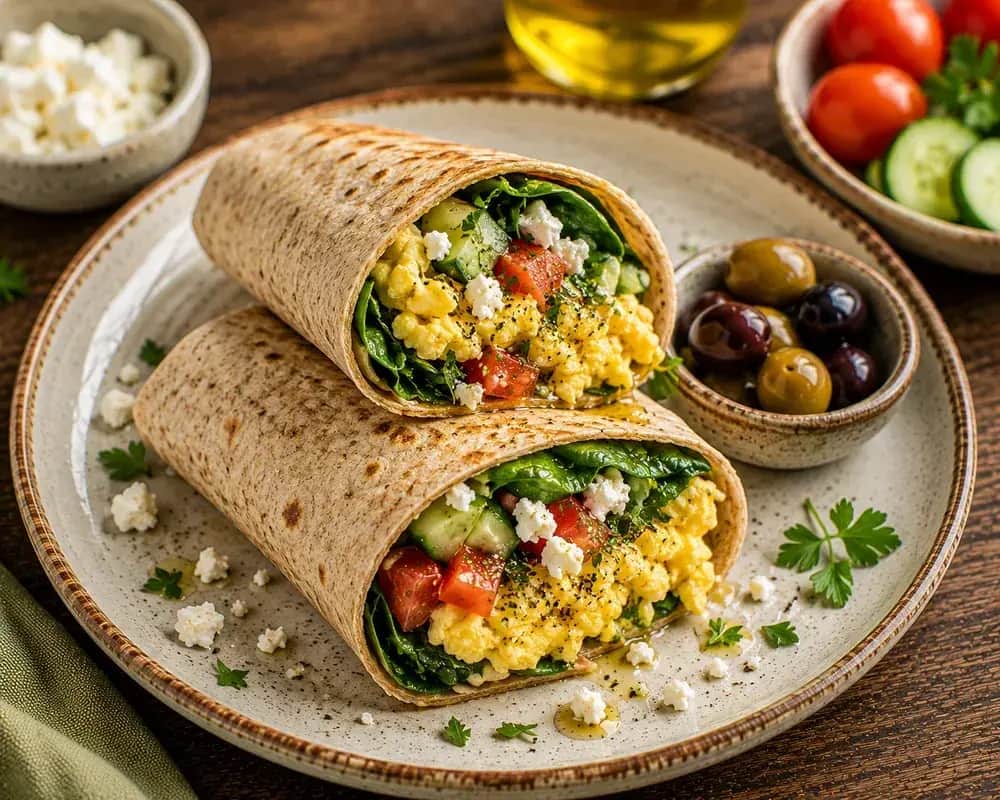
Mediterranean Breakfast Wrap Recipe — Healthy Lebanese-Style Egg & Hummus Breakfast Wrap
A Lebanese-style breakfast wrap filled with eggs, fresh vegetables, herbs, and Mediterranean flavors in warm flatbread. It is quick to assemble, satisfying without being heavy, and practical for busy mornings.
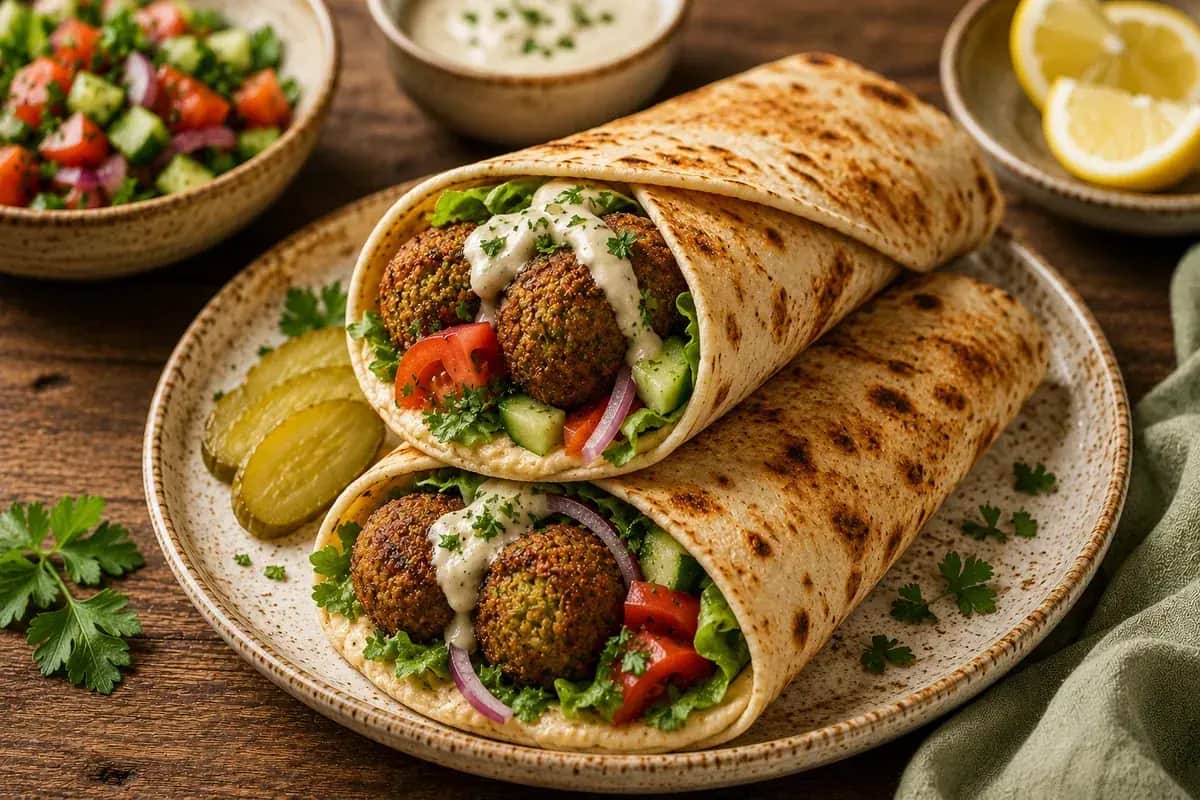
Mediterranean Falafel Wrap Recipe — Healthy Vegan Falafel Wrap with Tahini
This Mediterranean falafel wrap recipe combines warm crispy falafel, fresh lettuce, tomato, cucumber, red onion, parsley, pickled vegetables, lemon, and creamy tahini sauce in a soft flatbread. This healthy vegan falafel wrap is rich in plant-based protein, fiber, vegetables, and unsaturated fats and makes an easy Mediterranean-inspired lunch, dinner, or meal-prep option.