
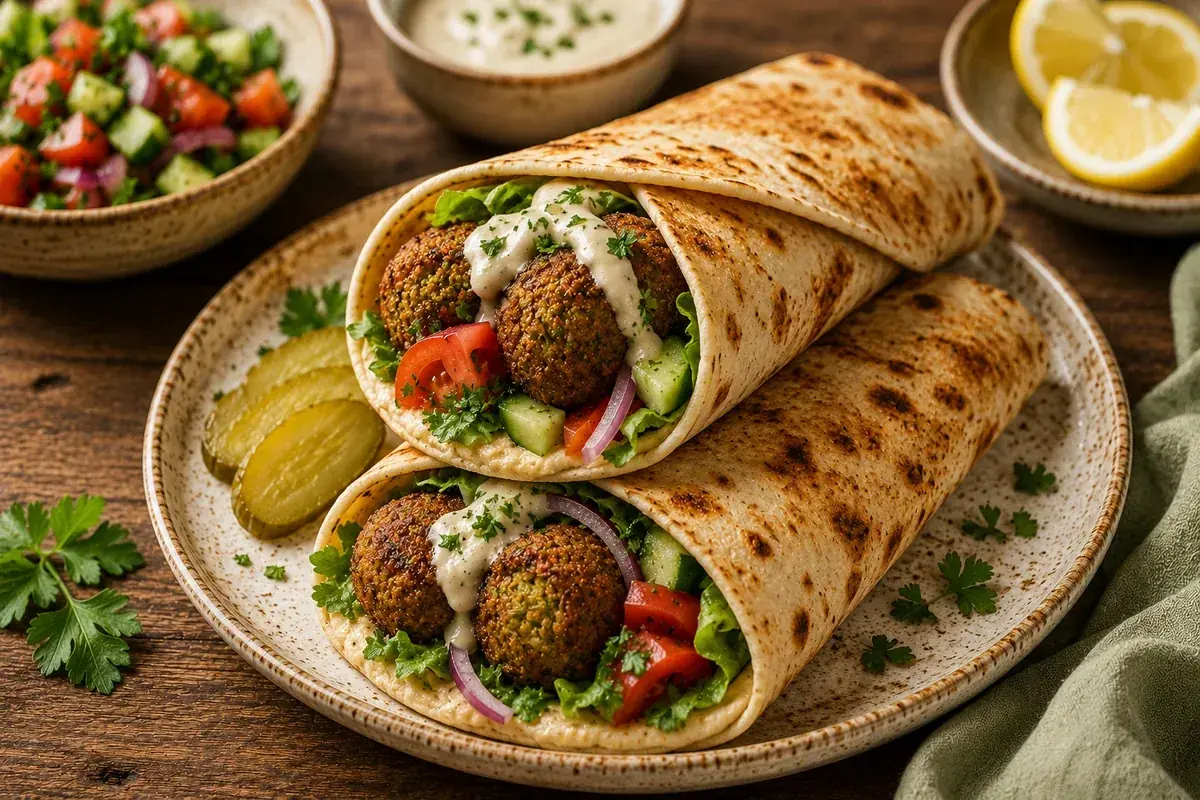
Mediterranean Falafel Wrap Recipe — Healthy Vegan Falafel Wrap with Tahini
This Mediterranean falafel wrap recipe combines warm crispy falafel, fresh lettuce, tomato, cucumber, red onion, parsley, pickled vegetables, lemon, and creamy tahini sauce in a soft flatbread. This healthy vegan falafel wrap is rich in plant-based protein, fiber, vegetables, and unsaturated fats and makes an easy Mediterranean-inspired lunch, dinner, or meal-prep option.
Prep Time
15 mins
Cook Time
10 mins
Total Time
25 mins
Servings
2
A TASTE OF TRADITION
The Story Behind This Recipe
A good falafel wrap is almost a small Middle Eastern meal folded into your hands. First comes the aroma of warm chickpeas and herbs, then the crunch of falafel, the cool snap of cucumber and lettuce, the sharpness of pickles and onion, and finally the nutty richness of tahini and the brightness of lemon. It is the kind of food that does not need a formal dining room: wrapped in flatbread, it belongs just as naturally in a busy market, a neighborhood bakery, a family kitchen, or a quick lunch shared with friends.
Cultural & Culinary Context
Falafel has become one of the best-known foods of the Middle East, but its exact origin is not settled. It is especially associated with Egypt, where a related preparation is commonly known as ta'amiya and is traditionally made with fava beans, as well as with the Levant, where chickpea-based falafel became deeply established. Across the region, recipes vary in their legumes, herbs, spices, shape, and accompaniments. That diversity is part of falafel's story: it is not a single rigid recipe but a family of preparations shaped by local ingredients and food traditions. The wrap developed naturally from the same idea—put warm falafel, fresh vegetables, pickles, herbs, and tahini into flatbread and create a complete meal that is portable, affordable, flavorful, and satisfying.
What Makes It Mediterranean?
This wrap brings together ingredients that are common across Mediterranean and Middle Eastern home cooking: chickpeas, sesame tahini, olive-oil-friendly vegetables, fresh herbs, lemon, pickled vegetables, and flatbread. Its character comes from contrast rather than complicated technique. Crisp falafel meets cool vegetables, creamy tahini meets sharp pickles, and lemon cuts through the richness. The result feels fresh and substantial at the same time, which is one reason falafel fits so naturally into a Mediterranean-inspired meal.
Mediterranean Influences
- 🌿Chickpeas provide the hearty plant-based foundation of the falafel.
- 🌿Tahini contributes the distinctive nutty flavor of ground sesame.
- 🌿Fresh tomatoes, cucumber, lettuce, onion, and parsley add color, freshness, and texture.
- 🌿Lemon juice provides brightness and balances the richer tahini and falafel.
- 🌿Pickled vegetables add acidity and the sharp, savory contrast common in Middle Eastern meals.
- 🌿Flatbread makes the ingredients portable while remaining central to the region's everyday food culture.
- 🌿The recipe relies on herbs, vegetables, legumes, sesame, and acidity rather than heavy sauces.
- 🌿The finished meal combines several simple ingredients into a balanced plant-based dish.
Ingredients
- 1 Falafel (Use freshly cooked or reheated falafel that is crisp outside and hot inside. If using frozen falafel, cook according to the package directions until thoroughly heated.)
- 1 Large flatbread (Use a flexible pita, Arabic flatbread, or similar wrap that is large enough to fold without cracking. Warm it briefly before assembling.)
- 1 Lettuce (Use crisp leaves and dry them thoroughly after washing. Excess water can make the wrap soggy.)
- 1 Tomato (Slice thinly and remove some of the watery center if the tomato is especially juicy.)
- 1 Cucumber (Slice thinly. If very watery, pat the slices dry before adding them to the wrap.)
- 1 Red onion (Slice very thinly so its sharp flavor does not overpower the falafel and tahini.)
- 1 Fresh parsley (Chop just before assembling for the freshest flavor.)
- 1 Tahini sauce (Use a pourable tahini sauce rather than thick plain tahini. If yours is too thick, loosen it gradually with a little water and lemon juice.)
- 1 Fresh lemon juice (Add gradually because pickled vegetables already provide acidity.)
- 1 Pickled vegetables (Drain well before adding. Excess pickle brine can quickly make the flatbread soggy.)
Instructions
- 1
Prepare the falafel according to the recipe or package instructions until the outside is crisp and the center is thoroughly hot. If reheating cooked falafel, use an oven, air fryer, or skillet rather than microwaving when possible so the exterior stays crisp.
- 2
Wash the lettuce, tomato, cucumber, red onion, and parsley. Dry the vegetables well. Water left on the vegetables is one of the easiest ways to make a wrap soggy.
- 3
Slice the tomato and cucumber thinly and the red onion very thinly. If the tomato or cucumber is particularly watery, remove some of the wet center and pat the slices dry.
- 4
Drain the pickled vegetables thoroughly. Keep them in a small bowl or on a paper towel while preparing the rest of the filling so excess brine does not soak into the flatbread.
- 5
Warm the flatbread briefly in a dry skillet over low to medium heat, or warm it for a few seconds until it becomes flexible. Do not overheat it, because a dry flatbread is much more likely to crack while rolling.
- 6
Place the warm flatbread on a clean work surface and spread a thin, even layer of tahini sauce over the center. Leave a border around the edges so the sauce does not squeeze out when the wrap is rolled.
- 7
Arrange the lettuce over the sauce first. This creates a useful barrier between the wetter vegetables and the bread.
- 8
Add the sliced tomato, cucumber, and red onion in an even layer. Avoid piling the vegetables too high in the center because an overfilled wrap is difficult to close.
- 9
Place the warm falafel over the vegetables. For large falafel pieces, gently break them into halves or smaller chunks so every bite contains some falafel without forcing the wrap open.
- 10
Add the drained pickled vegetables and chopped parsley. Distribute them rather than concentrating them in one spot so their acidity and freshness are balanced throughout the wrap.
- 11
Drizzle with fresh lemon juice and a small additional amount of tahini sauce if desired. Taste the balance before adding more because both lemon and pickles can provide plenty of acidity.
- 12
Fold the bottom edge of the flatbread slightly upward over the filling. Fold the two sides inward, then roll the wrap forward firmly while keeping the filling tucked inside.
- 13
If the flatbread feels dry or begins to crack, stop rolling and warm it briefly again rather than forcing it. A flexible flatbread will hold the filling much better.
- 14
For a firmer wrap, place the finished wrap seam-side down in a dry skillet for about 30–60 seconds over medium-low heat. This is optional but can help seal the wrap and lightly crisp the outside.
- 15
Serve immediately while the falafel is warm and crisp. If serving later, keep the wet ingredients and falafel separate from the bread until close to serving time.
SET YOURSELF UP FOR SUCCESS
Before You Cook
👨🍳 Keep In Mind
- •Read the assembly instructions before cooking the falafel because the wrap comes together quickly once all the components are ready.
- •Prepare and dry the vegetables before warming the bread. Wet lettuce or watery tomato can make the finished wrap soggy.
- •Drain the pickled vegetables well. The pickle flavor should be noticeable without carrying a pool of brine into the wrap.
- •Have the tahini sauce ready at a pourable consistency. Thick tahini is harder to spread evenly and can tear delicate flatbread.
- •Cook or reheat the falafel last so it reaches the wrap while still warm and crisp.
- •Choose a flatbread that is flexible enough to fold. Very dry or brittle bread will crack even if the filling is prepared perfectly.
- •Do not assemble the wrap too early. The longer the bread sits against wet ingredients, the softer it becomes.
💡 Helpful Tips
- •Dry vegetables thoroughly after washing.
- •Remove excess watery tomato seeds if the tomato is particularly juicy.
- •Keep pickled vegetables drained until the moment you assemble the wrap.
- •Warm the flatbread just enough to make it flexible; overheating makes it dry and brittle.
- •Use a thin layer of tahini rather than flooding the bread with sauce.
- •Place lettuce between the bread and the wetter vegetables as a simple moisture barrier.
- •Do not overfill the center. A smaller, tightly packed filling is easier to roll and eat.
- •Break very large falafel into pieces so they distribute more evenly.
- •Add lemon gradually because pickles already bring acidity.
- •If the tahini tastes bitter or extremely strong, dilute it with a little water and lemon rather than adding a large amount to the wrap.
- •If you want extra crunch, keep a few pickled vegetables and fresh lettuce near the top of the filling.
- •Roll the wrap while the bread is warm and flexible.
- •Place the finished wrap seam-side down if you want it to hold its shape.
- •Serve immediately for the best contrast between crisp falafel and fresh vegetables.
👀 How Do I Know It's Done?
- ✓The falafel is fully heated through and crisp on the outside.
- ✓The flatbread is warm and flexible rather than dry or brittle.
- ✓The vegetables remain crisp and fresh.
- ✓The pickled vegetables are distributed without releasing excessive liquid.
- ✓The tahini is spread evenly without overwhelming the other ingredients.
- ✓The wrap remains closed when placed seam-side down.
- ✓When cut in half, the filling stays reasonably contained instead of falling out immediately.
- ✓The finished bite has a balance of crisp falafel, fresh vegetables, creamy tahini, and acidic pickles and lemon.
Tweak It
Make This Recipe Work for You
Adapt the recipe to your ingredients, dietary needs, budget, time, serving size, or meal-prep plans.
🔄 Ingredient Substitutions
Use pita bread
A soft pita can be used instead of a large flatbread. Warm it gently so it opens or folds without cracking.
Use fava-bean falafel
Egyptian-style ta'amiya made primarily with fava beans can replace chickpea-based falafel. The flavor and texture will differ but the wrap works beautifully with it.
Change the greens
Use baby greens, shredded cabbage, or another crisp leafy vegetable if lettuce is unavailable. Dry the substitute well before assembling.
Change the pickled vegetables
Use pickled turnips, cucumbers, carrots, peppers, or a mixed vegetable pickle. Drain them well before adding.
Adjust the tahini sauce
If the sauce is too thick, gradually whisk in water and lemon juice until it becomes smooth and pourable. If it is too thin, add a little more tahini.
🌱 Dietary Adjustments
Keep it vegan
The wrap is naturally vegan when the falafel, flatbread, tahini sauce, and pickles are prepared without dairy, eggs, or other animal-derived ingredients. Check packaged ingredients when necessary.
Make it gluten-free
Use a certified gluten-free flatbread or wrap and verify the falafel and sauces are gluten-free if strict avoidance is required.
Reduce the sodium
Use lower-sodium pickles and tahini sauce, limit additional salt, and rely on lemon, parsley, cucumber, and tomato for extra flavor.
Increase protein
Use a generous portion of falafel and pair the wrap with a legume-based side salad. Keep the vegetables and tahini balanced so the wrap does not become difficult to roll.
💰 Budget-Friendly Options
Make the falafel stretch further
Break the falafel into smaller pieces and distribute them throughout the wrap rather than placing large pieces in one area. This gives every bite falafel while making the wrap easier to roll.
Use seasonal vegetables
Cucumber, tomato, lettuce, onion, cabbage, and herbs can be mixed according to what is affordable and fresh. The important goal is to keep a good balance of crisp, fresh ingredients.
Use tahini efficiently
Thin the tahini into a flavorful sauce with water and lemon rather than using a very thick layer of plain tahini. This spreads the sesame flavor across the entire wrap.
⏱️ Time-Saving Options
Prepare vegetables ahead
Wash, dry, and slice the vegetables earlier in the day. Store them separately in the refrigerator so the wrap can be assembled quickly.
Use prepared falafel
Store-bought or previously cooked falafel can make this a very fast meal. Reheat it in an oven, air fryer, or skillet to restore some crispness.
Prepare tahini sauce ahead
Keep prepared tahini sauce refrigerated and stir it before use. If it thickens, loosen it with a small amount of water and lemon juice.
👨👩👧👦 Serving Adjustments
Make one wrap
Halve the ingredients for a single serving. Keep the unused vegetables and sauce separate rather than assembling them in advance.
Prepare several wraps
Set all components out separately and let each person assemble their own wrap. This prevents the bread from becoming soggy while waiting.
🥡 Meal Prep
Store components separately
For meal prep, keep falafel, vegetables, pickles, tahini, and flatbread separate. Assemble shortly before eating for much better texture.
Refresh the falafel
Reheat falafel in an oven, air fryer, or dry skillet rather than a microwave when possible. This helps restore the crisp exterior before assembly.
Pack sauce and pickles separately
Keep tahini and pickled vegetables in small separate containers. Add them just before eating to prevent the flatbread from becoming wet.
RECIPE RESCUE
🧩 What Do You Need Help With?
Choose the problem you're facing and get a recipe-specific solution instead of a generic cooking tip.
WHAT IF?
🔄 What If...?
Choose your situation and we'll show you a practical pathway for making this recipe work.
STORAGE & LEFTOVERS
🥡 Storage & Leftovers
For the best texture, store the falafel, flatbread, vegetables, pickles, and tahini sauce separately rather than storing the assembled wrap.
Keep prepared vegetables refrigerated in clean, covered containers.
Keep tahini sauce refrigerated and stir before using.
Store cooked falafel according to normal cooked-food storage practices and reheat thoroughly before serving.
Drain pickled vegetables before storing them for assembly, but keep them refrigerated in their pickle brine according to the product's normal storage instructions.
Warm the flatbread immediately before assembling.
Reheat falafel in an oven, air fryer, or skillet when possible to restore some crispness.
If an assembled wrap must be stored temporarily, wrap it tightly and keep wet ingredients to a minimum. Expect some loss of crispness.
Do not leave prepared falafel or cut vegetables at room temperature for extended periods.
Best Storage Time
For best quality, assemble the wrap shortly before eating. Refrigerated cooked falafel and prepared components should be handled according to standard food-safety practices and their individual storage requirements.
How to Store
Use separate airtight containers for falafel, vegetables, pickles, and tahini sauce. Keep the flatbread wrapped separately so moisture from the filling does not soften it.
SERVING & PAIRING
🍽️ Serving & Pairing
Serve the wrap immediately while the falafel is warm and the vegetables are crisp. Cut it diagonally if desired and serve with extra tahini, lemon wedges, fresh herbs, or a small side salad. If serving several people, keeping the components separate until the last moment gives everyone a fresher wrap.
What Goes Well With It?
RECIPE FAQ
❓ Frequently Asked Questions
How do you make a Mediterranean falafel wrap?
To make a Mediterranean falafel wrap, first cook or reheat the falafel until it is crisp outside and hot inside. Wash and thoroughly dry the lettuce, tomato, cucumber, red onion, and parsley, and drain the pickled vegetables well. Warm a flexible flatbread, spread a thin layer of tahini sauce over the center, then layer lettuce, tomato, cucumber, onion, warm falafel, pickles, parsley, lemon juice, and a little additional tahini if desired. Fold the bottom and sides inward and roll firmly. Serve immediately for the best contrast between crisp falafel, fresh vegetables, creamy tahini, and acidic pickles.
What is the origin of falafel?
Falafel has deep roots in Middle Eastern food culture, but its exact origin is debated. It is strongly associated with Egypt, where a related preparation called ta'amiya is traditionally made with fava beans, and with the Levant, where chickpea-based falafel became especially widespread. Rather than treating one origin story as certain, it is more accurate to recognize falafel as a food with several regional traditions and variations.
Is this falafel wrap vegan?
Yes, this wrap is designed to be vegan. Check packaged falafel, flatbread, tahini sauce, and pickled vegetables if you are using prepared products, because formulations can vary.
How do I keep a falafel wrap from getting soggy?
Dry the vegetables, drain the pickles well, use a thin layer of tahini, and assemble immediately before eating. Putting lettuce between the sauce and wetter vegetables can also provide a useful moisture barrier.
Why did my flatbread crack?
The bread was probably too cold, dry, or over-toasted. Warm it gently until flexible rather than crisp. If it is already brittle, use a softer flatbread.
Should I microwave the falafel?
You can, but microwaving tends to soften the exterior. An oven, air fryer, or dry skillet usually gives a better texture because it can restore some crispness.
Can I use frozen falafel?
Yes. Cook it according to the package directions and make sure the center is thoroughly hot. For the best wrap texture, use an oven, air fryer, or skillet when possible.
Can I use fava-bean falafel instead of chickpea falafel?
Absolutely. Fava-bean falafel is especially associated with Egyptian ta'amiya. It has a somewhat different texture and flavor from chickpea falafel but works very well with the same vegetables, pickles, tahini, and lemon.
Why is my tahini sauce bitter?
Tahini naturally has a strong sesame flavor, and some varieties are more bitter than others. Thin it gradually with water and lemon juice and taste as you go. A small amount of acidity can make the sauce taste much more balanced.
How much tahini should I use?
Use enough to create a thin, even coating without flooding the bread. Too much sauce can overpower the falafel and make the wrap soggy.
Why does my wrap fall apart?
The most common causes are overfilling, a bread that is too dry, or filling that is spread too widely. Keep the filling compact, leave a border, fold the bottom first, tuck in the sides, and roll firmly.
How can I make the wrap more filling?
Use a generous serving of falafel, plenty of vegetables, and a balanced amount of tahini. You can also serve the wrap with a chickpea, lentil, or bean-based salad.
Can I make falafel wraps ahead of time?
For the best texture, prepare the components ahead but assemble the wrap shortly before eating. Store falafel, vegetables, pickles, tahini, and flatbread separately.
Can I make this wrap gluten-free?
Yes. Use a gluten-free flatbread and verify that the falafel, sauces, and pickled vegetables meet your gluten-free requirements.
How can I reduce the sodium?
Use lower-sodium pickles and tahini sauce, avoid adding extra salt, and rely on lemon, parsley, cucumber, and tomato for flavor.
What can I use instead of pickled vegetables?
You can use additional fresh cucumber and onion plus lemon juice. Pickled turnips, pickled cucumbers, carrots, or peppers are also good alternatives.
What should I serve with a falafel wrap?
Fresh salads, pickled vegetables, lemon, herbs, roasted vegetables, and extra tahini all pair naturally with falafel. A crisp cucumber-tomato salad is particularly useful for balancing the warm, savory falafel.
Why does the wrap taste bland even though it has many ingredients?
Falafel wraps depend on contrast. Check the tahini seasoning, then add small amounts of lemon, pickles, parsley, cucumber, or onion. Adding more sauce alone may make the wrap heavier without making it more flavorful.
Explore More
Go deeper into the cuisine
Learn more about the ingredients, traditions, and cooking approaches connected to this recipe.
You May Also Like
More delicious recipes from the Sandwiches & Wraps
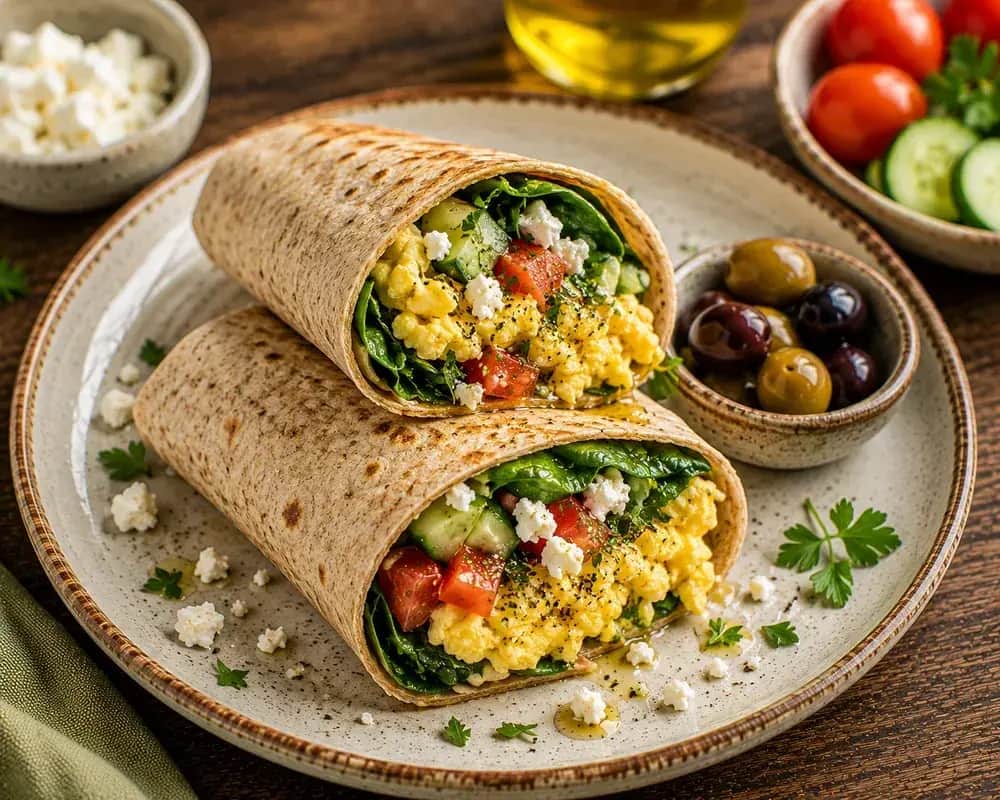
Mediterranean Breakfast Wrap Recipe — Healthy Lebanese-Style Egg & Hummus Breakfast Wrap
A Lebanese-style breakfast wrap filled with eggs, fresh vegetables, herbs, and Mediterranean flavors in warm flatbread. It is quick to assemble, satisfying without being heavy, and practical for busy mornings.
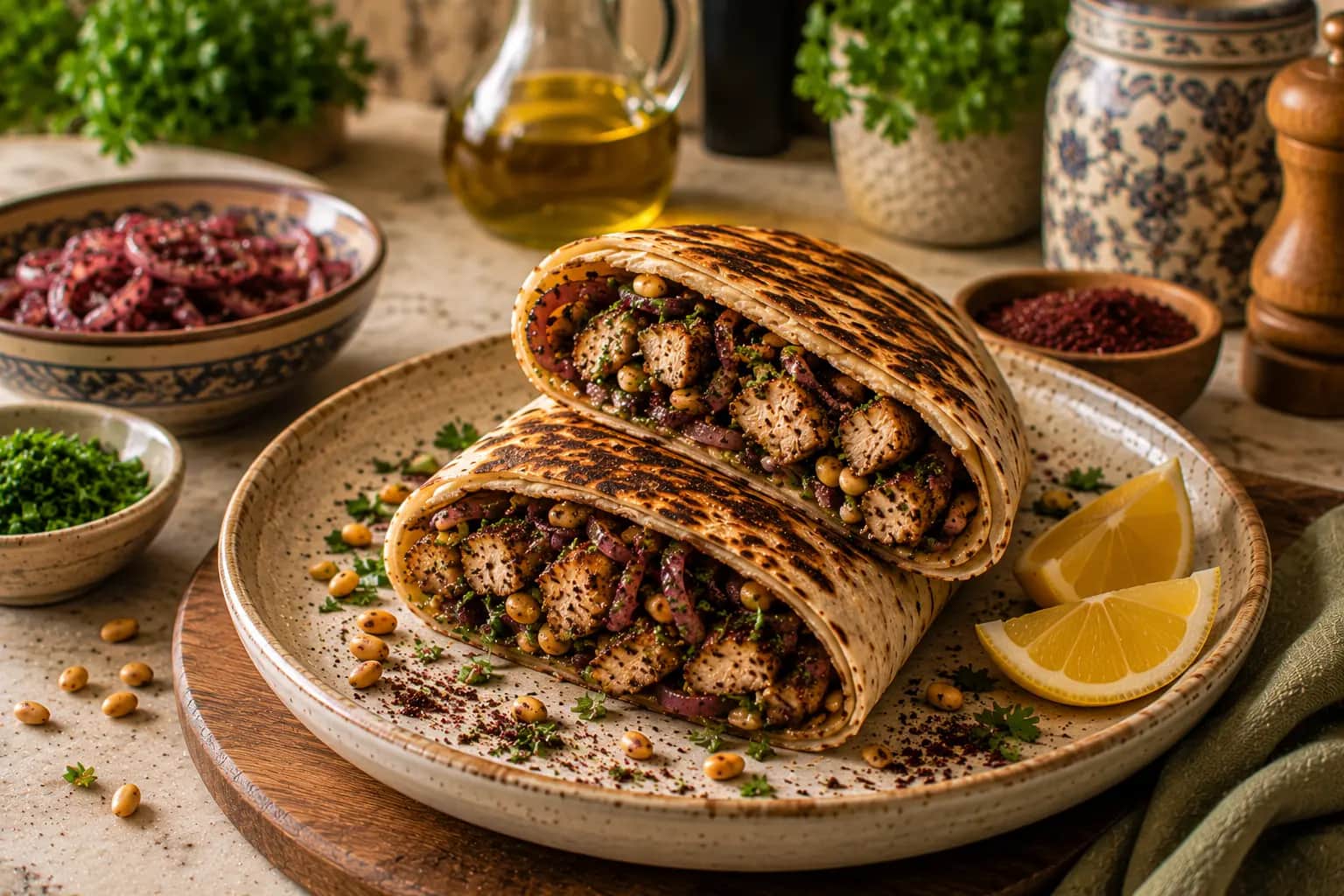
Palestinian Musakhan Chicken Pita Wrap Recipe
A Palestinian Musakhan chicken pita wrap made with sumac-seasoned chicken, soft sumac onions, extra virgin olive oil, toasted pine nuts, fresh parsley, and warm pita finished on the pan for a rustic taboon-style exterior. This version brings the defining flavors of Musakhan into a convenient pita wrap for everyday cooking.