
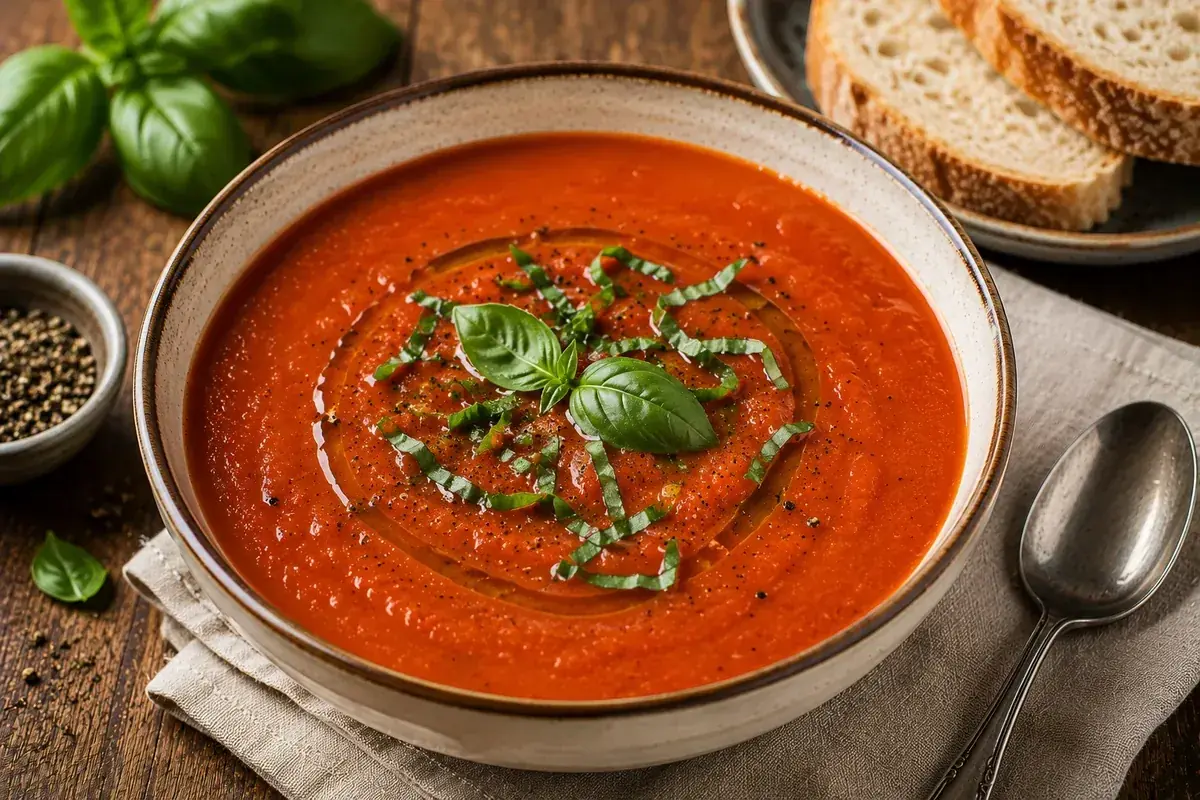
Roasted Tomato Basil Soup Recipe — Easy Mediterranean Soup Without Cream
A roasted tomato basil soup made with ripe tomatoes, onion, garlic, basil, oregano, and extra virgin olive oil. Roasting the tomatoes brings out their sweetness and gives the finished soup a deeper, more concentrated flavor.
Prep Time
20 mins
Cook Time
45 mins
Total Time
65 mins
Servings
6
A TASTE OF TRADITION
The Story Behind This Recipe
Roasted Tomato Basil Soup is a modern, home-style expression of a much older Mediterranean habit: letting a small number of ripe ingredients carry the dish. Tomatoes, olive oil, garlic, basil, and herbs create the foundation, while roasting concentrates the tomato flavor before everything is blended into a comforting soup. The result feels familiar across the Mediterranean because it relies on ingredients that are celebrated for their freshness rather than hiding them under heavy sauces or cream.
Cultural & Culinary Context
The strongest cultural connection for this soup is Italy, particularly the central Italian tradition of simple tomato-based dishes. A close historical and culinary relative is Tuscan pappa al pomodoro, a rustic soup made around tomatoes, bread, basil, olive oil, and simple seasoning. This recipe is not presented as the original or traditional form of that dish; instead, it borrows the same Mediterranean philosophy of turning ripe tomatoes, olive oil, herbs, and bread-friendly flavors into an uncomplicated meal. The tomato itself came to Europe from the Americas after the Columbian exchange and gradually became deeply embedded in Italian cuisine.
What Makes It Mediterranean?
The soup reflects Mediterranean cooking through its use of ripe tomatoes, extra virgin olive oil, garlic, basil, oregano, and vegetables. Roasting the tomatoes intensifies their natural flavor rather than relying on large amounts of fat or dairy for richness. The fresh basil and olive oil added at the end provide the bright herbal and fruity notes associated with many Mediterranean tomato dishes.
Mediterranean Influences
- 🌿Ripe tomatoes provide the main flavor and natural sweetness.
- 🌿Extra virgin olive oil is used both for roasting and finishing.
- 🌿Garlic and oregano provide a warm savory base.
- 🌿Fresh basil adds a bright herbal finish.
- 🌿The recipe relies on vegetables and herbs rather than heavy cream for richness.
- 🌿Fresh bread is a natural accompaniment, echoing Mediterranean tomato-and-bread dishes.
Ingredients
- 2 kg ripe tomatoes, halved (Choose ripe, flavorful tomatoes. Very watery tomatoes may need a little extra roasting time.)
- 1 medium onion, quartered (Keep the onion pieces fairly large so they do not burn before the tomatoes are ready.)
- 6 cloves garlic, peeled (Keep the cloves whole while roasting so they soften without burning.)
- 3 tbsp extra virgin olive oil (Use a flavorful olive oil because its taste remains noticeable in the finished soup.)
- 4 cups vegetable broth (Low-sodium broth gives you better control over the final seasoning.)
- 0.5 cup fresh basil leaves (Reserve a few small leaves for garnish.)
- 1 tsp dried oregano (Adds a gentle Mediterranean herbal note without overpowering the fresh basil.)
- 1 tsp sea salt (Start with less if your vegetable broth is already salted.)
- 0.5 tsp freshly ground black pepper
- 1 tbsp balsamic vinegar (Optional. Add gradually at the end if the tomatoes taste particularly sharp or acidic.)
- 1 fresh basil leaves for garnish
Instructions
- 1
Preheat the oven to 200°C (400°F) and position a rack in the center.
- 2
Arrange the halved tomatoes cut-side up on a large baking tray. Add the quartered onion and whole peeled garlic cloves, leaving some space between the vegetables so they roast instead of steaming.
- 3
Drizzle the vegetables evenly with olive oil. Season with salt and black pepper, making sure some seasoning reaches the tomato surfaces.
- 4
Roast for 35–40 minutes until the tomatoes are very soft, their edges have darkened slightly, and some of their natural juices have concentrated on the tray. The garlic should be soft and lightly golden, not dark brown.
- 5
Transfer the roasted tomatoes, onion, and garlic to a large soup pot. Scrape in the flavorful tomato juices and browned tomato bits, but leave any black or burnt pieces behind.
- 6
Add the vegetable broth and dried oregano. Bring to a gentle simmer and cook for about 10 minutes so the roasted vegetables and broth become fully integrated.
- 7
Turn off the heat and add the fresh basil leaves. Let them sit in the hot soup for 1–2 minutes so their aroma infuses the soup without cooking away all of their fresh character.
- 8
Blend the soup until completely smooth with an immersion blender. If using a countertop blender, cool the soup slightly and blend it in small batches according to the blender manufacturer's instructions for hot liquids.
- 9
Check the consistency. If the soup is too thick, add warm vegetable broth a little at a time. If it is too thin, simmer it uncovered for several minutes to evaporate some of the excess liquid.
- 10
Taste the soup before adding balsamic vinegar. If the tomatoes taste sharp or acidic, add the vinegar gradually, starting with a small amount. If the tomatoes already taste balanced, you may not need it.
- 11
Adjust the salt and black pepper after blending. Roasting concentrates the tomato flavor, so the final seasoning is best judged once the soup has reached its finished consistency.
- 12
Serve hot with fresh basil leaves and a light drizzle of extra virgin olive oil. Crusty whole-grain bread or toasted bread makes an excellent accompaniment.
SET YOURSELF UP FOR SUCCESS
Before You Cook
👨🍳 Keep In Mind
- •Choose tomatoes that smell fragrant and feel ripe but not completely soft. Good tomatoes make a noticeable difference because they are the main ingredient.
- •If the tomatoes are extremely watery, expect to roast them a little longer so excess moisture can evaporate.
- •Cut the tomatoes into similar-sized halves so they roast at roughly the same rate.
- •Keep the garlic cloves whole during roasting. Finely chopped garlic can burn before the tomatoes are ready.
- •Use a large baking tray rather than crowding the vegetables. Too much crowding traps steam and prevents proper roasting.
- •Keep some warm vegetable broth available for adjusting the final consistency.
- •Reserve a few small basil leaves for finishing the bowls.
💡 Helpful Tips
- •Do not overcrowd the baking tray. The vegetables should have enough room for moisture to escape.
- •The tomatoes should develop darkened edges and concentrated juices, but blackened or burnt surfaces can make the soup bitter.
- •If the garlic becomes dark brown before the tomatoes are ready, remove it from the tray and continue roasting the tomatoes.
- •Do not scrape black residue from the baking tray into the soup. Use the flavorful browned tomato juices and soft roasted vegetables, not burnt pieces.
- •Add fresh basil near the end rather than roasting it with the tomatoes. This preserves a fresher herbal aroma.
- •Blend thoroughly for a silky texture, but remember that tomato skins and seeds can remain noticeable depending on the blender.
- •If you want an exceptionally smooth restaurant-style texture, strain the blended soup through a fine-mesh sieve.
- •Taste after blending. Roasting changes both the sweetness and acidity of tomatoes, so the final seasoning can only be judged properly at this stage.
- •Add balsamic vinegar cautiously. A small amount can balance sharp tomatoes, but too much can make the soup taste sour or overly sweet.
- •A drizzle of good olive oil at serving time adds aroma and a smoother mouthfeel without requiring cream.
👀 How Do I Know It's Done?
- ✓The tomatoes should be very soft and concentrated after roasting.
- ✓The roasted garlic should crush easily between a spoon and the side of the pot.
- ✓The soup should have no large pieces of onion or tomato after blending.
- ✓The texture should be silky enough to coat a spoon lightly but still flow easily.
- ✓The tomato flavor should taste concentrated and naturally sweet rather than watery.
- ✓The seasoning should taste balanced between tomato sweetness, savory garlic, herbal basil, salt, and gentle acidity.
- ✓The soup should not have a bitter burnt-garlic flavor.
- ✓The finished bowl should have a fresh basil aroma and a light olive-oil sheen.
Tweak It
Make This Recipe Work for You
Adapt the recipe to your ingredients, dietary needs, budget, time, serving size, or meal-prep plans.
🔄 Ingredient Substitutions
Using canned tomatoes
If ripe fresh tomatoes are unavailable, use good-quality whole canned tomatoes. Drain only if they contain a very large amount of liquid, then simmer the soup long enough to concentrate the flavor.
Using additional fresh herbs
Fresh basil is the main herb, but a small amount of fresh oregano or parsley can be added if desired. Keep the quantities modest so the basil remains noticeable.
Using homemade vegetable broth
Homemade vegetable broth works especially well when it is lightly seasoned, allowing you to control the salt level of the finished soup.
🌱 Dietary Adjustments
Vegan
The soup is naturally vegan when prepared with vegetable broth and olive oil. Serve with vegan bread if needed.
Gluten-free
The soup itself is naturally gluten-free when the vegetable broth and balsamic vinegar are verified gluten-free. Use gluten-free bread if serving it with toast.
Dairy-free
No dairy is required. The silky texture comes from blending the roasted vegetables rather than adding cream.
💰 Budget-Friendly Options
Budget-friendly version
Use seasonal ripe tomatoes when they are inexpensive and flavorful. Homemade vegetable broth can also help reduce the cost while adding depth.
⏱️ Time-Saving Options
Prepare the roasting tray ahead
Halve the tomatoes and prepare the onion and garlic earlier in the day. Keep them refrigerated until you are ready to roast.
Use leftover roasted vegetables
Extra roasted tomatoes, onions, or garlic can be turned into soup by adding broth, oregano, and basil and blending until smooth.
👨👩👧👦 Serving Adjustments
Half batch
Halve all ingredients for a smaller batch. Use a smaller baking tray and watch the vegetables closely because they may roast slightly faster.
Large batch
Double the ingredients for meal preparation. Use two baking trays rather than overcrowding one tray so the tomatoes roast properly.
🥡 Meal Prep
Meal-prep friendly
Prepare the soup ahead, cool it appropriately, and divide it into individual portions. Keep fresh basil and finishing olive oil separate and add them when serving for the best flavor.
RECIPE RESCUE
🧩 What Do You Need Help With?
Choose the problem you're facing and get a recipe-specific solution instead of a generic cooking tip.
WHAT IF?
🔄 What If...?
Choose your situation and we'll show you a practical pathway for making this recipe work.
STORAGE & LEFTOVERS
🥡 Storage & Leftovers
Cool the soup appropriately before transferring it to clean, airtight containers.
Refrigerate promptly and keep chilled until ready to use.
Store fresh basil garnish separately whenever possible so it stays bright and fresh.
Reheat gently in a saucepan over low to medium-low heat, stirring occasionally.
Add a splash of broth or water if the soup thickens during refrigeration.
Taste after reheating because the tomato flavor and seasoning can become more concentrated during storage.
Best Storage Time
Refrigerate for up to 4 days for best quality. For longer storage, freeze in suitable airtight containers with room for expansion.
How to Store
Use clean airtight containers. Leave appropriate headspace if freezing because the soup expands as it freezes.
SERVING & PAIRING
🍽️ Serving & Pairing
Serve the soup hot with fresh basil, a light drizzle of extra virgin olive oil, and crusty bread. Whole-grain toast makes it a more substantial meal, while a simple green salad provides a fresh contrast to the warm roasted tomato flavor.
What Goes Well With It?
RECIPE FAQ
❓ Frequently Asked Questions
How do you make roasted tomato basil soup?
To make roasted tomato basil soup, halve 2 kg of ripe tomatoes and arrange them with 1 quartered medium onion and 6 whole peeled garlic cloves on a large baking tray. Drizzle with 3 tablespoons of extra virgin olive oil and season with 1 teaspoon sea salt and 1/2 teaspoon freshly ground black pepper. Roast at 200°C (400°F) for about 35–40 minutes until the tomatoes are very soft, their edges are lightly caramelized, and the garlic is soft and lightly golden. Transfer the roasted vegetables and their flavorful juices to a soup pot, add 4 cups vegetable broth and 1 teaspoon dried oregano, and simmer gently for about 10 minutes. Turn off the heat, add 1/2 cup fresh basil leaves, and let them infuse for 1–2 minutes. Blend until silky smooth, adjust the consistency with warm broth if needed, and balance the flavor with salt, pepper, and optional balsamic vinegar. Serve hot with fresh basil and a light drizzle of extra virgin olive oil.
Is tomato basil soup traditionally Mediterranean?
Tomato-and-basil cooking has a strong Mediterranean connection, particularly in Italy. A close traditional relative is Tuscan pappa al pomodoro, which combines tomatoes, bread, basil, olive oil, and simple seasoning. This particular roasted soup is better described as Mediterranean-inspired rather than claiming it is an ancient or uniquely traditional recipe.
Why roast the tomatoes instead of cooking them directly in the pot?
Roasting removes some of the tomatoes' water while concentrating their natural sugars and savory flavor. It also gives the tomatoes lightly caramelized edges that create more depth in the finished soup.
Can I make tomato basil soup without cream?
Yes. This recipe does not need cream. Roasted tomatoes, onion, garlic, and olive oil provide body, while thorough blending creates a naturally silky texture.
Why does my tomato soup taste bitter?
Burnt garlic, blackened tomatoes, or burnt residue from the roasting tray are common causes. Remove badly burnt pieces and do not scrape black residue into the soup.
Why is my tomato soup too sour?
Tomatoes vary naturally in acidity. Taste the soup after blending, then balance it gradually with salt, olive oil, and, if appropriate, a very small amount of balsamic vinegar. Avoid adding a large amount of vinegar.
Can I use canned tomatoes?
Yes. Good-quality canned whole tomatoes are a useful alternative when fresh tomatoes are out of season. Because canned tomatoes can contain different amounts of liquid, add the broth gradually and adjust the final consistency.
Can I freeze roasted tomato basil soup?
Yes. Cool the soup appropriately, transfer it to freezer-safe airtight containers with room for expansion, and thaw it safely before reheating. The texture may change slightly, so stir well and adjust with a little broth if needed.
How do I make the soup extra smooth?
Blend thoroughly and pass the soup through a fine-mesh sieve. This removes tomato seeds and skin fragments and produces a smoother, more refined texture.
When should I add fresh basil?
Add some basil near the end of cooking so its aroma remains fresh. Reserve additional small leaves for the finished bowls.
What should I serve with tomato basil soup?
Crusty bread, toasted sourdough, a simple green salad, or a fresh cucumber-and-tomato salad all work well. Bread is especially useful for turning the soup into a more filling meal.
Explore More
Go deeper into the cuisine
Learn more about the ingredients, traditions, and cooking approaches connected to this recipe.
You May Also Like
More delicious recipes from the Soups
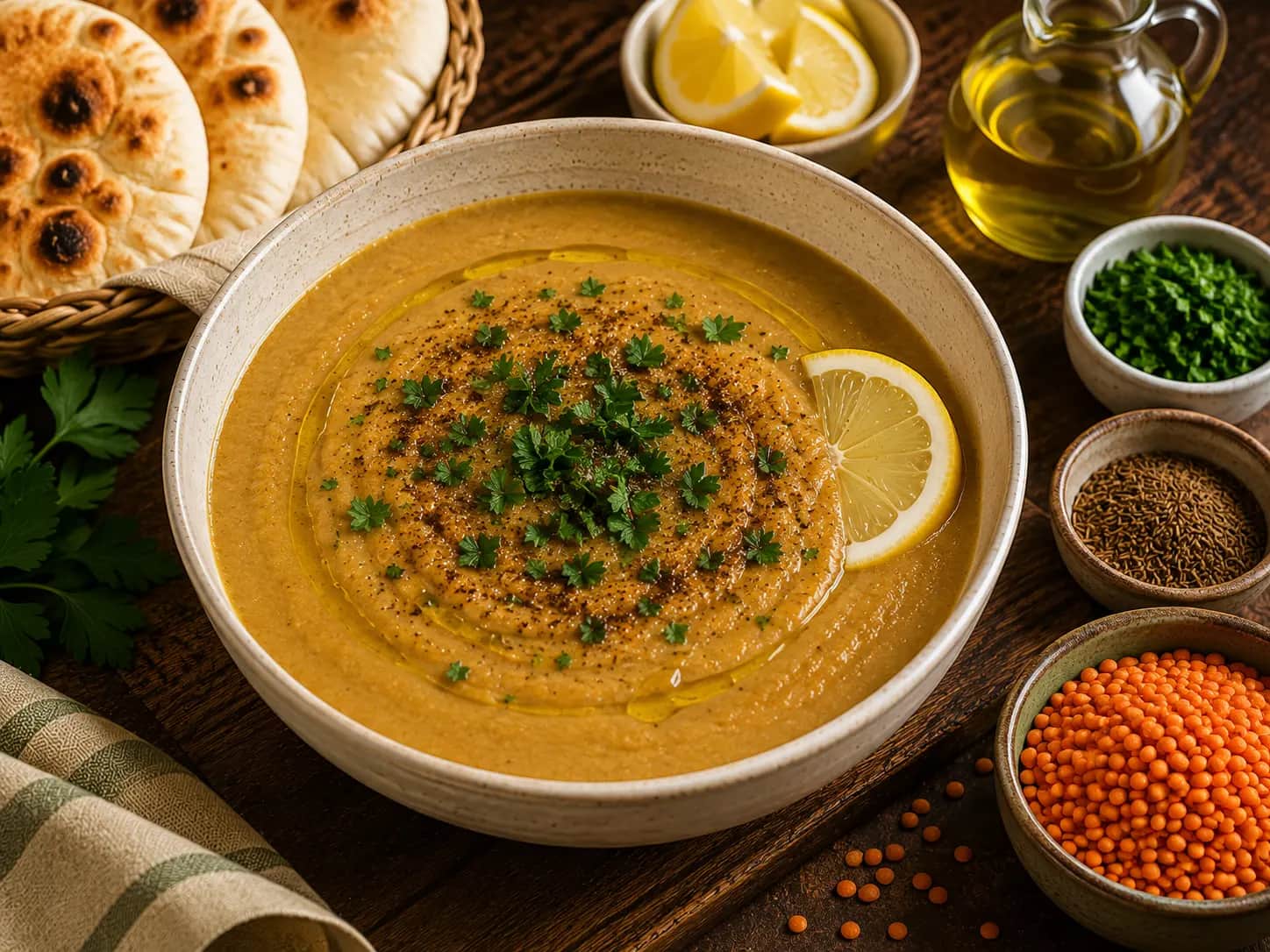
Syrian Lentil Soup (Shorbat Adas) Recipe — Easy Red Lentil Soup
A simple lentil soup made with red lentils, vegetables, garlic, cumin, lemon, and olive oil. The lentils soften quickly as they simmer, creating a naturally thick soup with a bright citrus finish.
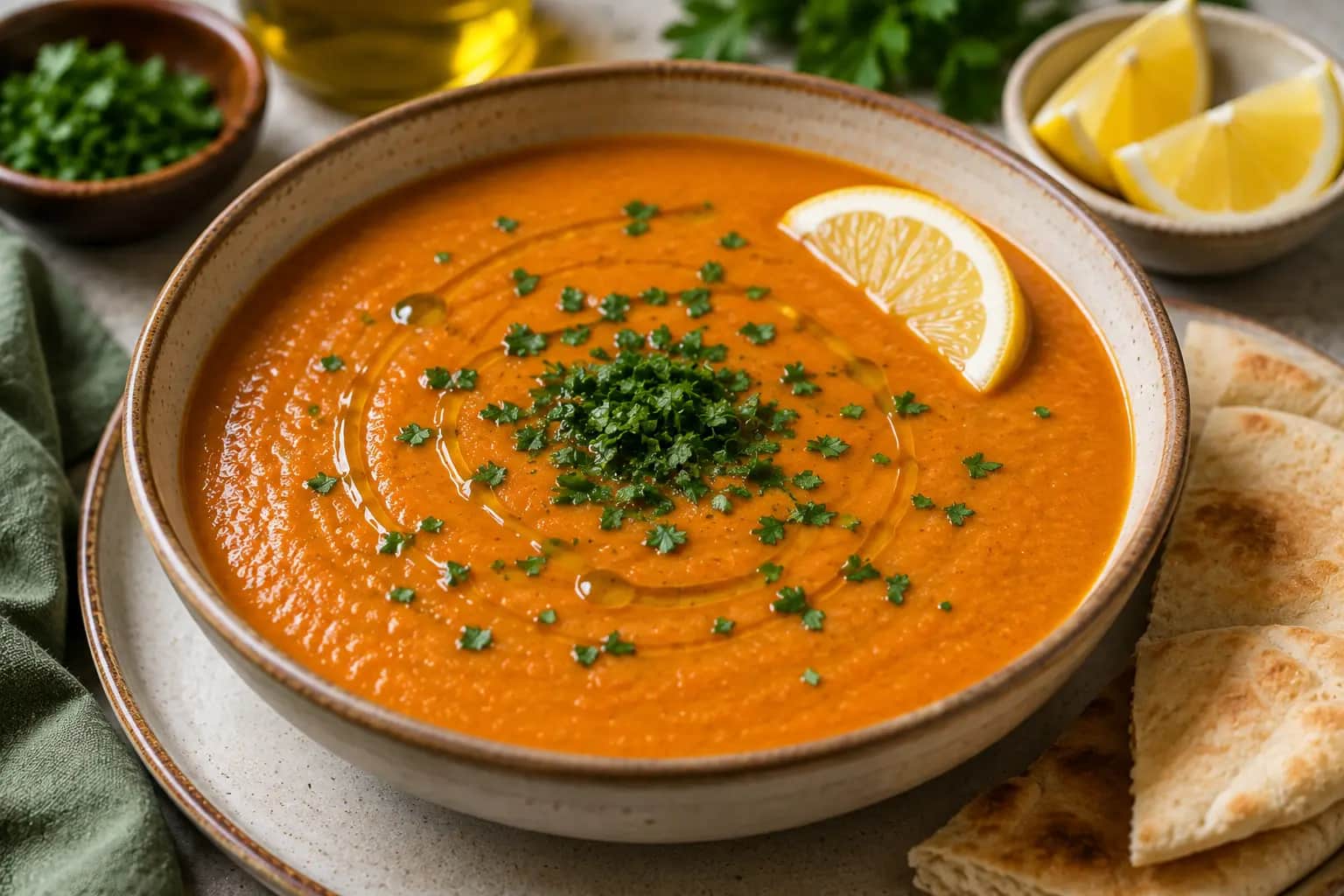
Lebanese Red Lentil Soup Recipe — Shorbat Adas with Lemon & Cumin
A Lebanese-style red lentil soup made with red lentils, vegetables, garlic, cumin, lemon, and olive oil. The lentils break down as they simmer, creating a naturally thick soup with a warm, earthy flavor and bright citrus finish.
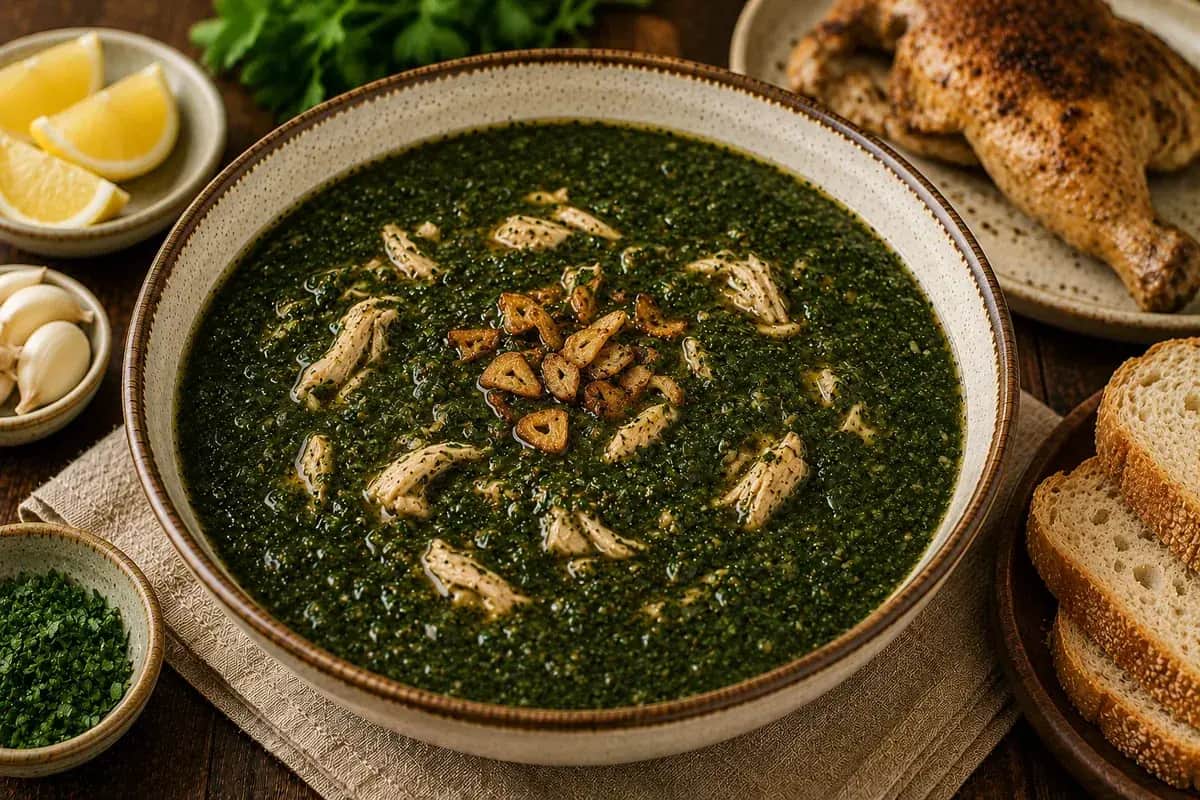
Egyptian Molokhia Soup Recipe
This traditional Egyptian molokhia soup recipe combines finely chopped jute mallow leaves with savory chicken broth, fragrant garlic, ground coriander, and a rich ta'aliya. Gently cooked for its signature silky texture, it is served hot with Egyptian rice and fresh lemon for a comforting Egyptian family meal.