
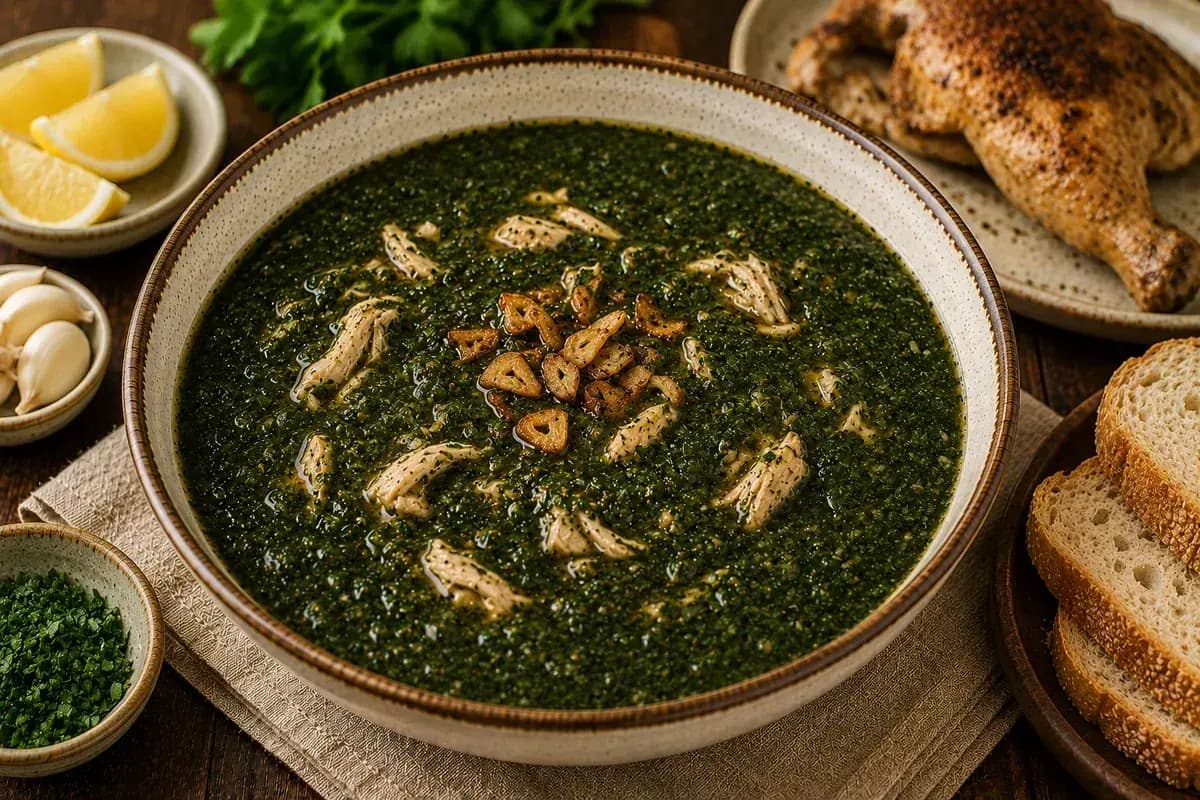
Egyptian Molokhia Soup Recipe
This traditional Egyptian molokhia soup recipe combines finely chopped jute mallow leaves with savory chicken broth, fragrant garlic, ground coriander, and a rich ta'aliya. Gently cooked for its signature silky texture, it is served hot with Egyptian rice and fresh lemon for a comforting Egyptian family meal.
Prep Time
20 mins
Cook Time
30 mins
Total Time
50 mins
Servings
6
A TASTE OF TRADITION
The Story Behind This Recipe
Egyptian Molokhia is much more than an ordinary leafy soup. It is one of the dishes most strongly associated with Egyptian home cooking, built around finely chopped molokhia leaves and a fragrant garlic-and-coriander finishing mixture. Its appeal comes from a combination of simplicity and technique: a few familiar ingredients become a deeply aromatic dish with a distinctive silky texture.
Cultural & Culinary Context
Molokhia has a particularly strong place in Egyptian food culture and is commonly prepared for family meals and gatherings. Egyptian versions are recognized for finely chopped leaves cooked gently in broth and finished with a garlic-and-coriander ta'aliya. It is commonly served with rice and lemon and may accompany chicken, rabbit, duck, or other savory dishes. Recipes and proportions naturally vary between families, but the garlic, coriander, broth, and characteristic texture are central to the style presented here.
What Makes It Mediterranean?
This recipe is distinctly Egyptian rather than a generic Mediterranean soup. Egypt's cuisine developed around the Nile Valley and its long agricultural traditions, while also sharing ingredients and cooking ideas with the wider eastern Mediterranean and Middle Eastern region. Olive oil, fresh lemon, leafy vegetables, herbs, grains, and legumes appear throughout Egyptian and Mediterranean food traditions. Molokhia itself, however, has its own strong Egyptian identity and should be appreciated on its own terms rather than being treated simply as a Mediterranean variation.
Mediterranean Influences
- 🌿Fresh lemon is used to brighten the finished dish.
- 🌿Leafy vegetables form the foundation of the soup.
- 🌿Olive oil can be used as an additional finishing fat.
- 🌿Garlic and aromatic herbs and spices provide flavor without heavy sauces.
- 🌿Rice and other grains are traditional partners for the soup.
Ingredients
- 500 g molokhia leaves (Use finely chopped fresh molokhia or frozen chopped molokhia. If frozen, thaw gently and do not squeeze the leaves completely dry.)
- 6 cups chicken broth (Use a flavorful, preferably low-sodium broth so the final seasoning can be controlled.)
- 2 tbsp butter or ghee (Ghee gives the garlic-coriander topping a particularly traditional richness.)
- 6 cloves garlic (Finely minced or crushed so it cooks evenly in the ta'aliya.)
- 2 tsp ground coriander (Use fragrant dried ground coriander; it is an important part of the Egyptian garlic topping.)
- 1 tbsp extra virgin olive oil (Optional additional fat for the soup or serving.)
- 1 tsp sea salt (Adjust according to the saltiness of the broth.)
- 0.5 tsp black pepper
- 1 tbsp fresh lemon juice (Optional in the pot; lemon wedges are recommended at the table so each person can adjust the acidity.)
- 1 cooked Egyptian-style white rice (Serve underneath or alongside the molokhia.)
- 1 lemon (Cut into wedges for serving.)
Instructions
- 1
If using frozen molokhia, thaw it gently in the refrigerator or at room temperature until loosened. Do not boil or aggressively heat the frozen leaves during thawing. If using fresh molokhia, wash the leaves thoroughly, dry them well, remove the tough stems, and chop the leaves very finely.
- 2
Bring the chicken broth to a gentle simmer in a large pot over medium heat. Taste the broth before adding the molokhia and adjust the salt if necessary.
- 3
Add the finely chopped molokhia gradually while stirring gently so the leaves disperse evenly through the broth. Bring the mixture back to a gentle simmer, but do not allow it to boil vigorously.
- 4
Cook the molokhia gently for about 8–10 minutes, stirring occasionally. The leaves should be fully heated and incorporated while the broth develops the characteristic slightly silky, viscous texture of molokhia.
- 5
While the molokhia cooks, prepare the garlic-coriander ta'aliya. Heat the butter or ghee in a small skillet over medium-low heat. Add the minced garlic and cook gently until fragrant and lightly golden. Do not let the garlic become dark brown because burnt garlic will make the soup bitter.
- 6
Add the ground coriander to the garlic and fat. Stir continuously for about 20–30 seconds until the coriander becomes intensely fragrant. Remove the skillet from the heat as soon as the mixture is aromatic.
- 7
Immediately add the hot garlic-and-coriander ta'aliya to the molokhia. Stir gently to distribute the fragrant mixture throughout the soup. Avoid vigorous whisking because the goal is to preserve the characteristic texture of the chopped leaves.
- 8
Season with salt and black pepper. If desired, add the measured lemon juice, but keeping most of the lemon for serving allows each person to adjust the acidity to taste.
- 9
Let the molokhia heat together gently for about 1–2 minutes after adding the ta'aliya. Do not return it to a hard boil. Taste and adjust the seasoning.
- 10
Serve immediately over or alongside cooked Egyptian-style white rice with lemon wedges. Traditionally, molokhia can also be served with chicken, rabbit, duck, or another savory main dish.
SET YOURSELF UP FOR SUCCESS
Before You Cook
👨🍳 Keep In Mind
- •Decide whether you are using fresh or frozen chopped molokhia before beginning because the preparation is slightly different.
- •If using fresh leaves, wash and dry them thoroughly and remove tough stems before chopping.
- •If using frozen molokhia, thaw it gently rather than heating it aggressively.
- •Prepare the garlic and measure the ground coriander before starting the ta'aliya because the garlic can brown quickly.
- •Have the cooked rice and lemon wedges ready so the molokhia can be served immediately after finishing.
💡 Helpful Tips
- •The defining texture of Egyptian molokhia is silky and slightly viscous. Do not treat it like a soup that needs vigorous boiling.
- •Keep the broth at a gentle simmer after adding the leaves.
- •The garlic should become lightly golden and fragrant, not dark brown. Burnt garlic can make the entire pot taste bitter.
- •Add the ground coriander near the end of the garlic cooking stage so it becomes fragrant without scorching.
- •Stir the molokhia gently after adding the ta'aliya rather than beating it aggressively.
- •Taste the broth before adding much salt because chicken broth can already contain significant sodium.
- •Serve lemon at the table if possible. This lets each person adjust the acidity without changing the entire pot.
👀 How Do I Know It's Done?
- ✓The molokhia leaves should be fully heated and evenly incorporated into the broth.
- ✓There should be no raw or aggressively grassy aroma from the leaves.
- ✓The soup should look glossy and silky rather than watery.
- ✓The garlic-and-coriander aroma should be clearly noticeable without smelling burnt.
- ✓The broth should be savory and aromatic with enough salt to support the leaves without tasting overly salty.
- ✓The final lemon should provide brightness without overpowering the garlic, coriander, and molokhia.
Tweak It
Make This Recipe Work for You
Adapt the recipe to your ingredients, dietary needs, budget, time, serving size, or meal-prep plans.
🔄 Ingredient Substitutions
Use Frozen Chopped Molokhia
Frozen chopped molokhia is a practical option and is widely used for home preparation. Thaw it gently and add it directly according to the recipe without aggressively boiling it during thawing.
Use Fresh Molokhia Leaves
Fresh leaves can be washed, dried, stemmed, and finely chopped before being added to the broth. The leaves should be chopped finely enough to create the characteristic Egyptian texture.
Choose Ghee or Butter
Both work for the garlic-coriander ta'aliya. Ghee provides a richer traditional-style aroma, while butter gives a softer dairy richness.
🌱 Dietary Adjustments
Use Less Ghee or Butter
Reduce the amount of ghee or butter in the ta'aliya if you prefer a lighter version. The garlic and coriander will still provide much of the characteristic aroma.
Use Halal Chicken Broth
For a halal preparation, use chicken broth made from halal chicken and verify packaged broth ingredients when using a commercial product.
💰 Budget-Friendly Options
Keep It Budget Friendly
Frozen molokhia, homemade chicken broth, rice, garlic, and dried coriander can make a filling family meal from relatively simple ingredients.
⏱️ Time-Saving Options
Save Time with Frozen Molokhia
Frozen chopped molokhia eliminates washing, stemming, drying, and finely chopping a large quantity of fresh leaves.
👨👩👧👦 Serving Adjustments
Make a Half Batch
Halve the ingredients for a smaller meal. Use the same gentle cooking method and watch the consistency carefully because a smaller pot can heat more quickly.
Make a Larger Batch
Double the ingredients for a larger family meal, but use a pot large enough to allow the broth and molokhia to heat evenly without splashing or overflowing.
🥡 Meal Prep
Prepare the Components Ahead
Cook the rice and prepare the garlic and coriander ingredients ahead of time, but finish the molokhia close to serving so its texture and aroma remain at their best.
RECIPE RESCUE
🧩 What Do You Need Help With?
Choose the problem you're facing and get a recipe-specific solution instead of a generic cooking tip.
WHAT IF?
🔄 What If...?
Choose your situation and we'll show you a practical pathway for making this recipe work.
STORAGE & LEFTOVERS
🥡 Storage & Leftovers
Allow leftover molokhia to cool appropriately before transferring it to a clean airtight container.
Refrigerate the soup promptly and keep it chilled until needed.
Reheat gently in a saucepan over low to medium-low heat.
Do not bring refrigerated molokhia to a vigorous rolling boil during reheating.
If the soup thickens after refrigeration, add a small amount of warm broth and stir gently.
Taste after reheating and add fresh lemon at the table if desired.
Best Storage Time
Refrigerate for up to 3 days for best quality.
How to Store
Store in a clean airtight container with enough room for safe refrigeration.
SERVING & PAIRING
🍽️ Serving & Pairing
Egyptian molokhia is traditionally served hot with white rice and lemon wedges. It is commonly accompanied by savory proteins such as chicken, rabbit, or duck. The rice helps carry the silky molokhia while lemon provides a bright contrast to the garlic, coriander, and broth. For a lighter meal, the soup can be served with rice and a simple fresh salad.
What Goes Well With It?
RECIPE FAQ
❓ Frequently Asked Questions
How do you make Egyptian molokhia?
To make Egyptian molokhia, gently heat finely chopped fresh or frozen molokhia in seasoned chicken broth without allowing it to boil vigorously. While it cooks, prepare the ta'aliya by gently sautéing minced garlic in ghee or butter, then adding ground coriander until fragrant. Stir the hot garlic-and-coriander mixture into the molokhia, season to taste, and heat briefly without returning it to a hard boil. Serve immediately with Egyptian-style white rice and lemon wedges.
What is molokhia?
Molokhia is a leafy green plant commonly known in English as jute mallow. The leaves are finely chopped and cooked into soups and stews in several regions, with Egyptian molokhia having its own distinctive preparation and texture.
Why should Egyptian molokhia not boil vigorously?
Gentle cooking helps preserve the delicate texture and characteristic silky consistency of the chopped leaves. A hard boil can affect the texture and aroma, so the soup is traditionally heated gently.
What is ta'aliya?
Ta'aliya is the fragrant garlic-and-coriander mixture cooked separately in fat and added to the molokhia near the end. It is one of the defining aromatic elements of Egyptian-style molokhia.
Can I use frozen molokhia?
Yes. Frozen chopped molokhia is convenient and works well. Thaw it gently and avoid aggressively boiling it during thawing or cooking.
Why is my molokhia bitter?
Burnt garlic or scorched ground coriander in the ta'aliya is a common cause of bitterness. Cook both gently and remove the skillet from the heat as soon as the mixture becomes fragrant.
What is traditionally served with Egyptian molokhia?
White rice and lemon are classic accompaniments. Egyptian meals may also serve molokhia alongside chicken, rabbit, duck, or another savory protein.
Can I make molokhia with vegetable broth?
Yes, although this recipe is written in the traditional chicken-broth style. Vegetable broth can be used for a plant-based adaptation, but it will change the traditional flavor profile.
How should leftover molokhia be reheated?
Reheat it gently over low to medium-low heat and avoid a vigorous boil. If it becomes too thick, add a little warm broth and stir gently before serving.
Explore More
Go deeper into the cuisine
Learn more about the ingredients, traditions, and cooking approaches connected to this recipe.
You May Also Like
More delicious recipes from the Soups
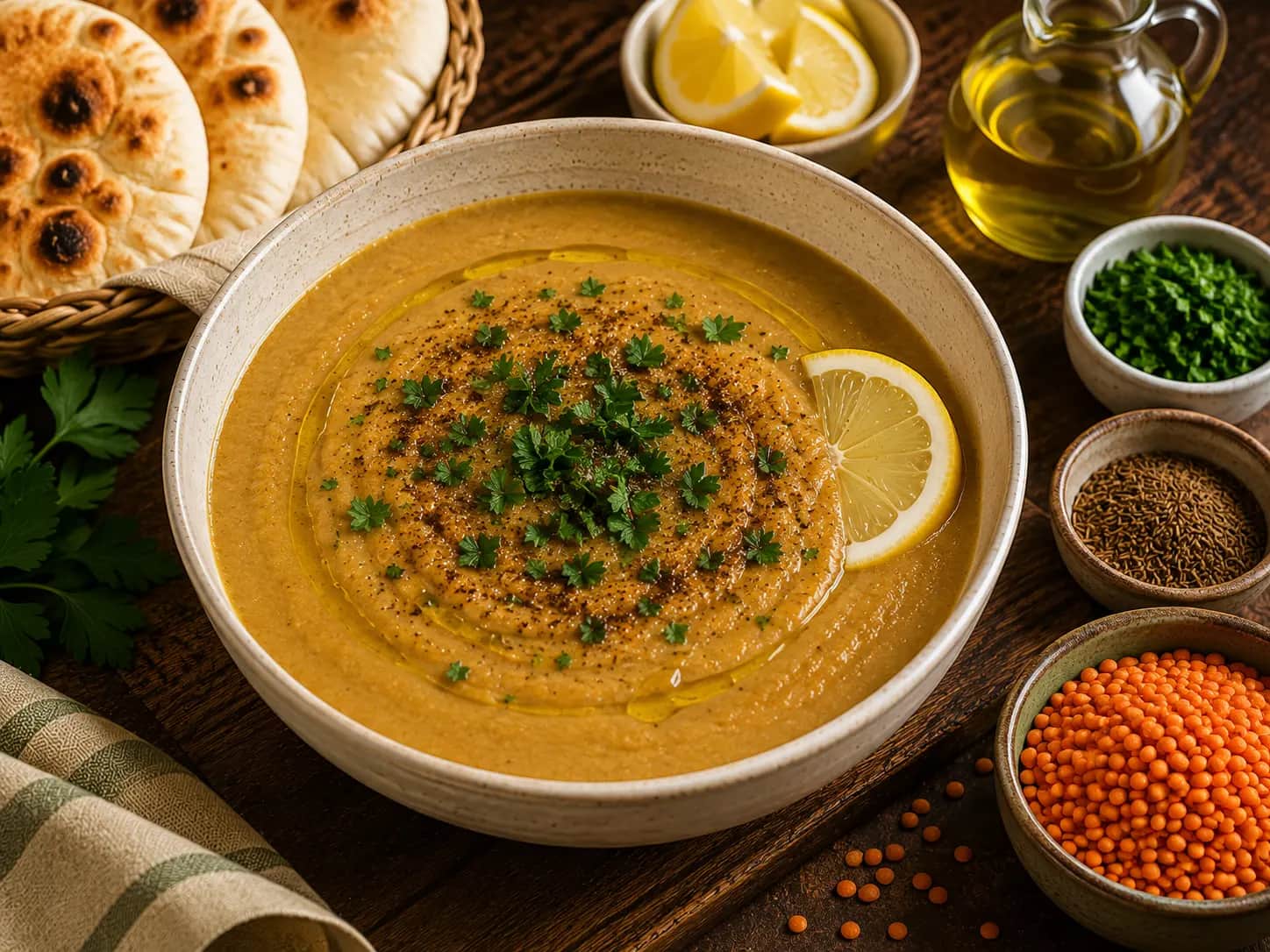
Syrian Lentil Soup (Shorbat Adas) Recipe — Easy Red Lentil Soup
A simple lentil soup made with red lentils, vegetables, garlic, cumin, lemon, and olive oil. The lentils soften quickly as they simmer, creating a naturally thick soup with a bright citrus finish.
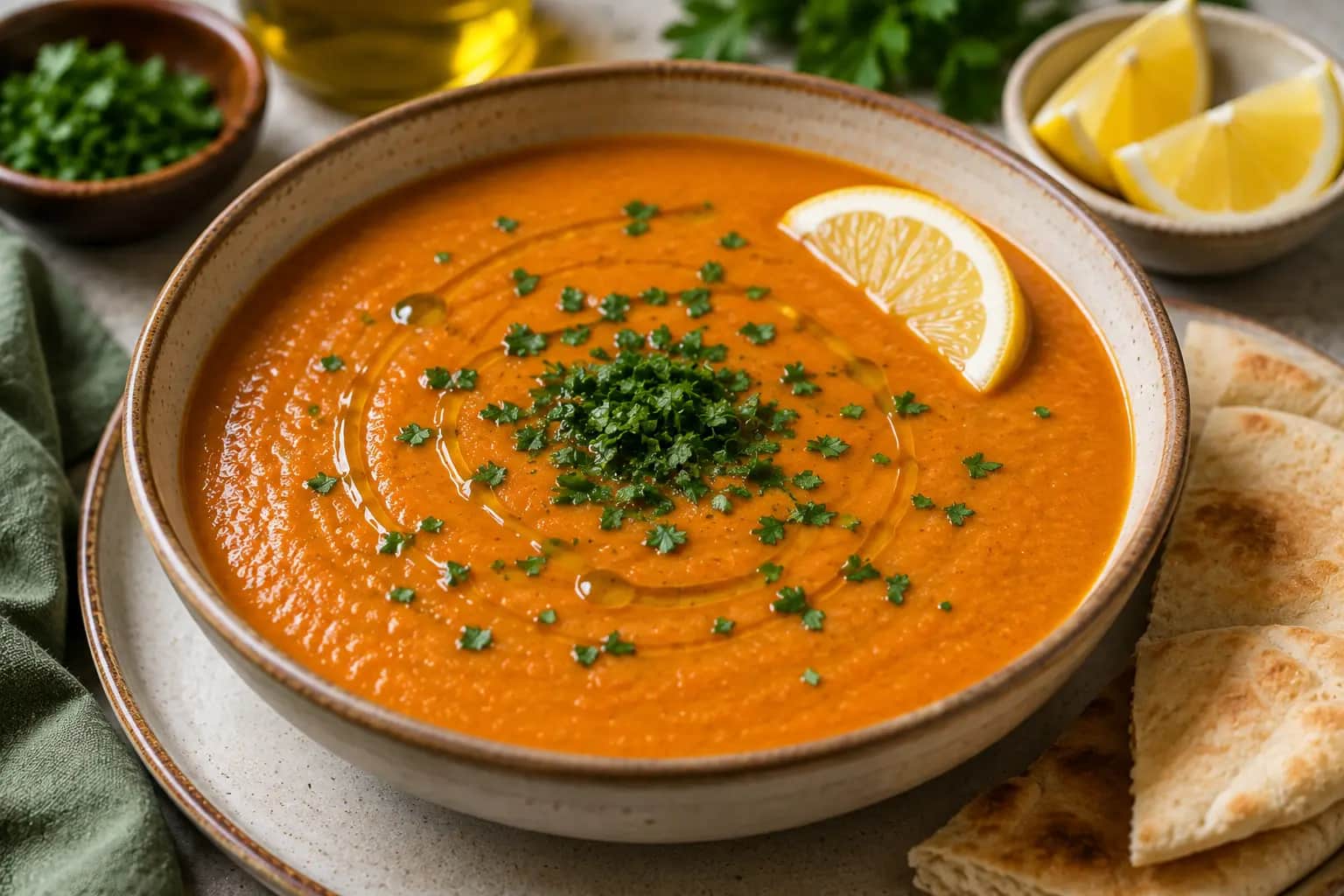
Lebanese Red Lentil Soup Recipe — Shorbat Adas with Lemon & Cumin
A Lebanese-style red lentil soup made with red lentils, vegetables, garlic, cumin, lemon, and olive oil. The lentils break down as they simmer, creating a naturally thick soup with a warm, earthy flavor and bright citrus finish.
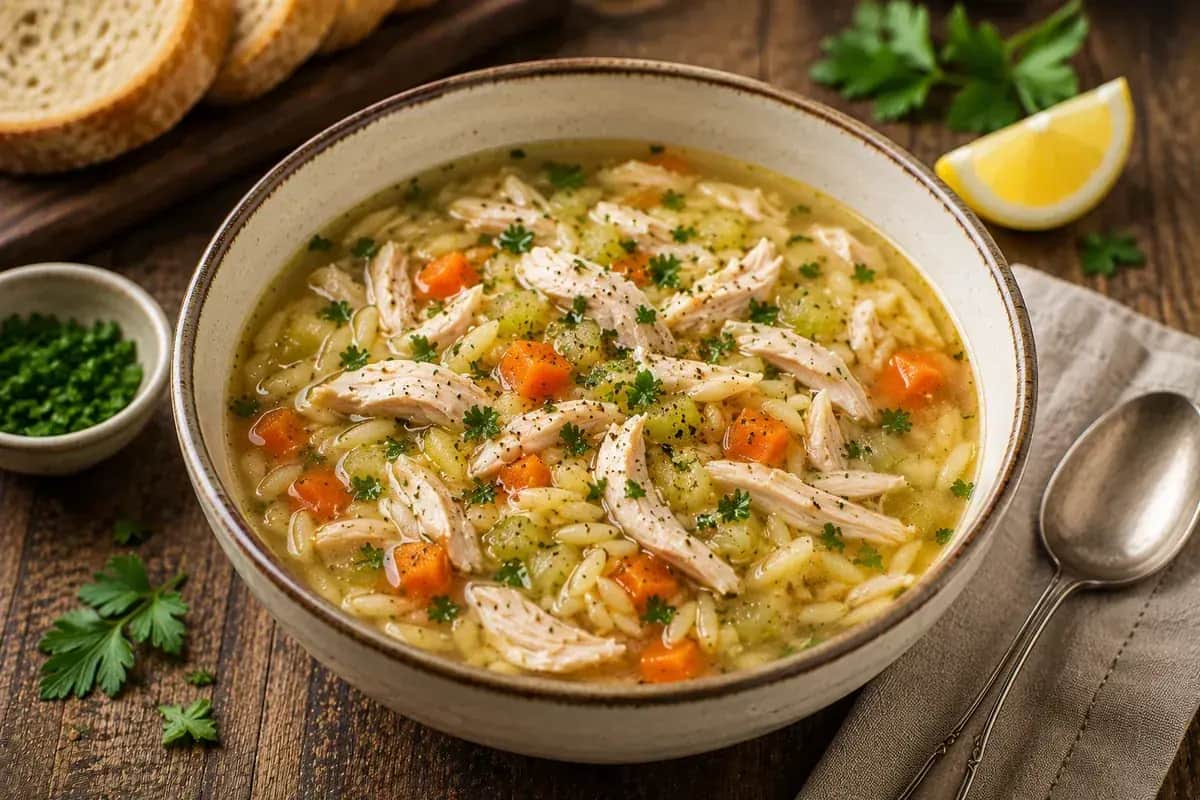
Mediterranean Chicken Orzo Soup Recipe — Healthy Lemon Chicken Orzo Soup
A one-pot chicken orzo soup made with tender chicken, vegetables, orzo, herbs, lemon, and a savory broth. The orzo cooks directly in the soup, giving the broth a little body while keeping the meal simple and comforting.