
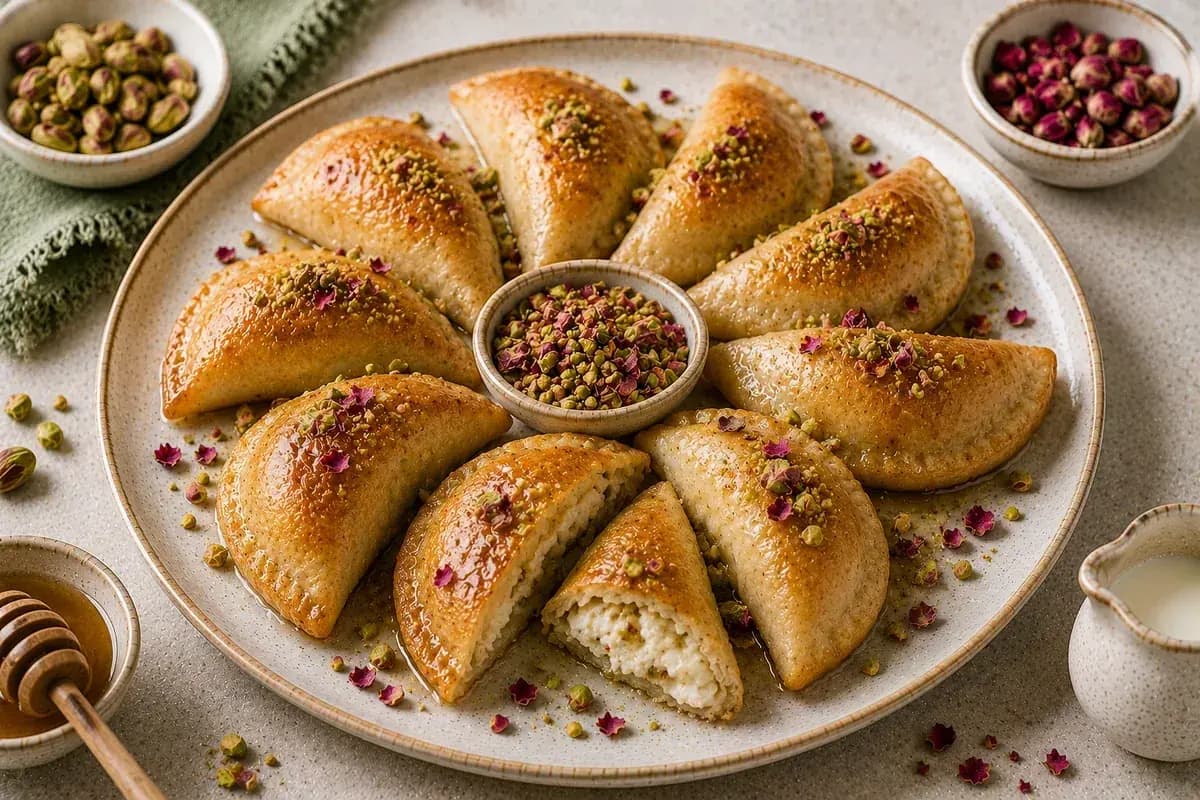
Healthy Baked Atayef Recipe with Ricotta & Pistachios
A baked atayef filled with creamy pistachio mixture and finished with a light honey syrup. Inspired by Egyptian and Levantine Ramadan desserts, this version uses the oven instead of deep-frying while keeping the soft pastry, nutty filling, and fragrant sweetness associated with atayef.
Prep Time
30 mins
Cook Time
18 mins
Total Time
48 mins
Servings
12
A TASTE OF TRADITION
The Story Behind This Recipe
Atayef are small stuffed pancakes that transform a simple batter into one of the most recognizable desserts of Ramadan. They are soft, fragrant, and designed to hold a sweet filling inside a folded half-moon shell. This healthier baked version keeps that comforting character while making the dessert lighter and easier to enjoy at home.
Cultural & Culinary Context
Atayef are strongly associated with Ramadan across Egypt and the Levant. In Egypt they are commonly known as qatayef or atayef, and they appear in homes, bakeries, and dessert shops during the holy month. Families prepare them with different fillings and shapes, including versions filled with nuts, cheese, or sweet cream. They are often served warm after the day's fast and are closely connected with Ramadan hospitality and family gatherings.
What Makes It Mediterranean?
Although atayef have deep Arab and Levantine roots rather than originating as a single Mediterranean dish, their ingredients and flavor profile fit naturally within the wider Eastern Mediterranean food tradition. Pistachios, dairy, wheat, honey, orange blossom water, and rose water are all longstanding ingredients in Egyptian and Levantine cooking. This recipe brings those ingredients together while using baking instead of deep-frying and a lighter filling instead of a heavy syrup.
Mediterranean Influences
- 🌿Wheat flour forms the soft pancake base, reflecting the importance of grains throughout the Eastern Mediterranean.
- 🌿Pistachios provide the characteristic nutty flavor found in many Egyptian and Levantine desserts.
- 🌿Ricotta and Greek yogurt create a fresh dairy filling inspired by the region's long tradition of combining dairy with grains and nuts.
- 🌿Orange blossom water and rose water are classic aromatic ingredients in Egyptian and Levantine sweets.
- 🌿Honey provides sweetness in place of a large quantity of refined sugar syrup.
- 🌿The use of olive oil spray for baking keeps the preparation aligned with lighter Mediterranean cooking practices.
Ingredients
- 1 cup whole wheat flour (Spoon into the measuring cup and level the top.)
- 0.5 cup all-purpose flour (Helps keep the pancakes soft while making the batter easier to work with.)
- 1 tsp instant yeast (Use fresh yeast for reliable bubbling and a tender pancake texture.)
- 1 tsp baking powder
- 1 tbsp honey (Used to lightly sweeten the pancake batter.)
- 1.5 cups warm water (Use warm, not hot, water so the yeast remains active.)
- 1 tsp vanilla extract
- 1 cup low-fat ricotta cheese (Drain excess liquid if the ricotta is very wet.)
- 0.5 cup plain Greek yogurt (Use thick yogurt for a filling that holds its shape.)
- 2 tbsp honey (Used in the filling.)
- 0.3333333333333333 cup chopped pistachios (Reserve a little for the final garnish if desired.)
- 1 tsp orange blossom water (Adds the characteristic floral aroma associated with many Levantine and Egyptian desserts.)
- 1 tsp rose water (Optional; use less if you prefer a subtler floral flavor.)
- 1 cooking spray or light olive oil spray (Use only enough to lightly coat the atayef before baking.)
Instructions
- 1
Combine the whole wheat flour, all-purpose flour, instant yeast, baking powder, 1 tablespoon honey, vanilla extract, and 1½ cups warm water in a bowl. Whisk until you have a smooth, pourable batter with no dry pockets of flour.
- 2
Cover the batter and let it rest for about 30 minutes in a warm place. The surface should develop small bubbles, indicating that the yeast is active and the batter is ready to cook.
- 3
Heat a clean non-stick skillet over medium heat. Do not add enough oil to fry the pancakes; the skillet should remain essentially dry.
- 4
Pour small circles of batter onto the skillet, using roughly 2 tablespoons of batter for each atayef. Leave space between the pancakes so they cook evenly.
- 5
Cook each pancake on one side only. Wait until bubbles cover much of the surface and the top looks set and dry while the underside is lightly golden. Do not flip the pancake.
- 6
Transfer each cooked pancake to a clean kitchen towel and cover it immediately. Keeping the pancakes covered prevents the edges from drying and helps them remain flexible enough to fold.
- 7
For the filling, combine 1 cup low-fat ricotta, ½ cup plain Greek yogurt, 2 tablespoons honey, 1 teaspoon orange blossom water, 1 teaspoon optional rose water, and ⅓ cup chopped pistachios. Mix until creamy and evenly combined.
- 8
Place approximately 1 tablespoon of filling in the center of each pancake. Fold the pancake over into a half-moon shape, keeping the filling away from the outer edge.
- 9
Press the edges together firmly but gently to seal the atayef. If an edge refuses to seal, lightly moisten the inside edge with a fingertip before pressing it closed.
- 10
Arrange the filled atayef in a single layer on a parchment-lined baking tray. Leave a little space between them so the hot air can circulate around each piece.
- 11
Lightly spray the tops with cooking spray or a small amount of olive oil spray. A thin coating is enough to encourage light browning without turning the dessert greasy.
- 12
Bake at 375°F (190°C) for approximately 15–18 minutes, turning the tray if necessary for even browning. The atayef are ready when the edges are firm and the outside is lightly golden.
- 13
Serve warm with a light drizzle of honey and extra chopped pistachios. Allow them to cool slightly before eating because the filling will be hot immediately after baking.
SET YOURSELF UP FOR SUCCESS
Before You Cook
👨🍳 Keep In Mind
- •Measure all ingredients before starting because the pancakes cook quickly once the skillet is hot.
- •Use warm water rather than hot water for the batter. Water that is too hot can weaken or kill the yeast.
- •Make sure the ricotta is not excessively watery. If necessary, drain it briefly so the filling stays thick.
- •Prepare a clean kitchen towel before cooking the pancakes because they need to be covered immediately after cooking.
- •Line the baking tray with parchment paper before filling the atayef so they can go directly into the oven after assembly.
💡 Helpful Tips
- •The batter should be pourable but not watery. If it is unusually thick, add a small splash of warm water; if it is too thin, allow it to rest a little longer before adjusting.
- •Do not flip the pancakes. Atayef are traditionally cooked on one side so the uncooked surface remains slightly tacky and can later seal when folded.
- •Keep the cooked pancakes covered. Exposed pancakes can dry quickly and crack when you try to fold them.
- •Do not overfill the atayef. About 1 tablespoon of filling is enough for a small pancake and leaves enough edge to seal securely.
- •Use thick Greek yogurt and reasonably firm ricotta. A wet filling can leak through the seams during baking.
- •If you are sensitive to floral flavors, reduce the rose water or leave it out entirely while keeping the orange blossom water.
- •Bake only until lightly golden. Overbaking can make the pancake shells dry and brittle.
👀 How Do I Know It's Done?
- ✓The pancakes are ready to remove from the skillet when the top is completely set, covered with bubbles, and no longer looks wet.
- ✓The filled atayef are ready to come out of the oven when the edges are firm and the exterior is lightly golden.
- ✓Do not wait for a deep brown color. Excessive browning usually means the pancake shell is becoming too dry.
- ✓The filling should be hot and creamy after baking, but it should not be leaking heavily from the sealed edges.
Tweak It
Make This Recipe Work for You
Adapt the recipe to your ingredients, dietary needs, budget, time, serving size, or meal-prep plans.
🔄 Ingredient Substitutions
Use More All-Purpose Flour
For a softer and more delicate pancake, replace part or all of the whole wheat flour with additional all-purpose flour. The finished atayef will have a lighter texture but slightly less fiber.
Replace the Ricotta
If ricotta is unavailable, use a thick mild fresh cheese or well-drained cottage cheese blended until smooth. Drain excess liquid carefully so the filling remains thick.
Adjust the Floral Flavor
Use only orange blossom water, only rose water, or reduce both if you prefer a more subtle aroma. Do not add large amounts because floral waters can quickly dominate the filling.
🌱 Dietary Adjustments
Vegetarian
The recipe is vegetarian as written.
Lower-Sugar Version
Reduce the honey in the filling and use only a very light honey drizzle when serving. The pistachios and floral waters help maintain a satisfying flavor without requiring a heavy syrup.
💰 Budget-Friendly Options
Stretch the Pistachios
Use the full amount in the filling but reserve no extra pistachios for garnish. The dessert will still have pistachio flavor while reducing the amount needed for topping.
⏱️ Time-Saving Options
Prepare the Filling Ahead
Mix the ricotta, Greek yogurt, honey, floral waters, and pistachios while the batter is resting. Keep the filling refrigerated until the pancakes are ready.
👨👩👧👦 Serving Adjustments
Make a Smaller Batch
For a smaller gathering, halve all ingredients and prepare approximately 6 atayef. Keep the pancake size consistent so the filling and baking time remain predictable.
🥡 Meal Prep
Prepare Ahead for Serving
The pancakes and filling can be prepared ahead and assembled shortly before baking. Keep prepared components covered and refrigerated, then bake until lightly golden before serving.
RECIPE RESCUE
🧩 What Do You Need Help With?
Choose the problem you're facing and get a recipe-specific solution instead of a generic cooking tip.
WHAT IF?
🔄 What If...?
Choose your situation and we'll show you a practical pathway for making this recipe work.
STORAGE & LEFTOVERS
🥡 Storage & Leftovers
Cool leftover baked atayef before placing them in a clean airtight container.
Refrigerate leftovers promptly and keep them covered to prevent the pancake shells from drying out.
For the best texture, reheat gently in an oven or toaster oven rather than overheating them in a microwave.
If preparing components ahead, keep the filling refrigerated separately from the pancakes until you are ready to assemble and bake.
Best Storage Time
Up to 3 days refrigerated for best quality.
How to Store
Airtight food-safe container.
SERVING & PAIRING
🍽️ Serving & Pairing
Serve the baked atayef warm or slightly cooled. Finish with a light honey drizzle and a scattering of chopped pistachios. They are especially enjoyable as a Ramadan dessert alongside coffee or tea.
What Goes Well With It?
RECIPE FAQ
❓ Frequently Asked Questions
How do you make healthy baked atayef?
To make healthy baked atayef, prepare a yeast-based pancake batter with whole wheat and all-purpose flour, cook small pancakes on one side until bubbles cover the surface, and keep them covered so they remain flexible. Fill each pancake with a mixture of low-fat ricotta, Greek yogurt, honey, chopped pistachios, orange blossom water, and optional rose water. Fold and seal the atayef, lightly coat them with cooking spray or olive oil spray, then bake at 375°F (190°C) for about 15–18 minutes until lightly golden. Finish with a light honey drizzle and chopped pistachios.
What are atayef?
Atayef are small Middle Eastern pancakes traditionally prepared during Ramadan. They are cooked on one side, filled, folded, and sealed before being baked or fried depending on the style.
Where did atayef originate?
Atayef have deep roots in Arab and Levantine food culture and are now strongly associated with Ramadan across countries including Egypt, Lebanon, Syria, Jordan, and Palestine. Their exact historical origin is difficult to assign to one modern country.
Why are these atayef baked instead of fried?
Baking avoids the larger amount of oil absorbed during deep-frying while still producing a lightly golden exterior. It also makes the dessert easier to prepare as a lighter everyday version.
Why should I cook the pancakes on only one side?
The uncooked surface remains slightly tacky, which helps the folded pancake seal around the filling. Cooking both sides can make the pancakes drier and more difficult to close.
How do I prevent the pancakes from cracking?
Keep the cooked pancakes covered with a clean kitchen towel while preparing the rest. This preserves their moisture and flexibility.
Can I make the filling ahead?
Yes. The ricotta and Greek yogurt filling can be mixed ahead and refrigerated in a covered container until you are ready to assemble the atayef.
Why is my filling leaking?
The most common causes are an overly wet filling, too much filling, or an incompletely sealed edge. Use thick dairy, about 1 tablespoon of filling per pancake, and press the seam firmly closed.
Can I leave out the rose water?
Yes. Rose water is optional. The orange blossom water provides plenty of floral character on its own.
How do I know when the baked atayef are ready?
They are ready when the edges are firm and the exterior is lightly golden after approximately 15–18 minutes at 375°F (190°C). Avoid baking until deeply browned because the pancake shell can become dry.
Explore More
Go deeper into the cuisine
Learn more about the ingredients, traditions, and cooking approaches connected to this recipe.
You May Also Like
More delicious recipes from the Desserts
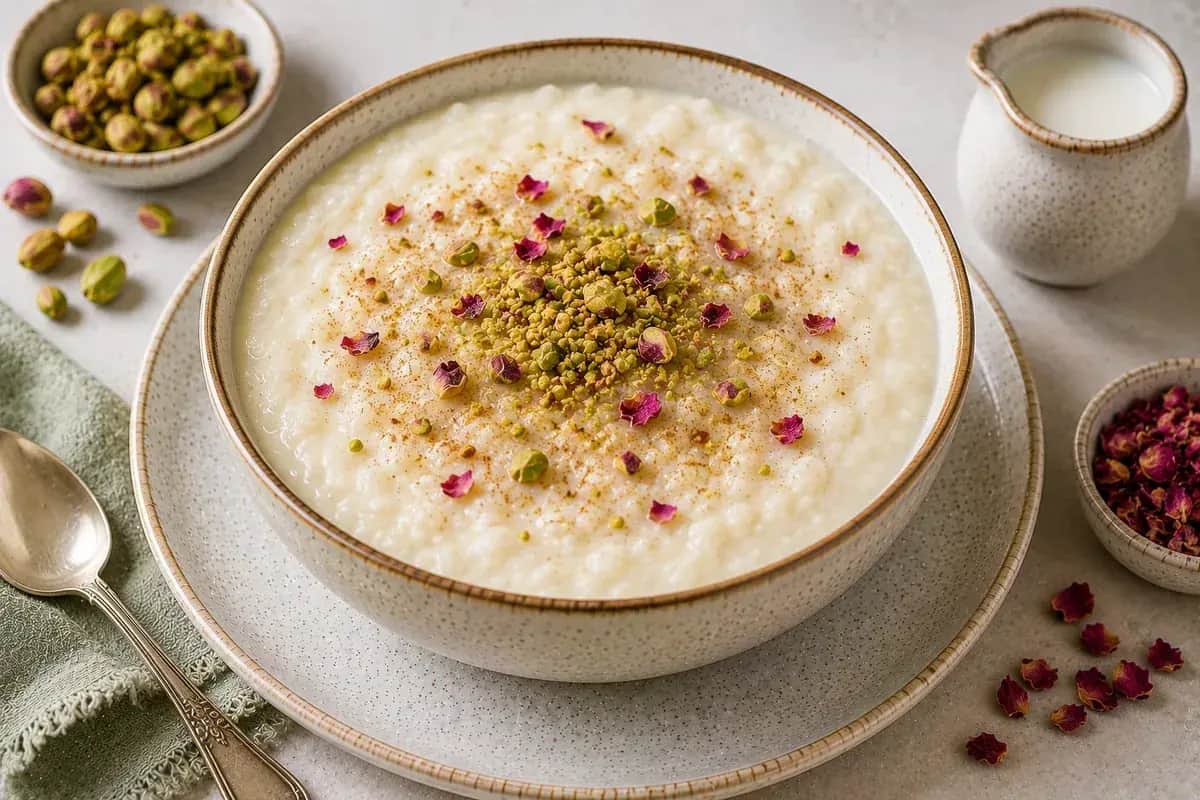
Healthy Roz Bel Laban Recipe — Egyptian Rice Pudding with Pistachios & Almonds
An Egyptian rice pudding made with milk, rice, gentle sweetness, cinnamon, and a nutty finish. Slow cooking gives the rice a creamy texture while keeping the dessert simple enough for everyday serving or make-ahead preparation.
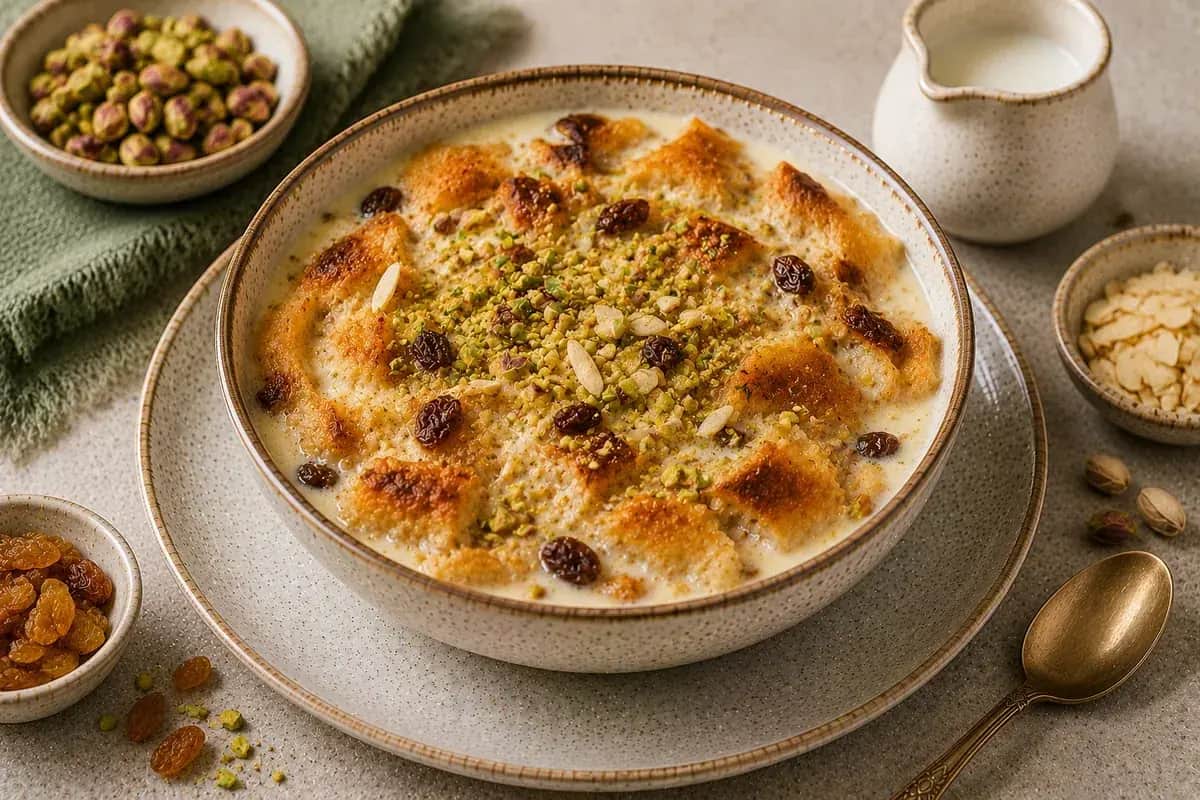
Healthy Om Ali Recipe — Egyptian Bread Pudding with Dates & Nuts
An Egyptian Om Ali made with baked pastry, milk, dried fruit, nuts, and warm spices. The pastry absorbs the sweetened milk as it bakes, creating a soft center with toasted edges and a nutty finish.
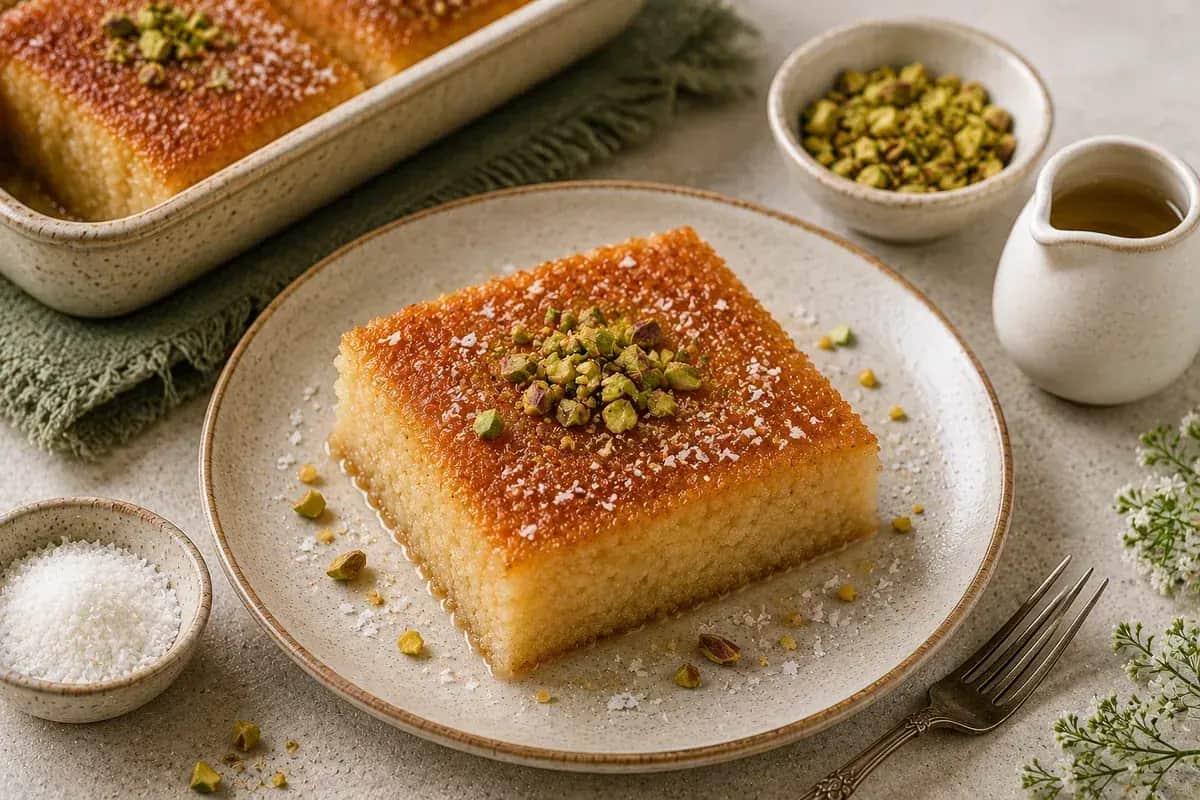
Healthy Basbousa Recipe — Light Egyptian Semolina Cake with Honey & Almonds
A lighter Egyptian basbousa made with semolina, yogurt, coconut, almonds, and a measured syrup. The cake bakes until golden and tender, then absorbs just enough syrup to give it the characteristic moist texture without becoming overly sweet.