
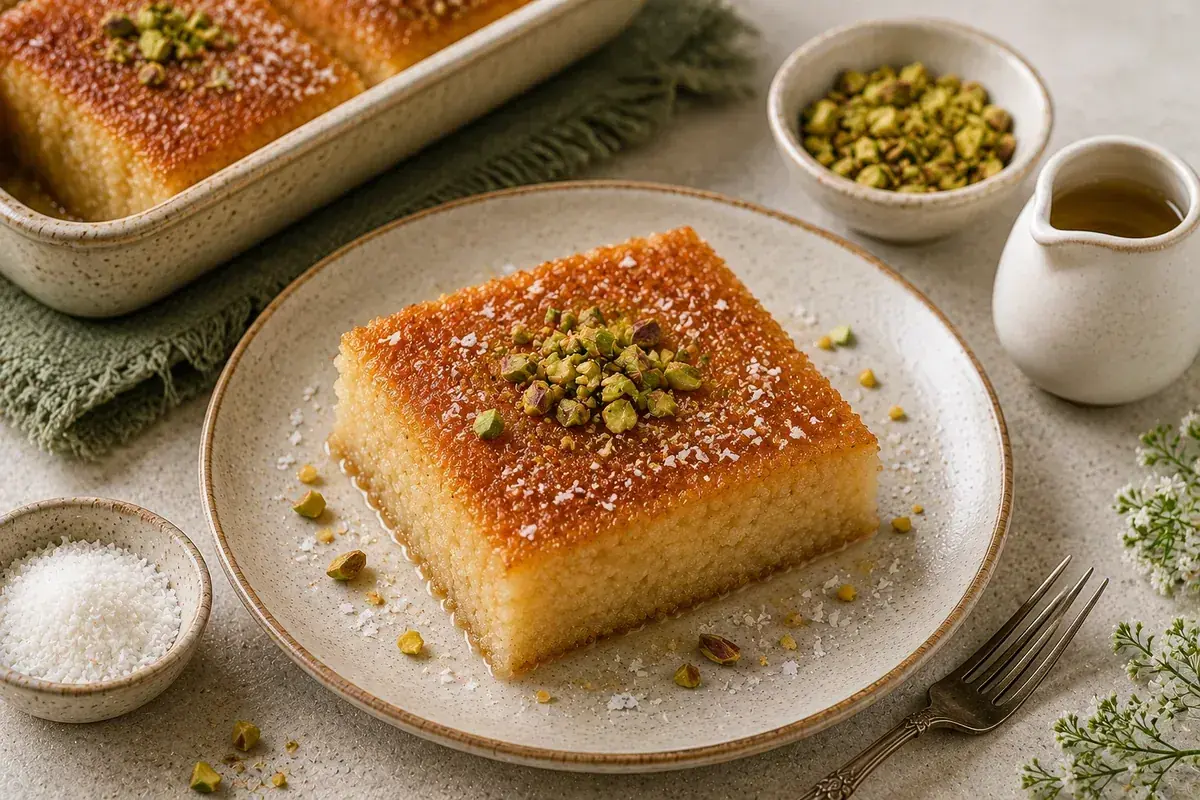
Healthy Basbousa Recipe — Light Egyptian Semolina Cake with Honey & Almonds
A lighter Egyptian basbousa made with semolina, yogurt, coconut, almonds, and a measured syrup. The cake bakes until golden and tender, then absorbs just enough syrup to give it the characteristic moist texture without becoming overly sweet.
Prep Time
20 mins
Cook Time
35 mins
Total Time
55 mins
Servings
12
A TASTE OF TRADITION
The Story Behind This Recipe
Basbousa is a beloved semolina-based sweet found across Egypt and the wider Arab world. In Egypt it is commonly known as basbousa and is associated with home baking, celebrations, Ramadan gatherings, family visits, and festive dessert tables. Its appeal comes from a simple combination of semolina, sweetness, aromatic flavorings, and a moist tender crumb. This Healthy Basbousa keeps that familiar identity while changing the balance of ingredients so the dessert is lighter and less dependent on heavy butter and sugary syrup.
Cultural & Culinary Context
Egyptian basbousa has long been part of the country's rich dessert tradition. Versions vary from household to household and bakery to bakery, with differences in semolina texture, dairy ingredients, sweeteners, nuts, coconut, and aromatic waters. Almonds are a familiar decorative element, while orange blossom water is frequently used in Egyptian and broader Middle Eastern sweets to provide a distinctive floral fragrance. Basbousa is especially popular during Ramadan, when sweets are shared with family and guests after the evening meal, but it is enjoyed throughout the year.
What Makes It Mediterranean?
Although basbousa is most strongly associated with Egypt and the Arab world rather than being a classic Mediterranean dish in the narrow European sense, its ingredients connect naturally with the broader eastern Mediterranean food culture. Semolina, olive oil, yogurt, almonds, citrus, and orange blossom water are all longstanding ingredients across the eastern Mediterranean and Middle Eastern culinary landscape. This version emphasizes those ingredients, particularly extra virgin olive oil, yogurt, almonds, and citrus, while preserving the Egyptian character of the dessert.
Mediterranean Influences
- 🌿Extra virgin olive oil replaces butter as the primary added fat, reflecting the importance of olive oil throughout Mediterranean and eastern Mediterranean cooking.
- 🌿Greek yogurt adds moisture, protein, and a gentle tang while fitting naturally into the dairy traditions of the eastern Mediterranean.
- 🌿Almonds provide the classic nutty finishing element and are widely used in Mediterranean and Middle Eastern sweets.
- 🌿Fresh lemon juice balances the sweetness of the honey syrup with acidity and freshness.
- 🌿Orange blossom water contributes the floral aroma strongly associated with many Egyptian, Levantine, and eastern Mediterranean desserts.
- 🌿The recipe relies on familiar whole-food ingredients and a restrained amount of added sweetness rather than an extremely heavy sugar syrup.
Ingredients
- 2 cups whole wheat semolina (Use fine or medium whole wheat semolina rather than very coarse semolina for a tender but slightly textured cake.)
- 1 cup plain Greek yogurt (Full-fat or low-fat Greek yogurt can be used. Bring it close to room temperature before mixing for easier incorporation.)
- 0.25 cup extra virgin olive oil (Choose a mild or fruity olive oil so its flavor complements rather than dominates the dessert.)
- 0.25 cup honey (Use a mild honey for a balanced flavor.)
- 1 tsp baking powder
- 1 tsp vanilla extract
- 1 tbsp orange blossom water (Optional, but highly recommended for the characteristic floral aroma associated with many Egyptian and Levantine sweets.)
- 12 whole almonds (Use one almond for each serving piece.)
- 2 tbsp unsweetened shredded coconut (Optional garnish.)
- 2 tbsp honey (For the light finishing syrup.)
- 2 tbsp fresh lemon juice (Freshly squeezed lemon gives the syrup brightness and prevents the dessert from tasting overly sweet.)
- 2 tbsp water (Used to loosen the honey-lemon syrup.)
Instructions
- 1
Preheat the oven to 350°F (175°C). Position a rack in the center of the oven so the basbousa cooks evenly without becoming too dark on top.
- 2
Lightly grease an 8-inch (20 cm) square baking pan with a thin layer of olive oil or nonstick spray. If desired, line the bottom with parchment paper, leaving a little overhang to make lifting the cooled cake easier.
- 3
In a large mixing bowl, combine 2 cups whole wheat semolina and 1 teaspoon baking powder. Stir thoroughly so the baking powder is evenly distributed before the wet ingredients are added.
- 4
Add 1 cup Greek yogurt, 1/4 cup extra virgin olive oil, 1/4 cup honey, 1 teaspoon vanilla extract, and 1 tablespoon orange blossom water if using.
- 5
Mix gently with a spatula until the ingredients are evenly combined and no dry pockets of semolina remain. Do not vigorously beat the batter or overmix it; excessive mixing can make the finished basbousa unnecessarily dense.
- 6
Transfer the mixture to the prepared 8-inch (20 cm) square pan. Spread it evenly with the back of a spoon or a lightly oiled spatula, pressing gently into the corners so the thickness is consistent throughout the pan.
- 7
Use a knife to score the surface into 12 diamond or square portions. Do not cut completely through the batter at this stage; the scoring simply creates clear guides for cutting after baking.
- 8
Place 1 whole almond in the center of each scored portion. Press each almond gently into the surface so it stays in position during baking without being completely buried.
- 9
Bake for approximately 30–35 minutes, checking from the 30-minute mark. The basbousa is ready when the surface is evenly golden, the edges are slightly deeper in color, and the center feels set rather than wet or loose.
- 10
While the basbousa is baking, prepare the finishing syrup. Place 2 tablespoons honey, 2 tablespoons fresh lemon juice, and 2 tablespoons water in a small saucepan or heatproof pan.
- 11
Warm the honey, lemon juice, and water gently over low heat, stirring until the honey loosens and the mixture becomes smooth and pourable. Do not boil it aggressively; the goal is simply to create a warm, thin syrup.
- 12
Remove the golden basbousa from the oven and immediately spoon or drizzle the warm honey-lemon syrup evenly across the hot surface. Pay particular attention to the scored lines and edges so the syrup can penetrate evenly.
- 13
Allow the basbousa to rest in the pan until it has cooled substantially and absorbed the syrup. For the cleanest slices, allow it to cool completely before cutting through the scored lines.
- 14
Once cooled, cut along the existing score marks to separate the 12 pieces. Garnish with a small amount of unsweetened shredded coconut if desired and serve at room temperature or slightly warm.
SET YOURSELF UP FOR SUCCESS
Before You Cook
👨🍳 Keep In Mind
- •Bring the Greek yogurt close to room temperature before mixing. Very cold yogurt can make the batter feel thicker and harder to spread evenly.
- •Measure the 2 cups of whole wheat semolina accurately. Too much semolina can produce a dry, dense cake.
- •Prepare the 8-inch (20 cm) square pan before mixing so the batter can be spread immediately and evenly.
- •Have all 12 almonds ready before scoring the batter so each portion receives one almond.
- •Prepare the honey-lemon syrup while the cake is close to finishing so the syrup is warm when the hot basbousa comes out of the oven.
- •If using orange blossom water, measure the full 1 tablespoon carefully. Too much can make the floral flavor overpowering.
💡 Helpful Tips
- •Do not overmix the batter after adding the yogurt and oil. Mix only until the semolina is evenly moistened.
- •Spread the batter to an even thickness. Uneven thickness can cause the edges to brown before the center is fully baked.
- •Score the basbousa before baking rather than trying to cut a fully baked cake. This makes the final portions easier to separate.
- •Do not completely bury the almonds. Leaving them visible gives the traditional appearance and helps you identify each serving portion.
- •The finishing syrup should be warm and fluid, not boiling hot. A gentle warm syrup is enough to soften and flavor the hot cake.
- •Pour the syrup gradually and evenly. Adding it all in one place can leave some areas overly moist while other areas remain dry.
- •Allow the basbousa to cool before cutting if you want clean diamond shapes. Cutting while extremely hot can cause the pieces to crumble.
- •If the top browns too quickly while the center still needs time, loosely cover the pan with foil and continue baking.
👀 How Do I Know It's Done?
- ✓The basbousa is ready when the top is evenly golden brown and the edges are slightly more deeply colored.
- ✓The center should feel set when gently pressed with a fingertip or the back of a spoon. It should not wobble like uncooked batter.
- ✓A knife inserted into the center should come out without wet batter attached. A few moist crumbs are normal because basbousa should remain tender.
- ✓The almonds should be lightly toasted and fragrant rather than dark or burnt.
- ✓After the honey-lemon syrup is added, the cake should gradually absorb the liquid. A properly soaked basbousa remains moist but still holds its shape.
- ✓If the center is still visibly wet after 35 minutes, continue baking in short 3–5 minute intervals and protect the top with foil if it is already sufficiently brown.
Tweak It
Make This Recipe Work for You
Adapt the recipe to your ingredients, dietary needs, budget, time, serving size, or meal-prep plans.
🔄 Ingredient Substitutions
Greek Yogurt Alternative
Use thick plain strained yogurt if Greek yogurt is unavailable. Avoid very thin yogurt because it can make the batter too loose and change the final texture.
Alternative Nut Topping
Replace the 12 almonds with pistachio halves or blanched hazelnuts if preferred. Keep approximately one nut per serving portion.
Without Orange Blossom Water
Omit the 1 tablespoon orange blossom water if unavailable. The dessert will still work, although it will have a less floral aroma.
🌱 Dietary Adjustments
Dairy-Free Version
Use a thick unsweetened dairy-free yogurt with a consistency similar to Greek yogurt. Check the product's behavior because very thin plant-based yogurt can produce a looser batter.
Naturally Egg-Free
The recipe contains no eggs, so no egg substitution is required.
Less Sweet
Reduce the honey in the batter slightly and use only enough finishing syrup to moisten the surface. Keep the lemon juice so the dessert remains balanced rather than simply tasting less sweet.
💰 Budget-Friendly Options
Use Regular Plain Yogurt
A thick plain yogurt can replace Greek yogurt when it is less expensive or more readily available. If the yogurt is noticeably thin, reduce it slightly so the batter does not become too wet.
Use Fewer Decorative Nuts
Use half almonds or chopped nuts as a garnish if whole almonds are expensive. The dessert remains flavorful without a full nut on every piece.
⏱️ Time-Saving Options
Prepare the Pan First
Grease and line the pan, measure the dry ingredients, and prepare the almonds before mixing so the batter can go directly into the oven once it is combined.
Prepare Syrup Ahead
Mix the honey, lemon juice, and water before the cake finishes baking. Keep it covered and warm it gently just before pouring it over the hot basbousa.
👨👩👧👦 Serving Adjustments
Half Batch
For approximately 6 servings, halve all ingredients and use a smaller baking dish while maintaining a similar batter thickness. Begin checking earlier because a smaller quantity may bake faster.
Larger Batch
For a larger gathering, multiply the ingredients proportionally and use a larger pan only if you can maintain a similar thickness. A much deeper layer will require significantly longer baking and can brown before the center is done.
🥡 Meal Prep
Make Ahead for Guests
Bake and cool the basbousa several hours before serving. Keep it covered at room temperature for short-term serving, then cut along the existing score lines just before presenting it.
RECIPE RESCUE
🧩 What Do You Need Help With?
Choose the problem you're facing and get a recipe-specific solution instead of a generic cooking tip.
WHAT IF?
🔄 What If...?
Choose your situation and we'll show you a practical pathway for making this recipe work.
STORAGE & LEFTOVERS
🥡 Storage & Leftovers
Allow the basbousa to cool completely before covering it.
Store it in an airtight container or cover the baking pan tightly.
Keep it at room temperature for short-term serving if the environment is cool and the dessert will be eaten promptly.
For longer storage, refrigerate the covered basbousa and allow individual pieces to come closer to room temperature before serving.
If refrigerated, the texture may become firmer. Let the pieces sit briefly before serving or warm them gently if desired.
Best Storage Time
Best enjoyed within 2–3 days when stored properly.
How to Store
Use a clean airtight container or a tightly covered baking pan. Place parchment between layers if stacking pieces to reduce sticking.
SERVING & PAIRING
🍽️ Serving & Pairing
Serve the basbousa as a light Egyptian dessert with the almond centered on each diamond or square. It is especially enjoyable slightly warm or at room temperature, when the semolina remains tender and the honey-lemon syrup is fragrant. For a balanced presentation, add a small spoonful of plain Greek yogurt, fresh berries, or citrus on the side rather than adding more honey.
What Goes Well With It?
RECIPE FAQ
❓ Frequently Asked Questions
How do you make healthy basbousa?
To make healthy basbousa, combine 2 cups whole wheat semolina with baking powder, then gently mix in Greek yogurt, extra virgin olive oil, honey, vanilla, and optional orange blossom water. Spread the mixture into an 8-inch square pan, score it into 12 portions, add one almond to each portion, and bake at 350°F (175°C) for about 30–35 minutes until golden and set. While it bakes, warm 2 tablespoons honey with 2 tablespoons fresh lemon juice and 2 tablespoons water. Pour the warm honey-lemon syrup over the hot basbousa, allow it to cool and absorb the syrup, then cut and serve.
What is basbousa?
Basbousa is a semolina-based sweet popular in Egypt and throughout the Arab world. It is traditionally baked until golden, cut into diamond or square pieces, and soaked with a sweet syrup. Egyptian versions commonly include aromatic ingredients such as vanilla or orange blossom water and are often decorated with almonds.
Is basbousa Egyptian?
Basbousa is strongly associated with Egypt and is a familiar part of Egyptian dessert culture, although related semolina cakes exist across the Middle East and eastern Mediterranean under different names and with different ingredient combinations.
Why is this basbousa healthier?
This version reduces reliance on refined sugar and butter by using honey, Greek yogurt, and extra virgin olive oil. It is also baked rather than fried and uses whole wheat semolina for additional dietary fiber.
Can I use butter instead of olive oil?
You can, but it changes the nutritional profile and flavor. The recipe is specifically designed around 1/4 cup extra virgin olive oil, which keeps the cake moist while providing predominantly unsaturated fat.
Why did my basbousa become too hard?
Overbaking is one of the most common causes. Using too much semolina or not distributing enough syrup can also contribute. Remove the cake once the center is set and golden, then distribute the warm syrup evenly while the cake is hot.
Should I pour the syrup on hot or cold basbousa?
For this recipe, pour the warm honey-lemon syrup over the basbousa immediately after it comes out of the oven. The hot cake absorbs the syrup more evenly and develops a moist texture.
Why should I score the basbousa before baking?
Scoring before baking creates guides for the final portions and makes it easier to cut clean diamonds or squares after the cake has cooled. It also helps you distribute the 12 almonds evenly.
Can I make basbousa ahead of time?
Yes. Basbousa is well suited to advance preparation. Bake and cool it several hours before serving, then keep it covered. The flavor and texture can become more settled as the syrup finishes absorbing.
Can I reduce the honey?
Yes. The finishing syrup is added gradually, so you can stop once the basbousa is sufficiently moist. If you want the least sweet result, avoid any additional honey drizzle when serving.
Why is my batter difficult to spread?
Whole wheat semolina can absorb moisture quickly. Allow the mixed batter to stand briefly so the semolina hydrates, then spread it gently. If the yogurt used is unusually thick, the mixture may naturally be more substantial.
How do I get clean basbousa pieces?
Cool the cake substantially before cutting, use a sharp knife, and follow the original score lines. Cutting while the cake is extremely hot can cause the tender semolina crumb to break apart.
Can I freeze healthy basbousa?
It can be frozen, although the texture may soften slightly after thawing because of the syrup. Cool it completely, wrap individual pieces well, and thaw them gradually before serving.
Explore More
Go deeper into the cuisine
Learn more about the ingredients, traditions, and cooking approaches connected to this recipe.
You May Also Like
More delicious recipes from the Desserts
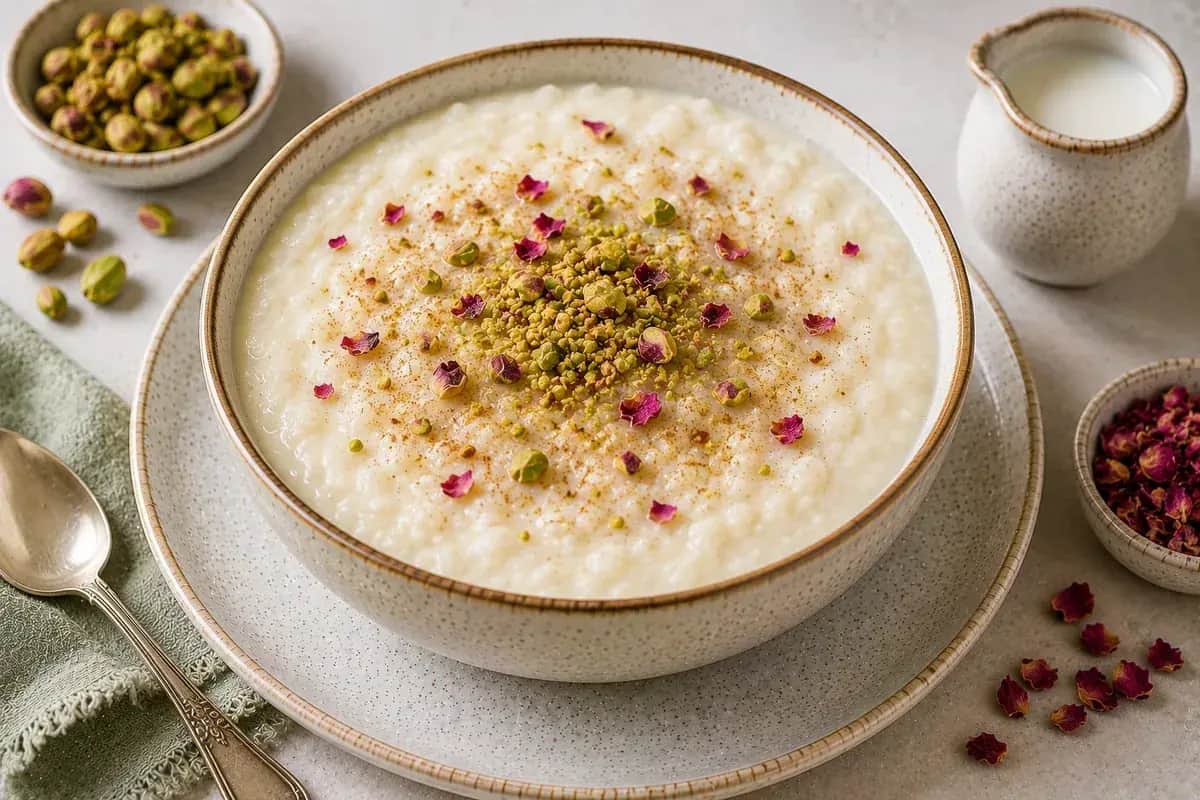
Healthy Roz Bel Laban Recipe — Egyptian Rice Pudding with Pistachios & Almonds
An Egyptian rice pudding made with milk, rice, gentle sweetness, cinnamon, and a nutty finish. Slow cooking gives the rice a creamy texture while keeping the dessert simple enough for everyday serving or make-ahead preparation.
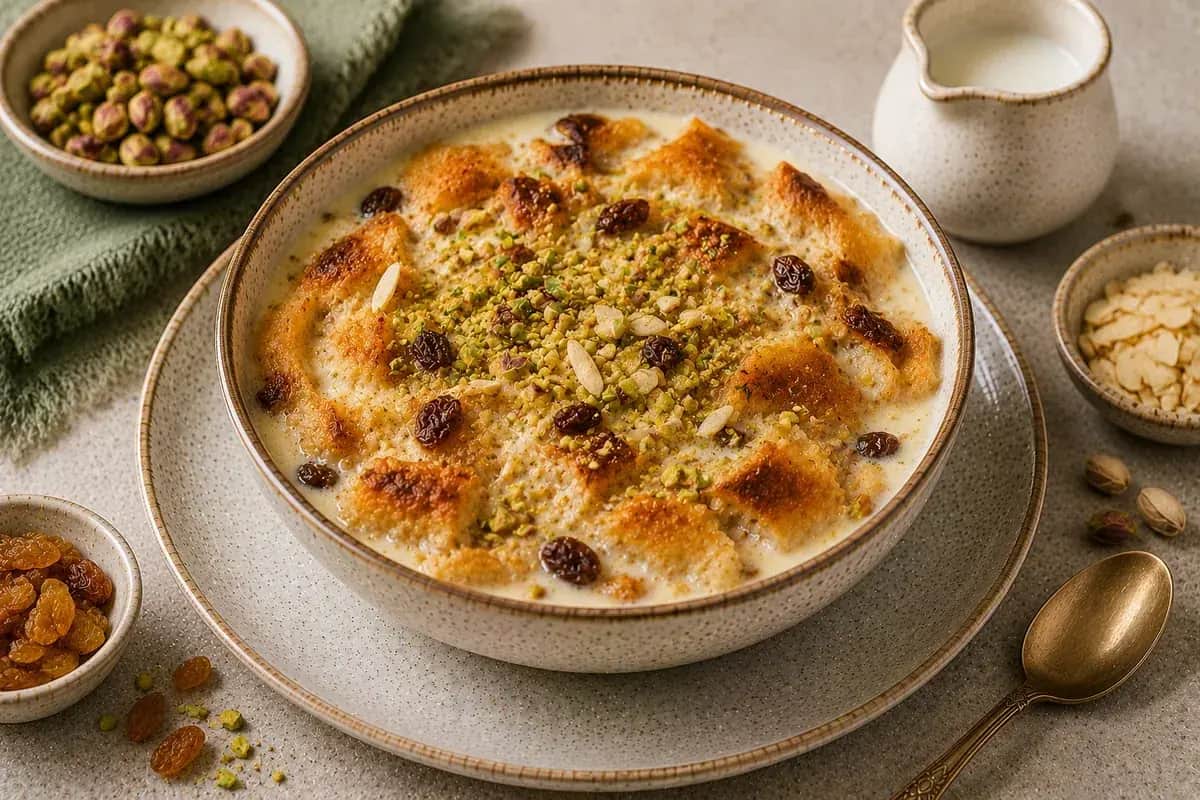
Healthy Om Ali Recipe — Egyptian Bread Pudding with Dates & Nuts
An Egyptian Om Ali made with baked pastry, milk, dried fruit, nuts, and warm spices. The pastry absorbs the sweetened milk as it bakes, creating a soft center with toasted edges and a nutty finish.
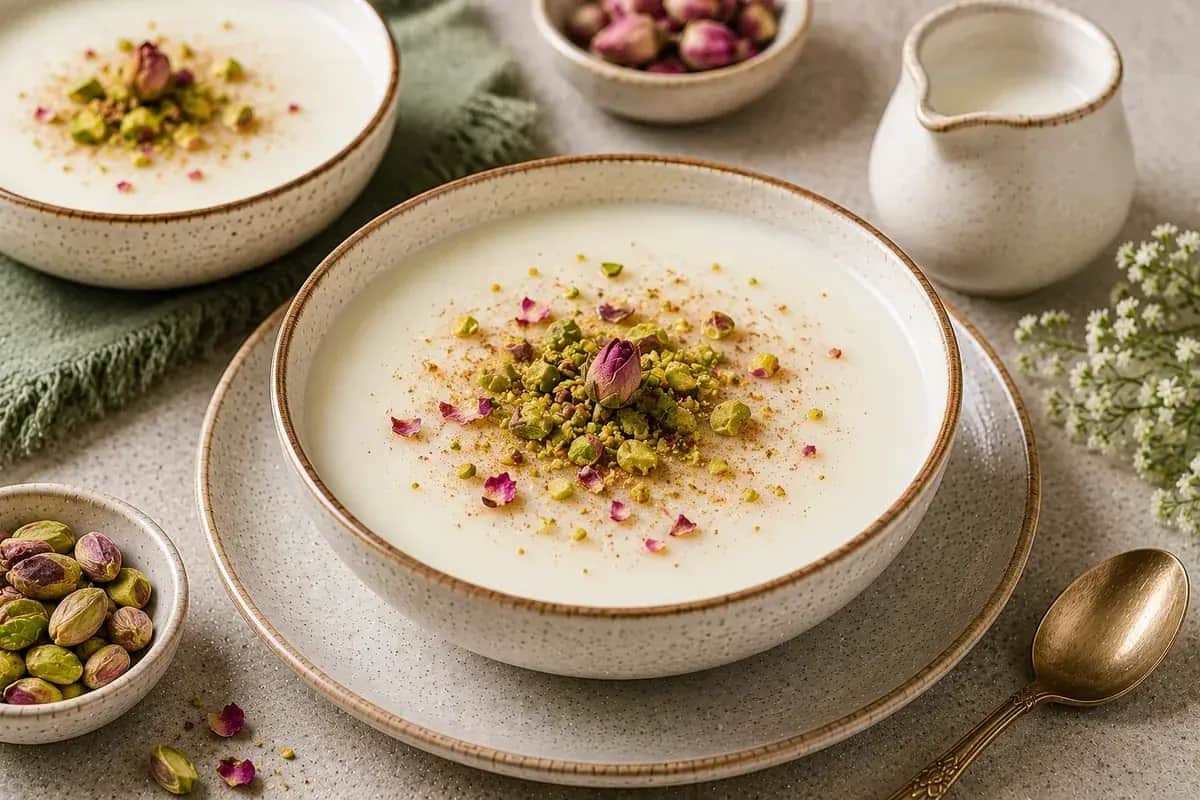
Healthy Mahalabia Recipe — Egyptian Milk Pudding with Rose Water & Pistachios
This healthy mahalabia recipe is a light, silky Egyptian milk pudding made with low-fat milk, cornstarch, honey, vanilla, and rose water, finished with chopped pistachios, cinnamon, and optional edible rose petals. An easy Middle Eastern dessert with delicate floral flavor, creamy texture, and a lighter sweetness.