
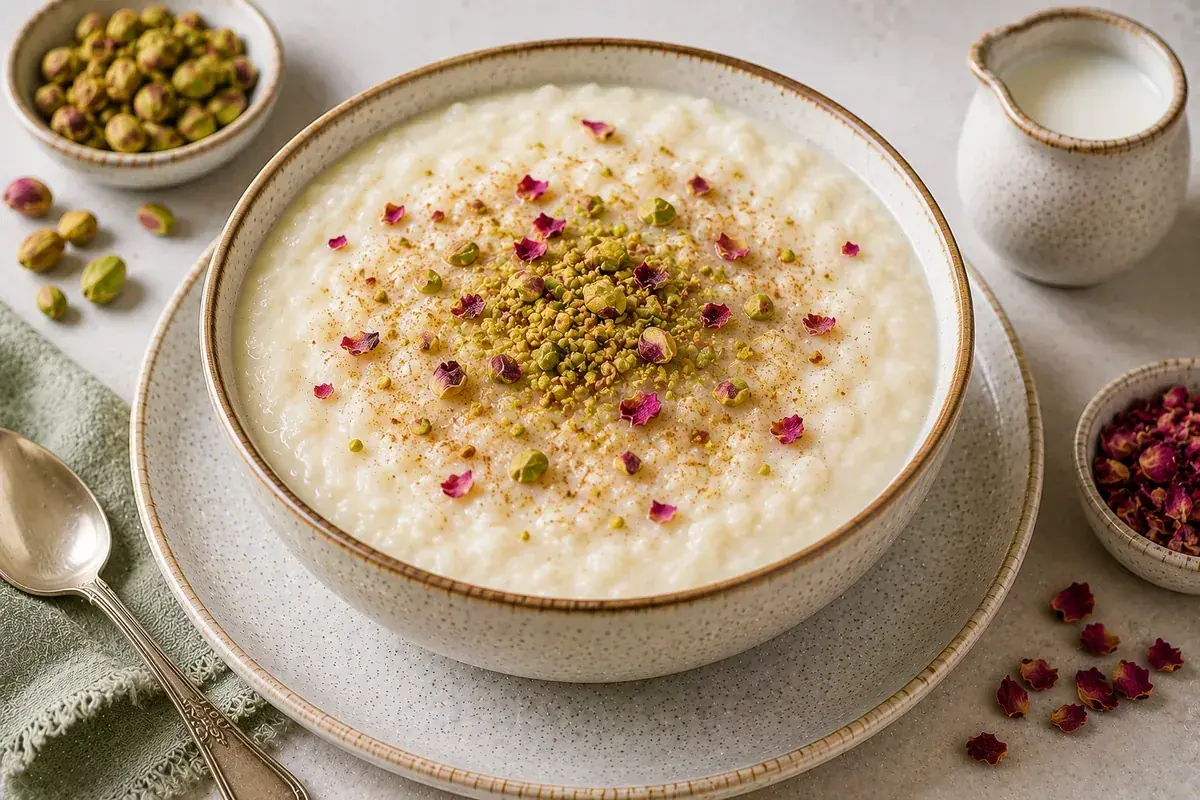
Healthy Roz Bel Laban Recipe — Egyptian Rice Pudding with Pistachios & Almonds
An Egyptian rice pudding made with milk, rice, gentle sweetness, cinnamon, and a nutty finish. Slow cooking gives the rice a creamy texture while keeping the dessert simple enough for everyday serving or make-ahead preparation.
Prep Time
10 mins
Cook Time
45 mins
Total Time
55 mins
Servings
6
A TASTE OF TRADITION
The Story Behind This Recipe
Roz Bel Laban, commonly written as Roz Bil Laban or Roz Bel Laban, means essentially 'rice with milk' in Arabic. It is a familiar Egyptian comfort dessert built from simple pantry ingredients: rice, milk, sweetener, and aromatic flavorings. Its appeal comes from transformation rather than complexity—the rice slowly softens and releases starch into the milk, creating a creamy pudding that can be served warm for comfort or chilled for a refreshing dessert. The same basic idea is kept here, with less richness and sweetness for a lighter dessert that works well for everyday serving.
Cultural & Culinary Context
Rice pudding belongs to a much wider family of milk-and-grain desserts found across the Middle East, Mediterranean, North Africa, and beyond. In Egypt, Roz Bel Laban has become a particularly recognizable dessert and is commonly associated with home cooking, family meals, bakeries, and dessert shops. The dish is valued for its simplicity and comforting texture, and Egyptian versions may vary in sweetness, thickness, flavorings, toppings, and presentation. Some preparations are enriched more heavily, while others keep the ingredient list very simple. Because rice pudding has ancient and widespread culinary relatives, it is more accurate to view Roz Bel Laban as part of a long regional tradition of cooking grains with milk rather than assigning the dish to a single isolated invention or origin story.
What Makes It Mediterranean?
This dessert connects naturally with the broader Mediterranean and Middle Eastern tradition of turning humble ingredients into fragrant, comforting sweets. Rice, dairy, cinnamon, nuts, and honey all appear in different forms throughout regional food traditions. Pistachios and almonds are especially familiar in Middle Eastern desserts, while cinnamon is widely used to add warmth without needing large amounts of sugar. The result is a dessert whose ingredients are simple but whose aroma and texture are deeply characteristic of the region.
Mediterranean Influences
- 🌿Pistachios and almonds are widely used in Mediterranean and Middle Eastern sweets and provide the final nutty texture.
- 🌿Cinnamon adds the warm aromatic character found in many regional desserts.
- 🌿Honey has a long history as a natural sweetener in Mediterranean and Middle Eastern food traditions.
- 🌿Milk and rice form the simple, comforting foundation of the dessert.
- 🌿The recipe emphasizes simple ingredients and aromatic flavor rather than relying on heavy cream or excessive sweetness.
- 🌿The combination of creamy rice, warm spice, and nuts reflects the broader dessert traditions shared across Egypt and neighboring Mediterranean and Middle Eastern cuisines.
Ingredients
- 0.75 cup short-grain white rice (Rinse briefly under cold water. Do not aggressively wash away all the surface starch because some starch helps create the creamy texture of the pudding.)
- 1.5 cups water (Used to cook the rice until very tender before the milk is added. Most of the water should be absorbed before moving to the next stage.)
- 4 cups low-fat milk (Add gradually to the tender rice. Keep the mixture at a gentle simmer rather than a hard boil to reduce the risk of scorching or foaming.)
- 2 tbsp honey (Provides the main added sweetness. It is added after the rice has become tender so the initial rice-cooking stage is less prone to sticking.)
- 1 tsp vanilla extract (Adds a soft aromatic background and helps round out the relatively modest amount of added sweetener.)
- 1 tsp ground cinnamon (Use 1/2 teaspoon during cooking and reserve the remaining 1/2 teaspoon for finishing if desired.)
- 1 tbsp cornstarch (Whisk with the cold water until completely smooth before adding. This helps thicken the pudding without creating lumps.)
- 2 tbsp cold water (Used to make the cornstarch slurry. Cold water allows the cornstarch to disperse smoothly before it reaches the hot pudding.)
- 2 tbsp finely chopped pistachios (Use unsalted or lightly salted pistachios. You can reserve some for the final garnish.)
- 1 tbsp sliced almonds (Thinly sliced almonds provide contrasting texture. They may be lightly toasted separately if you want a deeper nutty flavor.)
- 1 fresh mint leaves (Optional garnish. Add just before serving so the mint remains fresh and attractive.)
Instructions
- 1
Rinse 3/4 cup short-grain white rice briefly under cold water. Do not scrub the rice aggressively because retaining some surface starch helps the pudding become naturally creamy.
- 2
Place the rinsed rice and 1 1/2 cups water in a medium-to-large heavy-bottomed saucepan. Bring to a gentle boil over medium heat, then reduce the heat to low, cover, and simmer for approximately 10–15 minutes. Most of the water should be absorbed and the rice should be very tender.
- 3
Test the rice before adding the milk. Press a grain between your fingers or against the back of a spoon. It should be soft rather than hard in the center. If it is still firm, add 2–3 tablespoons water and continue cooking briefly. Do not rush to the milk stage while the rice is still noticeably undercooked.
- 4
Gradually add 4 cups low-fat milk to the tender rice while stirring. Return the mixture to a gentle simmer over medium heat. Avoid a vigorous boil because milk can foam rapidly and stick or scorch on the bottom of the saucepan.
- 5
Reduce the heat to medium-low and cook uncovered for approximately 20–25 minutes. Stir frequently, scraping across the bottom and around the corners of the saucepan. The rice should become increasingly soft and the milk should gradually become creamy and slightly reduced.
- 6
While the rice and milk simmer, whisk 1 tablespoon cornstarch with 2 tablespoons cold water in a small bowl. Continue whisking until the mixture is completely smooth with no visible lumps or dry cornstarch.
- 7
When the rice is very tender and the milk has begun to thicken, slowly pour in the cornstarch slurry while stirring continuously. Cook over medium-low heat for approximately 2–4 minutes. The pudding should noticeably thicken but should still move slowly when the saucepan is tilted.
- 8
Stir in 2 tablespoons honey, 1 teaspoon vanilla extract, and 1/2 teaspoon ground cinnamon. Mix thoroughly and cook gently for another 1–2 minutes. Do not allow the pudding to boil aggressively at this stage.
- 9
Check the consistency before removing the pudding from the heat. It should be slightly looser than the texture you ultimately want because rice pudding thickens significantly as it cools. If it has become too thick, stir in warm milk 1 tablespoon at a time until it loosens.
- 10
Remove the saucepan from the heat and taste carefully. The intended flavor is gently sweet, creamy, and aromatic rather than intensely sugary. The rice and milk should remain the main flavors.
- 11
Divide the hot pudding between 6 serving bowls or glasses. Leave the portions uncovered for several minutes so excess steam can escape before covering or refrigerating.
- 12
For warm serving, allow the pudding to cool for approximately 5–10 minutes. Sprinkle with chopped pistachios, sliced almonds, and some of the remaining cinnamon.
- 13
For chilled serving, allow the pudding to cool toward room temperature first, then cover and refrigerate until cold and set. Avoid sealing the containers while the pudding is still steaming hot because trapped condensation can affect the texture.
- 14
Before serving chilled pudding, check its consistency. If it has become firmer than desired, gently stir 1–2 teaspoons milk into each portion. Finish with pistachios, almonds, the remaining cinnamon, and fresh mint if desired.
SET YOURSELF UP FOR SUCCESS
Before You Cook
👨🍳 Keep In Mind
- •Measure all ingredients before beginning. The recipe moves through several stages, and having the milk, honey, vanilla, cinnamon, and cornstarch ready makes it easier to control the cooking.
- •Use a heavy-bottomed saucepan if possible. A thin pan can develop hot spots that make milk and rice stick or scorch more easily.
- •Rinse the 3/4 cup rice briefly rather than washing it repeatedly. Some surface starch is useful for creating the creamy pudding texture.
- •Have a heatproof spoon or spatula ready for frequent stirring. Pay particular attention to the bottom and corners of the saucepan once the milk is added.
- •Measure 1 tablespoon cornstarch and 2 tablespoons cold water separately so the thickening slurry can be mixed smoothly when needed.
- •Prepare the 2 tablespoons chopped pistachios and 1 tablespoon sliced almonds before serving. This prevents you from disturbing the pudding while it is setting.
- •Decide whether you want to serve the pudding warm or chilled. Both work, but chilled pudding becomes noticeably firmer.
💡 Helpful Tips
- •Do not add the milk while the rice is still hard in the center. The rice should already be very tender after the water-cooking stage.
- •A heavy-bottomed pan and moderate heat are your best protection against scorched milk.
- •Stir frequently after adding the milk. Milk solids and rice starch can settle on the bottom even when the surface looks calm.
- •Never leave simmering milk unattended for long. It can foam and rise quickly once it reaches a stronger boil.
- •Always mix the cornstarch with cold water before adding it to the hot pudding. Sprinkling dry cornstarch directly into hot liquid is likely to create lumps.
- •Add the honey after the rice has become tender. This keeps the initial cooking stage simpler and reduces unnecessary sticking.
- •Do not judge the final thickness while the pudding is still boiling hot. It will continue to thicken as it cools.
- •If the pudding becomes too thick, loosen it gradually with warm milk rather than adding a large amount at once.
- •If the pudding seems too loose immediately after cooking, give it several minutes to cool before deciding whether it needs more thickening.
- •If using salted pistachios, do not add any additional salt.
- •For the cleanest chilled presentation, cool the pudding enough for steam to escape before covering the bowls.
👀 How Do I Know It's Done?
- ✓The rice grains are completely tender with no hard or chalky center.
- ✓The milk has thickened enough to coat a spoon lightly.
- ✓The cornstarch has been fully incorporated without visible lumps.
- ✓The pudding moves slowly when the saucepan is tilted but is still fluid enough to spoon easily.
- ✓The finished mixture remains creamy rather than becoming dry, stiff, or grainy.
- ✓After cooling, the pudding should hold its shape in the serving bowl while remaining soft and spoonable.
Tweak It
Make This Recipe Work for You
Adapt the recipe to your ingredients, dietary needs, budget, time, serving size, or meal-prep plans.
🔄 Ingredient Substitutions
Using a different milk
The canonical recipe uses 4 cups low-fat milk. Other dairy milks can change the richness, sweetness, and final texture, so keep the same basic method but expect a slightly different result.
Make it nut-free
Omit the 2 tablespoons pistachios and 1 tablespoon sliced almonds. The pudding itself does not depend on the nuts for structure, so the cooking method remains unchanged.
Use pistachios only
If almonds are unavailable, omit the 1 tablespoon sliced almonds and use the 2 tablespoons chopped pistachios as the complete nut garnish.
Alternative sweetener
The canonical recipe uses 2 tablespoons honey. Replacing it with another liquid sweetener will change the flavor and may slightly alter the final sweetness, so adjust cautiously rather than adding a large quantity at once.
🌱 Dietary Adjustments
Vegetarian dessert
This recipe is vegetarian and contains no meat, poultry, or fish.
Vegan adaptation
The canonical recipe contains dairy milk and honey, so it is not vegan. A plant-based version would require replacing both with suitable alternatives, and the final texture and sweetness may differ.
Nut-free option
The pistachios and almonds are toppings rather than structural ingredients. Omit both for a nut-free version, while checking packaged ingredients for cross-contact if necessary.
💰 Budget-Friendly Options
Reduce garnish cost
The pistachios and almonds are used primarily for texture and presentation. Omitting the nuts will not prevent the rice pudding from cooking successfully.
Use one type of nut
If buying both nuts is inconvenient, use the 2 tablespoons pistachios alone and omit the 1 tablespoon almonds.
⏱️ Time-Saving Options
Measure everything first
Have the 4 cups milk, 2 tablespoons honey, 1 teaspoon vanilla, 1 teaspoon cinnamon, and cornstarch slurry ingredients measured before the milk stage begins. This makes the cooking process smoother and reduces the chance of leaving simmering milk unattended.
Prepare the toppings early
Chop the 2 tablespoons pistachios and measure the 1 tablespoon sliced almonds before cooking so the finished pudding can be served immediately once it reaches the desired temperature.
👨👩👧👦 Serving Adjustments
Six moderate dessert servings
The recipe is designed for 6 servings. Because the pudding is rich and creamy even with its lighter ingredient profile, six moderate portions provide a practical dessert serving size.
🥡 Meal Prep
Prepare ahead for chilled serving
The pudding can be prepared in advance and refrigerated once it has cooled enough to cover safely. It will become firmer as it chills, so loosen it with a small amount of milk before serving if necessary.
Portion before chilling
Dividing the pudding among 6 serving bowls while warm makes it easy to refrigerate individual portions and serve them directly from the refrigerator.
RECIPE RESCUE
🧩 What Do You Need Help With?
Choose the problem you're facing and get a recipe-specific solution instead of a generic cooking tip.
WHAT IF?
🔄 What If...?
Choose your situation and we'll show you a practical pathway for making this recipe work.
STORAGE & LEFTOVERS
🥡 Storage & Leftovers
Allow the pudding to cool enough for excess steam to escape before covering it.
Transfer portions to clean covered containers or keep the individual serving bowls covered.
Refrigerate the pudding for food safety rather than leaving dairy-based pudding at room temperature for extended periods.
Expect the pudding to become firmer during refrigeration because the rice starch continues to set.
Before serving chilled leftovers, add a small amount of milk if necessary and stir gently to restore a creamier consistency.
Do not repeatedly heat and cool the entire batch. Reheat only the portion you plan to serve warm.
Best Storage Time
Best enjoyed within 3–4 days when refrigerated promptly and stored properly.
How to Store
Use clean airtight food-storage containers or tightly covered individual serving bowls to protect the pudding from refrigerator odors and drying.
SERVING & PAIRING
🍽️ Serving & Pairing
Serve Roz Bel Laban warm after a short cooling period or chilled after refrigeration. Divide the pudding into 6 moderate portions and finish with chopped pistachios, sliced almonds, cinnamon, and optional fresh mint. The ideal texture is creamy and spoonable, with tender rice throughout rather than a firm, sliceable consistency.
What Goes Well With It?
RECIPE FAQ
❓ Frequently Asked Questions
How do you make healthy Roz Bel Laban?
To make healthy Roz Bel Laban, first cook 3/4 cup short-grain white rice with 1 1/2 cups water until the rice is very tender. Gradually add 4 cups low-fat milk and simmer gently for 20–25 minutes while stirring frequently. Whisk 1 tablespoon cornstarch with 2 tablespoons cold water, then stir the slurry into the pudding and cook for 2–4 minutes until creamy and slightly thickened. Add 2 tablespoons honey, 1 teaspoon vanilla, and 1/2 teaspoon cinnamon, then cook gently for another 1–2 minutes. Portion into 6 servings and finish with chopped pistachios, sliced almonds, remaining cinnamon, and optional fresh mint. Serve warm or chill before serving.
What does Roz Bel Laban mean?
Roz Bel Laban means essentially 'rice with milk' in Arabic. It is the Egyptian name commonly used for a creamy rice pudding made by cooking rice with milk and sweetening and flavoring it.
Is Roz Bel Laban Egyptian?
Yes. Roz Bel Laban is strongly associated with Egyptian cuisine and is a familiar Egyptian dessert. However, rice-and-milk puddings belong to a much wider family of dishes found throughout the Middle East, Mediterranean, North Africa, and other regions.
Why do you cook the rice in water before adding the milk?
Cooking the rice in 1 1/2 cups water until very tender makes the result more reliable. It ensures the rice is soft before the milk begins reducing and lowers the risk of ending up with hard rice or scorching the milk while waiting for the grains to cook.
Can I cook the raw rice directly in milk?
It is possible in some rice-pudding methods, but this Healthy Mezze recipe deliberately uses a two-stage method. Cooking the 3/4 cup rice in water first gives better control over rice tenderness and reduces the amount of time milk needs to remain over heat.
Why is short-grain rice recommended?
Short-grain rice releases starch readily during cooking and helps produce the creamy consistency expected from rice pudding. Other rice varieties can work, but they may produce a different texture and require different cooking times.
Why should I not boil the milk aggressively?
Aggressive boiling can cause milk to foam over and increases the chance of milk solids and rice starch sticking or scorching on the bottom of the saucepan. A gentle simmer provides enough heat to cook and thicken the pudding.
How often should I stir the pudding?
Stir frequently once the milk is added, especially across the bottom and around the corners of the pan. This helps prevent rice and milk solids from sticking and scorching.
Why do I mix cornstarch with cold water first?
Cornstarch disperses much more smoothly in cold water. Adding the resulting slurry to the hot pudding while stirring prevents the cornstarch from forming cooked lumps.
When should I add the honey?
Add the 2 tablespoons honey after the rice is already tender and the milk has begun to thicken. This keeps the initial rice-cooking stage simpler and gives you better control over the final sweetness.
How thick should Roz Bel Laban be?
It should be creamy and spoonable rather than stiff. The hot pudding should look slightly looser than the final desired texture because it thickens substantially as it cools.
Why did my pudding become too thick?
Rice pudding naturally thickens during cooling and refrigeration. If it becomes too firm, stir in warm or room-temperature milk one teaspoon or tablespoon at a time until it reaches the desired consistency.
Why is my pudding still too thin?
First allow it to cool because the pudding thickens naturally as it cools. If it remains substantially too loose, return it briefly to low heat and cook while stirring. Avoid immediately adding large amounts of cornstarch.
Why is my rice still hard?
The most likely reason is that the rice was moved to the milk stage before becoming fully tender. Return the rice to gentle cooking with a small amount of water if necessary and make sure there is no hard center before proceeding.
Why did my milk scorch?
Milk can scorch when the heat is too high or the mixture is not stirred frequently. Use a heavy-bottomed saucepan, keep the heat at medium-low once simmering, and stir across the bottom regularly.
Can I make this recipe without cornstarch?
The cornstarch provides additional thickness and consistency control. You can omit it, but the final pudding will likely be looser and more dependent on milk reduction and rice starch.
Can I use full-fat milk?
Yes, but the result will be richer and higher in fat than the canonical Healthy Mezze version. The recipe is specifically written with 4 cups low-fat milk to maintain its lighter profile.
Can I make it dairy-free?
The canonical recipe uses dairy milk, but a dairy-free adaptation is possible with a suitable plant-based milk. Because plant milks differ considerably in protein, fat, and thickness, the final texture may not match the original exactly.
Is Roz Bel Laban vegetarian?
Yes. This recipe contains no meat, poultry, or fish and is therefore vegetarian.
Is this recipe vegan?
No. The canonical recipe uses low-fat dairy milk and honey. A vegan version would require replacing both ingredients with suitable alternatives.
Can I make Roz Bel Laban ahead of time?
Yes. It is particularly convenient as a make-ahead chilled dessert. Prepare it, allow excess steam to escape, cover it, and refrigerate promptly. It will become firmer as it chills.
How do I make refrigerated Roz Bel Laban creamy again?
Stir a small amount of milk into the chilled pudding, starting with about 1–2 teaspoons per serving. Add more only if needed so you do not accidentally make it watery.
Can I serve Roz Bel Laban warm?
Yes. Allow the pudding to cool for approximately 5–10 minutes after portioning and serve it while still warm. The warm version is softer and more immediately creamy.
What nuts are traditionally associated with rice pudding toppings?
Regional preparations vary, but pistachios and almonds are familiar Middle Eastern dessert ingredients and make natural toppings for this version. The nuts are primarily for flavor, texture, and presentation.
Can I leave out the nuts?
Yes. The 2 tablespoons pistachios and 1 tablespoon almonds are garnishes and do not determine whether the pudding cooks successfully.
How long does the pudding keep?
For best quality, enjoy it within 3–4 days when refrigerated promptly in clean, covered containers. The texture will become firmer over time.
Can I freeze Roz Bel Laban?
Freezing is not recommended for the best texture. Freezing and thawing can cause dairy-based puddings to separate or become grainier, so refrigeration is the preferred storage method.
Explore More
Go deeper into the cuisine
Learn more about the ingredients, traditions, and cooking approaches connected to this recipe.
You May Also Like
More delicious recipes from the Desserts
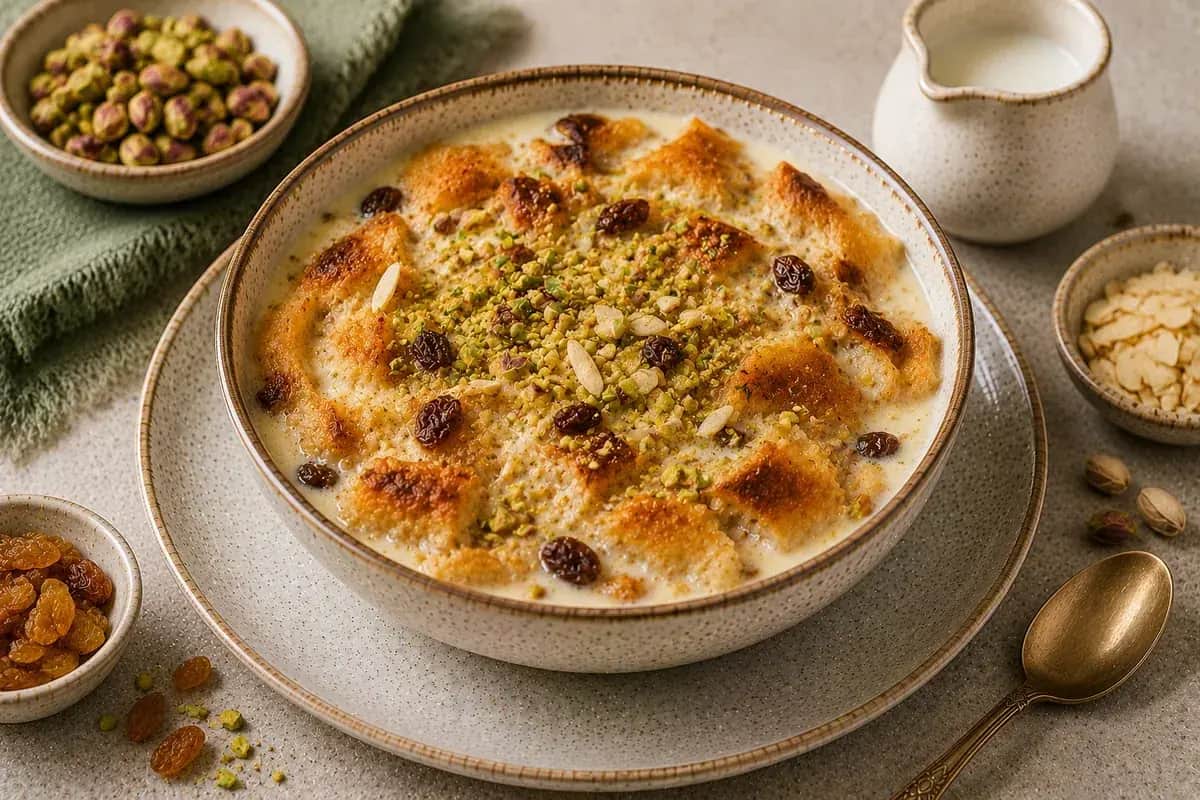
Healthy Om Ali Recipe — Egyptian Bread Pudding with Dates & Nuts
An Egyptian Om Ali made with baked pastry, milk, dried fruit, nuts, and warm spices. The pastry absorbs the sweetened milk as it bakes, creating a soft center with toasted edges and a nutty finish.
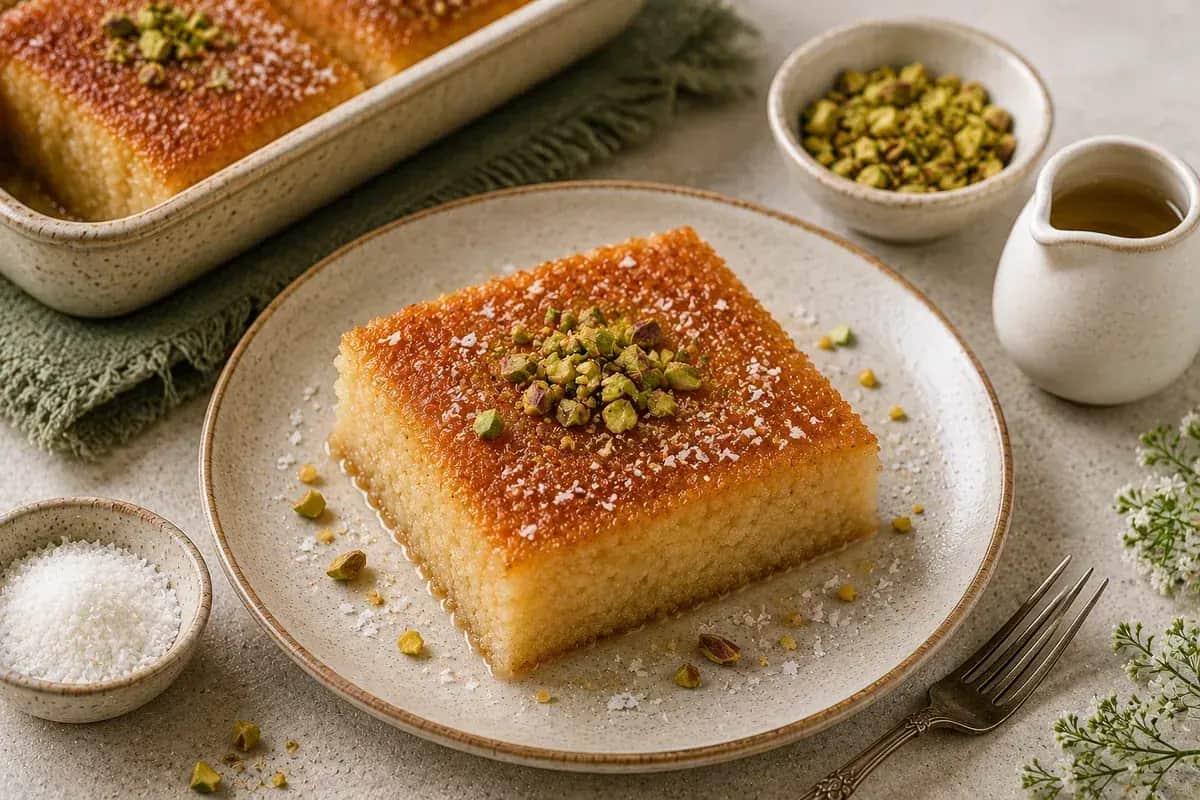
Healthy Basbousa Recipe — Light Egyptian Semolina Cake with Honey & Almonds
A lighter Egyptian basbousa made with semolina, yogurt, coconut, almonds, and a measured syrup. The cake bakes until golden and tender, then absorbs just enough syrup to give it the characteristic moist texture without becoming overly sweet.
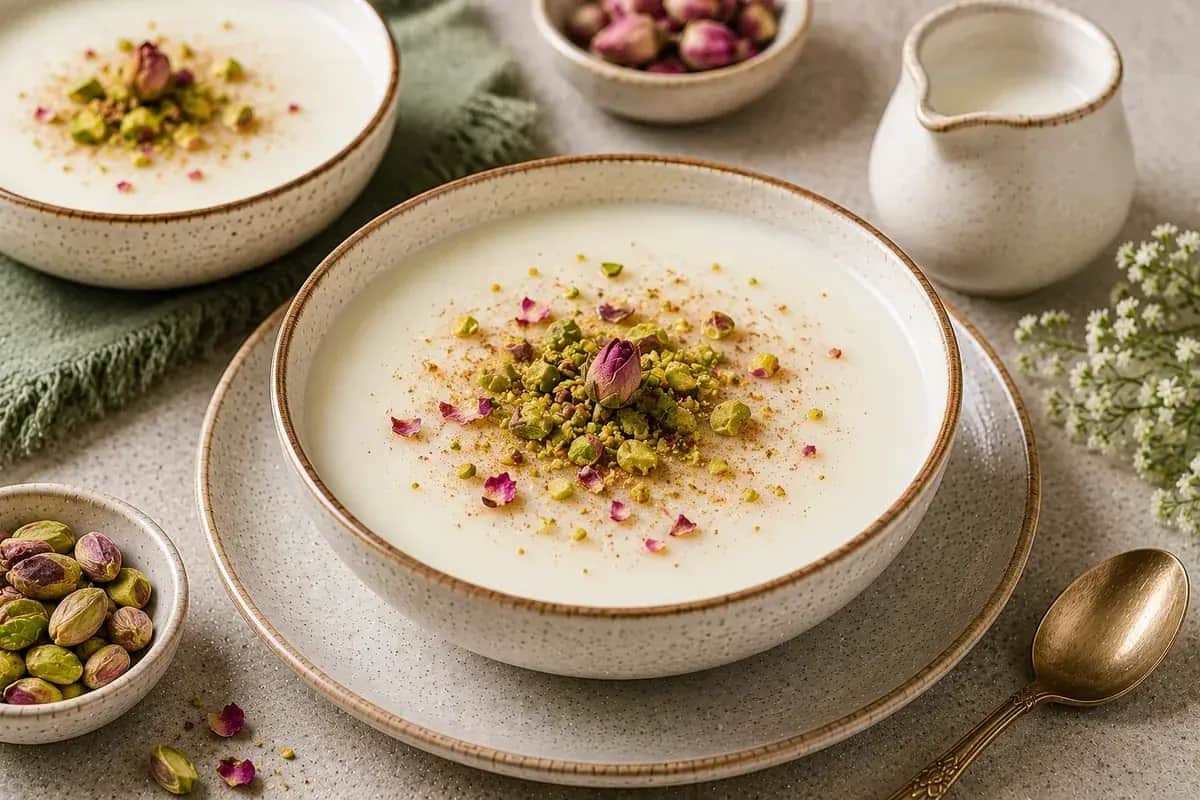
Healthy Mahalabia Recipe — Egyptian Milk Pudding with Rose Water & Pistachios
This healthy mahalabia recipe is a light, silky Egyptian milk pudding made with low-fat milk, cornstarch, honey, vanilla, and rose water, finished with chopped pistachios, cinnamon, and optional edible rose petals. An easy Middle Eastern dessert with delicate floral flavor, creamy texture, and a lighter sweetness.