
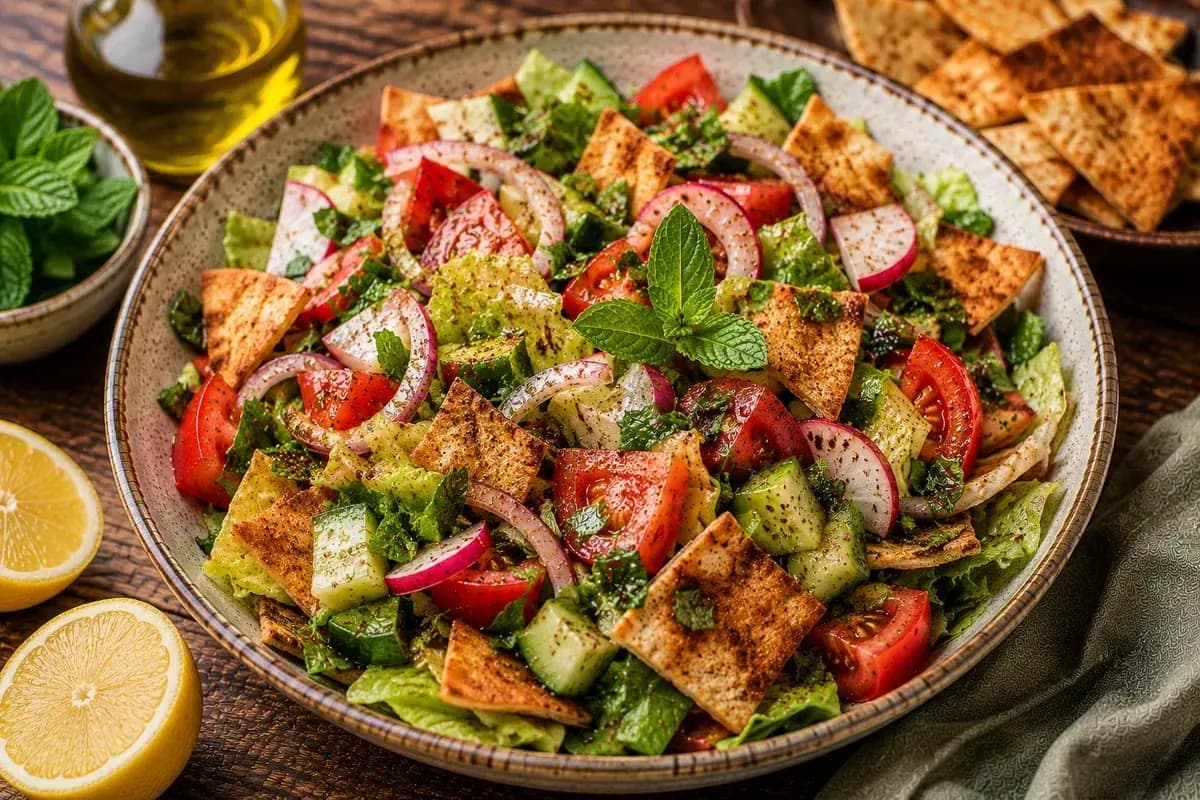
Fattoush Salad Recipe — Classic Lebanese Bread Salad
A classic Lebanese fattoush made with crisp vegetables, parsley, mint, toasted pita, sumac, lemon juice, olive oil, and pomegranate molasses. Its appeal comes from the contrast between crunchy vegetables, crisp pita, fresh herbs, and a bright sweet-tart dressing.
Prep Time
20 mins
Cook Time
5 mins
Total Time
25 mins
Servings
4
A TASTE OF TRADITION
The Story Behind This Recipe
Fattoush is a Lebanese and wider Levantine salad built around a simple but distinctive idea: combine fresh seasonal vegetables and herbs with pieces of toasted pita so that nothing goes to waste and every bite has contrasting textures.
Cultural & Culinary Context
Fattoush belongs to the family of Levantine salads in which fresh vegetables, herbs, bread, and a sharp dressing come together at the table. Toasted pita gives the salad its characteristic crunch, while sumac, lemon, and pomegranate molasses create the bright sweet-tart flavor associated with the dressing.
What Makes It Mediterranean?
Its Mediterranean character comes from the combination of fresh vegetables, herbs, extra virgin olive oil, lemon, and whole-grain-style bread. The emphasis is on seasonal produce, bold but fresh flavors, and olive oil as the main dressing fat.
Mediterranean Influences
- 🌿Fresh tomatoes, cucumber, radishes, lettuce, and herbs form the vegetable base.
- 🌿Extra virgin olive oil provides the main dressing fat.
- 🌿Lemon and sumac bring bright acidity without relying on heavy sauces.
- 🌿Fresh parsley and mint contribute the herbal character typical of many Levantine dishes.
- 🌿Toasted pita turns simple vegetables into a more satisfying salad while preserving the dish's traditional identity.
Ingredients
- 1 large head Romaine lettuce (Chop or tear into bite-sized pieces and dry thoroughly.)
- 2 ripe tomatoes (Use ripe but firm tomatoes and cut them into generous pieces.)
- 1 large cucumber (Cut into thick half-moons or bite-sized pieces.)
- 5 radishes (Thinly slice for a crisp texture and mild peppery flavor.)
- 0.5 large green bell pepper (Dice into small, even pieces.)
- 3 green onions (Thinly slice both the white and green parts.)
- 0.25 cup fresh parsley (Finely chop.)
- 0.25 cup fresh mint leaves (Finely chop or gently tear.)
- 2 pita breads (Cut into pieces and toast until crisp and lightly golden.)
- 3 tbsp extra virgin olive oil
- 2 tbsp fresh lemon juice (Add a little more after tasting if you prefer a sharper dressing.)
- 1 clove garlic (Finely grated or minced.)
- 1 tsp sumac (A tangy, lemony red spice made from dried sumac berries, widely used in Mediterranean and Middle Eastern cooking.)
- 1 tsp pomegranate molasses (A concentrated sweet-tart syrup made from pomegranate juice that adds depth to the dressing.)
- 0.5 tsp dried mint (Adds a deeper mint flavor to the dressing.)
- 0.5 tsp sea salt (Start with a small amount and adjust after tasting.)
- freshly ground black pepper (To taste.)
Instructions
- 1
Wash and thoroughly dry the lettuce, tomatoes, cucumber, radishes, green pepper, parsley, mint, and green onions. Excess water can dilute the dressing.
- 2
Cut the vegetables into generous, reasonably uniform pieces so the salad remains crisp and easy to eat.
- 3
Cut the pita bread into bite-sized pieces. Toast it in a skillet with a light coating of olive oil over medium heat until crisp and lightly golden, turning frequently.
- 4
Whisk together the extra virgin olive oil, lemon juice, garlic, sumac, pomegranate molasses, dried mint, salt, and black pepper.
- 5
Taste the dressing before adding it to the salad. It should be bright, tangy, lightly fruity, and balanced rather than overly sweet.
- 6
Place the lettuce, tomatoes, cucumber, radishes, green pepper, green onions, parsley, and fresh mint in a large serving bowl.
- 7
Pour the dressing over the vegetables and toss gently until the ingredients are lightly coated.
- 8
Add the toasted pita immediately before serving and toss briefly so it absorbs some dressing while remaining crisp.
- 9
Finish with a light sprinkle of sumac and serve immediately.
SET YOURSELF UP FOR SUCCESS
Before You Cook
👨🍳 Keep In Mind
- •Dry the vegetables thoroughly after washing them. Water left on the vegetables can dilute the dressing.
- •Prepare the pita separately from the vegetables so it stays crisp.
- •Taste the dressing before combining it with the salad because the vegetables will soften its intensity.
💡 Helpful Tips
- •Use ripe but firm tomatoes so they contribute flavor without releasing excessive liquid.
- •Keep the vegetable pieces generous and reasonably uniform.
- •Toast the pita until crisp rather than deeply browned; burnt pita can make the salad taste bitter.
- •Add the pita immediately before serving for the best texture.
- •If preparing the salad ahead, keep the dressing and pita separate until serving.
👀 How Do I Know It's Done?
- ✓The pita is done when it is crisp throughout and lightly golden.
- ✓The dressing is ready when the oil, lemon juice, and other ingredients are well combined and taste balanced.
- ✓The finished salad should remain crisp, with the pita still offering noticeable crunch.
Tweak It
Make This Recipe Work for You
Adapt the recipe to your ingredients, dietary needs, budget, time, serving size, or meal-prep plans.
🔄 Ingredient Substitutions
No pomegranate molasses?
Use a small amount of extra lemon juice with a tiny touch of date syrup or honey if you need to recreate some of the sweet-tart balance. For a vegan version, use date syrup or simply omit the sweetener.
No romaine lettuce?
Use another crisp lettuce variety, preferably one that can hold its texture after dressing.
No fresh mint?
Increase the parsley slightly and use the dried mint in the dressing, understanding that the fresh herbal character will be softer.
🌱 Dietary Adjustments
Make it gluten-free
Replace the regular pita with certified gluten-free pita or another gluten-free crisp bread.
Reduce the sodium
Use less salt in the dressing and rely more on lemon, sumac, herbs, and garlic for flavor.
Vegan by default
This version is already vegan as written because it uses olive oil and plant-based ingredients.
💰 Budget-Friendly Options
Use seasonal vegetables
Choose tomatoes, cucumber, radishes, and herbs that are fresh and affordable locally rather than buying expensive specialty produce.
Use leftover pita
Fattoush is an excellent way to use slightly stale pita. Toast it thoroughly until crisp before adding it to the salad.
⏱️ Time-Saving Options
Prepare the vegetables ahead
Wash, dry, and cut the vegetables several hours ahead, then refrigerate them separately from the dressing and pita.
Prepare the dressing ahead
Whisk the dressing in advance and refrigerate it in a sealed container. Bring it close to room temperature and shake or whisk again before serving.
👨👩👧👦 Serving Adjustments
For 2 servings
Halve the ingredients and use a smaller serving bowl so the vegetables remain easy to toss without crushing them.
For 8 servings
Double the ingredients and use a very large bowl. Dress the vegetables in batches if necessary and add pita shortly before serving.
🥡 Meal Prep
Prepare the components separately
Keep chopped vegetables, dressing, and toasted pita in separate containers. Combine only when you are ready to eat.
RECIPE RESCUE
🧩 What Do You Need Help With?
Choose the problem you're facing and get a recipe-specific solution instead of a generic cooking tip.
WHAT IF?
🔄 What If...?
Choose your situation and we'll show you a practical pathway for making this recipe work.
STORAGE & LEFTOVERS
🥡 Storage & Leftovers
Store the chopped vegetables, dressing, and toasted pita separately whenever possible.
Refrigerate prepared vegetables and dressing in sealed containers.
Keep toasted pita in an airtight container at room temperature so it remains crisp.
Once the salad has been dressed and mixed with pita, its texture is best when eaten immediately.
Best Storage Time
Prepared vegetables and dressing are best used within 1–2 days. Toasted pita can be kept separately for several days if stored airtight and dry.
How to Store
Use airtight containers for the vegetables and dressing. Store toasted pita separately in a dry airtight container at room temperature.
SERVING & PAIRING
🍽️ Serving & Pairing
Serve Fattoush immediately after adding the toasted pita so the salad has the best contrast between crisp vegetables and crunchy bread. A final sprinkle of sumac adds brightness and visual appeal.
What Goes Well With It?
RECIPE FAQ
❓ Frequently Asked Questions
How do you make Fattoush salad?
To make Fattoush, wash and thoroughly dry the vegetables and herbs, then cut them into generous bite-sized pieces. Toast pieces of pita until crisp and lightly golden. Whisk together olive oil, lemon juice, garlic, sumac, pomegranate molasses, dried mint, salt, and black pepper. Toss the vegetables and herbs with the dressing, then add the toasted pita immediately before serving so it stays crisp. Finish with an extra sprinkle of sumac.
What is Fattoush?
Fattoush is a Lebanese and Levantine salad made from fresh vegetables, herbs, toasted pita bread, and a bright dressing commonly built around lemon, sumac, olive oil, and other tart or aromatic ingredients.
What makes Fattoush different from other salads?
The defining feature is the combination of fresh vegetables with toasted pita and a sharp, tangy dressing. The pita adds a distinctive crunchy texture that sets Fattoush apart.
What is sumac?
Sumac is a tangy red spice made from dried sumac berries. It has a naturally lemony, fruity acidity and is widely used in Mediterranean and Middle Eastern cooking.
Can I prepare Fattoush ahead of time?
Yes. Prepare the vegetables and dressing ahead, but keep the pita separate and add it immediately before serving. This prevents the bread from becoming soggy.
Is Fattoush vegan?
Yes. As written, the recipe is vegan, with all of the ingredients coming from plant-based sources.
Why does my Fattoush become watery?
Excess water from washed vegetables, very juicy tomatoes, or too much dressing can make the salad watery. Dry the vegetables thoroughly and add the dressing shortly before serving.
Explore More
Go deeper into the cuisine
Learn more about the ingredients, traditions, and cooking approaches connected to this recipe.
Related from Healthy Mezze
You May Also Like
More delicious recipes from the Salads
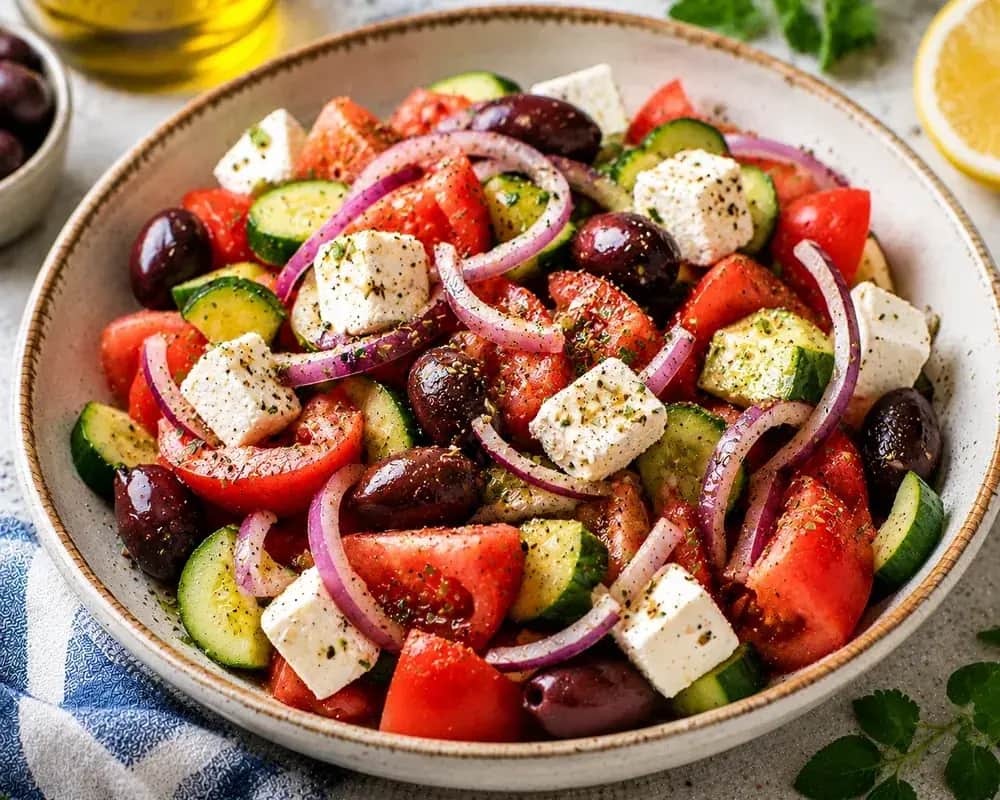
Greek Salad Recipe — Lebanese-Inspired Mediterranean Version
This Greek salad recipe combines ripe tomatoes, crisp cucumber, feta, Kalamata olives, oregano, extra virgin olive oil, lemon, fresh mint, and sumac for a bright Lebanese-inspired Mediterranean salad. Easy to prepare, fresh, vegetarian, and full of classic Mediterranean flavors, it makes a refreshing side dish or light meal.
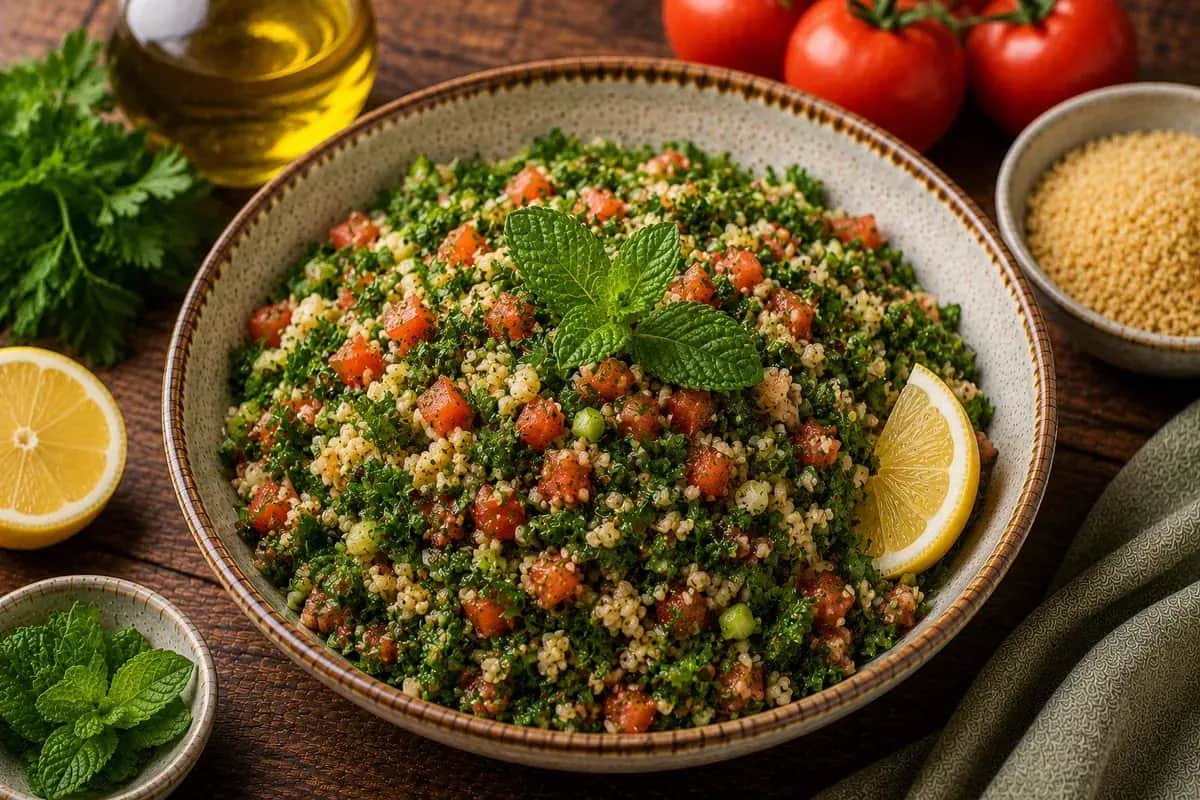
Lebanese Tabbouleh Recipe — Classic Parsley Salad
A classic Lebanese tabbouleh made with parsley, fresh tomatoes, bulgur, mint, lemon juice, and extra virgin olive oil. The salad is herb-forward and bright, with finely chopped vegetables and a tangy dressing.
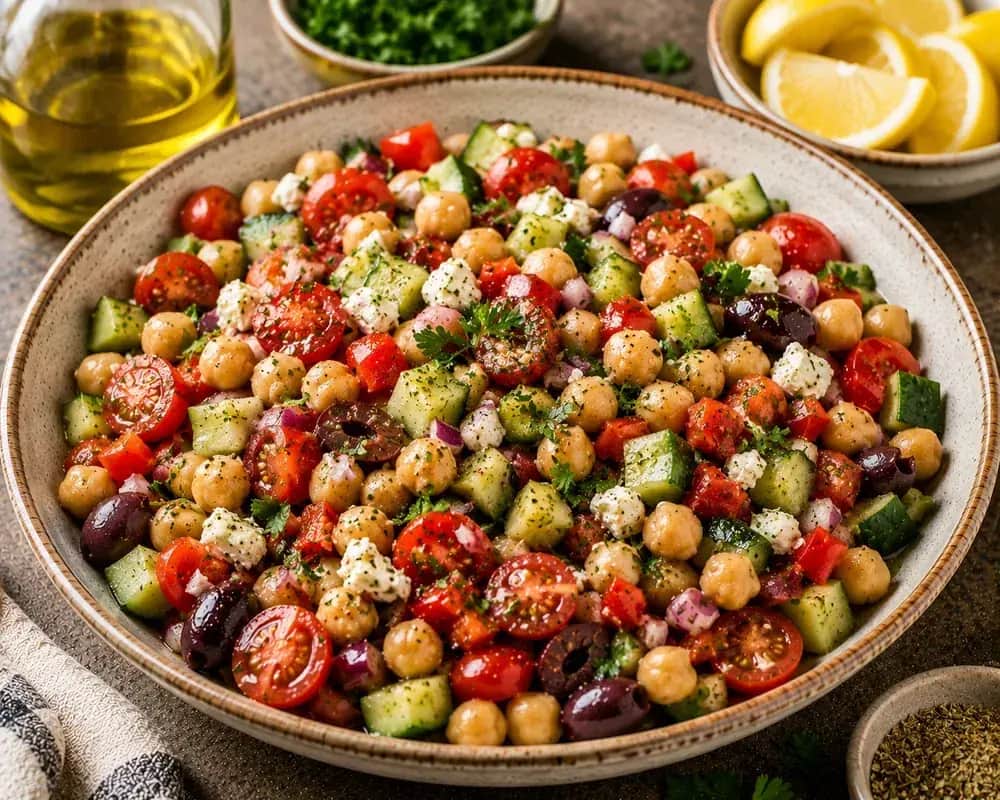
Mediterranean Chickpea Salad Recipe — Healthy Chickpea Salad with Lemon & Feta
A Mediterranean chickpea salad combining tender chickpeas with fresh vegetables, herbs, lemon, and extra virgin olive oil. The salad is substantial enough for lunch but also works as a side dish, mezze component, or make-ahead meal.