
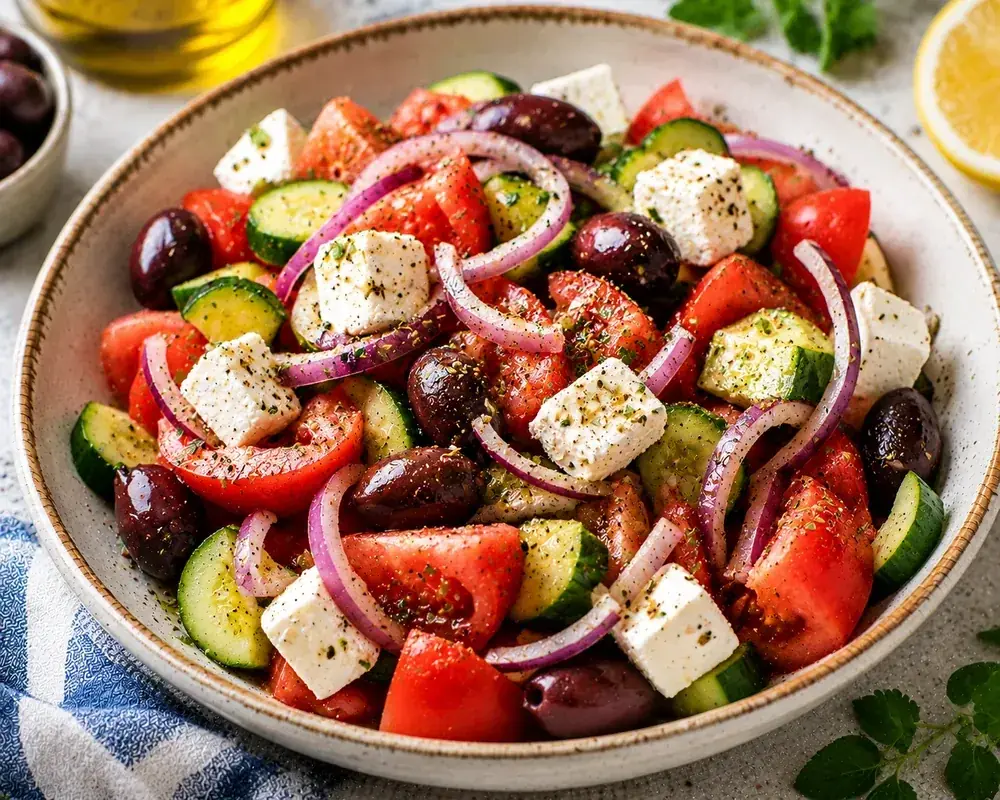
Greek Salad Recipe — Lebanese-Inspired Mediterranean Version
This Greek salad recipe combines ripe tomatoes, crisp cucumber, feta, Kalamata olives, oregano, extra virgin olive oil, lemon, fresh mint, and sumac for a bright Lebanese-inspired Mediterranean salad. Easy to prepare, fresh, vegetarian, and full of classic Mediterranean flavors, it makes a refreshing side dish or light meal.
Prep Time
15 mins
Cook Time
0 mins
Total Time
15 mins
Servings
4
A TASTE OF TRADITION
The Story Behind This Recipe
Greek salad is one of those recipes that shows how much a Mediterranean dish can communicate through a small number of ingredients. At its best, it is not overloaded with toppings or complicated techniques. Ripe vegetables, good olive oil, olives, feta, and herbs do most of the work.
Cultural & Culinary Context
The classic Greek village salad, or choriatiki, is a familiar part of Greek cuisine. Greek tourism sources describe it around tomatoes, cucumber, onion, feta, olives, oregano, and virgin olive oil — a combination that reflects the importance of fresh produce, herbs, olive oil, and dairy in Greek cooking.
What Makes It Mediterranean?
The recipe also fits naturally into the wider Mediterranean food landscape because it relies on seasonal vegetables, olive oil, herbs, citrus, olives, and a modest amount of cheese. These ingredients create a meal that feels abundant without requiring complicated cooking.
Mediterranean Influences
- 🌿Extra virgin olive oil is used as a primary source of richness rather than a heavy creamy dressing.
- 🌿Fresh vegetables remain the center of the plate instead of being buried under sauce.
- 🌿Olives and feta provide concentrated salty, savory flavor in relatively small amounts.
- 🌿Oregano and fresh mint provide aroma and freshness without relying on a large amount of seasoning.
- 🌿Lemon and sumac create acidity that keeps the salad bright and balanced.
- 🌿The recipe is designed around simple preparation and letting high-quality ingredients remain recognizable.
Ingredients
- 3 large ripe tomatoes, cut into wedges or large chunks (Use ripe but firm tomatoes so the salad stays juicy without becoming watery.)
- 1 large cucumber, cut into thick half-moons (English or Persian cucumber works especially well.)
- 1 small red onion, thinly sliced (Soak briefly in cold water if you prefer a milder onion flavor.)
- 150 g Greek feta cheese, cut into large cubes (Keep the pieces fairly large rather than crumbling the feta.)
- 0.5 cup Kalamata olives, pitted or whole
- 3 tbsp extra virgin olive oil
- 1.5 tbsp fresh lemon juice (Add more after tasting if you prefer a sharper dressing.)
- 1 tsp dried Greek oregano
- 2 tbsp fresh mint leaves, finely chopped (This is one of the Lebanese-inspired touches.)
- 0.5 tsp Sumac (A tangy, lemony red spice made from dried sumac berries, commonly used in Mediterranean and Middle Eastern cooking.)
- sea salt, to taste (Go lightly because feta and olives are already salty.)
- freshly ground black pepper, to taste
Instructions
- 1
Wash and thoroughly dry the tomatoes, cucumber, mint, and onion. Excess water can dilute the dressing and make the finished salad watery.
- 2
Cut the tomatoes into large wedges or chunky pieces. Avoid cutting them too small because they will release more juice and lose their texture.
- 3
Cut the cucumber into thick half-moons. If the cucumber is particularly watery, remove some of the seeds before slicing.
- 4
Thinly slice the red onion. For a gentler onion flavor, place the slices in cold water for 5 to 10 minutes, then drain and dry them well.
- 5
Place the tomatoes, cucumber, and red onion in a wide serving bowl. A wide bowl makes it easier to mix without crushing the tomatoes.
- 6
Add the Kalamata olives and gently distribute them through the vegetables.
- 7
In a small bowl, whisk together the extra virgin olive oil, lemon juice, dried oregano, and black pepper.
- 8
Add the chopped fresh mint to the dressing and let it sit for about 2 minutes. This gives the mint a chance to perfume the oil and lemon.
- 9
Pour the dressing over the vegetables and toss gently from the bottom of the bowl upward. Do not aggressively stir the salad.
- 10
Add the feta cubes and gently fold them through the salad. Keeping the feta in larger pieces gives the salad a better contrast of creamy and crisp textures.
- 11
Sprinkle the sumac over the finished salad. Taste before adding extra salt because the feta and olives already contribute significant saltiness.
- 12
Serve immediately or allow the salad to rest for 5 minutes before serving. The short rest helps the flavors meet while preserving the vegetables' freshness.
SET YOURSELF UP FOR SUCCESS
Before You Cook
👨🍳 Keep In Mind
- •Choose tomatoes that smell fragrant and feel ripe but still hold their shape when gently pressed.
- •Use a good extra virgin olive oil because the oil is part of the dressing rather than just a cooking ingredient.
- •Keep the vegetables dry after washing them. Water left on the surface can weaken the dressing.
- •Taste the feta and olives before seasoning. Their saltiness varies considerably between brands.
- •Prepare the dressing separately so you can taste and adjust the acidity before it reaches the salad.
💡 Helpful Tips
- •Cut tomatoes and cucumber fairly large. Chunkier pieces give the salad a more substantial texture.
- •Do not crush or aggressively toss the tomatoes.
- •If your onion is very strong, a short cold-water soak will soften its sharpness.
- •Add the feta near the end so it stays recognizable rather than dissolving into the dressing.
- •Use sumac as an accent rather than the dominant seasoning.
- •Taste the salad before adding salt. Feta and olives may already provide enough.
👀 How Do I Know It's Done?
- ✓The salad is ready when every vegetable has a light coating of dressing but the bottom of the bowl is not filled with liquid.
- ✓The tomatoes should still have defined edges rather than looking mashed.
- ✓The cucumber should remain crisp.
- ✓The flavor should balance acidity from lemon and sumac, richness from olive oil, saltiness from feta and olives, and herbal freshness from oregano and mint.
- ✓If one flavor dominates, adjust before serving rather than adding more ingredients automatically.
Tweak It
Make This Recipe Work for You
Adapt the recipe to your ingredients, dietary needs, budget, time, serving size, or meal-prep plans.
🔄 Ingredient Substitutions
No feta?
Use a mild goat cheese in approximately the same quantity. It will be creamier and slightly sharper, so start with a little less and adjust after tasting.
No Kalamata olives?
Use another good-quality brined olive. Choose a variety with enough salt and fruitiness to replace the role of the Kalamata olives.
No sumac?
Increase the lemon juice slightly instead. You will lose some of sumac's dry, fruity tartness, but the salad will remain bright.
No fresh mint?
Simply leave it out rather than replacing it with a large amount of dried mint. The Greek oregano and lemon will still provide plenty of character.
🌱 Dietary Adjustments
Make it vegan
Replace the feta with a plant-based feta-style cheese or omit it and increase the olives slightly. The salad remains flavorful because the vegetables, olive oil, lemon, oregano, mint, and sumac provide plenty of character.
Lower the sodium
Use less feta and choose lower-sodium olives if available. Avoid adding salt until the salad has been fully dressed and tasted.
Make it more filling
Serve the salad with chickpeas, lentils, grilled chicken, or another protein-rich Mediterranean side. Keep the salad itself balanced rather than simply adding large amounts of cheese.
💰 Budget-Friendly Options
Save money on produce
Buy tomatoes and cucumbers that are in season locally. The recipe depends more on freshness and flavor than on expensive specialty produce.
Use less feta without losing the flavor
Keep the feta in larger cubes. Larger pieces distribute the salty, creamy flavor more effectively than finely crumbled cheese.
⏱️ Time-Saving Options
15-minute pathway
Wash and dry the vegetables first, then prepare the dressing while you chop. Skip the optional onion soak and use a wide bowl so the salad can be mixed quickly.
Prepare the dressing ahead
Whisk the oil, lemon, oregano, and pepper in advance and refrigerate it. Bring it close to room temperature and shake or whisk again before using.
👨👩👧👦 Serving Adjustments
Cooking for 2
Halve the ingredients. Keep the dressing slightly conservative at first because smaller batches can become overdressed quickly.
Cooking for 8
Double the recipe and use a very wide serving bowl. If preparing for a gathering, dress the vegetables shortly before serving rather than hours in advance.
🥡 Meal Prep
Meal-prep friendly version
Store chopped vegetables, feta, olives, herbs, and dressing separately. Combine them shortly before eating so the vegetables stay crisp.
RECIPE RESCUE
🧩 What Do You Need Help With?
Choose the problem you're facing and get a recipe-specific solution instead of a generic cooking tip.
WHAT IF?
🔄 What If...?
Choose your situation and we'll show you a practical pathway for making this recipe work.
STORAGE & LEFTOVERS
🥡 Storage & Leftovers
For the best texture, store the vegetables and dressing separately whenever possible.
If already dressed, refrigerate leftovers promptly in a sealed container.
Feta and olives can remain with the vegetables, but the salad will soften as it sits.
Before eating leftovers, drain excess liquid and taste again before adding more seasoning.
Best Storage Time
Best eaten immediately. Undressed prepared vegetables can generally be kept refrigerated for about 1 day for the best quality.
How to Store
Use an airtight food-safe container. Keep the dressing in a separate small container for meal prep.
SERVING & PAIRING
🍽️ Serving & Pairing
Serve the salad cool or close to room temperature as a light lunch, side dish, or Mediterranean-style starter. For the best experience, let the finished salad sit for about 5 minutes before eating so the dressing can coat the vegetables without allowing them to soften too much.
What Goes Well With It?
RECIPE FAQ
❓ Frequently Asked Questions
How do you make Greek salad?
To make this Greek salad, wash and thoroughly dry the vegetables, then cut the tomatoes into large wedges or chunks, slice the cucumber and red onion, and add the Kalamata olives. Whisk together extra virgin olive oil, lemon juice, oregano, black pepper, and fresh mint. Gently toss the vegetables with the dressing, then fold in the feta and finish with a light sprinkle of sumac. Taste before adding extra salt because the feta and olives are already salty.
Is this an authentic Greek salad?
The foundation is based on the classic Greek village salad, or choriatiki, but this Healthy Mezze version is intentionally a Greek-inspired Mediterranean interpretation. Fresh mint, lemon-forward dressing, and sumac add a subtle Levantine influence, so we do not present it as a traditional Greek recipe.
Why are you adding sumac to Greek salad?
Sumac is not presented here as a defining ingredient of traditional Greek village salad. It is a deliberate Levantine-inspired addition that contributes a dry, fruity tartness and helps connect the recipe to the flavors of neighboring Mediterranean and Levantine cuisines.
Can I make this salad ahead of time?
Yes, but for the best texture prepare the vegetables and dressing separately. Combine them shortly before serving so the tomatoes and cucumber remain crisp.
Why shouldn't I crumble the feta?
Keeping the feta in larger pieces creates a better contrast between creamy cheese, crisp vegetables, and juicy tomatoes. It also prevents the feta from disappearing into the dressing.
How do I stop Greek salad from becoming watery?
Dry the vegetables thoroughly, avoid cutting the tomatoes too small, use a wide bowl, and do not dress the salad long before serving. Very ripe tomatoes naturally release more liquid, so choose ripe but firm ones when possible.
Can I make this Greek salad vegan?
Yes. Omit the feta or use a plant-based feta-style cheese. The vegetables, olives, olive oil, lemon, oregano, mint, and sumac provide plenty of flavor.
What is the difference between this and fattoush?
Fattoush is a distinct Levantine salad traditionally associated with toasted or fried pieces of pita, fresh herbs such as mint and parsley, vegetables, and sumac-based acidity. This recipe keeps the Greek village-salad foundation of tomato, cucumber, feta, olives, oregano, and olive oil while borrowing only a few Levantine flavor cues.
Explore More
Go deeper into the cuisine
Learn more about the ingredients, traditions, and cooking approaches connected to this recipe.
You May Also Like
More delicious recipes from the Salads
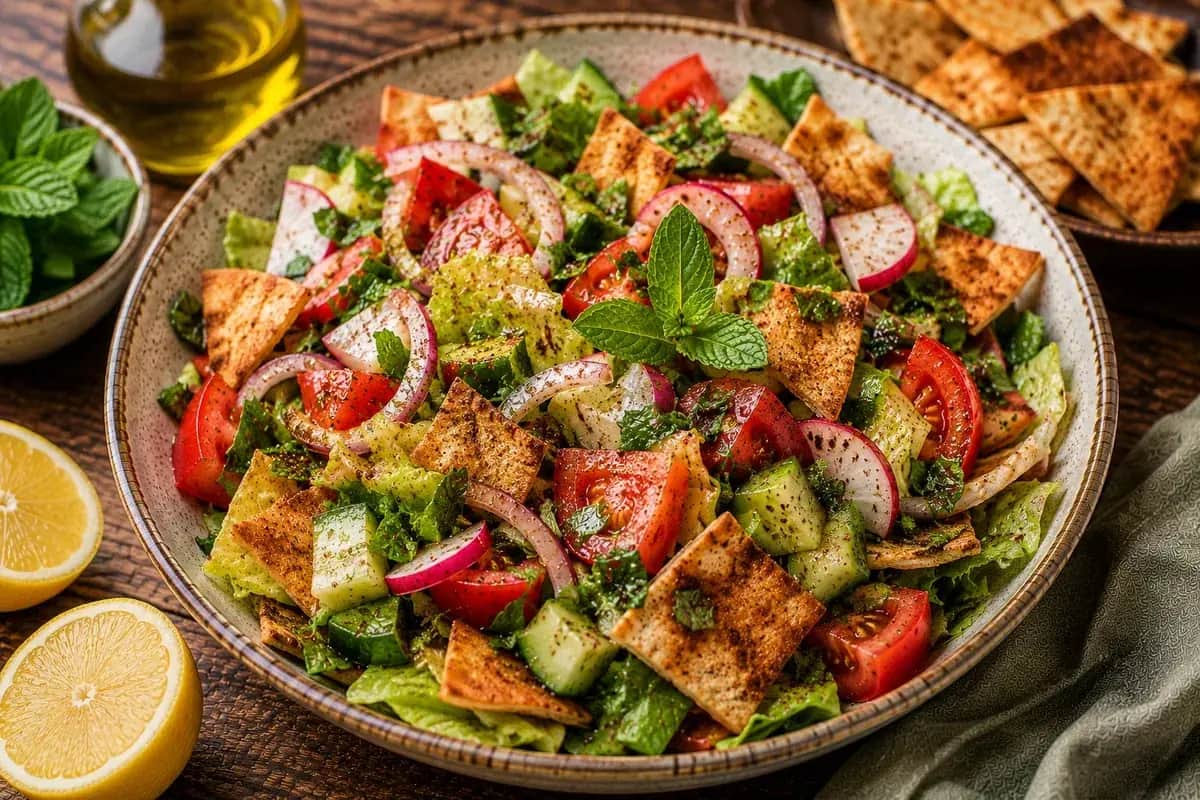
Fattoush Salad Recipe — Classic Lebanese Bread Salad
A classic Lebanese fattoush made with crisp vegetables, parsley, mint, toasted pita, sumac, lemon juice, olive oil, and pomegranate molasses. Its appeal comes from the contrast between crunchy vegetables, crisp pita, fresh herbs, and a bright sweet-tart dressing.
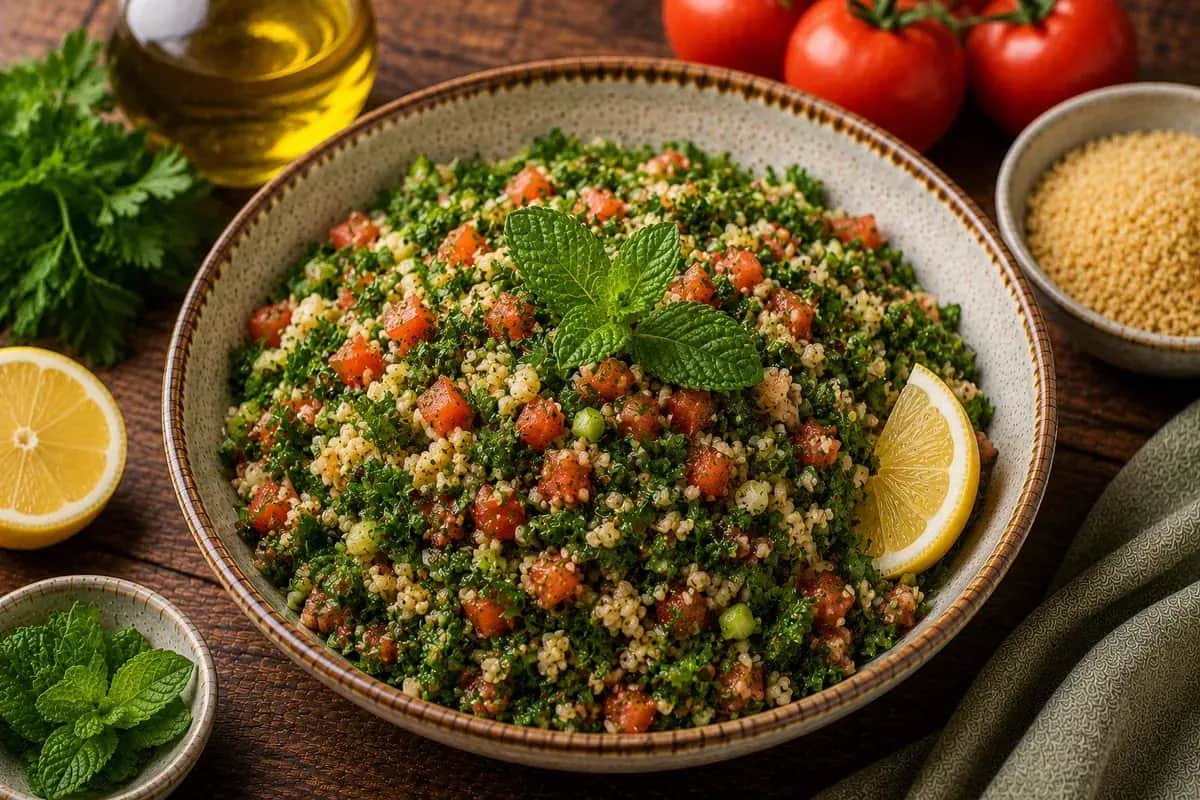
Lebanese Tabbouleh Recipe — Classic Parsley Salad
A classic Lebanese tabbouleh made with parsley, fresh tomatoes, bulgur, mint, lemon juice, and extra virgin olive oil. The salad is herb-forward and bright, with finely chopped vegetables and a tangy dressing.
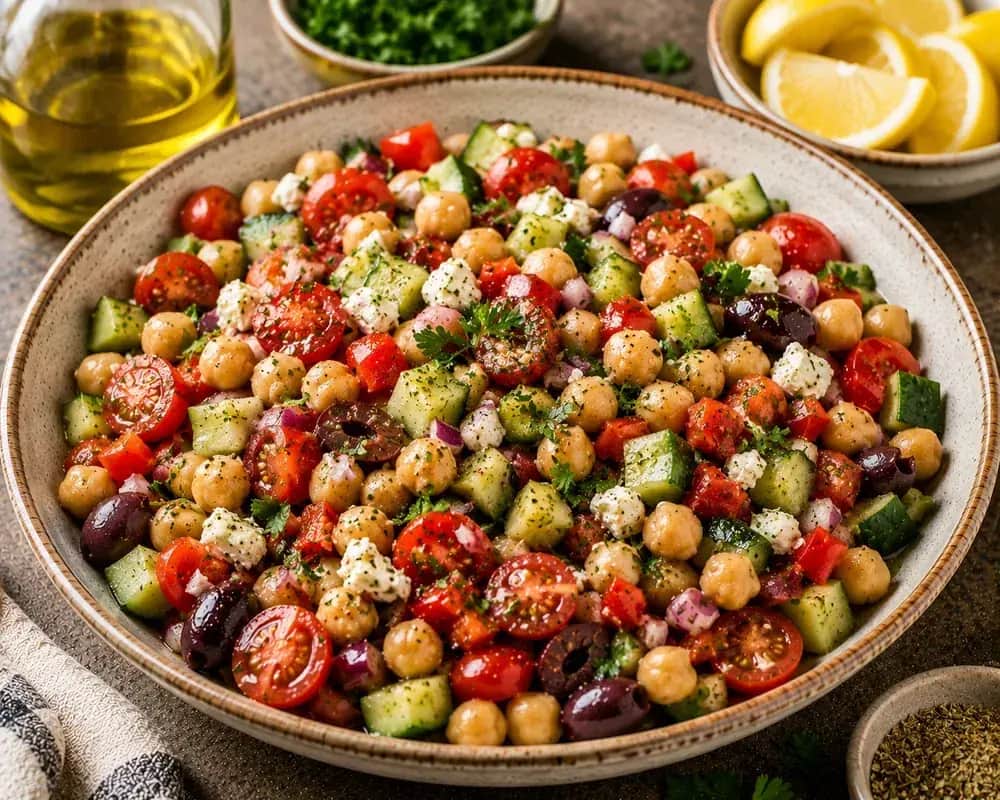
Mediterranean Chickpea Salad Recipe — Healthy Chickpea Salad with Lemon & Feta
A Mediterranean chickpea salad combining tender chickpeas with fresh vegetables, herbs, lemon, and extra virgin olive oil. The salad is substantial enough for lunch but also works as a side dish, mezze component, or make-ahead meal.