
Healthy Mezze Guide
Healthy Mezze Table Guide
A healthy mezze table is less about following a fixed list of dishes and more about bringing together vegetables, legumes, grains, herbs, dips, and other foods in a way that feels satisfying and varied. At Healthy Mezze, we build our tables around the foods we actually enjoy making, tasting as we go and adjusting recipes to suit the people sharing the meal.
What makes a mezze table work?
A good mezze table brings together different flavors, colors, textures, and levels of richness. Creamy hummus or tahini can be paired with fresh salads and vegetables, while grains, beans, or bread can provide more substance. The aim is variety rather than making every dish heavy or relying on one centerpiece.
Start with vegetables
Fresh and cooked vegetables can provide color, texture, and freshness across the table. Salads, roasted vegetables, herbs, cucumbers, tomatoes, and other seasonal ingredients can be combined with dips and grains. We like using vegetables in different forms so that the table does not feel repetitive.
Use legumes for substance
Chickpeas, lentils, beans, and other legumes can make a mezze meal more filling while fitting naturally alongside vegetables and grains. Hummus is one familiar example, but legumes can also appear in salads, soups, patties, and other preparations. Keeping legumes available makes it easier to build a meal without depending on meat for every dish.
Balance creamy, fresh, and acidic flavors
Rich or creamy foods can be balanced with fresh vegetables, herbs, and acidic ingredients such as lemon or sumac. We use this approach when tasting our own dishes: if one element feels too rich, something fresh or acidic can provide contrast. The same principle works across the whole table.
Choose cooking methods thoughtfully
The cooking method can change both the texture and character of a dish. When it suits the recipe, we often prefer baking or roasting instead of frying. This is not about changing every traditional dish, but about recognizing when an oven-based method can be a practical option while still producing food we enjoy.
Build around what you already have
A mezze table is naturally flexible, so you can work with the ingredients already in your kitchen. Start with one filling element, add a fresh salad or vegetable dish, then choose a dip, bread, grain, or additional preparation. When something is missing, check the individual recipe and use the What If and Recipe Rescue sections when available.
Taste before serving
We believe tasting is part of cooking rather than something saved for the end. Try a small spoonful of each preparation and check the salt, acidity, herbs, spice, and overall balance. For salad dressings and dips especially, a final taste can tell you whether a small adjustment will make the dish work better with the rest of the table.
Create a table people want to share
The most important part of a mezze table is that people enjoy sitting around it together. Leave room for different preferences and let everyone combine dishes in their own way. If you discover a substitution, an easier step, or a small adjustment that made your meal better, share it with us and help other home cooks make their own version.
Recipes from this guide
Try these recipes to put the ideas and ingredients from this guide into practice.
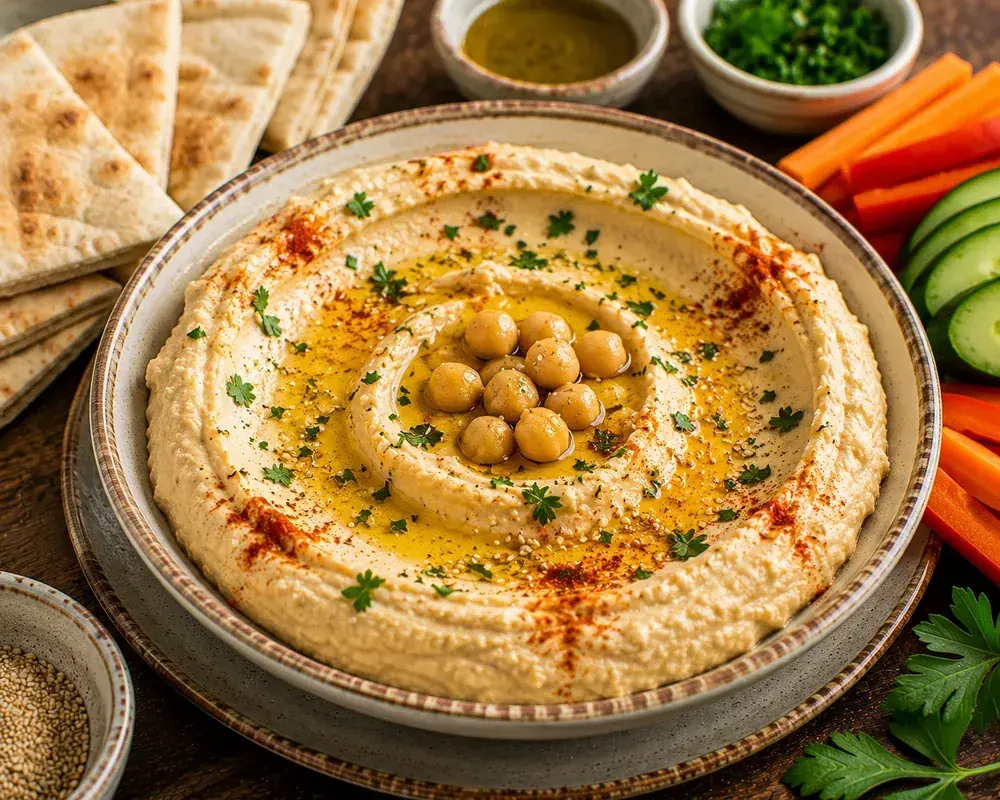
Classic Hummus Recipe — Palestinian Hummus bi-Tahini
A classic Palestinian hummus bi-tahini made with exceptionally tender chickpeas, creamy tahini, fresh lemon juice, garlic, cumin, and extra virgin olive oil. The finished hummus is smooth, light, and balanced, with warm Arabic bread for serving.
View recipe →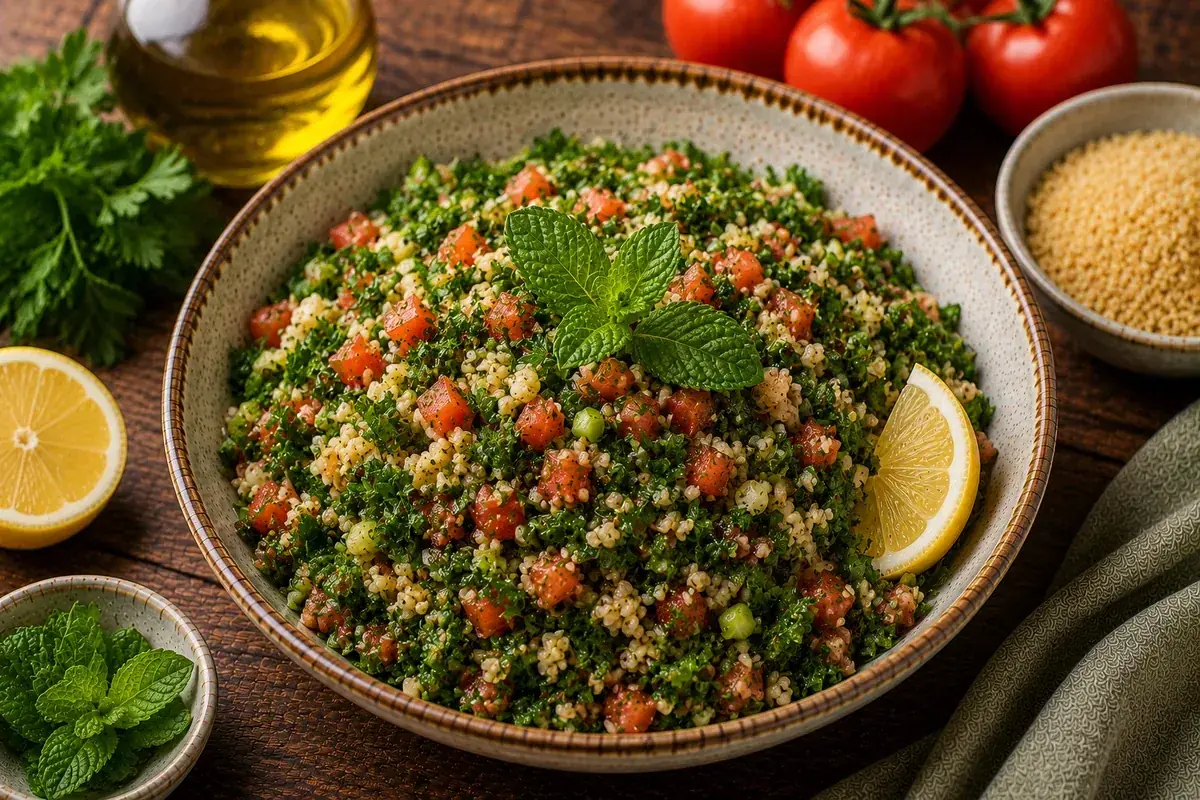
Lebanese Tabbouleh Recipe — Classic Parsley Salad
A classic Lebanese tabbouleh made with parsley, fresh tomatoes, bulgur, mint, lemon juice, and extra virgin olive oil. The salad is herb-forward and bright, with finely chopped vegetables and a tangy dressing.
View recipe →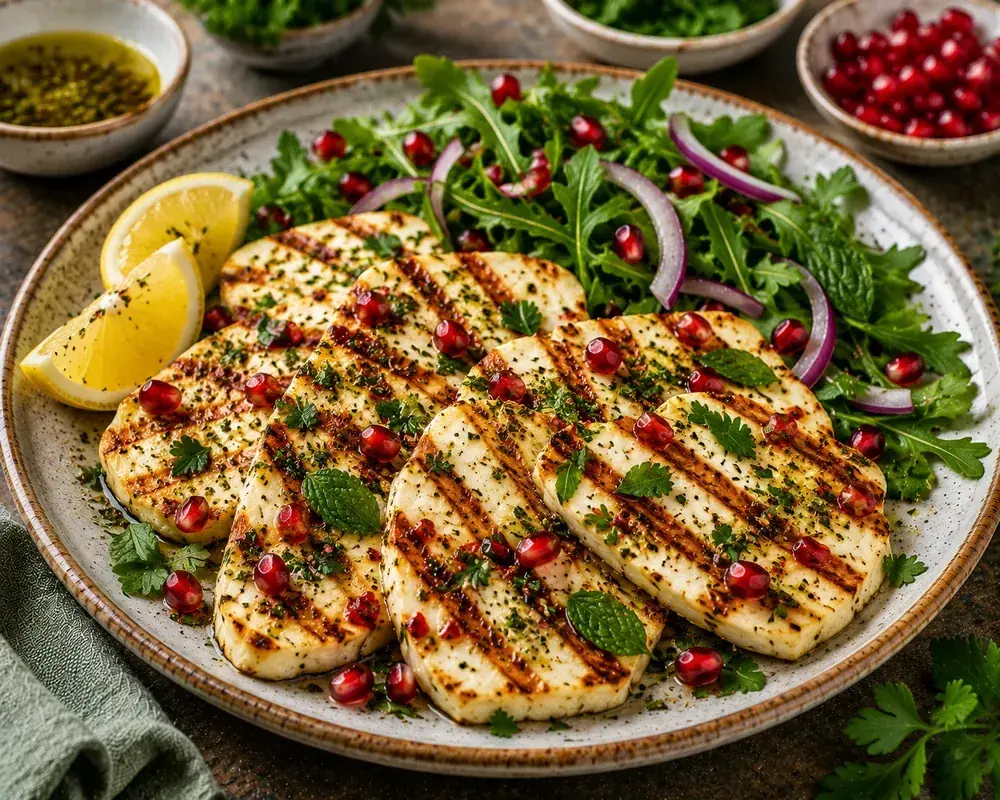
Grilled Halloumi with Herbs & Pomegranate Recipe — Mediterranean Mezze
This grilled halloumi with herbs and pomegranate recipe features golden halloumi with a crisp savory crust and soft center, finished with fresh parsley, mint, juicy pomegranate seeds, lemon, and extra virgin olive oil. An easy Mediterranean mezze recipe that balances salty grilled cheese with bright herbs, citrus, and naturally sweet-tart fruit.
View recipe →