
Healthy Mezze Guide
Egyptian Pantry Essentials
A useful Egyptian pantry does not need to be complicated. A small collection of beans, grains, spices, aromatics, oils, and shelf-stable ingredients can provide the foundation for many everyday meals. At Healthy Mezze, we focus on practical ingredients that we actually use when preparing familiar Egyptian food at home or in our café.
The everyday Egyptian pantry
Fava beans, lentils, rice, wheat-based grains, onions, garlic, cumin, coriander, olive oil, vinegar, and tomato-based ingredients are useful foundations for Egyptian cooking. Fresh vegetables and herbs complete many meals, but keeping these pantry staples available makes it easier to prepare filling food without needing a complicated shopping list.
Beans and legumes
Beans and legumes are central to many practical meals. Ful medames uses fava beans as its base, while lentils can become soups and other satisfying dishes. Keeping dried or prepared legumes available gives you flexibility when planning meals and makes it easier to build a dish around an inexpensive, filling ingredient.
Rice, grains, and the Egyptian table
Rice and other grains can provide the foundation or supporting element for many meals. Egyptian cooking also shows how grains can be combined with legumes, vegetables, sauces, and seasonings to create food with different textures. When preparing grain-based dishes, we pay attention to texture rather than treating cooking time as the only measure of readiness.
Spices and flavor builders
Cumin, coriander, garlic, onion, chili, lemon, and vinegar are useful flavor builders. They can be used individually or combined to create very different results from simple ingredients. We prefer adding seasoning gradually and tasting as we cook so that one strong ingredient does not overwhelm the rest of the dish.
Oil, acidity, and balance
Oil contributes richness, while lemon and vinegar provide acidity that can brighten a dish. The amount needed depends on the other ingredients and the style of preparation. When making a dressing or seasoning a cooked dish, we mix and taste before deciding whether it needs more salt, acidity, oil, or spice.
Building a healthier pantry
A pantry can support healthier cooking when it makes it easy to reach for legumes, grains, vegetables, herbs, and simple seasonings. We often prefer oven cooking when it suits the recipe because it can provide a practical alternative to frying. This does not mean every traditional dish needs to be changed; the goal is to understand where a practical adaptation works for the particular recipe.
Substitutions when something is missing
A well-stocked pantry still will not contain every ingredient. Before replacing something, consider what it contributes to the dish: flavor, acidity, texture, moisture, or structure. Some substitutions are straightforward while others noticeably change the result. Check the individual recipe and use the What If and Recipe Rescue sections when available.
A practical pantry starting list
If you are building an Egyptian-inspired pantry from scratch, start with fava beans or lentils, rice, onions, garlic, cumin, coriander, olive oil, vinegar, and a few shelf-stable vegetables or tomato products. Add fresh lemons, herbs, tomatoes, and cucumbers when shopping. With these basics, you can create a range of breakfasts, soups, salads, grain dishes, and everyday meals without keeping dozens of specialty ingredients on hand.
Recipes from this guide
Try these recipes to put the ideas and ingredients from this guide into practice.
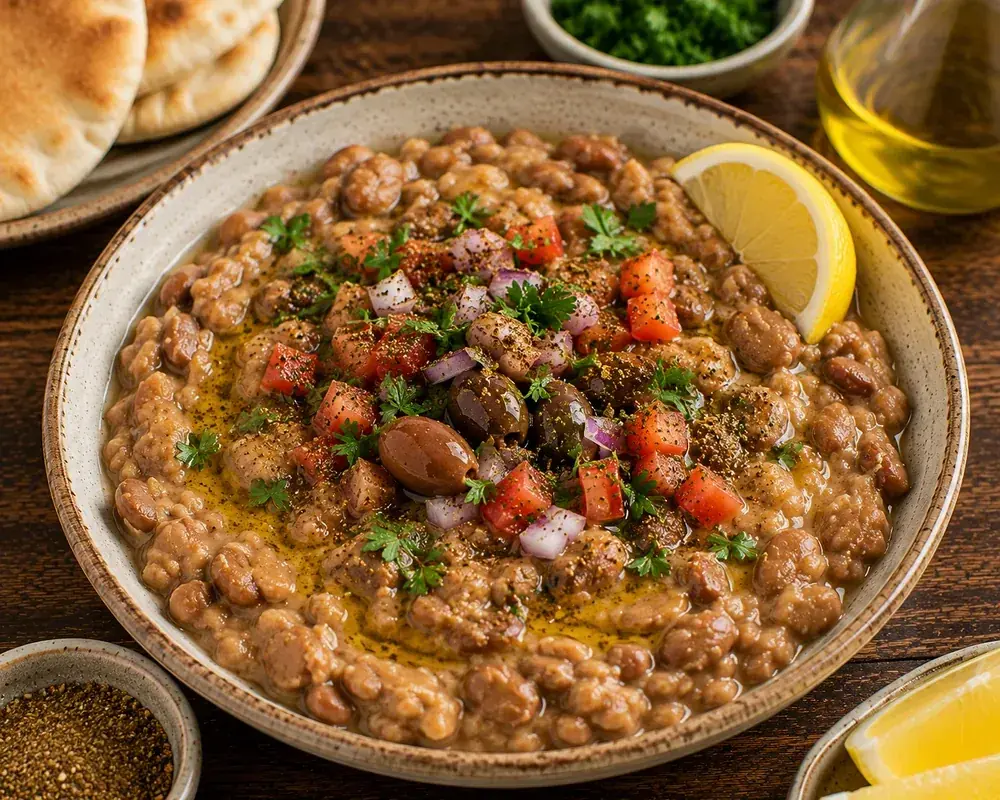
Ful Medames Recipe — Traditional Egyptian Fava Beans
A traditional Egyptian ful medames made with tender fava beans, garlic, cumin, fresh lemon juice, and extra virgin olive oil, finished with tomato, red onion, parsley, and warm pita. The beans are partly mashed for a thick texture while plenty remain whole.
View recipe →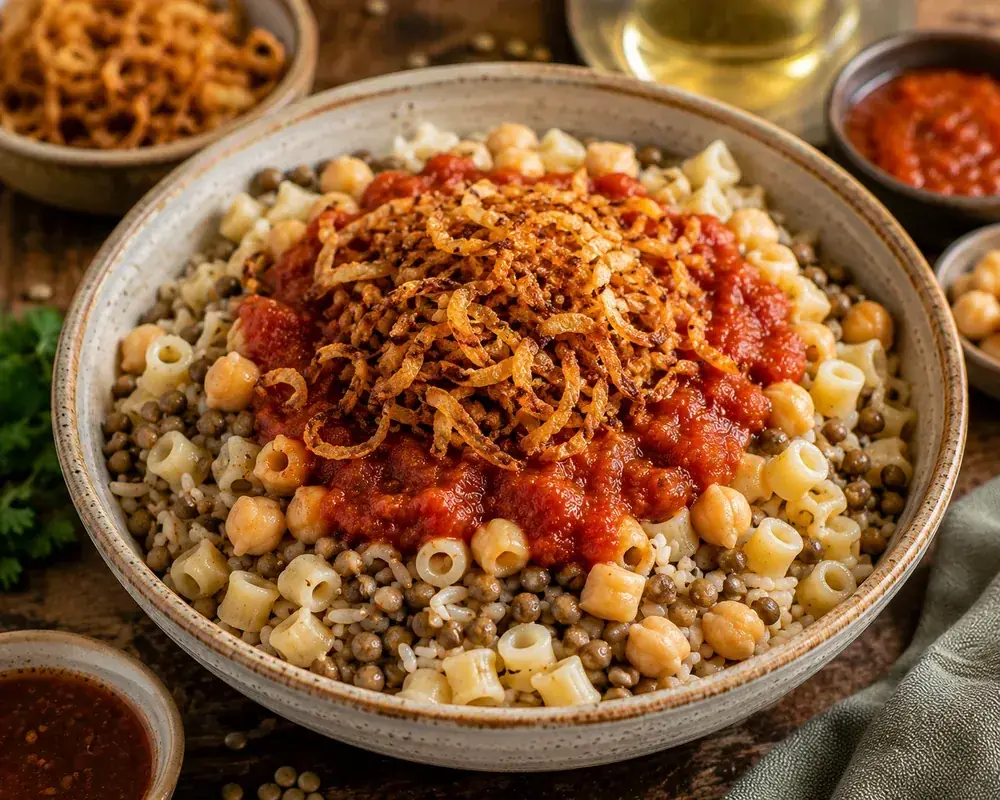
Egyptian Koshari Recipe
This Egyptian koshari recipe combines seasoned rice, tender brown lentils, small pasta, chickpeas, crispy onions, and a bold garlic-vinegar tomato sauce. A hearty vegetarian and vegan Egyptian comfort food made from affordable pantry staples.
View recipe →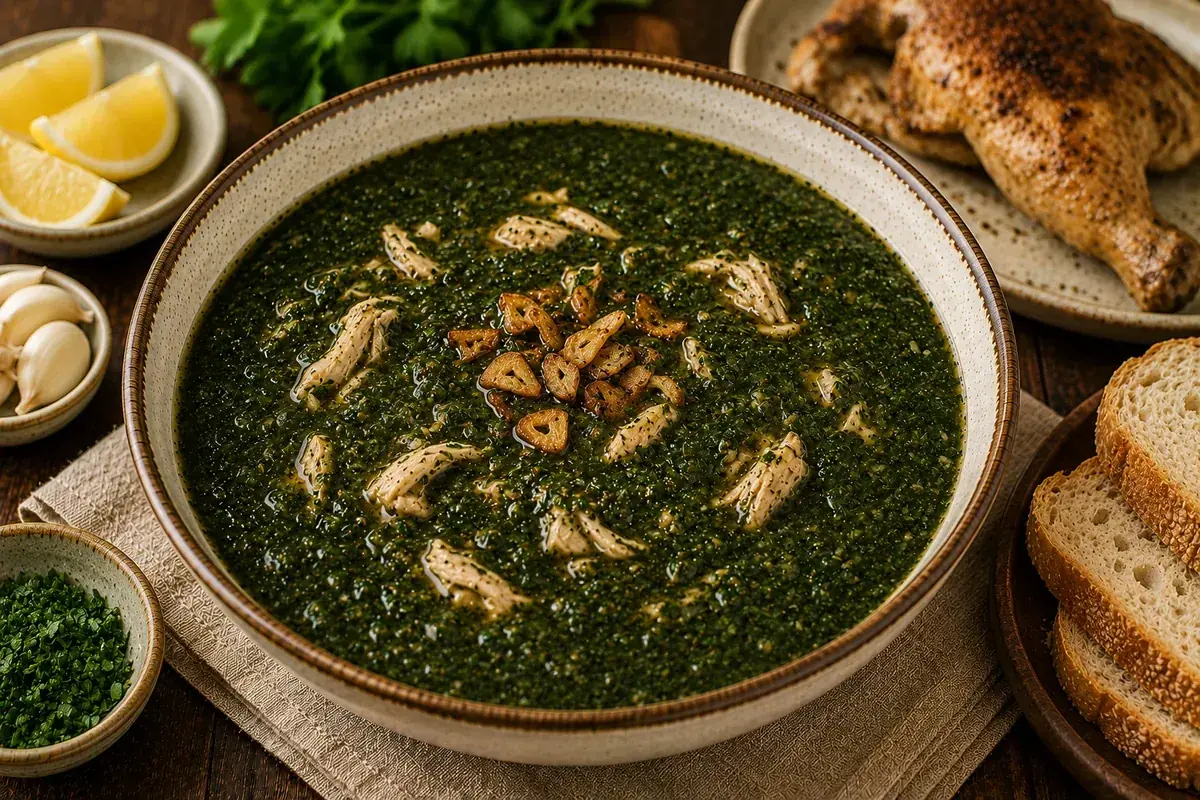
Egyptian Molokhia Soup Recipe
This traditional Egyptian molokhia soup recipe combines finely chopped jute mallow leaves with savory chicken broth, fragrant garlic, ground coriander, and a rich ta'aliya. Gently cooked for its signature silky texture, it is served hot with Egyptian rice and fresh lemon for a comforting Egyptian family meal.
View recipe →