
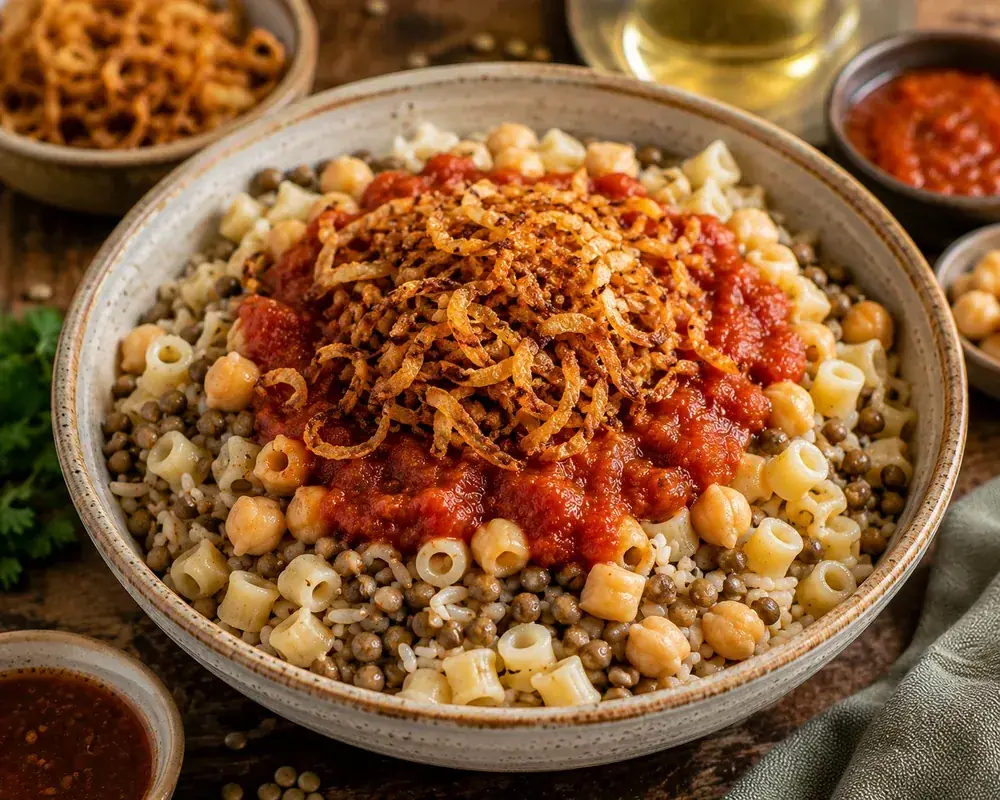
Egyptian Koshari Recipe
This Egyptian koshari recipe combines seasoned rice, tender brown lentils, small pasta, chickpeas, crispy onions, and a bold garlic-vinegar tomato sauce. A hearty vegetarian and vegan Egyptian comfort food made from affordable pantry staples.
Prep Time
20 mins
Cook Time
45 mins
Total Time
65 mins
Servings
6
A TASTE OF TRADITION
The Story Behind This Recipe
Koshari turns a collection of humble pantry staples into one of Egypt's most recognizable comfort foods. Rice, lentils, pasta, chickpeas, onions, tomatoes, garlic, and vinegar each bring something different to the bowl: softness, chewiness, creaminess, sweetness, acidity, warmth, and crunch. Its appeal comes from that combination of simplicity and contrast, making a filling meat-free meal from ingredients that are inexpensive and widely available.
Cultural & Culinary Context
Koshari is strongly associated with modern Egyptian food culture, particularly Egypt's street-food stalls and casual eateries where bowls are assembled from prepared components and finished with tomato sauce, vinegar-based seasoning, and crispy onions. It is also familiar as a practical home meal because the ingredients can be cooked in quantity and combined just before serving. Rather than relying on one expensive ingredient, koshari gets its character from the careful preparation and layering of several everyday foods.
What Makes It Mediterranean?
Koshari is distinctly Egyptian rather than simply a generic Mediterranean dish, but it fits naturally into the wider Mediterranean and Middle Eastern food landscape through its use of legumes, grains, tomatoes, olive oil, garlic, onions, vinegar, fresh herbs, and aromatic spices. Its emphasis on plant foods and acidity reflects a broader regional tradition of making substantial meals from grains and legumes while using herbs, spices, and sharp sauces to keep them lively and flavorful.
Mediterranean Influences
- 🌿Lentils and chickpeas provide the legume-rich foundation common across Mediterranean and Middle Eastern cuisines.
- 🌿Tomatoes, garlic, onions, and parsley supply vegetables, aromatics, and fresh herbal flavor.
- 🌿Olive oil contributes richness and carries the flavor of the crispy onions into the sauce.
- 🌿Vinegar provides acidity that balances the substantial rice, pasta, and legumes.
- 🌿Cumin and coriander add warm aromatic spice without overwhelming the dish.
- 🌿The recipe is naturally plant-based and meat-free.
- 🌿It reflects the regional tradition of turning affordable grains and legumes into satisfying complete meals.
Ingredients
- 1 cup long-grain rice (Rinse until the water is mostly clear and drain well before cooking for fluffier grains.)
- 1 cup brown lentils (Cook until tender but still holding their shape; do not cook until they become mushy.)
- 1 cup cooked chickpeas (Canned chickpeas are convenient; drain and rinse them thoroughly before warming.)
- 200 g small pasta such as elbow macaroni or ditalini (Cook until al dente so it keeps some bite after assembly.)
- 2 large onions, thinly sliced (Slice evenly so the onions cook at a similar rate and become crisp without burning.)
- 3 tbsp extra virgin olive oil (Use for frying the onions and building the tomato sauce; add a little more if needed for the onions.)
- 4 garlic cloves, minced (Fresh garlic gives the tomato sauce its characteristic savory sharpness.)
- 2 cups tomato puree (Use a smooth tomato puree without added sugar when possible.)
- 2 tbsp tomato paste (Helps concentrate the tomato flavor and gives the sauce body.)
- 1 tsp ground cumin (Adds earthy warmth to the tomato sauce.)
- 1 tsp ground coriander (Adds an aromatic, lightly citrusy spice note.)
- 0.5 tsp paprika (Adds color and gentle pepper warmth.)
- 0.25 tsp crushed red pepper flakes (Optional; adjust according to the desired level of heat.)
- 2 tbsp white vinegar (Adds the sharp acidity that balances the rice, pasta, and legumes.)
- 1 tsp sea salt (Season gradually because the tomato sauce and individual components may already contain some salt.)
- 0.5 tsp black pepper (Freshly ground pepper gives the tomato sauce a stronger aroma.)
- 1 fresh parsley for garnish (Add immediately before serving for freshness and color.)
Instructions
- 1
Rinse the brown lentils and place them in a saucepan with plenty of water. Bring to a gentle boil and cook until tender but still intact, usually about 20–25 minutes depending on the lentils. Drain thoroughly and set aside.
- 2
Rinse the rice under cool water until the water becomes mostly clear. Drain well, then cook according to the package instructions. Once cooked, remove from the heat, keep covered for about 5 minutes, and fluff gently with a fork.
- 3
While the lentils and rice cook, bring a separate pot of salted water to a boil. Cook the small pasta until al dente according to the package timing. Drain thoroughly and set aside.
- 4
Heat the olive oil in a wide skillet over medium heat. Add the thinly sliced onions and spread them into an even layer. Cook slowly for about 12–18 minutes, stirring regularly, until deeply golden and crisp. Reduce the heat if they begin browning too quickly.
- 5
Transfer the crispy onions to a paper-towel-lined plate and spread them into a single layer. They will become crisper as excess oil drains away. Reserve some of the onion-infused oil for the tomato sauce if desired.
- 6
Add the minced garlic to the skillet and sauté for about 30 seconds, just until fragrant. Do not allow the garlic to become dark brown because burnt garlic can make the sauce bitter.
- 7
Add the tomato puree, tomato paste, cumin, coriander, paprika, optional red pepper flakes, salt, and black pepper. Stir well and bring the sauce to a gentle simmer.
- 8
Simmer the tomato sauce uncovered for about 15 minutes, stirring occasionally, until it thickens slightly and no longer smells strongly of raw tomato. If it becomes too thick, loosen it with a small splash of water.
- 9
Stir the white vinegar into the sauce near the end of cooking. Taste carefully and adjust the salt, vinegar, or chili if needed. The finished sauce should be savory, garlicky, tomato-rich, and noticeably tangy without tasting harshly acidic.
- 10
Drain and rinse the cooked chickpeas if using canned chickpeas. Warm them gently just before assembly; avoid prolonged boiling because they can become soft and split.
- 11
Keep the cooked rice, lentils, pasta, and chickpeas separate until serving, or combine the rice and lentils if preferred. Keeping the components separate gives you better control over the final texture.
- 12
Build each serving with rice and lentils as the base, followed by the small pasta and chickpeas. Spoon the tomato sauce generously over the top and finish with crispy onions and fresh parsley.
- 13
Serve immediately while the components are warm and the onions are still crisp. Offer extra tomato sauce, crispy onions, and chili sauce at the table.
SET YOURSELF UP FOR SUCCESS
Before You Cook
👨🍳 Keep In Mind
- •Read the full recipe first because koshari contains several components that are cooked separately.
- •Start the lentils first because they generally take longer than the rice and pasta.
- •Prepare the tomato sauce while the grains and legumes are cooking to keep the overall process efficient.
- •Slice the onions evenly so thin pieces do not burn before thicker pieces become crisp.
- •Use a wide skillet for the onions so moisture can escape instead of steaming them.
- •Keep the crispy onions separate from the tomato sauce until serving.
- •Taste the tomato sauce after adding the vinegar because the correct balance should be tangy rather than harsh.
- •If using canned chickpeas, drain and rinse them before warming.
💡 Helpful Tips
- •Do not overcook the lentils. They should be tender but still recognizable as individual lentils.
- •Rinse the rice thoroughly and drain it well to reduce excess surface starch.
- •Cook the pasta only to al dente because it can soften further after draining.
- •Cook onions patiently over medium or medium-low heat rather than using high heat.
- •Spread fried onions out on paper towels instead of piling them together so steam does not soften them.
- •If the tomato sauce tastes too sharp, simmer it longer and adjust gradually rather than adding a large amount of sugar.
- •If the sauce becomes too thick, loosen it with a small amount of water.
- •Keep extra tomato sauce available because the rice and pasta absorb sauce quickly.
- •Assemble immediately before eating to preserve the contrast between soft components and crisp onions.
👀 How Do I Know It's Done?
- ✓The lentils are tender but intact.
- ✓The rice is fully cooked and fluffy.
- ✓The pasta is al dente.
- ✓The onions are deeply golden and crisp.
- ✓The tomato sauce has thickened slightly and tastes cooked rather than raw.
- ✓The vinegar is noticeable but balanced by tomato, garlic, and spices.
- ✓The chickpeas are warm and tender.
- ✓The assembled koshari is hot while the crispy onions remain crunchy.
Tweak It
Make This Recipe Work for You
Adapt the recipe to your ingredients, dietary needs, budget, time, serving size, or meal-prep plans.
🔄 Ingredient Substitutions
Use canned lentils
For a faster version, use well-drained canned brown or green lentils. Rinse them gently and warm them before assembling.
Use canned chickpeas
Canned chickpeas are a convenient substitute for cooked-from-scratch chickpeas. Drain and rinse them thoroughly before warming.
Use whole-wheat pasta
Small whole-wheat pasta can replace regular pasta. Cook it according to its package directions and keep it al dente.
Use brown rice
Brown rice can replace white rice, but its cooking time and water requirements differ, so follow the package directions.
🌱 Dietary Adjustments
Keep it vegan
The core recipe is naturally vegan when all packaged ingredients are plant-based.
Make it gluten-free
Replace regular pasta with gluten-free small pasta and check packaged ingredients for gluten or cross-contact according to your needs.
Increase the protein
Increase the lentil and chickpea portions slightly while reducing some rice or pasta to create a more legume-focused bowl.
Reduce the sodium
Use no-salt-added chickpeas and tomato puree, season gradually, and rely on garlic, vinegar, cumin, coriander, and chili for flavor.
💰 Budget-Friendly Options
Keep it pantry friendly
Rice, lentils, pasta, chickpeas, onions, tomatoes, garlic, and spices make koshari naturally economical and filling.
Cook dried legumes
Using dried lentils and chickpeas can reduce ingredient costs, although it requires additional preparation time.
⏱️ Time-Saving Options
Prepare components ahead
Cook the lentils, rice, pasta, and tomato sauce ahead of time and reheat them separately before serving.
Prepare crispy onions ahead
Make the crispy onions in advance and store them separately so they are ready to add immediately before serving.
Use canned legumes
Canned chickpeas and ready-to-use lentils can shorten the preparation considerably.
👨👩👧👦 Serving Adjustments
Make two servings
Halve the ingredients and cook each component separately. Use a smaller skillet for the onions while keeping them spread out.
Make a large batch
Double the ingredients for a crowd, but keep the components separate until serving so everyone can control the sauce and onion portions.
🥡 Meal Prep
Store components separately
Keep rice, lentils, pasta, chickpeas, tomato sauce, and crispy onions in separate containers to preserve their textures.
Build meal-prep bowls
Pack rice, lentils, pasta, and chickpeas together while keeping the tomato sauce and crispy onions separate until serving.
RECIPE RESCUE
🧩 What Do You Need Help With?
Choose the problem you're facing and get a recipe-specific solution instead of a generic cooking tip.
WHAT IF?
🔄 What If...?
Choose your situation and we'll show you a practical pathway for making this recipe work.
STORAGE & LEFTOVERS
🥡 Storage & Leftovers
Cool cooked components appropriately and transfer them to clean, covered containers rather than leaving them at room temperature for extended periods.
Store rice, lentils, pasta, chickpeas, and tomato sauce separately whenever possible.
Keep crispy onions in a dry container away from the tomato sauce and other moist ingredients.
Reheat only the amount you plan to eat and add crispy onions after reheating.
Keep the tomato sauce refrigerated in a sealed container.
If rice or lentils dry out during storage, add a small splash of water before reheating.
Best Storage Time
For best quality and food safety, refrigerate cooked components promptly and use leftovers according to local food-safety guidance.
How to Store
Use separate airtight containers for the rice and lentils, pasta, chickpeas, tomato sauce, and crispy onions. Keeping the onions separate is especially important for preserving their crunch.
SERVING & PAIRING
🍽️ Serving & Pairing
Koshari is best served as a generous layered bowl. Start with rice and lentils, add pasta and chickpeas, then spoon over plenty of garlic-vinegar tomato sauce and finish with crispy onions and fresh parsley. Extra sauce and crispy onions can be served at the table so everyone can adjust the balance of acidity, spice, and crunch.
What Goes Well With It?
RECIPE FAQ
❓ Frequently Asked Questions
How do you make Egyptian koshari?
To make Egyptian koshari, cook the brown lentils, rice, small pasta, and chickpeas separately so each component keeps its texture. Prepare crispy golden onions and a garlic-vinegar tomato sauce with cumin and coriander, then layer the rice and lentils with pasta and chickpeas. Spoon the tomato sauce over the top and finish with crispy onions and fresh parsley just before serving.
What is koshari?
Koshari is a famous Egyptian dish combining rice, lentils, pasta, chickpeas, tomato sauce, and crispy onions. It is a hearty vegetarian staple strongly associated with Egyptian street-food culture and home cooking.
Is koshari Egyptian?
Yes. Koshari is distinctly associated with Egypt and is one of the country's best-known everyday foods. Its historical development is complex, so it is better to describe its modern identity as Egyptian than to claim a single ancient origin.
Why are rice and pasta used together?
The combination is characteristic of koshari. Rice provides a fluffy base while pasta contributes chewiness, and the lentils and chickpeas add legumes, protein, and contrasting textures.
Should the lentils be completely soft?
No. They should be tender enough to eat comfortably but still hold their shape. Lentils cooked until they fall apart can make the final dish mushy.
How do I make crispy onions without burning them?
Use a wide skillet and cook the onions patiently over medium to medium-low heat. Stir regularly and remove them when deeply golden rather than waiting until they become very dark.
Why is vinegar used in koshari?
Vinegar gives the tomato sauce sharp acidity that balances the starchiness of the rice, pasta, lentils, and chickpeas.
Can I use canned chickpeas?
Yes. Drain and rinse them thoroughly, then warm them gently before assembling the dish.
Can koshari be gluten-free?
Yes. Replace regular pasta with gluten-free small pasta and check packaged ingredients for gluten or cross-contact according to your dietary needs.
Is koshari vegan?
The core recipe is naturally vegan when all packaged ingredients are plant-based. Check labels on prepared ingredients when necessary.
Can I make koshari ahead?
Yes. Prepare and store the components separately. Reheat the rice, lentils, pasta, and chickpeas as needed, warm the sauce separately, and add the crispy onions immediately before serving.
Why did my koshari become mushy?
Common causes include overcooked lentils or pasta, excess water in the rice, and adding tomato sauce too early. Keep the components separately cooked and assemble immediately before serving.
Can I mix everything together before serving?
You can, but keeping the components layered or loosely combined gives better texture control. Add the crispy onions at the end.
How spicy should koshari be?
The heat is flexible. The tomato sauce should be savory, garlicky, tangy, and warmly spiced, while chili can be adjusted or served separately.
Explore More
Go deeper into the cuisine
Learn more about the ingredients, traditions, and cooking approaches connected to this recipe.
You May Also Like
More delicious recipes from the Main Dishes
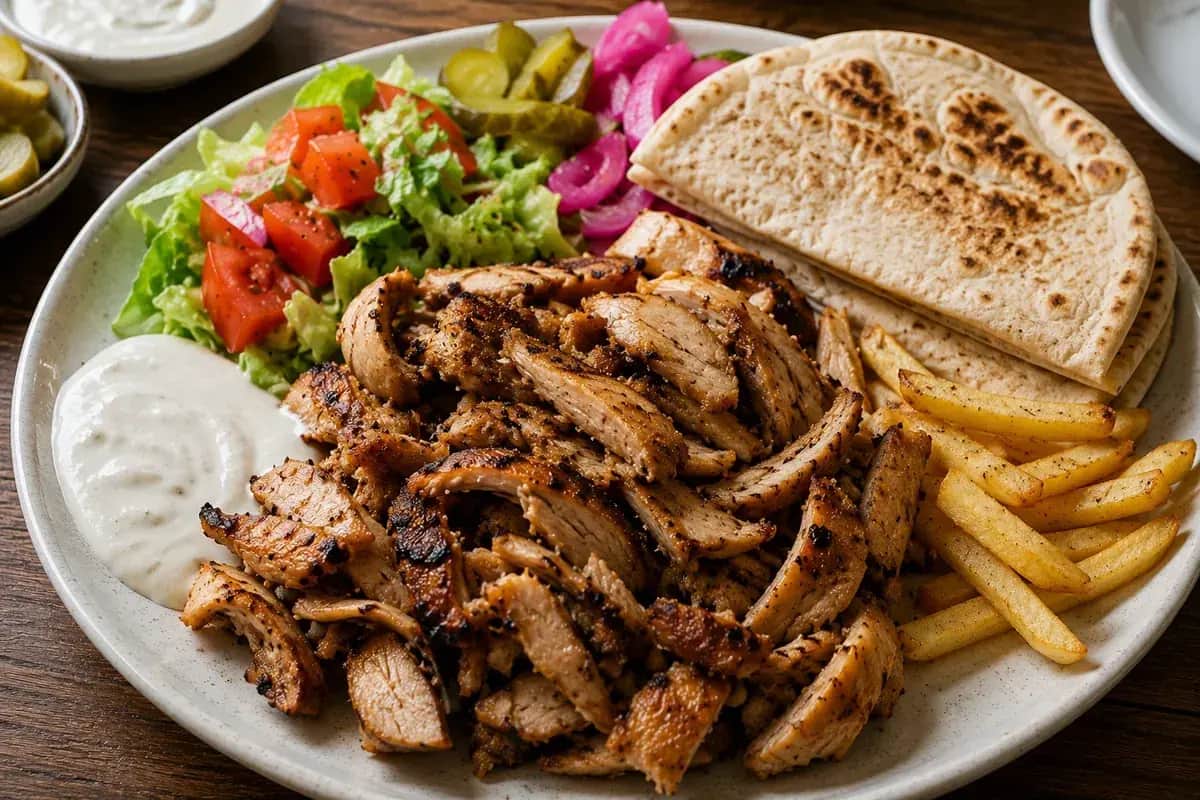
Palestinian Chicken Shawarma Recipe
A Palestinian chicken shawarma recipe made with thinly sliced chicken, yogurt, lemon, extra virgin olive oil, garlic, and warm Levantine spices. This homemade skillet version develops deeply browned edges while keeping the chicken tender and well seasoned. Serve it in warm pita, wraps, or a shawarma bowl with your favorite toppings.
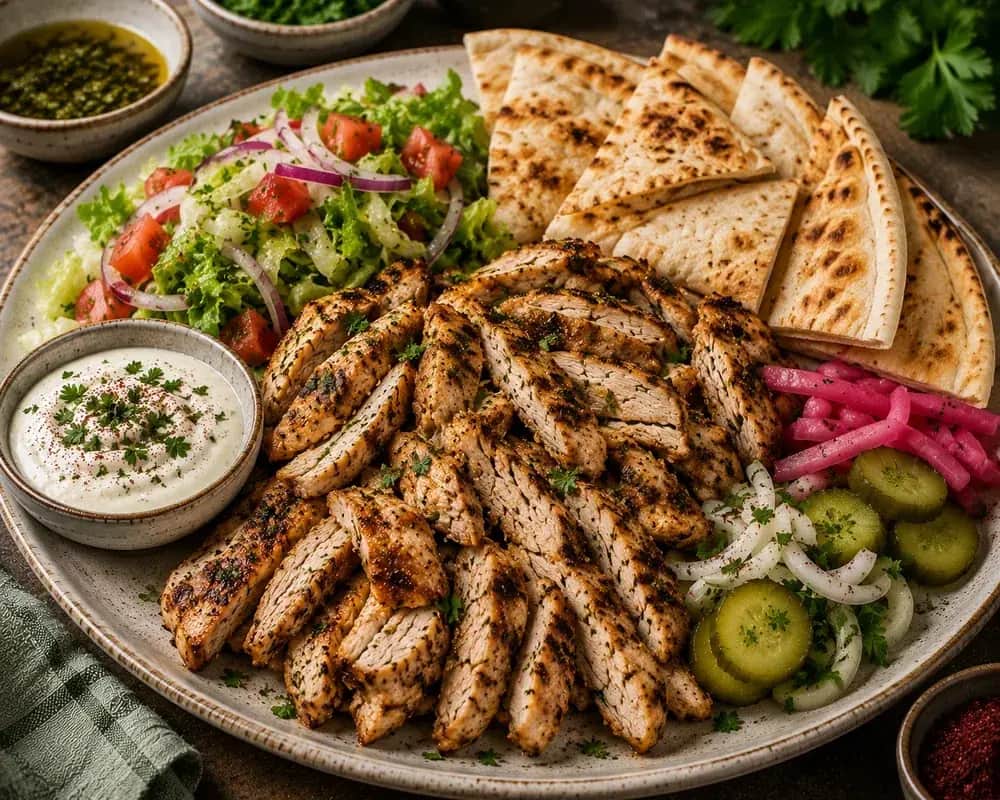
Grilled Chicken Shawarma Recipe — Lebanese-Style Mediterranean Chicken
A Lebanese-style grilled chicken shawarma made with thinly sliced chicken, yogurt, lemon, garlic, olive oil, and warm Levantine spices. The chicken develops lightly charred edges while staying tender, making it easy to serve in pita, wraps, bowls, salads, or as part of a mezze spread.
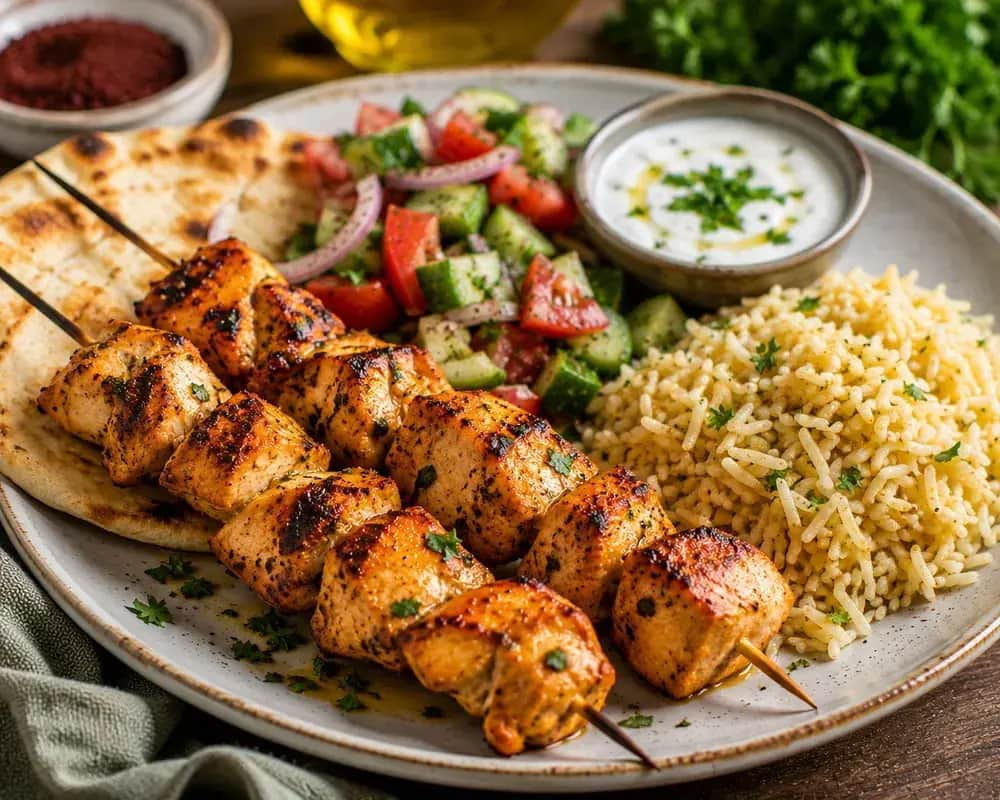
Shish Tawook Recipe — Juicy Lebanese Chicken Kabobs with Yogurt Marinade
This Shish Tawook recipe makes juicy Lebanese-style chicken kabobs marinated in Greek yogurt, lemon, garlic, extra virgin olive oil, tomato paste, paprika, cumin, oregano, and turmeric, then grilled until tender with golden-brown and lightly charred edges. An easy Mediterranean chicken recipe that's high in protein and perfect with toum, warm pita, rice, grilled vegetables, pickles, or fresh salad.