
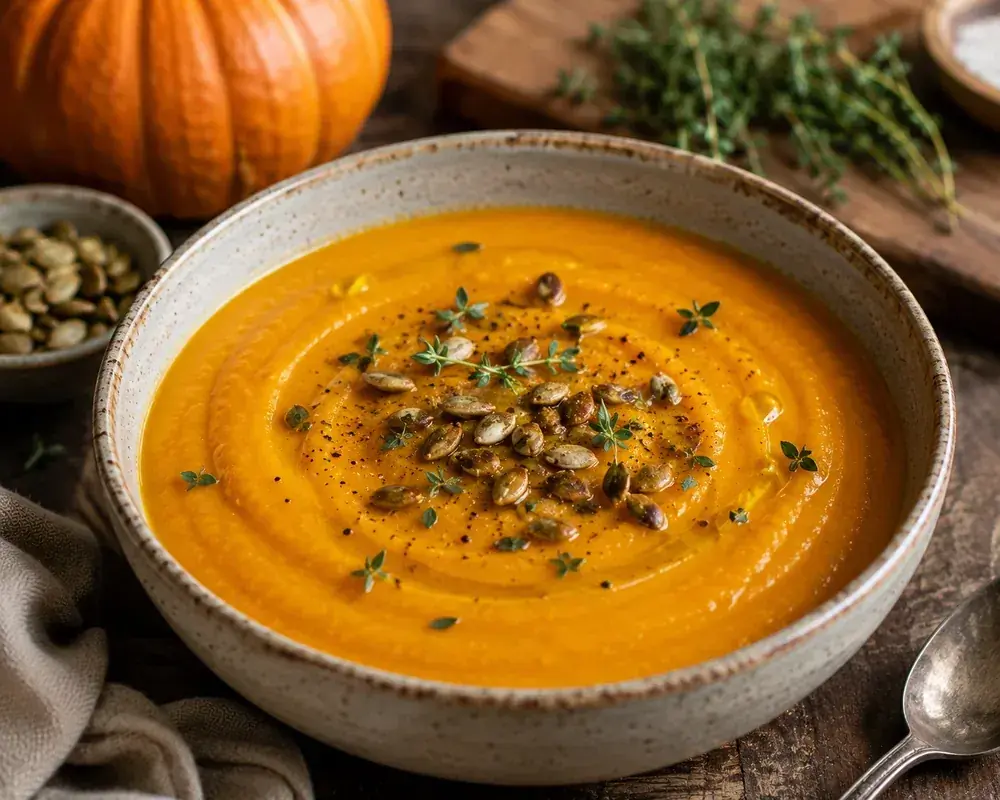
Roasted Pumpkin Soup Recipe — Mediterranean Vegan Pumpkin Soup with Carrots & Cumin
A roasted pumpkin soup made with pumpkin, onion, garlic, herbs, spices, and olive oil. Roasting the pumpkin first deepens its natural sweetness before the vegetables are blended into a smooth, warming soup.
Prep Time
20 mins
Cook Time
45 mins
Total Time
65 mins
Servings
6
A TASTE OF TRADITION
The Story Behind This Recipe
This roasted pumpkin soup is a modern Mediterranean-inspired bowl built around one of autumn's most naturally sweet vegetables. Pumpkin becomes especially flavorful when roasted until tender and lightly caramelized, then combined with garlic, olive oil, warm spices, and fresh herbs for a soup that is both simple and deeply comforting.
Cultural & Culinary Context
Pumpkin and other winter squashes became part of Mediterranean cooking after these New World crops reached Europe following the Columbian exchange. Over time, cooks around the Mediterranean incorporated them into regional soups, stews, baked dishes, and vegetable preparations. This recipe is not presented as a single traditional Lebanese dish; instead, it draws on the broader Mediterranean habit of letting vegetables, olive oil, herbs, garlic, and carefully balanced seasoning carry the dish.
What Makes It Mediterranean?
The Mediterranean character comes from the combination of extra virgin olive oil, garlic, fresh parsley, lemon, vegetables, and restrained warm spices. Roasting the pumpkin before simmering also follows the Mediterranean preference for concentrating the natural flavor of vegetables rather than relying on heavy cream or large amounts of butter.
Mediterranean Influences
- 🌿Extra virgin olive oil is used both for roasting and finishing the soup.
- 🌿Garlic provides a savory aromatic foundation.
- 🌿Fresh parsley adds a bright herbal finish.
- 🌿Fresh lemon juice balances the natural sweetness of pumpkin and carrots.
- 🌿Cumin and paprika provide warm savory depth.
- 🌿The soup relies on vegetables rather than cream for its body and richness.
- 🌿Pumpkin seeds add a simple, rustic garnish and satisfying crunch.
Ingredients
- 1.5 kg pumpkin, peeled, seeded, and cut into 3–4 cm cubes (Choose a dense, sweet-fleshed pumpkin or winter squash. Similar-sized pieces roast more evenly.)
- 2 medium carrots, peeled and sliced (Cut into similar-sized pieces so the carrots become tender at roughly the same time as the pumpkin.)
- 1 medium onion, quartered (Separate the quarters slightly so the exposed edges can caramelize during roasting.)
- 5 cloves garlic, peeled (Keep the cloves whole for roasting so they become soft and sweet rather than burning quickly.)
- 3 tbsp extra virgin olive oil (Use 2 tablespoons for roasting and 1 tablespoon to finish the soup.)
- 4 cups low-sodium vegetable broth (Low-sodium broth makes it easier to control the final seasoning.)
- 1 tsp ground cumin (Adds earthy warmth that complements the sweetness of the pumpkin.)
- 0.5 tsp ground cinnamon (Use a modest amount; too much can make the soup taste dessert-like.)
- 0.5 tsp sweet paprika (Adds gentle warmth and color without making the soup spicy.)
- 1 tsp sea salt, plus more to taste (Start conservatively and adjust after the broth and roasted vegetables are combined.)
- 0.5 tsp freshly ground black pepper
- 1 tbsp fresh lemon juice, plus more to taste (Add gradually. Lemon should brighten the pumpkin's sweetness rather than make the soup sour.)
- 2 tbsp fresh parsley, chopped (Add near the end for a fresh herbal contrast.)
- 2 tbsp roasted pumpkin seeds for garnish, optional (Add just before serving so they stay crisp.)
Instructions
- 1
Preheat the oven to 200°C (400°F). Line a large baking tray with parchment if desired.
- 2
Spread the pumpkin, carrots, onion, and garlic over the tray in a single layer. Avoid overcrowding because trapped steam can prevent the vegetables from caramelizing.
- 3
Drizzle with 2 tablespoons of olive oil and season with salt and black pepper. Toss thoroughly until the vegetables are lightly coated.
- 4
Roast for 35–40 minutes, turning the pumpkin and carrots once halfway through. The vegetables are ready when the pumpkin is fork-tender, the edges have light golden-brown spots, and the onion is soft and lightly caramelized.
- 5
Watch the garlic closely. If the cloves become deeply brown before the pumpkin is tender, remove them from the tray and continue roasting the other vegetables.
- 6
Transfer the roasted vegetables to a large soup pot. Add the vegetable broth, cumin, cinnamon, and paprika. Scrape any soft roasted vegetable bits from the tray into the pot because they contain concentrated flavor.
- 7
Bring the soup to a gentle simmer over medium heat, then reduce the heat and simmer for about 10 minutes. Avoid a vigorous boil, which can make the soup splatter and is unnecessary once the vegetables are already roasted.
- 8
Turn off the heat and blend until silky and smooth using an immersion blender. Keep the blender head submerged to reduce splashing.
- 9
If using a countertop blender, work in small batches and never fill the blender more than halfway with hot soup. Remove or loosen the center cap to allow steam to escape while covering the opening with a folded kitchen towel.
- 10
Check the consistency. If the soup is too thick, add warm vegetable broth or water a little at a time. If it is too thin, simmer uncovered for several minutes until it reaches the desired consistency.
- 11
Stir in the lemon juice and remaining 1 tablespoon of olive oil. Taste and adjust the salt, pepper, cumin, or lemon gradually.
- 12
Serve hot with fresh parsley, roasted pumpkin seeds, and a drizzle of extra virgin olive oil. Warm pita, crusty bread, or a simple Mediterranean salad makes a good accompaniment.
SET YOURSELF UP FOR SUCCESS
Before You Cook
👨🍳 Keep In Mind
- •Choose a dense, sweet pumpkin or winter squash rather than a watery variety.
- •If using a large pumpkin, remove the seeds and fibrous center before peeling and cutting.
- •Cut the pumpkin into roughly 3–4 cm pieces so the vegetables roast at a similar rate.
- •Use a large baking tray and leave space between the vegetables. Crowding creates steam and reduces caramelization.
- •Have warm vegetable broth ready before blending so you can easily adjust the final consistency.
💡 Helpful Tips
- •Do not judge doneness only by the clock. A knife or fork should slide easily into the thickest piece of pumpkin.
- •Light golden-brown edges are desirable because they add depth and sweetness.
- •Avoid letting the garlic become dark brown or black because burnt garlic can make the entire soup bitter.
- •Use cinnamon sparingly. The goal is gentle warmth, not a sweet or dessert-like flavor.
- •Add lemon gradually after blending because the amount needed depends on how sweet the pumpkin is.
- •For an especially silky soup, blend for an extra minute and strain it through a fine-mesh sieve if desired.
- •Do not add all the broth immediately if your pumpkin is particularly watery. You can always thin the soup later.
👀 How Do I Know It's Done?
- ✓The pumpkin and carrots are completely tender before blending.
- ✓The roasted vegetables have some golden-brown edges without burnt areas.
- ✓The soup blends into a smooth texture without visible vegetable chunks.
- ✓The consistency is creamy enough to coat a spoon but still easy to pour.
- ✓The flavor tastes savory and balanced, with the pumpkin's sweetness followed by warm spices and a fresh lemon finish.
Tweak It
Make This Recipe Work for You
Adapt the recipe to your ingredients, dietary needs, budget, time, serving size, or meal-prep plans.
🔄 Ingredient Substitutions
Use winter squash
Butternut squash, kabocha squash, or another dense orange-fleshed winter squash can replace pumpkin. Choose a variety that becomes creamy when cooked.
Use roasted garlic
For a sweeter, deeper garlic flavor, roast the garlic until soft and blend it into the soup with the other vegetables.
Use water with seasoning
If vegetable broth is unavailable, use water and adjust the salt and spices carefully. Broth gives the soup more savory depth.
🌱 Dietary Adjustments
Vegetarian
This recipe is naturally vegetarian because it uses vegetables, olive oil, and vegetable broth with no meat, poultry, or dairy.
Vegan
This recipe is naturally vegan when prepared with plant-based vegetable broth. No cream, butter, milk, or other animal products are required.
Dairy-free
The soup contains no dairy and gets its creamy texture entirely from blended roasted vegetables.
Gluten-free
The soup itself is naturally gluten-free when using a gluten-free vegetable broth and suitable packaged ingredients.
💰 Budget-Friendly Options
Use seasonal pumpkin
Choose pumpkin or winter squash that is abundant and inexpensive in your local market. The soup works well with several dense varieties.
Skip the garnish
Pumpkin seeds are optional. The soup remains flavorful and satisfying without them.
⏱️ Time-Saving Options
Use pre-cut pumpkin
Pre-cut fresh pumpkin or squash can save peeling and cutting time. Choose pieces of similar size so they roast evenly.
Use leftover roasted vegetables
Already-roasted pumpkin, squash, carrots, or onion can be turned into soup quickly. Add them to the broth with the spices and simmer before blending.
👨👩👧👦 Serving Adjustments
Make a smaller batch
Halve all ingredients for approximately three servings. Use a smaller baking tray so the vegetables still have enough space to roast properly.
Make a double batch
Double the ingredients for meal prep. Use two baking trays rather than overcrowding one tray, and adjust seasoning after blending.
🥡 Meal Prep
Prepare ahead
The soup can be completely cooked, blended, and cooled before refrigeration. Reheat gently and add a small splash of broth or water if it thickens in the refrigerator.
RECIPE RESCUE
🧩 What Do You Need Help With?
Choose the problem you're facing and get a recipe-specific solution instead of a generic cooking tip.
WHAT IF?
🔄 What If...?
Choose your situation and we'll show you a practical pathway for making this recipe work.
STORAGE & LEFTOVERS
🥡 Storage & Leftovers
Cool the soup promptly before transferring it to a sealed container.
Store it in the refrigerator and reheat gently on the stovetop or in the microwave.
The soup may thicken after chilling. Stir in a small amount of warm broth or water when reheating.
For freezing, cool the soup completely and portion it into freezer-safe containers, leaving room for expansion.
Thaw frozen soup in the refrigerator when possible, then reheat gently and stir well.
Best Storage Time
Best refrigerated within 3–4 days; frozen soup is best used within 2–3 months for quality.
How to Store
Airtight glass or food-safe freezer container.
SERVING & PAIRING
🍽️ Serving & Pairing
Serve the soup hot as a light lunch, comforting dinner, or Mediterranean-inspired starter. Finish each bowl with fresh parsley, roasted pumpkin seeds, and a small drizzle of extra virgin olive oil.
What Goes Well With It?
RECIPE FAQ
❓ Frequently Asked Questions
How do you make roasted pumpkin soup?
To make roasted pumpkin soup, roast 1.5 kg of peeled and cubed pumpkin together with 2 medium carrots, 1 quartered onion, and 5 garlic cloves at 200°C (400°F) until the vegetables are fork-tender and lightly caramelized, about 35–40 minutes. Transfer the roasted vegetables to a pot with 4 cups low-sodium vegetable broth, 1 teaspoon cumin, 1/2 teaspoon cinnamon, and 1/2 teaspoon sweet paprika. Simmer gently for about 10 minutes, then blend until silky smooth. Stir in 1 tablespoon fresh lemon juice and the remaining 1 tablespoon of extra virgin olive oil, then adjust the salt, pepper, and lemon to taste. Serve hot with fresh parsley, roasted pumpkin seeds, and an optional drizzle of olive oil.
Is Roasted Pumpkin Soup vegetarian?
Yes. The recipe is vegetarian because it contains no meat, poultry, or other animal ingredients.
Is Roasted Pumpkin Soup vegan?
Yes. It is naturally vegan when prepared with vegetable broth. The soup contains no cream, butter, milk, or other animal products.
Can I use butternut squash instead of pumpkin?
Yes. Butternut squash and other dense winter squashes are excellent substitutes. Choose a variety with firm, naturally sweet flesh.
Why roast the pumpkin instead of boiling it?
Roasting removes some surface moisture and creates caramelized edges, producing a deeper, sweeter, more concentrated flavor than simply boiling the pumpkin.
Can I use canned pumpkin?
Yes. Use plain unsweetened pumpkin puree. Roast the other vegetables for flavor, then add the pumpkin puree to the pot with the broth and spices.
How can I make the soup thinner?
Add warm vegetable broth or water a few tablespoons at a time until the desired consistency is reached.
How can I make the soup thicker?
Simmer it uncovered for several minutes to evaporate excess liquid. You can also blend more of the roasted vegetables if some pieces were reserved.
Can I freeze pumpkin soup?
Yes. Cool the soup completely, portion it into freezer-safe containers, leave room for expansion, and thaw before reheating gently.
How do I stop the soup from tasting too sweet?
Add lemon juice gradually, then adjust salt, black pepper, and cumin. These savory and acidic elements help balance naturally sweet pumpkin and carrots.
Can I make this soup ahead of time?
Yes. It is well suited to meal prep. Refrigerate the cooked soup in a sealed container and gently reheat it when needed.
Explore More
Go deeper into the cuisine
Learn more about the ingredients, traditions, and cooking approaches connected to this recipe.
You May Also Like
More delicious recipes from the Soups
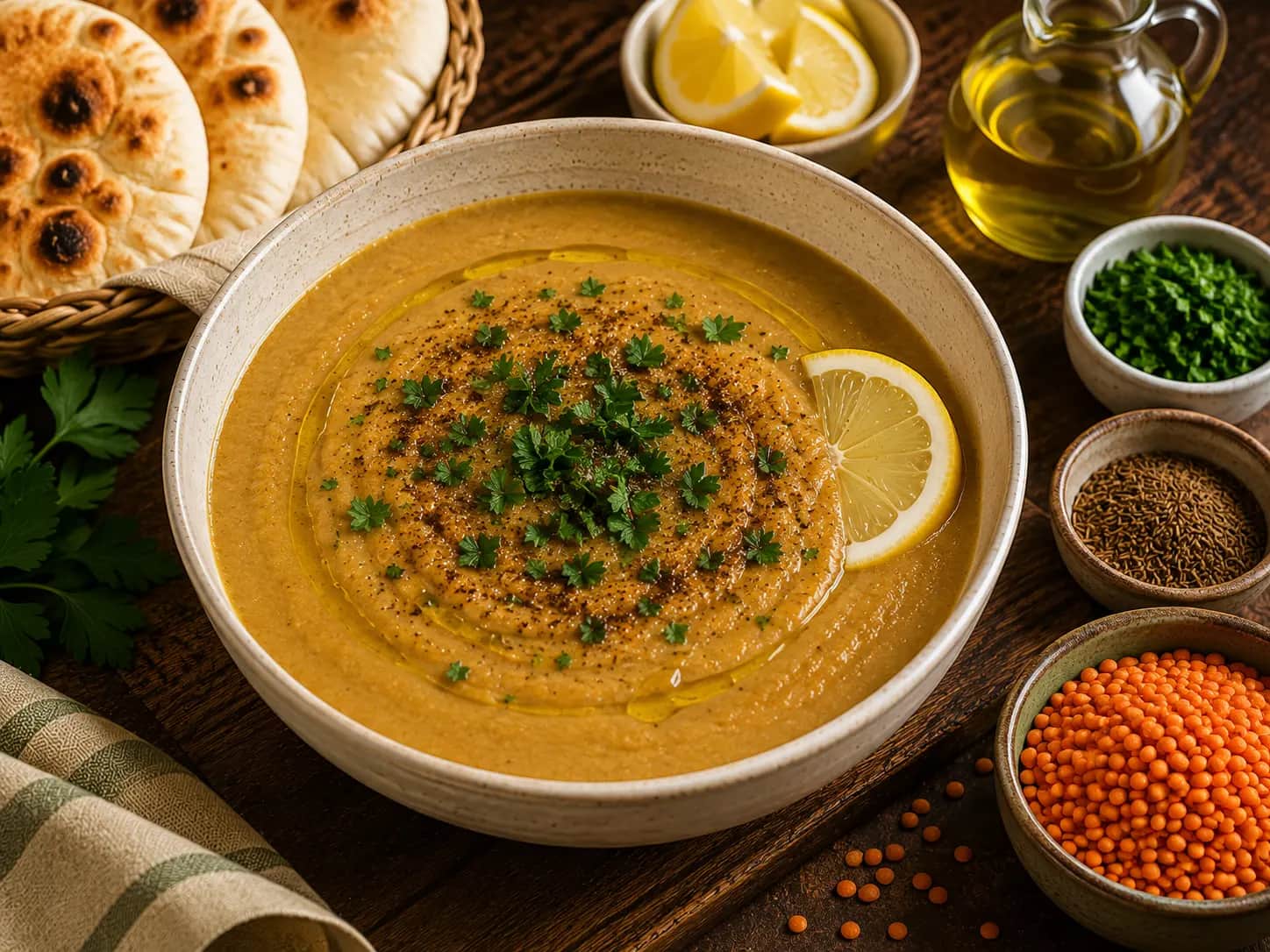
Syrian Lentil Soup (Shorbat Adas) Recipe — Easy Red Lentil Soup
A simple lentil soup made with red lentils, vegetables, garlic, cumin, lemon, and olive oil. The lentils soften quickly as they simmer, creating a naturally thick soup with a bright citrus finish.
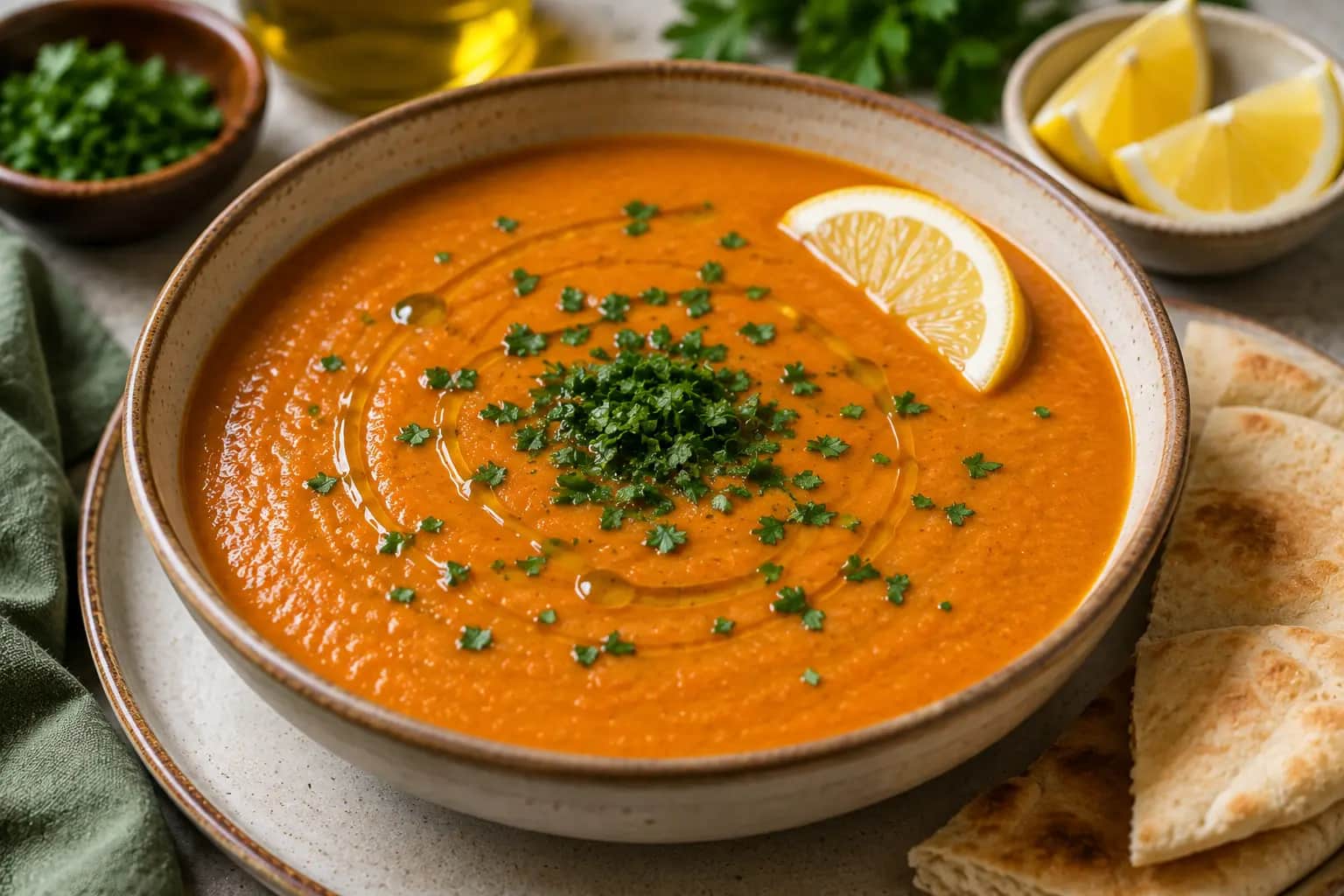
Lebanese Red Lentil Soup Recipe — Shorbat Adas with Lemon & Cumin
A Lebanese-style red lentil soup made with red lentils, vegetables, garlic, cumin, lemon, and olive oil. The lentils break down as they simmer, creating a naturally thick soup with a warm, earthy flavor and bright citrus finish.
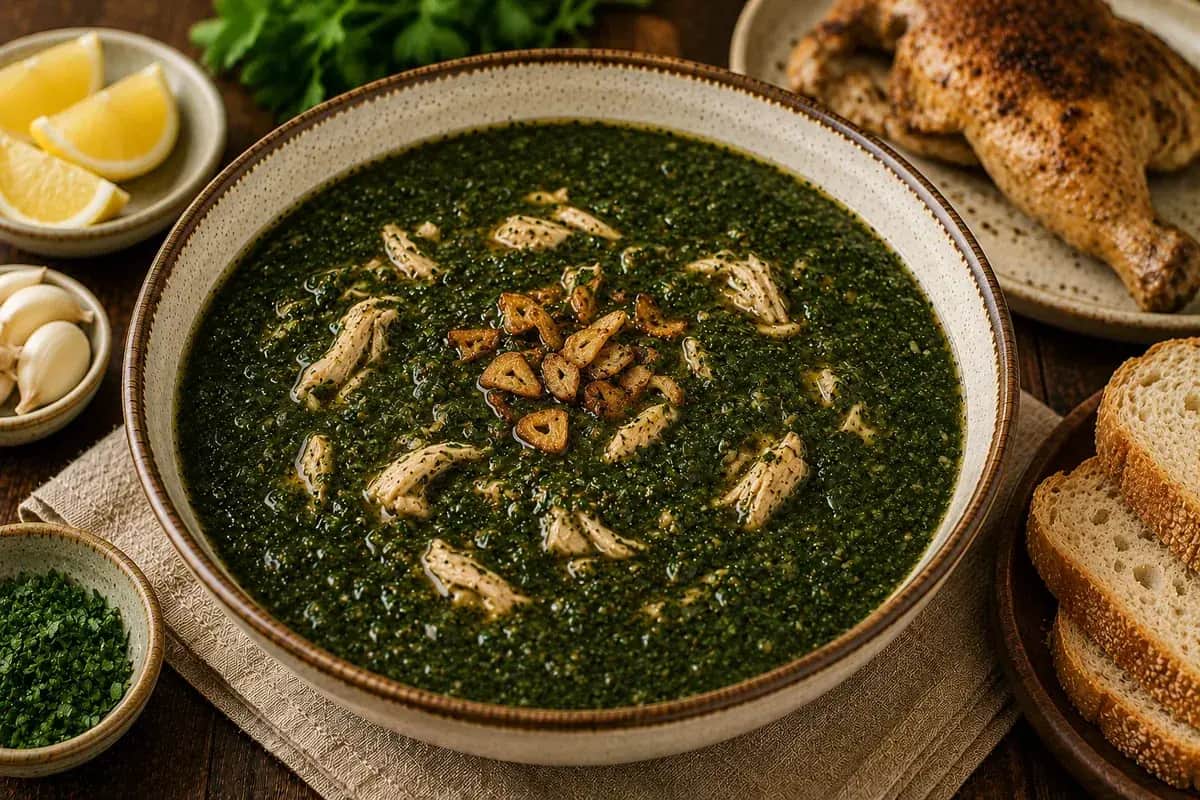
Egyptian Molokhia Soup Recipe
This traditional Egyptian molokhia soup recipe combines finely chopped jute mallow leaves with savory chicken broth, fragrant garlic, ground coriander, and a rich ta'aliya. Gently cooked for its signature silky texture, it is served hot with Egyptian rice and fresh lemon for a comforting Egyptian family meal.