
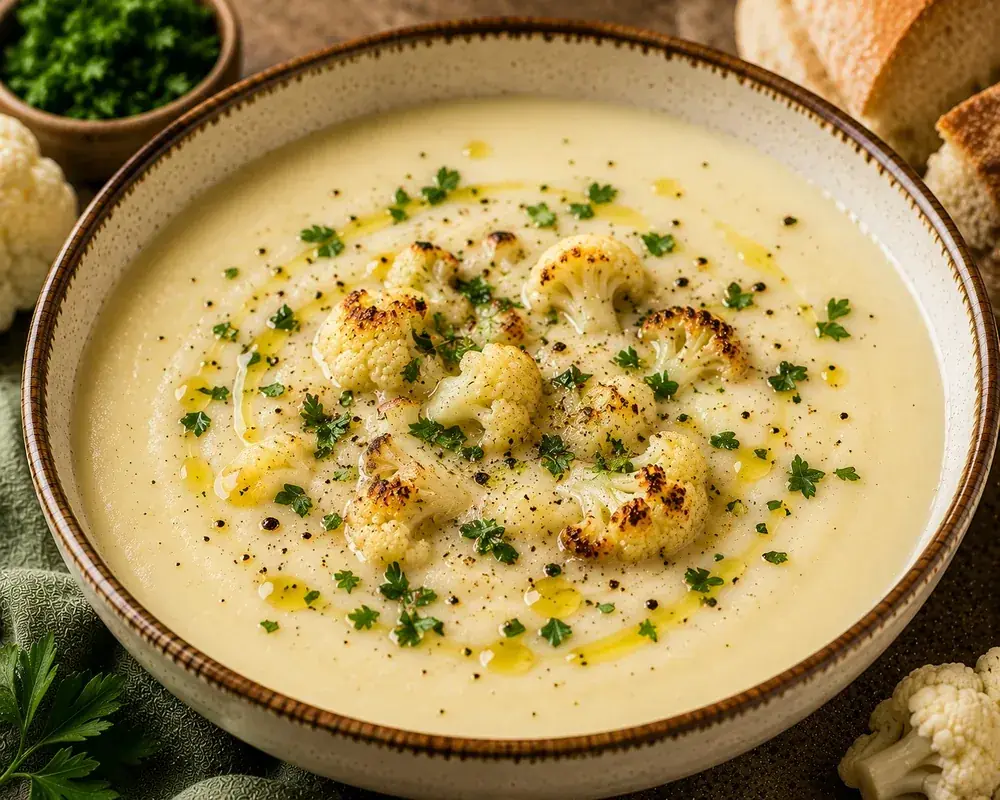
Creamy Cauliflower Soup Recipe
A creamy cauliflower soup made with roasted cauliflower, garlic, onion, thyme, cumin, fresh lemon juice, and extra virgin olive oil. Roasting the vegetables first gives the soup a deeper flavor, while blending creates a velvety texture without cream.
Prep Time
15 mins
Cook Time
45 mins
Total Time
60 mins
Servings
6
A TASTE OF TRADITION
The Story Behind This Recipe
Cauliflower may look humble, but roasting transforms it into something remarkably rich and aromatic. This soup takes advantage of that transformation by giving the cauliflower, onion, and garlic time in a hot oven before they meet the broth. The result is a smooth, comforting bowl with roasted depth, gentle warmth from cumin and thyme, and a fresh lift from lemon and olive oil.
Cultural & Culinary Context
Cauliflower is widely used throughout Middle Eastern and Mediterranean cooking, appearing in roasted vegetable dishes, salads, mezze, stews, and soups. This recipe takes that familiar vegetable and presents it in a smooth soup while keeping the flavor profile rooted in ingredients common to the region, including olive oil, garlic, cumin, thyme, parsley, and lemon.
What Makes It Mediterranean?
The Mediterranean character comes from relying on vegetables, extra virgin olive oil, herbs, spices, and lemon rather than cream or butter for richness and flavor. Roasting concentrates the natural flavors of the vegetables, while cumin and thyme provide warmth and lemon keeps the finished soup bright.
Mediterranean Influences
- 🌿Cauliflower is the main vegetable rather than a cream-based soup base.
- 🌿Extra virgin olive oil supplies richness and fruity flavor.
- 🌿Garlic provides a classic savory Mediterranean foundation.
- 🌿Cumin adds warm, earthy spice.
- 🌿Thyme and parsley contribute fresh herbal notes.
- 🌿Fresh lemon juice balances the roasted vegetables.
- 🌿The recipe relies on simple whole ingredients rather than heavy cream.
Ingredients
- 1 large cauliflower (Cut into evenly sized florets.)
- 1 medium onion (Peeled and cut into thick wedges.)
- 5 garlic cloves (Leave whole or lightly crush.)
- 3 tbsp extra virgin olive oil
- 4 cups vegetable broth (Use low-sodium broth when possible.)
- 1 tsp dried thyme
- 0.5 tsp ground cumin
- 1 tsp sea salt (Adjust to taste depending on the broth.)
- 0.5 tsp black pepper
- 2 tbsp fresh parsley (Finely chopped, for serving.)
- 1 tbsp fresh lemon juice (Add after blending.)
- 1 tbsp extra virgin olive oil (For finishing and serving.)
Instructions
- 1
Preheat the oven to 200°C (400°F) and position a rack in the center of the oven.
- 2
Cut the cauliflower into evenly sized florets so they roast at roughly the same rate. Cut the onion into thick wedges and prepare the garlic cloves.
- 3
Arrange the cauliflower, onion, and garlic in a single layer on a large baking tray. Avoid overcrowding the tray so the vegetables roast instead of steaming.
- 4
Drizzle with the olive oil and season with sea salt and black pepper. Toss gently until the vegetables are lightly coated.
- 5
Roast for about 30–35 minutes, turning the vegetables once halfway through, until the cauliflower is tender with golden-brown edges and the onion is softened.
- 6
Reserve a few attractive roasted cauliflower florets for garnish if desired, then transfer the remaining roasted vegetables to a large soup pot.
- 7
Add the vegetable broth, dried thyme, and ground cumin. Bring the mixture to a gentle simmer and cook for about 10 minutes so the flavors combine.
- 8
Blend the soup until smooth using an immersion blender. If using a countertop blender, blend in small batches and never fill the blender more than recommended, because hot liquid expands and can cause dangerous splashing.
- 9
If the soup is thicker than you prefer, gradually add a little more warm vegetable broth or water until the desired consistency is reached.
- 10
Stir in the fresh lemon juice after blending. Taste carefully and adjust the salt, black pepper, cumin, or lemon according to preference.
- 11
Ladle the soup into warm bowls and finish with chopped parsley, the reserved roasted cauliflower florets, cracked black pepper, and a light drizzle of extra virgin olive oil.
SET YOURSELF UP FOR SUCCESS
Before You Cook
👨🍳 Keep In Mind
- •Choose a firm cauliflower with compact florets and no large dark spots.
- •Cut the florets into similar sizes so they become tender at approximately the same time.
- •Do not overcrowd the roasting tray. Space between the vegetables allows moisture to evaporate and encourages browning.
- •Use a low-sodium vegetable broth if possible because the final salt level is easier to control.
- •Have the lemon juice ready before blending so you can brighten the soup immediately after it becomes smooth.
- •If using a countertop blender, allow the soup to cool slightly before blending and work in small batches.
- •Reserve a few browned cauliflower pieces before blending if you want a more attractive finished bowl.
💡 Helpful Tips
- •The roasted cauliflower should have browned edges, not just a pale steamed appearance.
- •Turn the vegetables halfway through roasting so the exposed surfaces brown more evenly.
- •Do not rush the roasting stage. The browned edges are an important source of flavor.
- •Add the broth gradually if you are unsure about the final thickness.
- •Blend thoroughly for a very smooth soup, or stop slightly earlier for a more rustic texture.
- •Add lemon after blending rather than before roasting so its fresh flavor remains noticeable.
- •Taste the soup after adding lemon before adding more salt. Acidity can make the existing seasoning taste brighter.
- •For the smoothest texture, blend for a little longer and strain the soup if your blender leaves noticeable vegetable fibers.
- •A final drizzle of olive oil adds aroma and a silky finish without cream.
👀 How Do I Know It's Done?
- ✓The roasted vegetables are tender and visibly browned.
- ✓The broth has absorbed the roasted garlic, onion, thyme, and cumin flavors.
- ✓The soup blends into a smooth, creamy consistency without visible large pieces.
- ✓The lemon adds brightness without making the soup taste sour.
- ✓The seasoning tastes balanced rather than dominated by salt or cumin.
- ✓The final bowl is hot, silky, aromatic, and easy to spoon.
Tweak It
Make This Recipe Work for You
Adapt the recipe to your ingredients, dietary needs, budget, time, serving size, or meal-prep plans.
🔄 Ingredient Substitutions
Change the broth
Use homemade vegetable stock, low-sodium vegetable broth, or a mild chicken broth if a non-vegetarian version is acceptable.
Change the herbs
Replace thyme with dried oregano or use a small amount of fresh thyme for a brighter herbal flavor.
Adjust the spice profile
Add a pinch of smoked paprika, coriander, or mild chili flakes if you want a different aromatic direction.
Change the garnish
Use toasted cauliflower, pumpkin seeds, chopped parsley, za'atar, or a few drops of olive oil instead of the suggested garnish.
🌱 Dietary Adjustments
Keep it vegan
Use vegetable broth and extra virgin olive oil. The soup is naturally dairy-free without needing cream or butter.
Keep it dairy-free
No dairy substitutions are required because the creamy texture comes from blended cauliflower.
Make it gluten-free
Use certified gluten-free vegetable broth and verify any packaged seasonings if strict gluten avoidance is required.
Reduce the sodium
Use low-sodium broth and season gradually near the end rather than adding the full amount of salt at the beginning.
💰 Budget-Friendly Options
Use the whole cauliflower
Keep the tender stems and leaves when suitable, trimming only tough portions. They can be roasted and blended into the soup.
Use homemade vegetable broth
Save suitable vegetable trimmings and use them to make a simple broth, reducing waste and keeping the soup economical.
Use leftover roasted vegetables
Small amounts of suitable roasted onion, garlic, or cauliflower can be incorporated into the soup instead of discarded.
⏱️ Time-Saving Options
Use pre-cut cauliflower
Pre-cut florets can reduce preparation time when you need a quick weeknight soup.
Roast extra vegetables
Roast additional cauliflower at the same time and reserve it for salads, bowls, or another meal.
Use an immersion blender
Blending directly in the soup pot reduces transfers and makes cleanup easier.
👨👩👧👦 Serving Adjustments
Make a smaller batch
Halve the ingredients for approximately three servings while keeping the same cooking method.
Make a larger batch
Double the recipe for meal preparation, but use a sufficiently large roasting tray so the cauliflower still has room to brown.
🥡 Meal Prep
Prepare ahead
Cook the soup ahead of time, cool it promptly, cover it, and refrigerate it so it is ready for quick meals.
Reheat gently
Warm the soup over medium-low heat, stirring occasionally. Add a splash of broth or water if it thickens during storage.
Freeze portions
Cool the soup completely, portion it into freezer-safe containers, and leave space for expansion. Thaw in the refrigerator before reheating.
RECIPE RESCUE
🧩 What Do You Need Help With?
Choose the problem you're facing and get a recipe-specific solution instead of a generic cooking tip.
WHAT IF?
🔄 What If...?
Choose your situation and we'll show you a practical pathway for making this recipe work.
STORAGE & LEFTOVERS
🥡 Storage & Leftovers
Cool leftover soup promptly before covering and refrigerating.
Store the soup in airtight containers in the refrigerator.
Keep garnishes such as parsley, roasted cauliflower, and olive oil separate when possible.
Reheat gently over medium-low heat, stirring occasionally.
If the soup thickens in the refrigerator, loosen it with a splash of warm broth or water.
For longer storage, freeze cooled portions in freezer-safe containers and leave room for expansion.
Thaw frozen soup in the refrigerator before reheating when possible.
Best Storage Time
Best enjoyed fresh or within a few days when refrigerated; frozen portions are suitable for longer storage.
How to Store
Use airtight containers with enough headspace for expansion when freezing.
SERVING & PAIRING
🍽️ Serving & Pairing
Serve the soup hot in warm bowls so it stays silky and comforting. A few roasted cauliflower florets, fresh parsley, cracked black pepper, and a final drizzle of extra virgin olive oil provide color, aroma, and texture. For a fuller Mediterranean meal, serve it with whole-grain bread, a simple salad, roasted chickpeas, or a small mezze plate.
What Goes Well With It?
RECIPE FAQ
❓ Frequently Asked Questions
How do you make creamy cauliflower soup?
To make creamy cauliflower soup, roast cauliflower, onion, and garlic until tender and golden, then simmer them with vegetable broth, thyme, and cumin. Blend the vegetables and broth until silky smooth, then stir in fresh lemon juice and extra virgin olive oil. The blended cauliflower creates a creamy texture naturally, so no cream or butter is required.
How does cauliflower soup become creamy without cream?
The cauliflower itself provides the creamy body. Once it is roasted, simmered, and thoroughly blended, its natural starches and fibers create a smooth texture without requiring dairy cream.
Why roast the cauliflower first?
Roasting removes some moisture and creates browned edges, which adds deeper, sweeter, more savory flavor than simply boiling the cauliflower.
Can I use frozen cauliflower?
Yes. Frozen cauliflower can work well, although it may release more moisture during roasting. Spread it well on the tray and roast until the edges develop good color.
Can I make this soup without cumin?
Yes. Cumin adds earthy warmth but is not essential. You can omit it or replace it with a small amount of coriander or additional thyme.
Can I use fresh thyme?
Yes. Fresh thyme can replace dried thyme. Add the leaves during the simmering stage and remove any woody stems before blending.
How can I make the soup extra smooth?
Blend thoroughly with an immersion or countertop blender. For an exceptionally refined texture, pass the finished soup through a fine-mesh strainer.
Why add lemon at the end?
Fresh lemon juice provides brightness. Adding it after blending preserves more of its fresh character and makes it easier to adjust the final acidity.
Can I make it ahead of time?
Yes. The soup reheats well. Keep garnishes separate and add them just before serving for the best texture and appearance.
Can I freeze cauliflower soup?
Yes. Cool it completely, portion it into freezer-safe containers, leave expansion space, and thaw before gently reheating.
Why is my soup too thick after refrigeration?
Blended cauliflower continues to hold moisture as the soup cools. Add a little warm broth or water while reheating until the desired consistency returns.
Is this soup vegan?
Yes, provided you use vegetable broth and no dairy-based garnish. The base recipe uses olive oil rather than cream or butter.
What can I serve with cauliflower soup?
Whole-grain pita, a simple salad, roasted chickpeas, hummus, or a small mezze plate all work well and complement the soup's Mediterranean flavors.
Explore More
Go deeper into the cuisine
Learn more about the ingredients, traditions, and cooking approaches connected to this recipe.
You May Also Like
More delicious recipes from the Soups
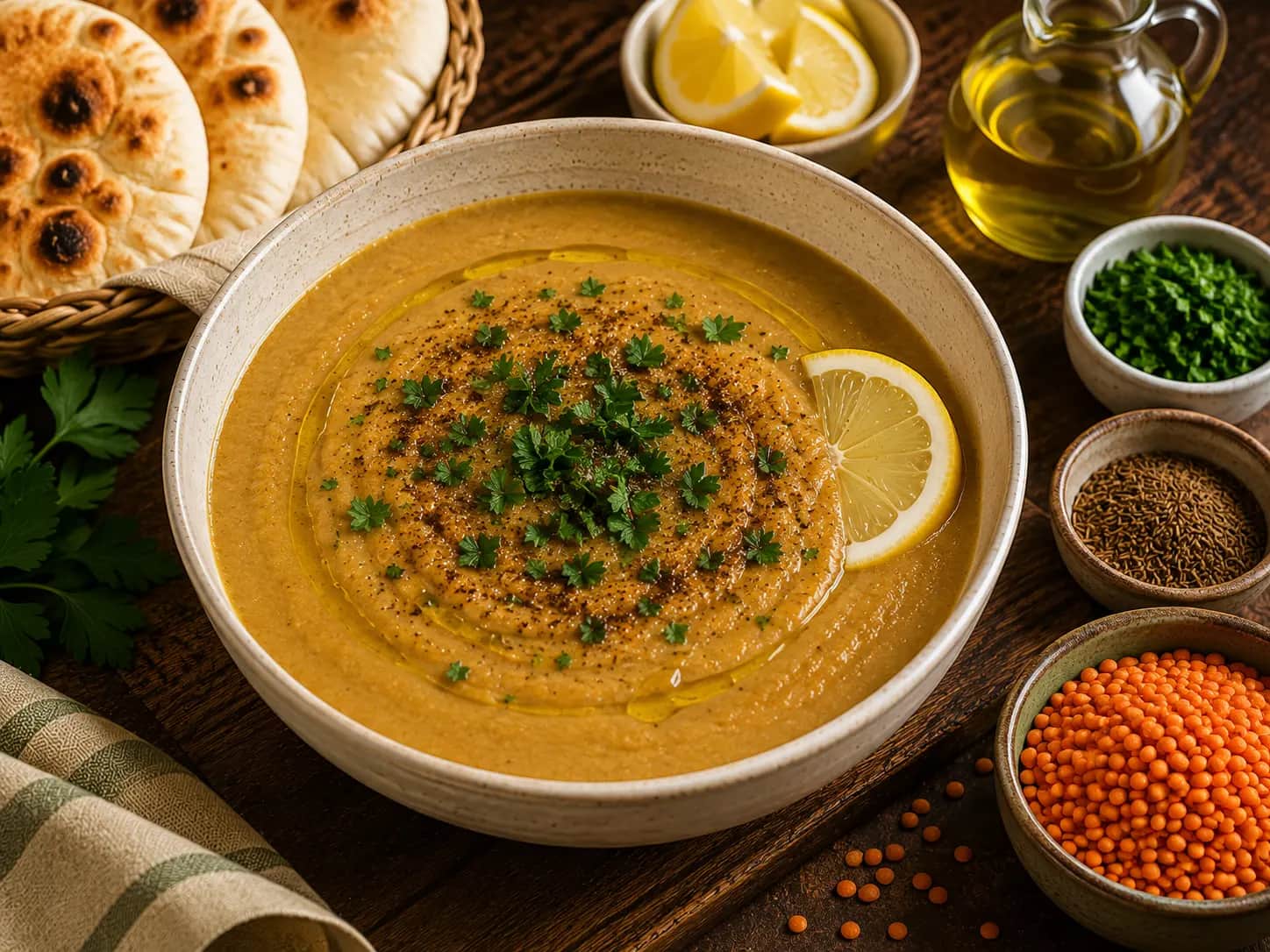
Syrian Lentil Soup (Shorbat Adas) Recipe — Easy Red Lentil Soup
A simple lentil soup made with red lentils, vegetables, garlic, cumin, lemon, and olive oil. The lentils soften quickly as they simmer, creating a naturally thick soup with a bright citrus finish.
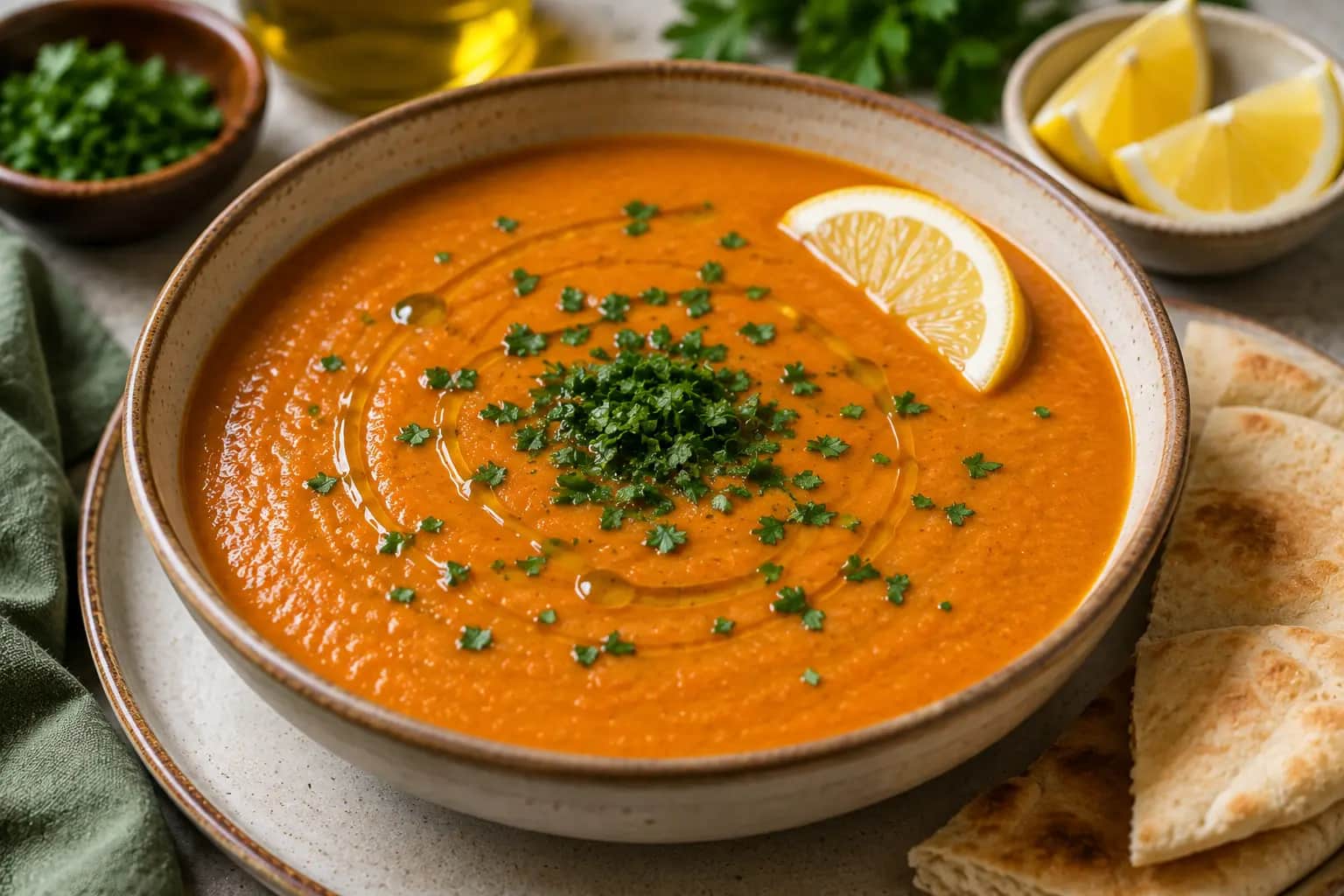
Lebanese Red Lentil Soup Recipe — Shorbat Adas with Lemon & Cumin
A Lebanese-style red lentil soup made with red lentils, vegetables, garlic, cumin, lemon, and olive oil. The lentils break down as they simmer, creating a naturally thick soup with a warm, earthy flavor and bright citrus finish.
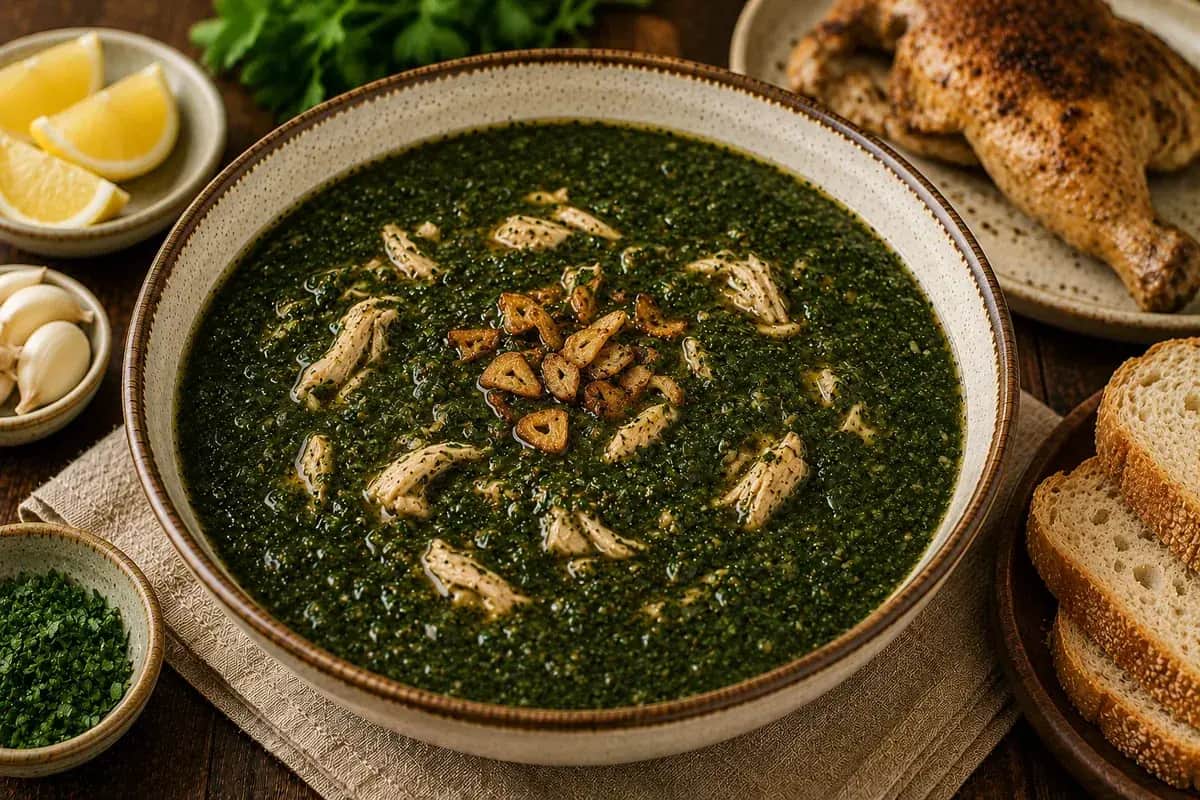
Egyptian Molokhia Soup Recipe
This traditional Egyptian molokhia soup recipe combines finely chopped jute mallow leaves with savory chicken broth, fragrant garlic, ground coriander, and a rich ta'aliya. Gently cooked for its signature silky texture, it is served hot with Egyptian rice and fresh lemon for a comforting Egyptian family meal.