
Healthy Mezze Guide
Egyptian Cuisine Guide
Egyptian home cooking is built around familiar ingredients, generous shared meals, and practical ways of turning beans, lentils, grains, vegetables, herbs, and spices into satisfying food. At Healthy Mezze, we approach these dishes as food we can actually make at home or in our café, while respecting the traditions behind them and making practical adjustments when needed.
The foundation of Egyptian home cooking
Beans, lentils, rice, wheat, vegetables, herbs, garlic, onions, cumin, coriander, lemon, vinegar, and cooking oils appear throughout Egyptian cooking. These ingredients are not complicated, but the way they are combined creates layers of flavor. Ful medames is a good example: humble fava beans become a complete-feeling meal when seasoned with cumin, garlic, lemon, and oil and served with vegetables and bread.
Food for the everyday table
Egyptian food is not limited to famous dishes such as koshari. Everyday meals can include beans and legumes, rice dishes, vegetable preparations, soups, grilled foods, breads, pickles, desserts, and drinks. What is placed on the table often depends on what is available, what the family enjoys, and how much time there is to prepare the meal.
How Egyptian flavors are built
Garlic, onion, cumin, coriander, lemon, vinegar, fresh herbs, and chili are useful flavor builders. Browning onions can add depth, gently cooking garlic and other aromatics can soften their sharpness, and adding lemon or vinegar at the right stage can bring a dish into balance. We find that tasting as we cook is one of the simplest ways to understand whether the flavors are working together.
A practical way to balance a dish
When we cook, we do not rely only on a fixed amount of seasoning. We taste along the way and adjust according to the ingredients and the final balance we want. A little extra lemon may brighten a dish, more spice can add heat, and a small adjustment of salt can bring other flavors forward. The same idea works with salad dressings: mix them, taste them, and then decide whether they need more salt, acidity, or another adjustment.
Traditional cooking and practical adaptations
Traditional recipes naturally change as families move between regions and generations, especially when certain ingredients or preparation methods are not available. We treat healthier and more practical adaptations as part of our cooking approach rather than pretending that every version is identical to an older preparation. Depending on the dish, this can mean using the oven instead of frying, increasing vegetables or legumes, adjusting the amount of oil, or offering a practical ingredient substitute.
Cooking with what you have
One of the useful lessons from home cooking is that a missing ingredient does not always mean the recipe has to stop. Some substitutions work well, while others change the character of the dish. We encourage checking the individual recipe for suggested alternatives and using the What If and Recipe Rescue sections when available. The goal is to help you understand the role of an ingredient before deciding how to change it.
How we approach cooking proteins
For chicken and other proteins, flavor is only part of the process. We also pay attention to whether the food is fully cooked. When preparing something in the oven, for example, we may remove the tray and cut into a small piece to check the doneness rather than relying on time alone. Cooking times can vary with the size of the pieces, the equipment, and the starting temperature of the ingredients.
Where to start exploring Egyptian food
A useful starting point is ful medames, Egyptian koshari, lentil soup, vegetable dishes, grilled foods, and Egyptian drinks. As you cook, pay attention to how legumes, grains, vegetables, herbs, acidity, and spices work together. Learning those combinations makes it easier to understand Egyptian food and to adapt individual dishes to your own kitchen.
Recipes from this guide
Try these recipes to put the ideas and ingredients from this guide into practice.
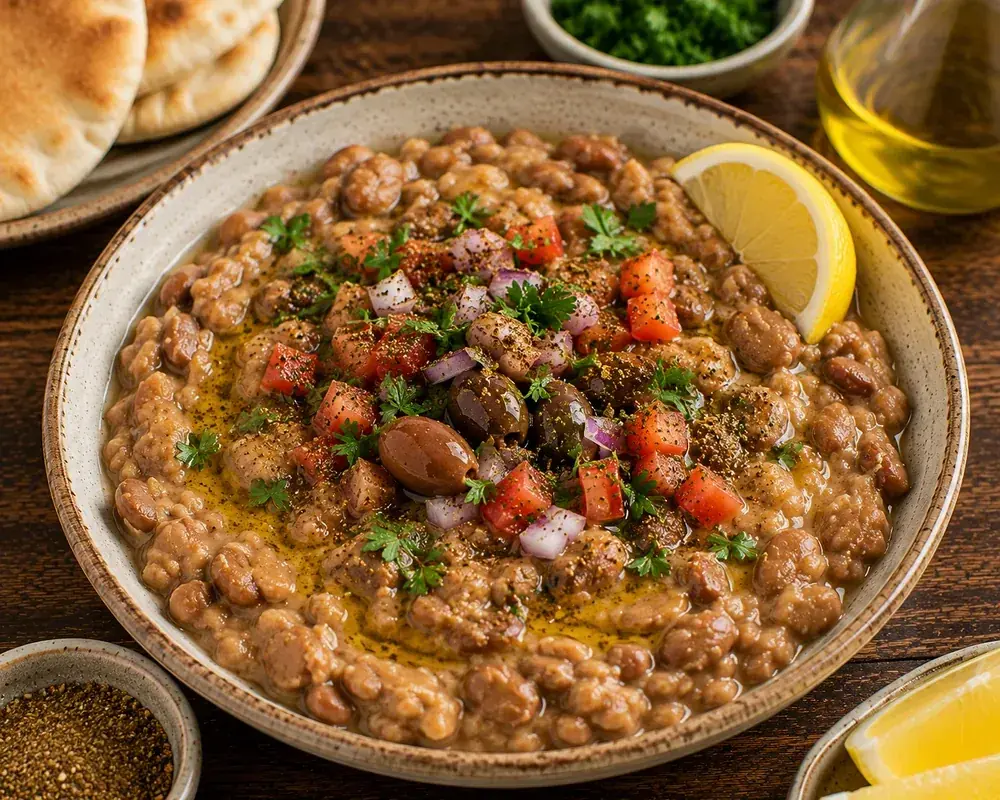
Ful Medames Recipe — Traditional Egyptian Fava Beans
A traditional Egyptian ful medames made with tender fava beans, garlic, cumin, fresh lemon juice, and extra virgin olive oil, finished with tomato, red onion, parsley, and warm pita. The beans are partly mashed for a thick texture while plenty remain whole.
View recipe →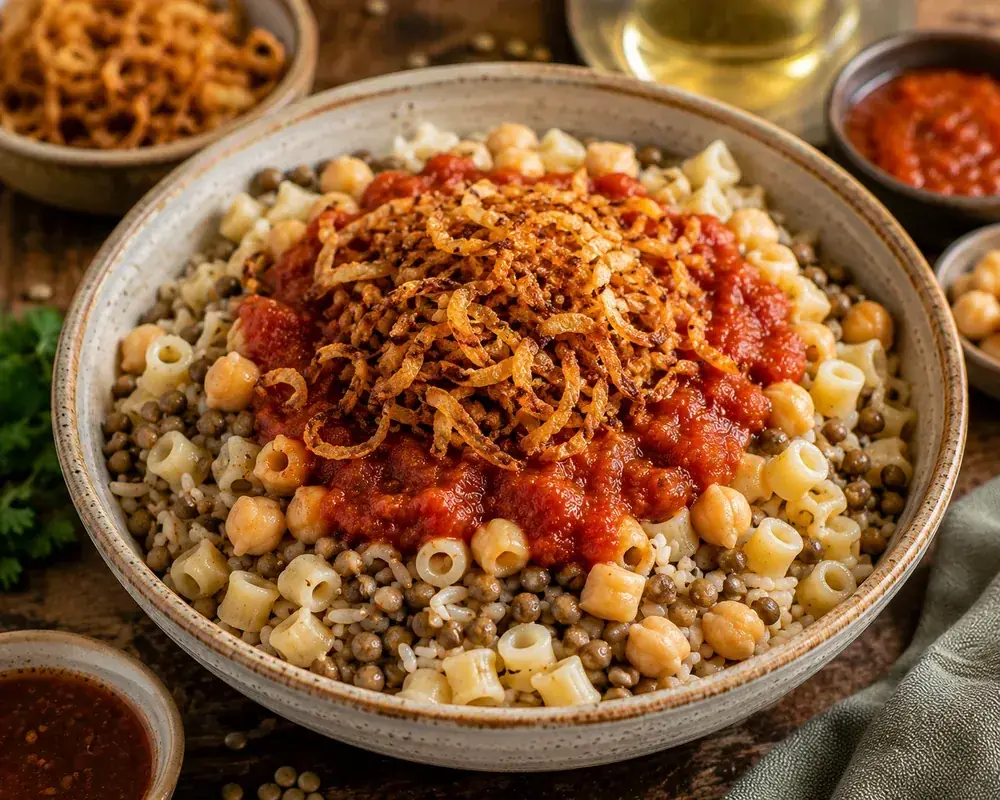
Egyptian Koshari Recipe
This Egyptian koshari recipe combines seasoned rice, tender brown lentils, small pasta, chickpeas, crispy onions, and a bold garlic-vinegar tomato sauce. A hearty vegetarian and vegan Egyptian comfort food made from affordable pantry staples.
View recipe →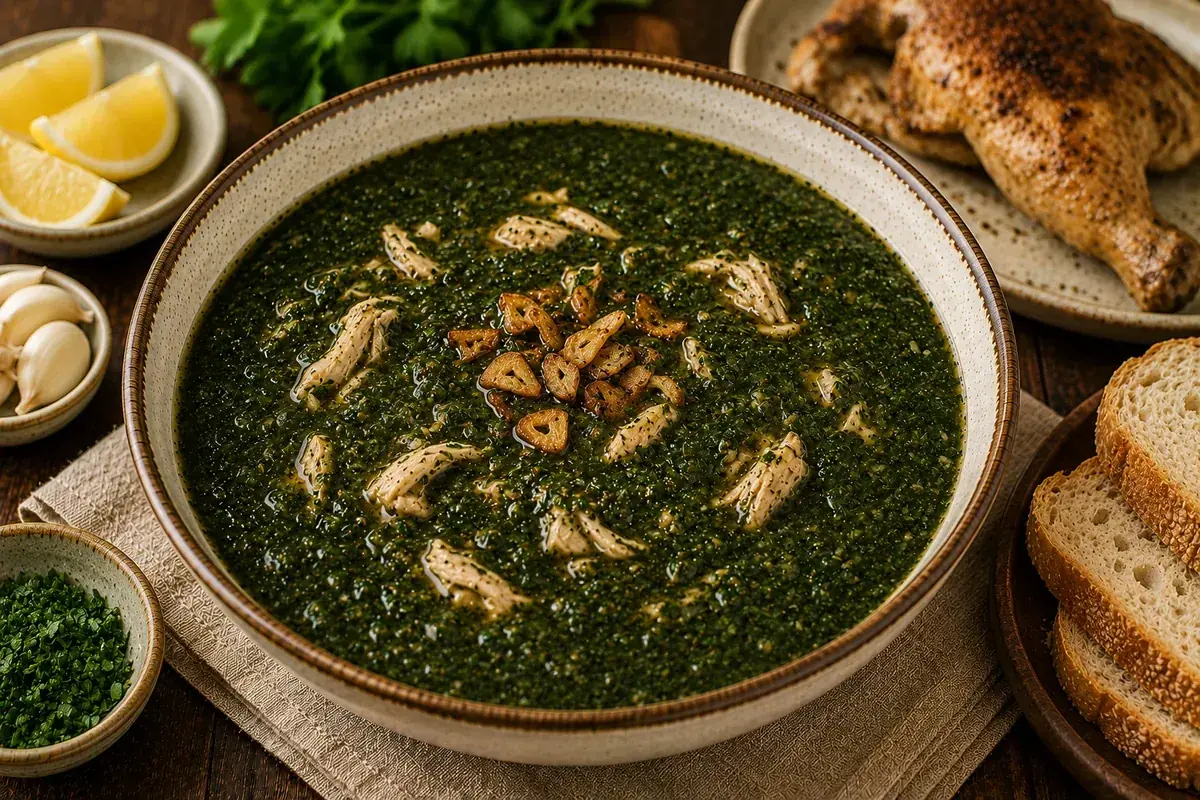
Egyptian Molokhia Soup Recipe
This traditional Egyptian molokhia soup recipe combines finely chopped jute mallow leaves with savory chicken broth, fragrant garlic, ground coriander, and a rich ta'aliya. Gently cooked for its signature silky texture, it is served hot with Egyptian rice and fresh lemon for a comforting Egyptian family meal.
View recipe →