
Healthy Mezze Guide
Eastern Mediterranean Food Guide
Eastern Mediterranean food cultures share many ingredients and techniques while retaining distinct regional identities. Egyptian and Lebanese cooking provide two useful perspectives on how grains, legumes, vegetables, herbs, breads, and fresh flavors shape everyday meals.
What connects the region
Olive oil, legumes, grains, fresh herbs, garlic, lemon, vegetables, yogurt, sesame, spices, and flatbreads appear across many Eastern Mediterranean kitchens. Similar ingredients can be transformed into very different dishes depending on local traditions.
Shared ingredients do not mean identical cuisines
A common pantry should not be mistaken for a single cuisine. Egyptian ful, Lebanese hummus, regional flatbreads, different rice dishes, salads, pickles, and spice combinations each have their own histories and customary preparations.
The importance of bread and grains
Bread, rice, bulgur, and other grains help structure meals and provide practical ways to serve legumes, vegetables, dips, and grilled foods. Choosing portions thoughtfully can keep the meal balanced while preserving the traditional role of grains.
Fresh herbs and acidity
Parsley, mint, coriander, lemon, sumac, and other bright ingredients provide contrast to legumes, grains, grilled foods, and rich dips. Adding freshness near the end of cooking or just before serving can make a simple dish taste more complete.
A healthy regional pattern
A balanced Eastern Mediterranean meal can emphasize vegetables and legumes, include suitable portions of grains or bread, add a protein when desired, and use olive oil, tahini, nuts, or dairy in sensible quantities. Variety across meals matters more than making every individual dish low in calories.
How to explore responsibly
Use regional names accurately and avoid treating neighboring cuisines as interchangeable. When adapting a dish for a modern kitchen, explain meaningful changes while preserving the flavor combinations and techniques that give the original its character.
Recipes from this guide
Try these recipes to put the ideas and ingredients from this guide into practice.
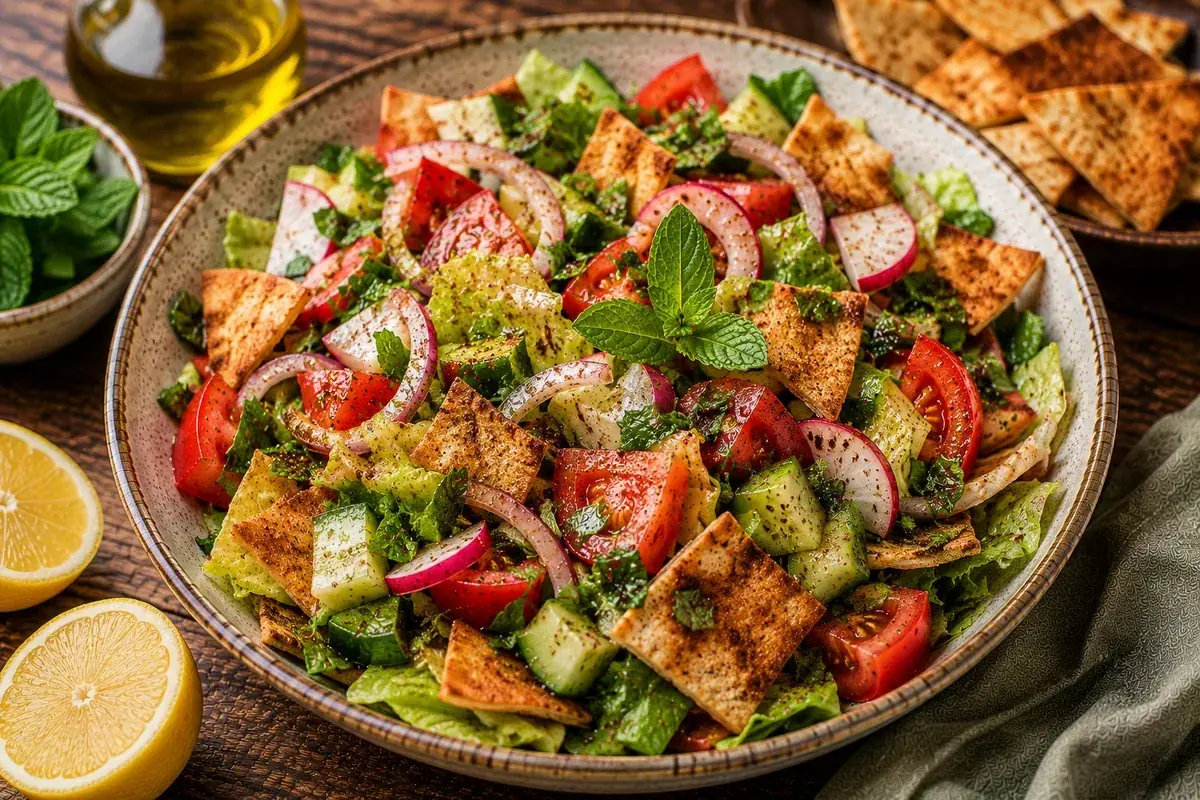
Fattoush Salad Recipe — Classic Lebanese Bread Salad
A classic Lebanese fattoush made with crisp vegetables, parsley, mint, toasted pita, sumac, lemon juice, olive oil, and pomegranate molasses. Its appeal comes from the contrast between crunchy vegetables, crisp pita, fresh herbs, and a bright sweet-tart dressing.
View recipe →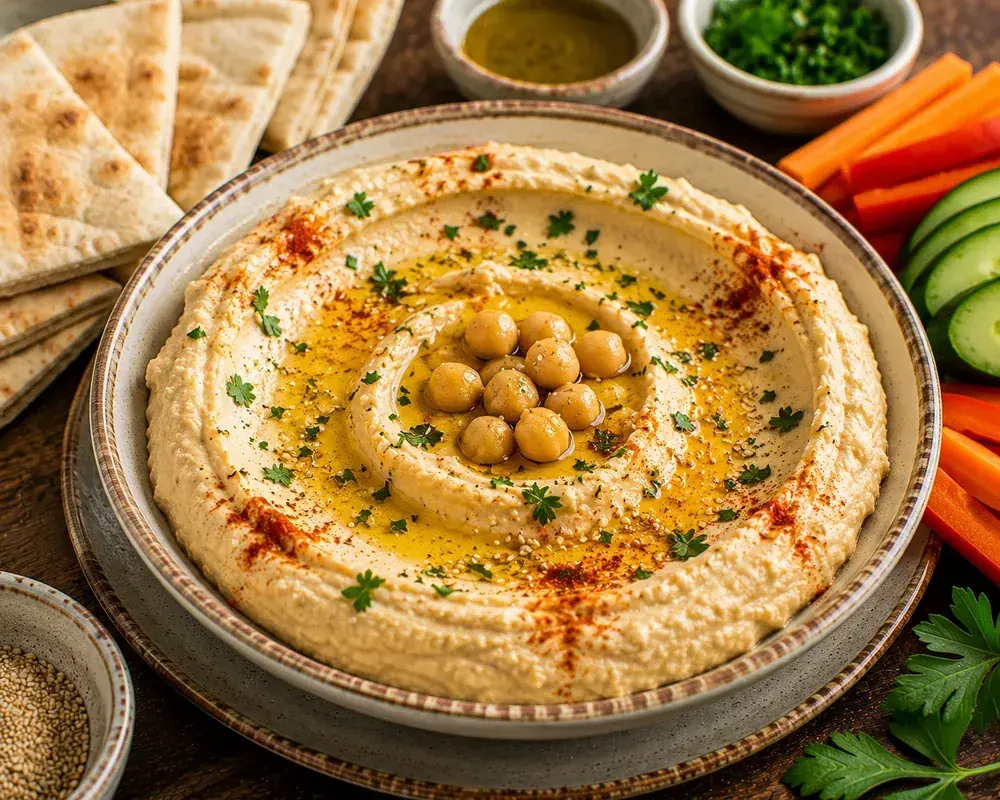
Classic Hummus Recipe — Palestinian Hummus bi-Tahini
A classic Palestinian hummus bi-tahini made with exceptionally tender chickpeas, creamy tahini, fresh lemon juice, garlic, cumin, and extra virgin olive oil. The finished hummus is smooth, light, and balanced, with warm Arabic bread for serving.
View recipe →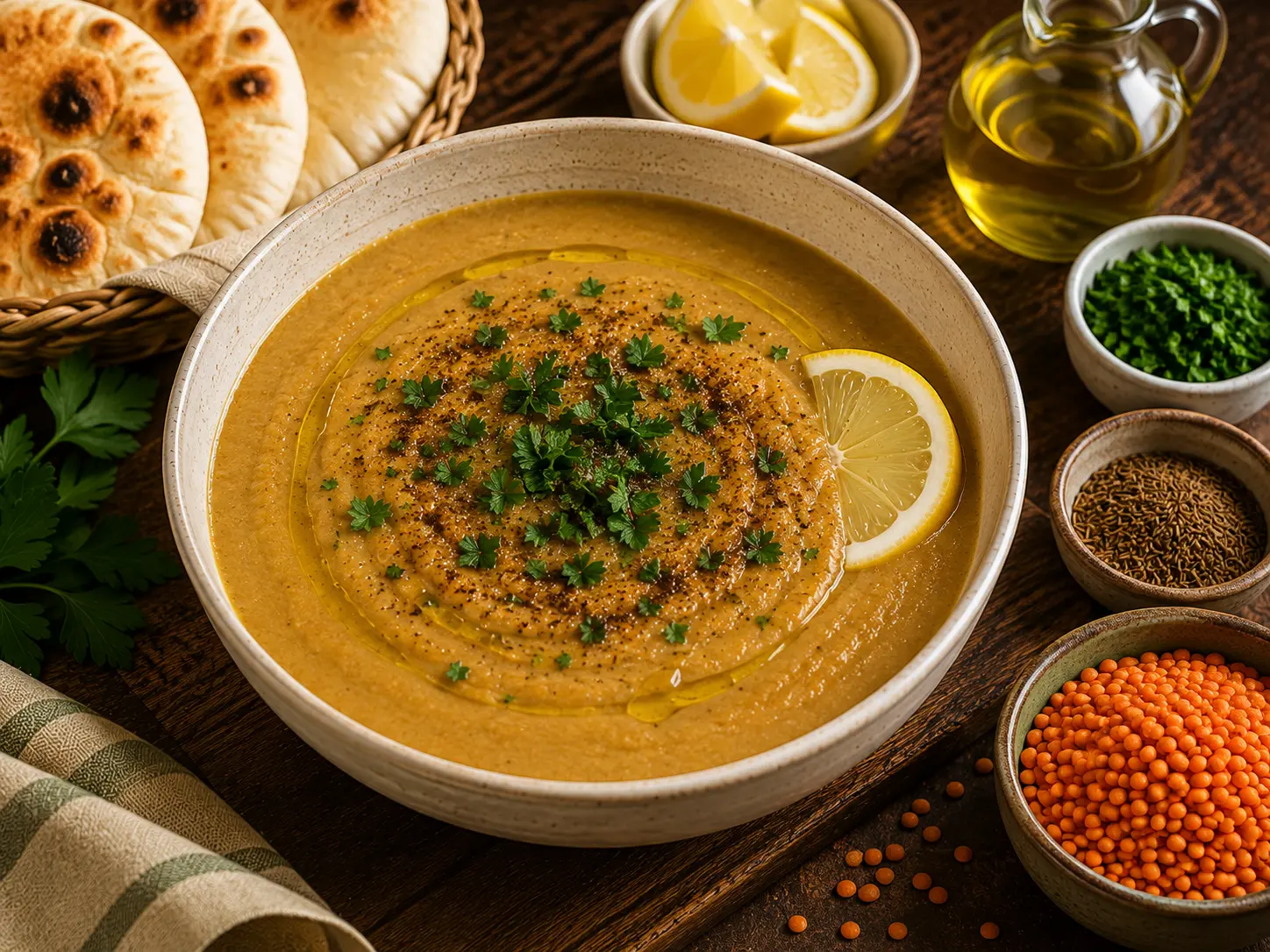
Syrian Lentil Soup (Shorbat Adas) Recipe — Easy Red Lentil Soup
A simple lentil soup made with red lentils, vegetables, garlic, cumin, lemon, and olive oil. The lentils soften quickly as they simmer, creating a naturally thick soup with a bright citrus finish.
View recipe →