
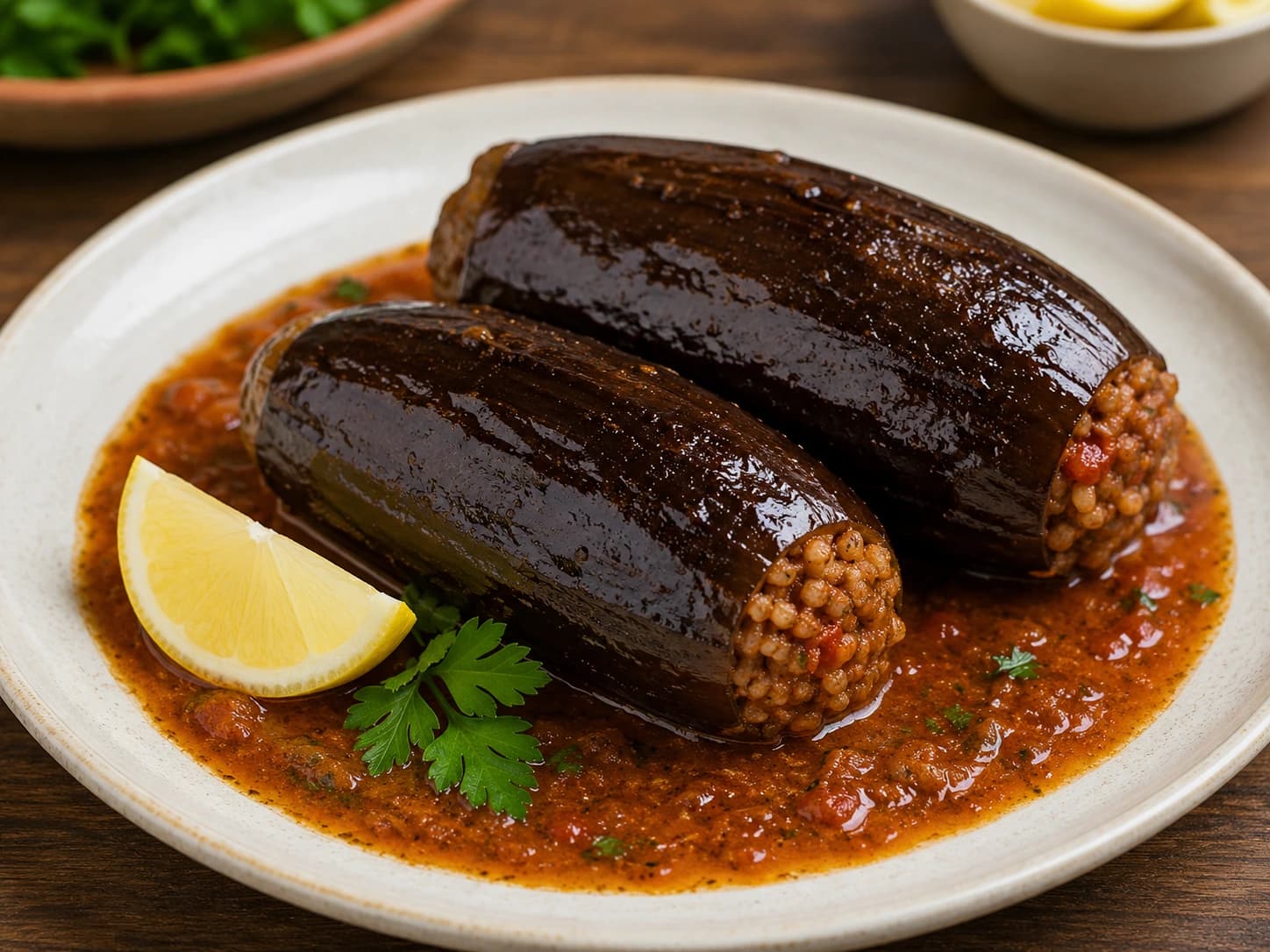
Egyptian Stuffed Eggplant with Herbed Rice Recipe — Healthy Eggplant Mahshi
An Egyptian mahshi-inspired stuffed eggplant filled with seasoned rice, vegetables, herbs, and aromatic spices. The eggplant cooks until tender while the filling absorbs the savory flavors of the surrounding vegetables and broth.
Prep Time
35 mins
Cook Time
55 mins
Total Time
90 mins
Servings
4
A TASTE OF TRADITION
The Story Behind This Recipe
Stuffed vegetables are among the most comforting dishes in Egyptian home cooking. This eggplant version brings together tender seasonal eggplant and a fragrant rice filling enriched with tomato, fresh herbs, garlic, onion, olive oil, and warm spices. It is the kind of dish that feels generous and homestyle: simple ingredients are transformed through slow cooking into something deeply aromatic and satisfying.
Cultural & Culinary Context
The recipe belongs to the Egyptian tradition of mahshi, the broad family of vegetables filled with seasoned rice and cooked slowly until both the vegetable and filling become tender. Mahshi is associated with home kitchens, family meals, and generous shared tables. Depending on the household and region, different vegetables may be prepared with similar rice-based fillings, including eggplant, zucchini, peppers, grape leaves, and cabbage. This version focuses on eggplant, using its naturally creamy flesh and sturdy shape to hold the herbed rice.
What Makes It Mediterranean?
Egyptian cuisine sits at the meeting point of the Nile Valley, North Africa, the Middle East, and the Mediterranean. Eggplant, tomatoes, fresh herbs, olive oil, garlic, onion, and aromatic spices are all deeply familiar across this wider culinary landscape. While this recipe is specifically Egyptian rather than Greek or Levantine, its use of vegetables, herbs, olive oil, rice, and slow cooking reflects the shared food traditions that connect Egypt with the Eastern Mediterranean.
Mediterranean Influences
- 🌿Eggplant and tomato form the vegetable foundation of the dish.
- 🌿Extra virgin olive oil is used as the principal cooking fat.
- 🌿Fresh parsley, dill, and cilantro provide a bright herbal character.
- 🌿Garlic and onion create the aromatic base of the filling.
- 🌿Coriander, cumin, paprika, and black pepper provide warm Mediterranean and Middle Eastern spice notes.
- 🌿The dish emphasizes vegetables, grains, herbs, and plant-based ingredients rather than heavy sauces or processed ingredients.
Ingredients
- 4 medium eggplants (Choose firm eggplants of similar size so they cook evenly. Trim the stem end while keeping enough structure around the opening for stuffing.)
- 1 cup short-grain white rice (Use raw rice and rinse it thoroughly until the water is mostly clear. Do not cook the rice beforehand.)
- 3 medium ripe tomatoes (Finely chopped. Use ripe, juicy tomatoes for the most flavorful filling.)
- 1 medium yellow onion (Finely chopped.)
- 3 cloves garlic (Finely minced.)
- 0.25 cup fresh parsley (Finely chopped.)
- 0.25 cup fresh dill (Finely chopped.)
- 0.25 cup fresh cilantro (Finely chopped.)
- 2 tbsp tomato paste (Adds concentrated tomato flavor and helps give the rice filling a rich color.)
- 3 tbsp extra virgin olive oil (Use some in the filling and reserve some for the baking dish and finishing.)
- 1 tsp ground coriander (A key warm, earthy flavor in the herbed rice.)
- 1 tsp ground cumin (Adds warmth and depth without overpowering the herbs.)
- 0.5 tsp paprika
- 0.5 tsp freshly ground black pepper
- 1 tsp salt (Adjust according to the saltiness of the stock used.)
- 2 cups hot vegetable stock or hot water (Keep the liquid genuinely hot when adding it to the baking dish so the rice begins cooking immediately.)
Instructions
- 1
Rinse the raw short-grain rice several times under cool running water until the water is mostly clear. Drain it very well. Do not soak or cook the rice unless the recipe specifically calls for it.
- 2
Prepare the eggplants by trimming the stem end and carefully hollowing the inside with a vegetable corer or narrow spoon. Leave enough flesh around the walls and bottom to keep each eggplant intact during cooking. Be especially careful not to pierce through the skin.
- 3
Place the hollowed eggplants upright or on their sides while preparing the filling. If they contain a lot of moisture, gently pat the outside dry so they are easier to handle.
- 4
In a large bowl, combine the drained raw rice, chopped tomatoes, onion, garlic, parsley, dill, cilantro, tomato paste, olive oil, ground coriander, cumin, paprika, black pepper, and salt.
- 5
Mix the filling thoroughly so the tomato, herbs, spices, and tomato paste are distributed evenly throughout the rice. The mixture should look moist but should not be watery.
- 6
Taste a tiny amount of the seasoned mixture before stuffing and adjust the salt and spices if necessary. Remember that the rice is still raw and will absorb flavor as it cooks.
- 7
Loosely fill each hollowed eggplant with the rice mixture. Do not pack the filling tightly and do not fill the eggplants completely to the top. The raw rice needs room to expand as it absorbs the tomato juices and cooking liquid.
- 8
Arrange the stuffed eggplants snugly in a suitable baking dish. Keeping them close together helps prevent them from tipping over and helps the filling cook evenly.
- 9
Pour the hot vegetable stock or hot water carefully into the baking dish around the eggplants. The liquid should come partway up the sides of the eggplants rather than flooding over the openings.
- 10
Cover the baking dish tightly with foil or a suitable oven-safe lid. A tight cover is important because the trapped steam helps the raw rice cook inside the eggplants.
- 11
Bake at 190°C (375°F) until the eggplants are very tender and the rice has absorbed the cooking liquid and become fully cooked. Begin checking toward the end of the expected cooking time rather than opening the oven repeatedly, because losing steam can slow the rice cooking process.
- 12
Check one eggplant carefully by opening the top slightly and testing a few grains of rice. The rice should be tender all the way through, without a hard or chalky center. The eggplant should also be soft enough to pierce easily with a fork.
- 13
If the rice is still firm but the baking dish has become dry, add a small amount of additional hot water or hot stock around the eggplants, cover the dish again, and continue baking until the rice is tender. Do not add cold liquid because it can interrupt the cooking process.
- 14
Once the rice is fully cooked and the eggplants are tender, uncover the baking dish for a short final period if you want the tops to become slightly more concentrated and glossy.
- 15
Remove the dish from the oven and let the stuffed eggplants rest for about 10 minutes before serving. This resting period allows the rice to finish settling and makes the eggplants easier to transfer without breaking.
- 16
Serve warm with some of the tomato-rich cooking juices from the baking dish spooned around the eggplants. Finish with a little fresh parsley, dill, or cilantro if desired.
SET YOURSELF UP FOR SUCCESS
Before You Cook
👨🍳 Keep In Mind
- •Choose four medium eggplants that are firm, relatively straight, and similar in size. Similar-sized eggplants are easier to hollow and will cook at approximately the same rate.
- •Rinse the raw rice thoroughly and drain it well. Excess water on the rice can make the filling wetter than intended.
- •Prepare all vegetables and herbs before mixing the filling. Once the rice is combined with the tomato mixture, it is best to stuff the eggplants promptly.
- •Have the hot stock or water ready before the stuffed eggplants go into the oven.
- •Use a baking dish that holds the eggplants snugly. Too much empty space makes them more likely to tip during cooking.
💡 Helpful Tips
- •Do not hollow the eggplants too aggressively. Leaving a substantial layer of flesh prevents the shells from collapsing during baking.
- •Do not pack the rice filling tightly. Raw rice expands as it cooks and needs space inside the eggplant.
- •Keep the baking dish covered for most of the cooking time. Steam is essential for cooking the rice inside the eggplants.
- •Use hot stock or hot water rather than cold liquid when adding moisture to the baking dish.
- •If the rice is undercooked while the dish looks dry, add a little hot liquid, cover again, and continue baking.
- •Let the finished eggplants rest before moving them. Very hot eggplant can be delicate and may split if transferred immediately.
👀 How Do I Know It's Done?
- ✓The eggplant flesh should be very tender and easy to pierce with a fork.
- ✓The rice should be completely tender throughout, with no hard white center.
- ✓The filling should look plump and hydrated rather than dry or crunchy.
- ✓There should still be flavorful cooking juices around the eggplants rather than a completely scorched or dry baking dish.
- ✓After resting, the stuffed eggplants should be soft enough to serve easily while remaining intact.
Tweak It
Make This Recipe Work for You
Adapt the recipe to your ingredients, dietary needs, budget, time, serving size, or meal-prep plans.
🔄 Ingredient Substitutions
Use water instead of stock
Hot water works well when vegetable stock is unavailable. Increase the seasoning slightly if needed because stock normally contributes additional savory flavor.
Adjust the fresh herbs
If one of the fresh herbs is unavailable, keep the total amount of fresh herbs similar and emphasize the herbs you have rather than replacing them with a large amount of dried herbs.
🌱 Dietary Adjustments
Keep it vegan
Use water or vegetable stock. The recipe is naturally vegan when no animal-based stock is used.
Keep it gluten-free
The core ingredients are naturally gluten-free. If using packaged vegetable stock or tomato paste, check the label if strict gluten avoidance is required.
⏱️ Time-Saving Options
Prepare the filling ahead
Chop the vegetables and herbs and rinse the rice ahead of time, then keep them refrigerated separately until you are ready to assemble the dish.
👨👩👧👦 Serving Adjustments
Scaling the recipe
When increasing or decreasing the quantity, keep the rice-to-vegetable balance consistent and use a baking dish that keeps the eggplants reasonably snug.
🥡 Meal Prep
Make it ahead
The cooked eggplants can be prepared ahead and reheated gently. Add a small splash of water or stock if the rice appears dry during reheating.
RECIPE RESCUE
🧩 What Do You Need Help With?
Choose the problem you're facing and get a recipe-specific solution instead of a generic cooking tip.
WHAT IF?
🔄 What If...?
Choose your situation and we'll show you a practical pathway for making this recipe work.
STORAGE & LEFTOVERS
🥡 Storage & Leftovers
Allow leftover stuffed eggplant to cool before refrigerating.
Store in a covered airtight container in the refrigerator.
Reheat gently until the rice and eggplant are hot throughout.
If the rice becomes dry during reheating, add a small splash of water or vegetable stock and cover while reheating.
Best Storage Time
Up to 3 days refrigerated.
How to Store
Airtight food-safe container.
SERVING & PAIRING
🍽️ Serving & Pairing
Serve the stuffed eggplants warm, with their tomato-rich cooking juices spooned around them. A final scattering of fresh parsley, dill, or cilantro adds color and freshness. They work particularly well as a satisfying vegetarian main dish or as part of a larger Egyptian-style meal.
What Goes Well With It?
RECIPE FAQ
❓ Frequently Asked Questions
How do you make Egyptian stuffed eggplant with rice?
To make Egyptian stuffed eggplant with rice, use 4 medium eggplants, 1 cup raw short-grain white rice, 3 medium ripe tomatoes, 1 finely chopped onion, 3 minced garlic cloves, 1/4 cup each of fresh parsley, dill, and cilantro, 2 tablespoons tomato paste, 3 tablespoons extra virgin olive oil, 1 teaspoon ground coriander, 1 teaspoon ground cumin, 1/2 teaspoon paprika, 1/2 teaspoon black pepper, 1 teaspoon salt, and 2 cups hot vegetable stock or hot water. Carefully hollow the eggplants while leaving sturdy walls and a solid bottom. Rinse and drain the raw rice thoroughly, then mix it with the chopped tomatoes, onion, garlic, fresh herbs, tomato paste, olive oil, and spices. Loosely fill each eggplant, leaving room for the raw rice to expand. Arrange the eggplants snugly in a baking dish and pour hot stock or water around them so the liquid comes partway up the sides without flooding the openings. Cover the dish tightly and bake at 190°C (375°F) until the eggplant is very tender and the rice is completely cooked. If the rice remains firm and the dish becomes dry, add a small amount of additional hot liquid, cover again, and continue baking. Rest the finished eggplants for about 10 minutes before serving with their tomato-rich cooking juices and fresh herbs.
Should the rice be cooked before stuffing the eggplants?
No. The recipe uses raw, thoroughly rinsed short-grain rice. It cooks inside the eggplant while absorbing the tomato juices and hot stock or water. Pre-cooking the rice would change the filling texture and can make it easier to overcook.
Why is it important not to pack the rice tightly?
Raw rice expands as it absorbs liquid. Packing the cavity tightly can leave the center of the filling undercooked and can also cause the eggplant to split as the rice expands.
How much cooking liquid should be in the baking dish?
The hot stock or water should come partway up the sides of the eggplants rather than covering the openings. The goal is to provide enough moisture for steam and rice cooking without flooding the filling.
Why does the recipe need to be covered?
The cover traps steam inside the baking dish. This helps the raw rice cook evenly and keeps the eggplant moist while it becomes tender.
What should I do if the rice is hard but the eggplant is already tender?
Check whether the baking dish has become dry. Add a small amount of hot water or vegetable stock around the eggplants, cover the dish tightly again, and continue baking until the rice is completely tender.
Can I use vegetable stock instead of water?
Yes. Vegetable stock adds additional savory flavor. If using a salty stock, adjust the salt in the filling accordingly.
How do I prevent the eggplants from falling over?
Use a baking dish that holds them relatively snugly. Arrange the eggplants close together so they support one another during cooking.
How do I know the rice is completely cooked?
Open one eggplant carefully and taste a few grains. The rice should be tender throughout with no hard, crunchy, or chalky center.
Why should the stuffed eggplants rest before serving?
Resting for about 10 minutes allows the rice and juices to settle and gives the delicate cooked eggplant enough time to firm slightly, making it easier to transfer without breaking.
Explore More
Go deeper into the cuisine
Learn more about the ingredients, traditions, and cooking approaches connected to this recipe.
You May Also Like
More delicious recipes from the Vegetarian
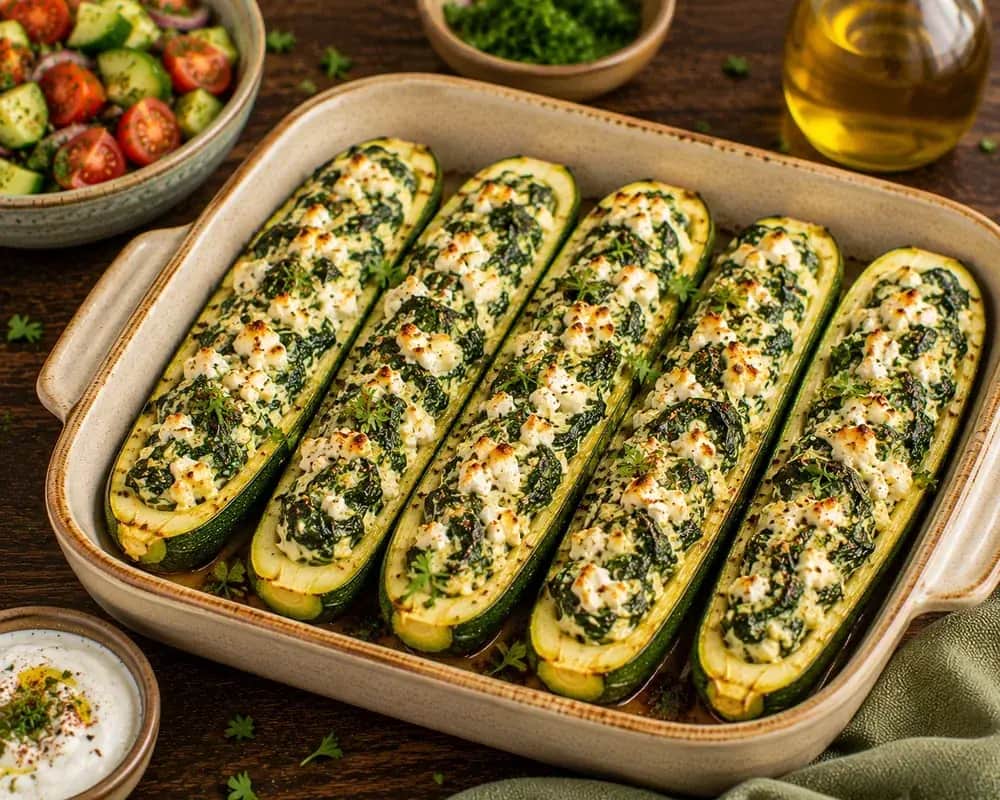
Spinach & Feta Stuffed Zucchini Boats Recipe — Healthy Mediterranean Vegetarian Dinner
Baked zucchini boats filled with spinach, feta, herbs, and Mediterranean seasonings. The zucchini becomes tender in the oven while the savory filling develops a lightly browned top.
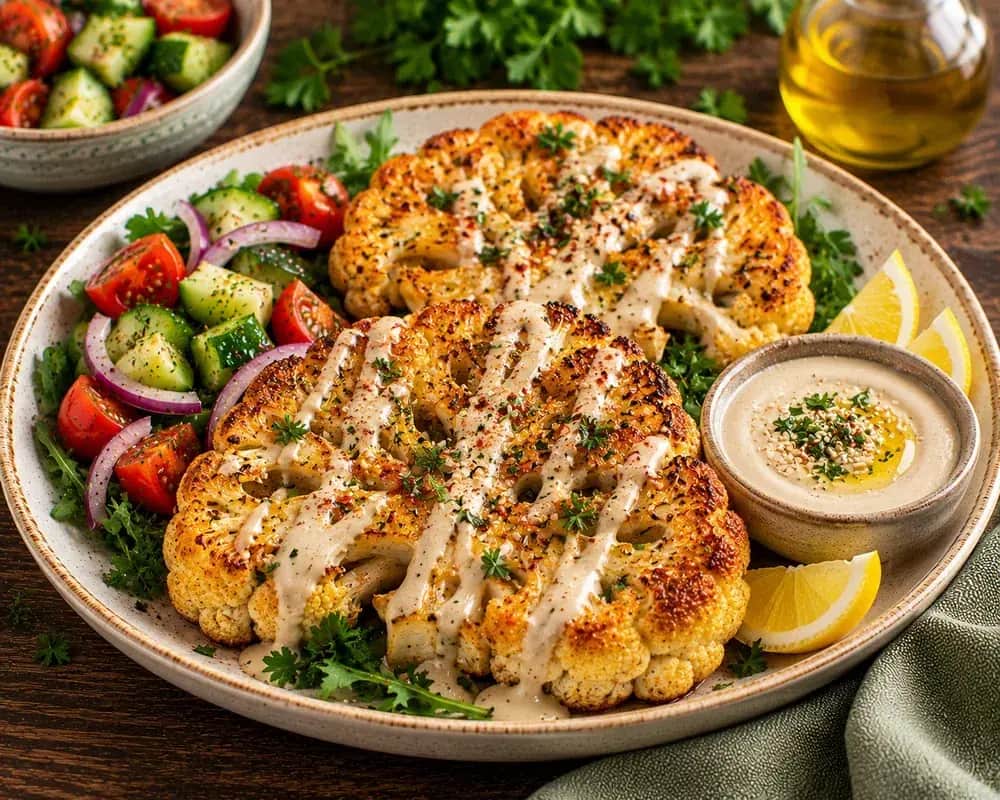
Cauliflower Steaks with Lemon Tahini Sauce Recipe
A healthy cauliflower steaks with lemon tahini sauce recipe made with thick roasted cauliflower, paprika, cumin, garlic, creamy tahini, fresh lemon, toasted pine nuts, and parsley. This easy Mediterranean vegetarian dinner is roasted until golden and caramelized, then finished with a bright, creamy tahini sauce.
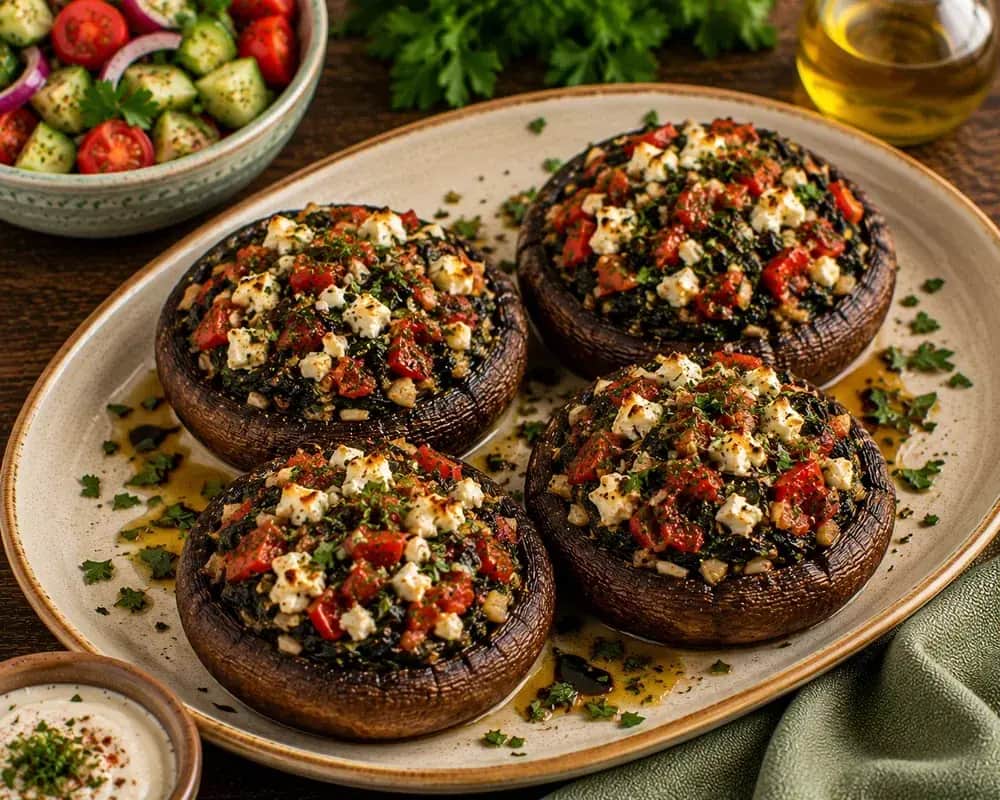
Mediterranean Stuffed Portobello Mushrooms Recipe — Healthy Vegetarian
Large Portobello mushrooms filled with quinoa, spinach, sun-dried tomatoes, feta, herbs, lemon, and Parmesan. The mushrooms roast until tender while the filling develops a savory, herb-rich flavor.