

Spinach & Feta Omelette Recipe — Healthy Mediterranean Breakfast with Eggs
This Spinach & Feta Omelette recipe makes a fluffy, tender Mediterranean breakfast filled with fresh spinach, creamy feta, onion, garlic, parsley, and optional dill, gently cooked in extra virgin olive oil. This healthy high-protein vegetarian omelette is easy to make and perfect with fresh tomatoes, whole grain toast, olives, yogurt, or warm pita.
Prep Time
10 mins
Cook Time
10 mins
Total Time
20 mins
Servings
2
A TASTE OF TRADITION
The Story Behind This Recipe
There is something wonderfully practical about an omelette: a few eggs, a handful of greens, a little cheese, and a hot pan can become a complete meal in minutes. This Spinach & Feta Omelette takes that everyday idea and gives it a Mediterranean and Middle Eastern character through extra virgin olive oil, garlic, onion, herbs, leafy greens, and tangy brined cheese.
Cultural & Culinary Context
Eggs have long been part of everyday breakfast and light meals across the Middle East and the wider Mediterranean, where simple ingredients are often cooked together rather than treated as elaborate dishes. Lebanese and neighboring Levantine kitchens especially make generous use of olive oil, fresh herbs, leafy vegetables, garlic, onions, and salty white cheeses. This omelette fits naturally into that culinary landscape, even though the specific spinach-and-feta combination is best understood as a modern Mediterranean-style preparation rather than a single traditional Lebanese dish with one documented origin.
What Makes It Mediterranean?
The foundation is distinctly Mediterranean: extra virgin olive oil replaces heavier cooking fats, spinach provides a seasonal green element, garlic and onion build the savory base, and fresh herbs add brightness. Feta contributes the salty, tangy quality associated with brined cheeses found throughout the Eastern Mediterranean. The result is simple home cooking built around fresh ingredients rather than a complicated recipe.
Mediterranean Influences
- 🌿Extra virgin olive oil is used as the main cooking fat.
- 🌿Spinach provides a simple leafy vegetable component.
- 🌿Garlic and onion create the savory foundation.
- 🌿Parsley and optional dill provide fresh herbal flavor.
- 🌿Feta adds a tangy, salty contrast to the mild eggs and spinach.
- 🌿The recipe relies on straightforward pan cooking and fresh ingredients rather than heavy sauces.
Ingredients
- 4 large eggs (Bring them to room temperature if possible and crack them into a bowl before whisking.)
- 2 tbsp milk (Adds tenderness to the egg mixture; use whole or low-fat milk.)
- 1 tbsp extra virgin olive oil (Use enough to lightly coat the skillet without leaving a large pool of oil.)
- 1 cup fresh spinach (Wash well, drain thoroughly, and chop. Excess water can make the omelette watery.)
- 0.25 small onion (Finely diced so it softens quickly without creating large pieces in the filling.)
- 1 clove garlic (Minced finely and added after the onion so it does not burn.)
- 0.3333333333333333 cup crumbled feta cheese (Crumble into small pieces for even distribution. Taste before adding extra salt because feta can be quite salty.)
- 1 tbsp fresh parsley (Finely chopped for a fresh herbal finish.)
- 1 tbsp fresh dill (Finely chopped and optional. It adds a fresh, slightly sweet herbal note.)
- 0.5 tsp sea salt (Use carefully because the feta already contributes salt.)
- 0.25 tsp black pepper
- 0.25 tsp dried oregano
- 1 cherry tomatoes (For serving. Halve them if desired.)
- 1 whole grain toast (For serving.)
Instructions
- 1
Whisk the eggs, milk, salt, black pepper, and dried oregano until evenly combined. Whisk enough to break up the egg whites, but do not whip excessive air into the mixture.
- 2
Heat the extra virgin olive oil in a good non-stick skillet over medium heat. The pan should feel hot when the ingredients enter it, but the oil should not be smoking.
- 3
Add the diced onion and cook for 2–3 minutes, stirring occasionally, until softened and translucent. Avoid browning it heavily because a gentle flavor works better in the omelette.
- 4
Add the minced garlic and cook for about 30 seconds, just until fragrant. If the garlic begins to brown quickly, lower the heat.
- 5
Add the chopped spinach and cook until wilted and most of its visible moisture has evaporated. Spread the spinach across the pan rather than leaving it in a wet pile.
- 6
Pour the egg mixture evenly over the spinach and onion. Gently tilt the skillet so the eggs reach the edges and form an even layer.
- 7
Leave the eggs mostly undisturbed for about 2 minutes. The edges should begin to set while the center remains slightly soft and glossy.
- 8
Scatter the feta, parsley, and optional dill over one half of the omelette. Keep some space around the edge so the filling does not spill when the omelette is folded.
- 9
Carefully fold the empty half over the filling using a wide spatula. If the omelette feels too delicate to fold, allow the bottom to set for another 20–30 seconds before trying again.
- 10
Continue cooking gently for another 1–2 minutes, or until the center is cooked to your preferred level. The eggs should be set but still tender rather than dry or rubbery.
- 11
Slide the omelette onto a plate and serve immediately with cherry tomatoes and whole grain toast.
SET YOURSELF UP FOR SUCCESS
Before You Cook
👨🍳 Keep In Mind
- •Wash the spinach thoroughly and drain it very well before chopping. Water clinging to the leaves is one of the easiest ways to end up with a watery omelette.
- •Crack and whisk the eggs before starting the pan so the vegetables do not sit unattended while you prepare the egg mixture.
- •Crumble the feta and chop the herbs before cooking. Once the eggs enter the skillet, the final stages move quickly.
- •Use a non-stick skillet with enough surface area for the eggs to form a reasonably even layer. A pan around 20–24 cm (8–9 inches) works well for this amount.
- •Have a wide, flexible spatula ready. A thin spatula makes folding much easier than a thick or rigid one.
💡 Helpful Tips
- •Do not add wet spinach directly to the eggs. Cook it first until most visible moisture has disappeared.
- •Keep the heat around medium rather than high. High heat can brown the outside while leaving the center difficult to control.
- •Add garlic after the onion has softened because minced garlic can burn quickly.
- •Do not keep stirring the eggs once they enter the pan. An omelette needs an intact layer so it can be folded.
- •Keep the feta away from the outermost edge. This gives the omelette a clean seam and reduces filling falling out during folding.
- •If the eggs appear to be setting too quickly, lower the heat immediately rather than trying to rescue overcooked eggs later.
- •Because feta varies considerably in saltiness, taste the cheese before deciding whether the full amount of salt is necessary.
👀 How Do I Know It's Done?
- ✓The spinach is fully wilted and excess moisture has cooked away before the eggs are added.
- ✓The egg edges are firm enough to lift with a spatula while the center has only a slight softness.
- ✓After folding, there should be no visibly raw liquid egg escaping from the center.
- ✓The omelette should be set enough to slide from the pan but still feel soft and tender when pressed gently with a spatula.
- ✓The exterior should remain pale golden rather than deeply browned.
Tweak It
Make This Recipe Work for You
Adapt the recipe to your ingredients, dietary needs, budget, time, serving size, or meal-prep plans.
🔄 Ingredient Substitutions
Use another salty white cheese
If feta is unavailable, use a mild crumbly goat cheese or another suitable brined white cheese. Adjust the salt because different cheeses vary in sodium.
Use frozen spinach
Thaw frozen spinach completely and squeeze out as much water as possible before cooking. Frozen spinach usually contains more retained moisture than fresh spinach.
Replace the milk
Use an unsweetened dairy-free milk or simply omit the milk if necessary. The eggs will still cook into an omelette, although the texture may be slightly less tender.
Change the herbs
Use additional parsley or a small amount of fresh mint if dill is unavailable. Keep the herbs moderate so they complement rather than overpower the spinach and feta.
🌱 Dietary Adjustments
Vegetarian
The recipe is naturally vegetarian.
Gluten-free
The omelette itself is naturally gluten-free. If serving it with toast, choose certified gluten-free bread when needed.
Reduce the dairy
Reduce the feta slightly and use an unsweetened dairy-free milk. The omelette will have a milder, less creamy filling.
💰 Budget-Friendly Options
Use less feta
Reduce the feta slightly while keeping enough to provide its salty, tangy flavor. The spinach, garlic, herbs, and oregano will still give the omelette plenty of character.
Skip the toast
Serve the omelette with tomatoes or another inexpensive seasonal vegetable instead of toast when you want to reduce the cost or carbohydrate content of the meal.
⏱️ Time-Saving Options
Prepare the vegetables ahead
Dice the onion, mince the garlic, wash and drain the spinach, and crumble the feta ahead of time. Keep the prepared ingredients refrigerated and cook the omelette when ready to eat.
Use pre-washed spinach
Pre-washed spinach can reduce preparation time, but still check it for excess moisture and drain it well before cooking.
👨👩👧👦 Serving Adjustments
Make one serving
Halve the ingredients for one person. A smaller pan is preferable because a thinner layer of egg is easier to overcook.
Serve more people
For more than two servings, it is usually better to cook separate omelettes rather than putting a large quantity of eggs into one pan. Smaller omelettes are easier to fold and cook evenly.
🥡 Meal Prep
Prepare the filling components ahead
The onion, garlic, spinach, herbs, and feta can be prepared in advance and kept refrigerated. For the best texture, whisk and cook the eggs shortly before serving.
RECIPE RESCUE
🧩 What Do You Need Help With?
Choose the problem you're facing and get a recipe-specific solution instead of a generic cooking tip.
WHAT IF?
🔄 What If...?
Choose your situation and we'll show you a practical pathway for making this recipe work.
STORAGE & LEFTOVERS
🥡 Storage & Leftovers
For the best texture, serve the omelette immediately after cooking.
If you have leftovers, allow them to cool promptly and place them in a sealed food-safe container in the refrigerator.
Keep fresh tomatoes and toast separate from the omelette so they do not make it soggy.
Reheat gently in a skillet over low heat or in short microwave intervals. Avoid high heat because it can make the eggs rubbery.
Best Storage Time
Best enjoyed fresh; refrigerated leftovers are best used within 1–2 days.
How to Store
Airtight glass or food-safe container.
SERVING & PAIRING
🍽️ Serving & Pairing
Serve the omelette immediately while the eggs are tender and the feta is still soft. Add fresh cherry tomatoes for acidity and freshness, with whole grain toast for a more substantial breakfast.
What Goes Well With It?
RECIPE FAQ
❓ Frequently Asked Questions
How do you make a spinach and feta omelette?
To make a spinach and feta omelette, whisk 4 large eggs with 2 tablespoons milk, 1/2 teaspoon sea salt, 1/4 teaspoon black pepper, and 1/4 teaspoon dried oregano. Heat 1 tablespoon extra virgin olive oil in a non-stick skillet over medium heat, then cook 1/4 small finely diced onion for 2–3 minutes until softened. Add 1 minced garlic clove and cook for about 30 seconds, then add 1 cup chopped fresh spinach and cook until wilted and most visible moisture has evaporated. Pour the egg mixture evenly over the spinach and cook gently for about 2 minutes, until the edges are set and the center remains slightly glossy. Scatter 1/3 cup crumbled feta, 1 tablespoon fresh parsley, and optional 1 tablespoon fresh dill over one half. Fold the omelette over the filling and cook gently for another 1–2 minutes, until the eggs are fully set but still tender. Slide onto a plate and serve immediately with cherry tomatoes and whole grain toast.
Why is my spinach and feta omelette watery?
The most common reason is excess moisture from the spinach. Drain fresh spinach thoroughly and cook it until most visible moisture has evaporated before adding the eggs. If using frozen spinach, thaw it completely and squeeze it very well.
Should I use fresh or frozen spinach?
Both work. Fresh spinach gives a lighter texture and is convenient for a quick omelette, while frozen spinach can be useful when fresh greens are unavailable. Frozen spinach must be thawed and squeezed very dry before cooking.
How do I keep the omelette from sticking?
Use a good non-stick skillet, lightly coat it with olive oil, and avoid trying to move the eggs before the base has started to set. A thin flexible spatula also makes releasing and folding easier.
Why did my omelette tear when I folded it?
The egg layer may have been too soft or the filling may have been too heavy. Let the base set slightly longer, keep the filling away from the edges, and use a wide spatula to support the omelette during folding.
How do I know when the omelette is cooked?
The edges should be set, the omelette should lift from the pan, and there should be no visibly raw liquid egg running from the center. Remove it while it is still tender because residual heat will continue cooking it.
Can I make this omelette without milk?
Yes. The milk can be omitted if necessary. The eggs will still make a good omelette, although the texture may be slightly less tender.
Can I use another cheese instead of feta?
Yes. A mild crumbly goat cheese or another suitable brined white cheese can work. Adjust the added salt according to the cheese you choose.
Can I prepare the ingredients ahead of time?
Yes. The onion, garlic, spinach, herbs, and feta can be prepared ahead and refrigerated. For the best texture, whisk and cook the eggs shortly before serving.
Is this omelette gluten-free?
The omelette itself is naturally gluten-free when the individual ingredients are suitable. If serving it with toast, use gluten-free bread when required.
Can I make this recipe dairy-free?
Yes, although it changes the flavor and texture. Omit the feta and replace the milk with an unsweetened dairy-free alternative or omit it entirely. Add a little extra fresh herbs or vegetables for flavor.
Explore More
Go deeper into the cuisine
Learn more about the ingredients, traditions, and cooking approaches connected to this recipe.
You May Also Like
More delicious recipes from the Breakfast

Mediterranean Shakshuka Recipe — Healthy Eggs in Tomato and Red Pepper Sauce
A Mediterranean-style shakshuka made with eggs gently cooked in a spiced tomato and pepper sauce with garlic, onion, and herbs. Serve it straight from the pan with warm pita for scooping up the rich tomato sauce.
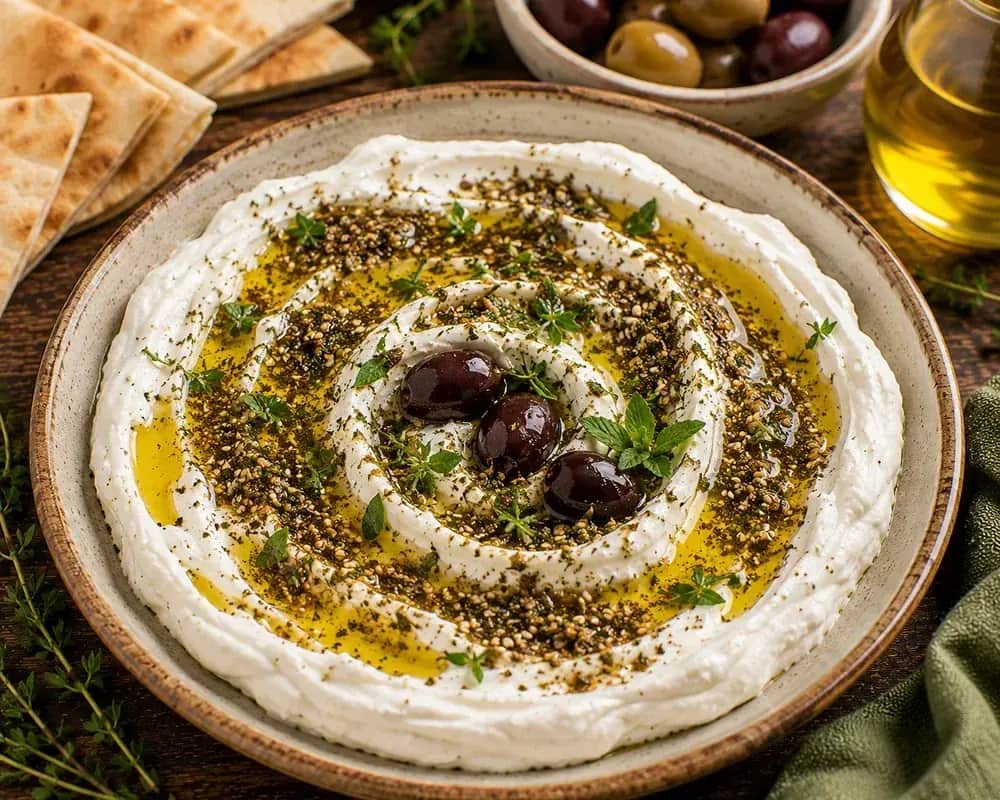
Labneh with Za'atar & Olive Oil Recipe — Lebanese Labneh Mezze & Breakfast
This labneh with za'atar and olive oil recipe is a classic Lebanese-inspired mezze and breakfast made with thick strained yogurt, fragrant za'atar, extra virgin olive oil, fresh mint, parsley, crisp cucumber, tomatoes, olives, and warm pita. An easy Mediterranean dish that can be made with store-bought labneh or homemade labneh from full-fat plain yogurt.

Ful Medames Recipe — Traditional Egyptian Fava Beans
A traditional Egyptian ful medames made with tender fava beans, garlic, cumin, fresh lemon juice, and extra virgin olive oil, finished with tomato, red onion, parsley, and warm pita. The beans are partly mashed for a thick texture while plenty remain whole.