
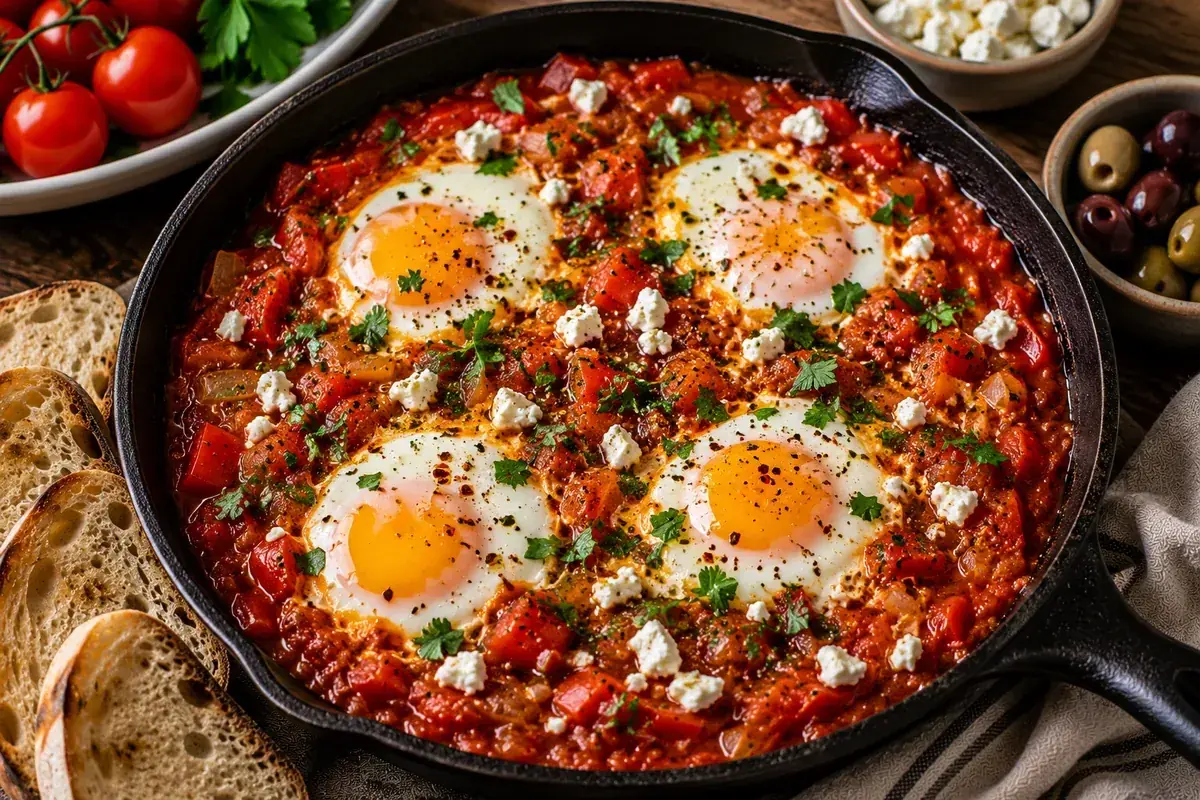
Mediterranean Shakshuka Recipe — Healthy Eggs in Tomato and Red Pepper Sauce
A Mediterranean-style shakshuka made with eggs gently cooked in a spiced tomato and pepper sauce with garlic, onion, and herbs. Serve it straight from the pan with warm pita for scooping up the rich tomato sauce.
Prep Time
15 mins
Cook Time
25 mins
Total Time
40 mins
Servings
4
A TASTE OF TRADITION
The Story Behind This Recipe
Shakshuka is the kind of dish that feels like it belongs in a busy family kitchen: a warm pan in the center of the table, a bubbling tomato sauce, eggs nestled into little wells, and pieces of bread ready for dipping. Its appeal comes from doing a lot with everyday ingredients. Instead of treating eggs as a separate component, shakshuka cooks them directly in a richly seasoned vegetable sauce, allowing the eggs to absorb the aromas of tomato, pepper, garlic, olive oil, and warm spices.
Cultural & Culinary Context
Shakshuka has deep roots in the cuisines of North Africa and the wider Middle East and is now a familiar breakfast and brunch dish across the region. Its exact origin is debated, and it is more accurate to describe it as a dish that developed and traveled through a connected culinary world rather than assigning it exclusively to one modern country. Variations are found across North African and Middle Eastern kitchens, with differences in peppers, spices, herbs, heat level, and accompaniments. In the Levant, tomato-and-egg preparations fit naturally into a broader tradition of sharing warm, vegetable-based dishes with bread at the table.
What Makes It Mediterranean?
This version reflects Mediterranean and Middle Eastern cooking through extra virgin olive oil, tomatoes, peppers, garlic, fresh herbs, and warm spices. The cooking method is especially characteristic of practical home cooking: vegetables are slowly softened to build flavor, tomatoes are reduced until concentrated, and eggs are cooked directly in the finished sauce. Nothing is complicated, but each stage matters. The result depends more on patience and sensory judgment than on elaborate technique.
Mediterranean Influences
- 🌿Extra virgin olive oil forms the aromatic cooking base.
- 🌿Tomatoes and red peppers provide the vegetable foundation of the sauce.
- 🌿Garlic and onion build depth without requiring heavy ingredients.
- 🌿Cumin, paprika, and coriander provide warm, earthy spice notes associated with many Middle Eastern preparations.
- 🌿Fresh parsley adds brightness at the end of cooking.
- 🌿The dish is built around vegetables, eggs, olive oil, and simple pantry spices rather than a heavy cream-based sauce.
- 🌿Warm pita or crusty bread turns the dish into a communal meal that can be shared directly from the pan.
Ingredients
- 2 tbsp extra virgin olive oil (Use a flavorful olive oil because it forms part of the sauce's aromatic foundation.)
- 1 medium yellow onion (Finely diced so it softens evenly and blends naturally into the tomato sauce.)
- 1 medium red bell pepper (Seeded and diced into small pieces. Red pepper adds sweetness as it cooks.)
- 3 cloves garlic (Finely minced and added after the onion and pepper have softened.)
- 800 g crushed tomatoes (Canned crushed tomatoes are convenient. If they are particularly watery, the sauce may need a few extra minutes of uncovered simmering.)
- 2 tbsp tomato paste (Adds concentrated tomato flavor and helps the sauce develop a thicker texture.)
- 1 tsp ground cumin (Adds a warm, earthy flavor that gives the tomato sauce a distinctive Middle Eastern character.)
- 1 tsp paprika (Adds gentle sweetness and warm pepper flavor.)
- 0.5 tsp ground coriander (Adds a subtle citrusy and earthy spice note.)
- 0.25 tsp chili flakes (Optional. Increase or decrease according to your preferred heat level.)
- 1 tsp sea salt (Start conservatively if your canned tomatoes contain added salt. Taste the reduced sauce before adding the eggs.)
- 0.5 tsp black pepper
- 4 large eggs (For better control, crack each egg into a small cup before sliding it gently into the sauce.)
- 2 tbsp fresh parsley (Finely chopped and added after cooking for freshness and color.)
- 2 tbsp crumbled feta cheese (Optional. Add at the end for a salty and creamy contrast.)
- 1 warm pita bread (For serving and scooping up the tomato sauce and egg.)
Instructions
- 1
Heat the extra virgin olive oil in a large, deep skillet over medium heat. The oil should shimmer gently but should not smoke.
- 2
Add the diced onion and cook for about 4 minutes, stirring occasionally, until softened and translucent. This slow first stage builds sweetness and a better foundation for the sauce.
- 3
Add the diced red bell pepper and cook for another 4–5 minutes until noticeably softened. If the vegetables begin browning too quickly, lower the heat.
- 4
Add the minced garlic and cook for about 30–60 seconds, just until fragrant. Do not let it become dark brown because burnt garlic can make the entire sauce taste bitter.
- 5
Add the crushed tomatoes, tomato paste, cumin, paprika, ground coriander, chili flakes, salt, and black pepper. Stir thoroughly so the tomato paste and spices are distributed throughout the sauce.
- 6
Bring the mixture to a gentle simmer, then reduce the heat to medium-low. Simmer uncovered for about 12–15 minutes, stirring occasionally, until the sauce visibly thickens and excess watery liquid has evaporated.
- 7
Taste the sauce before adding the eggs. Adjust the salt, pepper, chili, or spices as needed. The finished sauce should taste slightly more seasoned than you want the final dish because the eggs will soften its intensity.
- 8
Use the back of a spoon to create four deep wells in the thick sauce. Space them apart so each egg has enough room to cook without merging into the others.
- 9
Crack one egg into a small cup and gently slide it into each well. Lower the egg close to the sauce rather than dropping it from a height to help keep the yolk intact.
- 10
Cover the skillet and cook gently for about 6–8 minutes. Start checking at 6 minutes. The whites should be set while the yolks can remain soft, jammy, or fully cooked according to preference.
- 11
If the sauce is bubbling aggressively around the eggs, reduce the heat. A gentle simmer is preferable because intense bubbling can make the egg whites cook unevenly and may break the yolks.
- 12
Remove the skillet from the heat when the eggs reach your preferred doneness. Remember that residual heat will continue cooking the eggs for a short time.
- 13
Scatter the chopped parsley over the shakshuka and add crumbled feta if using.
- 14
Serve immediately with warm pita bread or crusty bread. Spoon the tomato sauce and egg onto the bread rather than stirring the eggs through the sauce.
SET YOURSELF UP FOR SUCCESS
Before You Cook
👨🍳 Keep In Mind
- •Use a wide, deep skillet with a lid. A wider pan makes it easier to create separate wells for the eggs.
- •Prepare and measure all spices before starting because the garlic and spice stages move quickly.
- •Dice the onion and pepper into reasonably small, similar-sized pieces so they soften at the same rate.
- •If your crushed tomatoes are very watery, plan to simmer the sauce a little longer before adding the eggs.
- •Have a spoon ready for making the egg wells and a small cup for cracking each egg before it goes into the sauce.
- •Warm the pita shortly before serving so it is ready when the shakshuka comes off the heat.
💡 Helpful Tips
- •Do not rush the onion and pepper. Properly softened vegetables create a sweeter and more rounded sauce.
- •Add garlic later than the onion because minced garlic burns much faster.
- •Cook the tomato sauce uncovered. Covering it too early traps steam and slows the reduction you need for a thick shakshuka.
- •Do not add the eggs until the sauce is thick enough to hold a spoon-shaped well.
- •Taste the sauce before adding the eggs because it is much easier to correct seasoning at this stage.
- •Keep the heat gentle after adding the eggs. Aggressive bubbling can break the whites and make the yolks cook unevenly.
- •For intact yolks, crack each egg into a small cup and slide it gently into the sauce.
- •Do not judge egg doneness only by the timer. Egg size, pan shape, sauce temperature, and heat level can all change the cooking time.
- •Remember that the eggs continue cooking briefly after the skillet is removed from the heat.
- •If you want soft yolks, remove the pan slightly earlier than you think you need to because residual heat will finish the whites.
👀 How Do I Know It's Done?
- ✓The tomato sauce has reduced enough to hold the eggs in individual wells.
- ✓The sauce is bubbling gently rather than violently.
- ✓The egg whites are opaque and set, with no obvious raw liquid white remaining.
- ✓For soft yolks, the yolks should still look glossy and give slightly when gently touched with a spoon.
- ✓For jammy yolks, the centers should be thicker and less fluid while remaining soft.
- ✓For fully cooked yolks, the centers should no longer look translucent or runny.
- ✓The vegetables should be tender rather than crunchy.
- ✓The finished dish should smell rich and savory, with the tomato, garlic, olive oil, and spices clearly noticeable without one overpowering the others.
Tweak It
Make This Recipe Work for You
Adapt the recipe to your ingredients, dietary needs, budget, time, serving size, or meal-prep plans.
🔄 Ingredient Substitutions
Use fresh tomatoes
Use ripe fresh tomatoes when they are flavorful and in season. Dice or grate them and simmer longer if necessary because fresh tomatoes can release more water than canned crushed tomatoes.
Use another bell pepper
Yellow or orange bell pepper can replace the red pepper. The flavor will be slightly less sweet but the cooking method remains the same.
Replace the feta
Feta can be omitted or replaced with another crumbly salty cheese. If the substitute is saltier than feta, reduce the added salt in the tomato sauce.
Adjust the spice blend
Increase cumin for a warmer earthy flavor, paprika for a sweeter pepper note, or chili flakes for more heat. Add changes gradually because the flavors become more concentrated as the sauce reduces.
🌱 Dietary Adjustments
Vegetarian
The recipe is naturally vegetarian and gets its main protein from eggs.
Gluten-free
The shakshuka itself can be gluten-free. Serve it without regular pita or use certified gluten-free bread.
Dairy-free
Simply omit the optional feta. The tomato, pepper, egg, and spice combination remains flavorful without cheese.
Lower-sodium
Reduce the added salt and omit the feta. Choose no-salt-added or lower-sodium crushed tomatoes when available, then season gradually after the sauce reduces.
💰 Budget-Friendly Options
Use economical canned tomatoes
Good-quality basic crushed tomatoes work well because the long simmer concentrates their flavor. There is no need for an expensive specialty tomato product.
Skip the feta
Feta is optional. Omitting it reduces the cost while leaving the main tomato, pepper, egg, and spice character intact.
⏱️ Time-Saving Options
Prepare vegetables ahead
Dice the onion and pepper and mince the garlic earlier in the day. Keep them refrigerated in separate containers until cooking time.
Pre-measure the spices
Combine the cumin, paprika, coriander, chili flakes, and black pepper in a small bowl before cooking. This prevents the garlic from sitting too long in the hot pan while you measure spices.
👨👩👧👦 Serving Adjustments
Make a smaller batch
For two people, halve the ingredients and use a smaller skillet. A smaller pan helps the sauce remain deep enough to create proper wells for the eggs.
Make a larger batch
For more than four servings, use a wider skillet or prepare two pans. Overcrowding the eggs makes them harder to cook evenly and can increase the amount of time needed.
🥡 Meal Prep
Prepare the sauce ahead
The tomato and pepper sauce can be cooked ahead and refrigerated. Reheat it gently until bubbling before adding fresh eggs. For the best texture, poach the eggs only when you are ready to serve.
Prepare the vegetables in advance
Dice the onion and pepper and mince the garlic ahead of time. This turns the final cooking process into a quick assembly and simmer.
RECIPE RESCUE
🧩 What Do You Need Help With?
Choose the problem you're facing and get a recipe-specific solution instead of a generic cooking tip.
WHAT IF?
🔄 What If...?
Choose your situation and we'll show you a practical pathway for making this recipe work.
STORAGE & LEFTOVERS
🥡 Storage & Leftovers
For the best texture, prepare and eat shakshuka fresh because eggs continue changing texture during storage and reheating.
If you are preparing ahead, cook the tomato and pepper sauce without the eggs, cool it promptly, and refrigerate it in a sealed container.
Reheat the sauce gently in a skillet until it is steaming and bubbling softly before adding fresh eggs.
If leftover shakshuka already contains cooked eggs, refrigerate it promptly in a covered food-safe container.
Reheat leftovers gently and avoid repeatedly reheating the same portion, as the eggs can become rubbery.
Keep fresh parsley, feta, and bread separate until serving for better texture.
Best Storage Time
For best quality, use refrigerated cooked sauce within 3–4 days. Cooked egg leftovers are best eaten promptly rather than kept for extended storage.
How to Store
Airtight glass or food-safe container suitable for refrigerator storage.
SERVING & PAIRING
🍽️ Serving & Pairing
Serve shakshuka hot, ideally straight from the skillet, with warm pita or crusty bread for scooping up the tomato sauce and eggs. Fresh parsley provides brightness while feta adds a salty, creamy contrast. For a larger Middle Eastern-style breakfast table, pair it with simple salads, olives, labneh, or other light mezze.
What Goes Well With It?
RECIPE FAQ
❓ Frequently Asked Questions
How do you make Mediterranean shakshuka?
To make Mediterranean shakshuka, first soften diced onion and red bell pepper in extra virgin olive oil. Add minced garlic, crushed tomatoes, tomato paste, cumin, paprika, coriander, chili flakes, salt, and black pepper, then simmer the sauce uncovered until it becomes thick enough to hold individual wells. Gently crack four eggs into the wells, cover the skillet, and cook until the whites are set and the yolks reach your preferred doneness. Finish with fresh parsley and optional feta, then serve immediately with warm pita or crusty bread.
Why is my shakshuka watery?
The most common reason is that the tomato sauce was not reduced enough before the eggs were added. Simmer the sauce uncovered until it becomes thick and spoonable. When you drag a spoon through it, the path should remain visible briefly rather than immediately filling with liquid.
Should I cover the shakshuka while the tomato sauce is cooking?
No. Keep the sauce uncovered while reducing it so excess water can evaporate. Cover the skillet only after adding the eggs so the trapped steam helps cook the egg whites.
How do I get runny yolks but fully cooked whites?
Use gentle heat, cover the pan after adding the eggs, and begin checking early. Remove the skillet when the whites are opaque and set but the yolks still look glossy. Residual heat will continue cooking them after the pan leaves the stove.
Why did my egg yolks break?
Dropping the eggs from too high above the pan or cracking them directly against the skillet can break the yolks. Crack each egg into a small cup first and gently slide it into the sauce well.
Can I use fresh tomatoes instead of canned tomatoes?
Yes. Use ripe, flavorful tomatoes and allow additional simmering time if they release more water. The important goal is the final sauce consistency, not a fixed cooking time.
How spicy should shakshuka be?
There is no single required heat level. Chili flakes are optional in this recipe, so you can leave them out for a mild version or increase them gradually for more heat. Remember that the sauce becomes more concentrated as it reduces.
Can I make shakshuka without feta?
Yes. Feta is an optional finishing ingredient. The core dish is the tomato and pepper sauce with poached eggs, so omitting the cheese does not compromise the basic recipe.
Can I make shakshuka dairy-free?
Yes. Simply omit the optional feta and use dairy-free accompaniments. The tomato, pepper, spice, olive oil, and egg base is naturally dairy-free.
Is shakshuka gluten-free?
The shakshuka itself can be gluten-free. The main issue is the bread served alongside it, so use certified gluten-free bread or enjoy the dish without bread if needed.
Can I prepare shakshuka ahead of time?
Yes, and the best way is to prepare the tomato and pepper sauce ahead of time without the eggs. Refrigerate the sauce, reheat it gently, and add fresh eggs when you are ready to serve. This gives much better egg texture than fully cooking the eggs in advance.
Why did the bottom of my shakshuka burn?
The heat was probably too high, especially after the sauce had thickened. Reduce the heat once the sauce reaches the desired consistency and avoid scraping burnt material from the bottom into the finished dish.
Can I use a cast-iron skillet?
Yes. Cast iron retains heat very well, so reduce the heat earlier than you might with a thinner pan and remember that the skillet will continue cooking the eggs after it is removed from the burner.
How do I know when the tomato sauce is ready for the eggs?
The sauce should be thick enough to hold four wells. If you make a spoon-shaped indentation, the sauce should not immediately flood back into the space. If it does, continue simmering uncovered.
Can I make shakshuka for a large group?
Yes, but use a wide enough skillet to keep the eggs separated. If the pan becomes overcrowded, prepare the sauce in a larger vessel and poach the eggs in batches rather than trying to fit too many eggs into one pan.
Explore More
Go deeper into the cuisine
Learn more about the ingredients, traditions, and cooking approaches connected to this recipe.
You May Also Like
More delicious recipes from the Breakfast
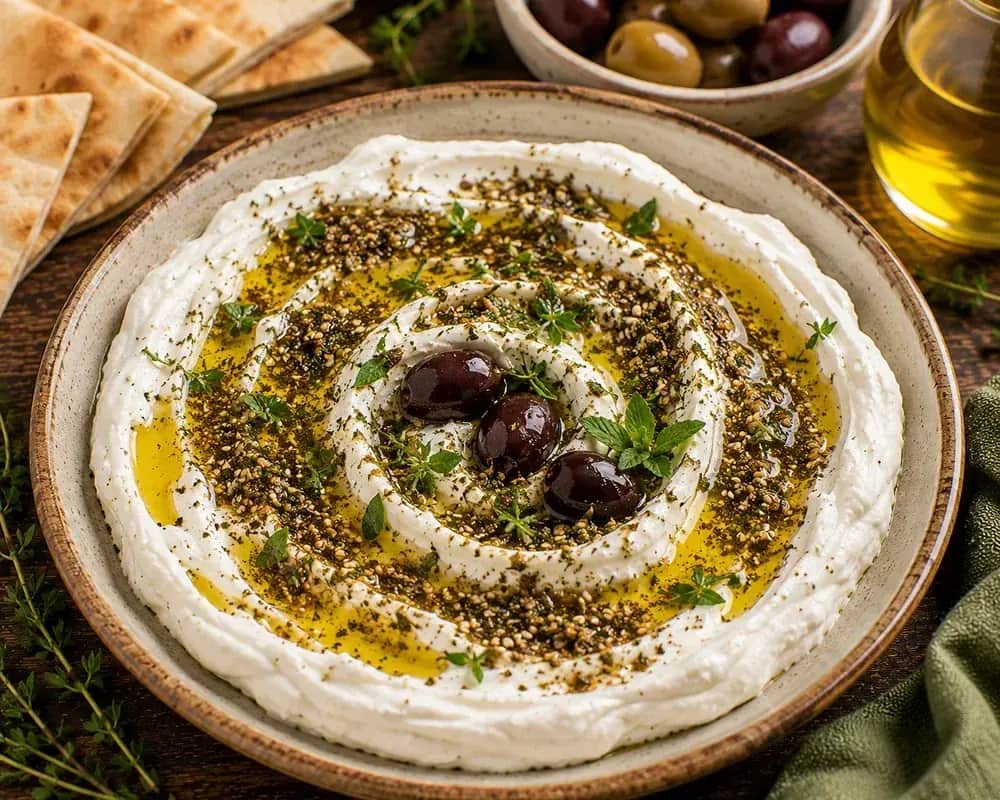
Labneh with Za'atar & Olive Oil Recipe — Lebanese Labneh Mezze & Breakfast
This labneh with za'atar and olive oil recipe is a classic Lebanese-inspired mezze and breakfast made with thick strained yogurt, fragrant za'atar, extra virgin olive oil, fresh mint, parsley, crisp cucumber, tomatoes, olives, and warm pita. An easy Mediterranean dish that can be made with store-bought labneh or homemade labneh from full-fat plain yogurt.
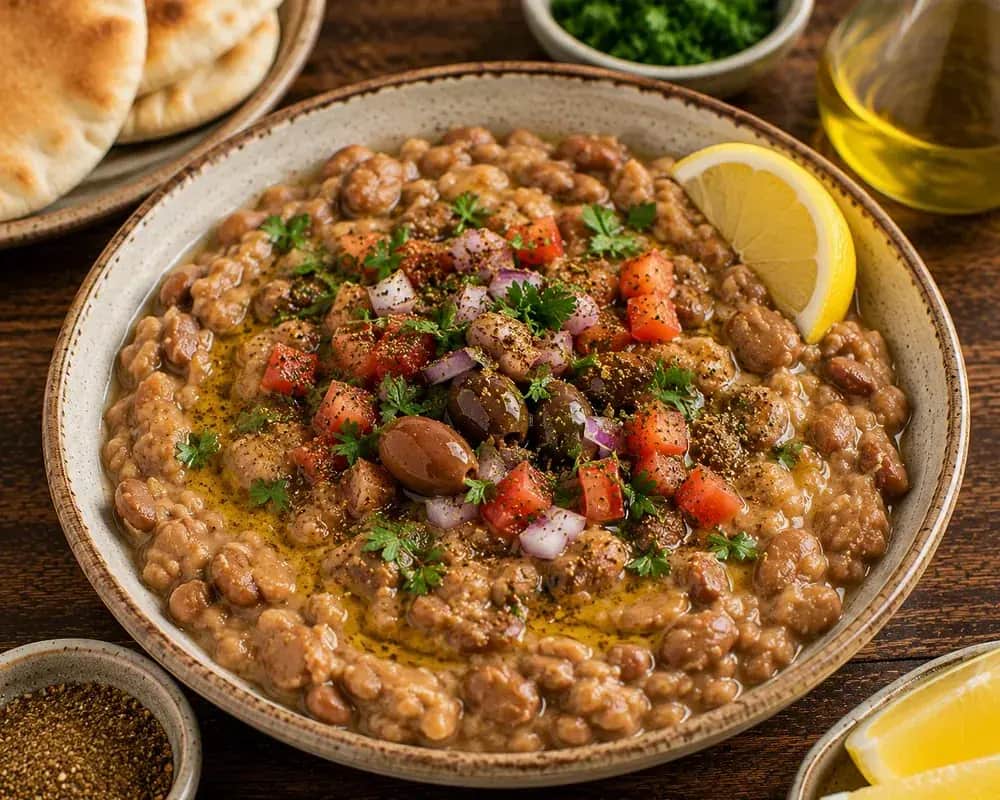
Ful Medames Recipe — Traditional Egyptian Fava Beans
A traditional Egyptian ful medames made with tender fava beans, garlic, cumin, fresh lemon juice, and extra virgin olive oil, finished with tomato, red onion, parsley, and warm pita. The beans are partly mashed for a thick texture while plenty remain whole.
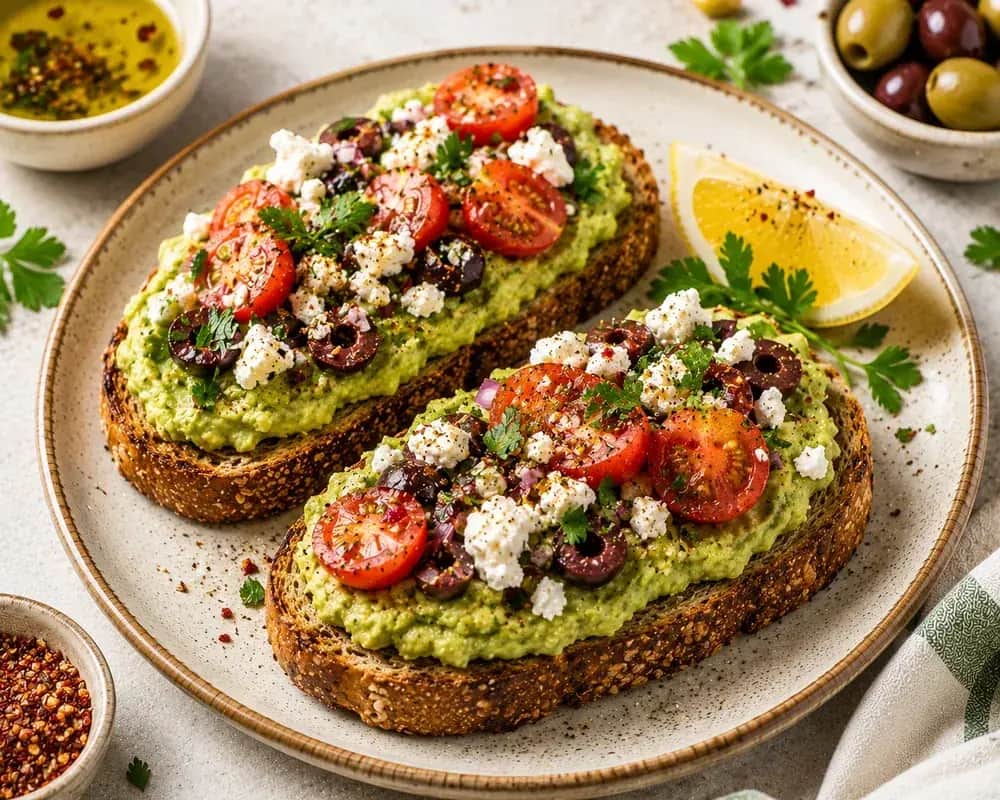
Mediterranean Avocado Toast Recipe — Healthy Lebanese-Style Avocado Toast with Feta & Za'atar
A Lebanese-style Mediterranean avocado toast topped with creamy avocado, fresh vegetables, herbs, and savory seasonings. It comes together quickly and makes a simple breakfast when you want something fresh and filling without much cooking.