
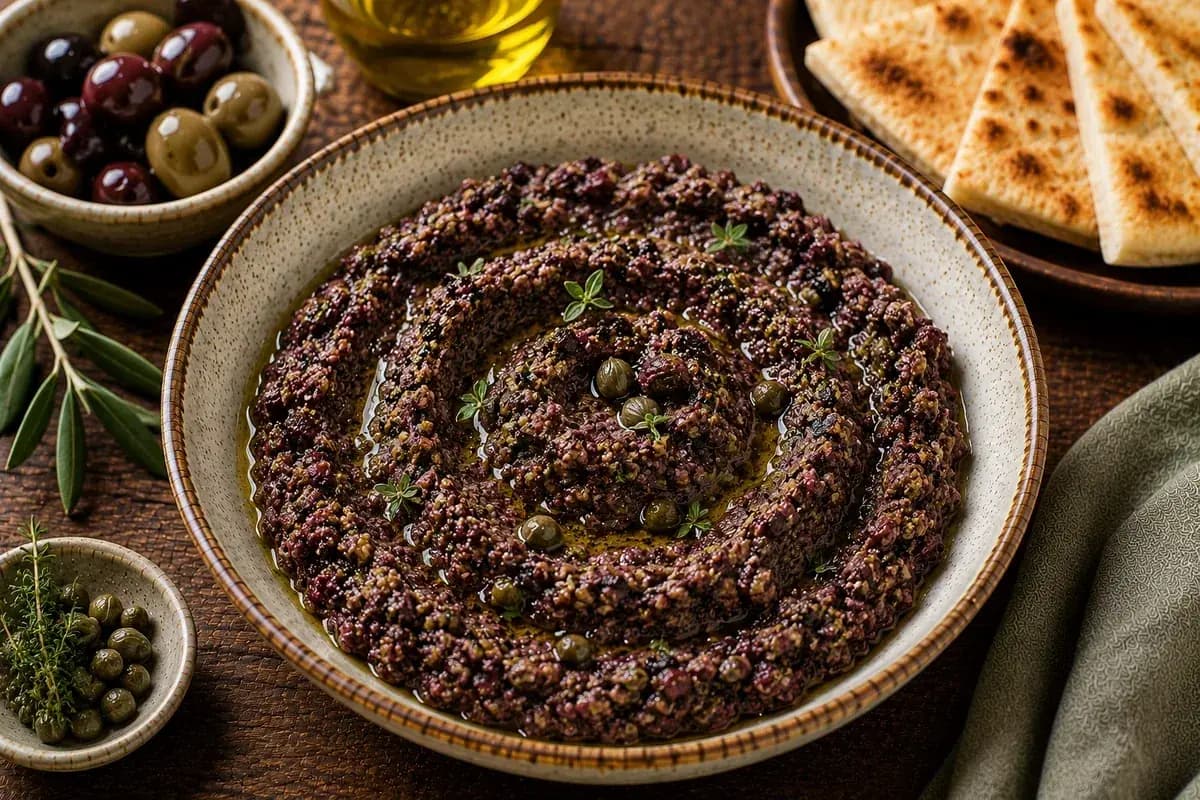
Olive Tapenade Recipe — Mediterranean Olive Spread with Kalamata Olives
A Mediterranean olive tapenade made with olives, capers, garlic, herbs, lemon, and extra virgin olive oil. The ingredients are finely chopped or blended into a savory spread with a bold, briny flavor.
Prep Time
15 mins
Cook Time
0 mins
Total Time
15 mins
Servings
8
A TASTE OF TRADITION
The Story Behind This Recipe
Olive Tapenade is a celebration of one of the Mediterranean's most enduring ingredients: the olive. The modern tapenade is particularly associated with Provence in southern France, where the name refers to a preparation centered on olives and traditionally combined with ingredients such as capers, olive oil, and seasonings. The familiar Mediterranean character remains, but the preparation is kept simple enough for everyday meals.
Cultural & Culinary Context
Olives have been cultivated around the Mediterranean for thousands of years and have played an important role in regional food traditions, agriculture, and trade. Olive-based pastes, chopped olive preparations, and seasoned olive mixtures appear in different forms across Mediterranean cuisines. Tapenade itself is closely linked to Provençal cooking, while the broader idea of combining olives with herbs, oil, and other strongly flavored ingredients reflects a much wider Mediterranean approach to food: simple ingredients are brought together to create something intensely flavorful.
What Makes It Mediterranean?
The Mediterranean identity of this tapenade comes from its reliance on olives, extra virgin olive oil, capers, garlic, lemon, and fresh herbs. These ingredients create a flavor profile that is salty, bright, herbal, and deeply savory without requiring a complicated cooking process. The spread is especially suited to the Mediterranean habit of placing flavorful small dishes at the center of the table and using bread, vegetables, or other foods to scoop and share them.
Mediterranean Influences
- 🌿Olives are the defining ingredient and one of the foundational foods of Mediterranean cuisine.
- 🌿Extra virgin olive oil provides richness and carries the flavors of the herbs, garlic, and olives.
- 🌿Capers add a briny, savory dimension that complements the olives.
- 🌿Fresh lemon provides acidity that keeps the rich olive flavor from feeling heavy.
- 🌿Garlic and fresh herbs add the aromatic character associated with many Mediterranean preparations.
- 🌿The tapenade works naturally as part of a shared mezze or Mediterranean-style table rather than requiring an elaborate main dish.
Ingredients
- 1 cup pitted Kalamata olives (Use good-quality olives with a firm but tender texture. If they are very salty, rinse briefly and drain well before using.)
- 2 tbsp capers, drained (Drain thoroughly. If the capers are especially salty, rinse briefly and pat dry.)
- 1 clove garlic (Use a fresh clove and remove any green sprout from the center if present.)
- 1 tbsp fresh lemon juice (Add gradually and taste because the olives and capers already provide significant acidity and salt.)
- 3 tbsp extra virgin olive oil (Use a flavorful olive oil. Add gradually so you can control the final consistency.)
- 1 tbsp fresh parsley, finely chopped (Use fresh parsley for a clean herbal finish.)
- 1 tsp fresh thyme leaves (Strip the leaves from the stems before measuring.)
- 0.25 tsp freshly ground black pepper
Instructions
- 1
Check the olives carefully to make sure every pit has been removed. Even olives sold as pitted can occasionally contain a small fragment of pit.
- 2
Drain the olives and capers thoroughly. If either ingredient tastes extremely salty, rinse briefly under cool water and pat completely dry before continuing.
- 3
Add the olives, capers, and garlic to a food processor. Pulse in short bursts until finely chopped but still visibly textured. Do not run the processor continuously or the mixture can become a completely smooth paste.
- 4
Add the lemon juice, extra virgin olive oil, parsley, thyme, and black pepper. Pulse several more times until the ingredients are evenly combined.
- 5
Stop and scrape down the sides of the food processor. Check the consistency and taste a small amount before making further adjustments.
- 6
Adjust the texture with a little more olive oil if the tapenade is too dry. If it is too loose or oily, pulse in a few additional olives or capers to bring the mixture back together.
- 7
Taste carefully before adding any salt. Olives and capers can provide more than enough salt on their own, especially if they were not rinsed.
- 8
Balance the flavor as needed. Add a small amount of lemon juice if the tapenade tastes heavy or overly salty, or add a little more olive oil if the acidity or saltiness feels too sharp.
- 9
Transfer the finished tapenade to a clean serving bowl. For the best flavor, let it rest for at least 15–30 minutes before serving so the garlic, herbs, olives, and capers can meld.
- 10
Serve at room temperature or slightly chilled. Store leftovers covered in the refrigerator and bring the desired portion toward room temperature before serving for the best texture and flavor.
SET YOURSELF UP FOR SUCCESS
Before You Cook
👨🍳 Keep In Mind
- •Use pitted olives, but still check them carefully for any remaining fragments of pit.
- •Taste the olives and capers before preparing the tapenade. Their saltiness varies considerably between brands and varieties.
- •Drain all brined ingredients well. Excess brine can make the finished tapenade watery and excessively salty.
- •Have the lemon juice and olive oil ready, but add them gradually so you can control the balance.
- •Use fresh garlic and herbs when possible because they have a much brighter flavor than dried or pre-minced alternatives.
💡 Helpful Tips
- •Pulse rather than continuously blending. A good tapenade should have a rustic texture instead of becoming a completely smooth puree.
- •Taste before adding salt. Additional salt is often unnecessary because olives and capers are already highly seasoned.
- •If the flavor is too salty, do not simply add more lemon. Balance it with additional unsalted ingredients and olive oil.
- •Let the tapenade rest before serving. The flavor becomes more integrated after the garlic, herbs, olives, and capers sit together.
- •For spreading on bread, aim for a moist but spoonable consistency rather than a runny mixture.
- •Use a good-quality extra virgin olive oil because its flavor remains noticeable in an uncooked preparation.
👀 How Do I Know It's Done?
- ✓The tapenade is ready when the olives, capers, garlic, herbs, lemon, and olive oil are evenly combined into a coarse, spreadable mixture.
- ✓A spoonful should hold together but remain moist enough to spread easily.
- ✓The flavor should taste predominantly olive-forward, with noticeable but balanced acidity, garlic, herbs, and capers.
- ✓It should not taste overwhelmingly salty, bitter, acidic, or oily.
- ✓After resting for 15–30 minutes, the individual flavors should taste more integrated and rounded.
Tweak It
Make This Recipe Work for You
Adapt the recipe to your ingredients, dietary needs, budget, time, serving size, or meal-prep plans.
🔄 Ingredient Substitutions
Use another olive variety
Replace Kalamata olives with another flavorful pitted olive such as green olives or a mixed olive combination. Choose olives with enough character to remain the dominant flavor.
Adjust the herbs
Use additional parsley or substitute another fresh Mediterranean herb that complements olives if fresh thyme is unavailable.
Adjust the capers
Reduce the capers if your olives are already very briny. If you omit them completely, the finished tapenade will have a simpler olive flavor.
Reduce the garlic
Use half a clove for a milder tapenade, especially if serving it immediately. Garlic becomes more integrated as the tapenade rests.
🌱 Dietary Adjustments
Vegan
The tapenade is naturally vegan when the olives, capers, and other packaged ingredients contain no animal-derived additives.
Vegetarian
It also works well as a savory plant-based component of a mezze platter.
💰 Budget-Friendly Options
Use everyday olives
You do not need premium olives to make a flavorful tapenade. Choose a good everyday variety, then balance it carefully with lemon, olive oil, garlic, and herbs.
⏱️ Time-Saving Options
Prepare it ahead
Make the tapenade in advance and refrigerate it so it is ready whenever you need a quick spread, appetizer, or mezze component.
👨👩👧👦 Serving Adjustments
Make a larger batch
Double the ingredients for a larger gathering or meal-prep batch. Process in batches if your food processor is too small to accommodate the increased quantity comfortably.
🥡 Meal Prep
Prepare a mezze component
Make the tapenade ahead and keep it refrigerated. Bring the amount needed for serving out shortly before the meal so the olive oil and flavors can soften and become more aromatic.
RECIPE RESCUE
🧩 What Do You Need Help With?
Choose the problem you're facing and get a recipe-specific solution instead of a generic cooking tip.
WHAT IF?
🔄 What If...?
Choose your situation and we'll show you a practical pathway for making this recipe work.
STORAGE & LEFTOVERS
🥡 Storage & Leftovers
Transfer the finished tapenade to a clean airtight container.
Refrigerate promptly after preparation.
Use a clean spoon each time you serve it to help maintain freshness.
If a thin layer of olive oil separates on top during storage, stir it back into the tapenade before serving.
Let the portion you plan to eat warm slightly before serving for a more aromatic flavor and softer texture.
Best Storage Time
Up to 5 days in the refrigerator
How to Store
Clean airtight glass or food-safe container
SERVING & PAIRING
🍽️ Serving & Pairing
Serve Olive Tapenade as a spread or condiment rather than as a large standalone portion. Its concentrated olive flavor works especially well with plain or lightly toasted bread, fresh vegetables, crackers, and other mild foods. It can also be used to add a savory Mediterranean accent to sandwiches, wraps, grain bowls, or simple grilled dishes.
What Goes Well With It?
RECIPE FAQ
❓ Frequently Asked Questions
How do you make olive tapenade?
To make olive tapenade, start by checking and draining 1 cup pitted Kalamata olives and 2 tablespoons drained capers. If they are extremely salty, rinse them briefly and pat them dry. Add the olives, capers, and 1 fresh garlic clove to a food processor and pulse in short bursts until finely chopped but still visibly textured. Add 1 tablespoon fresh lemon juice, 3 tablespoons extra virgin olive oil, 1 tablespoon finely chopped fresh parsley, 1 teaspoon fresh thyme leaves, and 1/4 teaspoon freshly ground black pepper. Pulse several more times until the ingredients form a cohesive, rustic spread. Taste before adding salt because the olives and capers may already provide enough seasoning. Let the tapenade rest for 15–30 minutes before serving so the garlic, herbs, olives, capers, lemon, and olive oil can meld.
Is tapenade traditionally Lebanese?
Tapenade is particularly associated with Provence in southern France, so it should not be presented as an ancient traditional Lebanese dish. This recipe is Mediterranean-inspired and uses ingredients that are widely familiar across Mediterranean food traditions.
Should olive tapenade be completely smooth?
No. A good tapenade can be rustic and textured, with finely chopped olives and capers still visible. Processing it into a completely smooth puree can make it feel more like a generic olive paste.
Do I need to add salt?
Usually not. Olives and capers are naturally salty, and additional salt should only be considered after tasting the completed tapenade.
Why is my tapenade too salty?
The olives or capers may have been particularly salty. Rinsing very salty ingredients before preparation can help, and the finished tapenade can be balanced with additional unsalted olives, olive oil, and fresh herbs.
Can I use green olives instead of Kalamata olives?
Yes. Green olives work well and produce a brighter, sharper flavor. Taste them first because their saltiness varies and you may need to adjust the capers and lemon.
Can I make tapenade without a food processor?
Yes. Finely chop the olives, capers, and garlic with a sharp knife, then combine them with the remaining ingredients. The result will usually have a more rustic texture.
Why did my tapenade become watery?
Too much olive oil, residual brine, or excess lemon juice can make the mixture loose. Drain the olives and capers thoroughly, add liquids gradually, and use additional chopped olives if the finished tapenade needs more body.
How long should tapenade rest before serving?
Allowing it to rest for about 15–30 minutes gives the garlic, herbs, lemon, capers, and olives time to meld. It can also be made further in advance and refrigerated.
Can I freeze olive tapenade?
It can be frozen in an airtight freezer-safe container, although the texture may become slightly different after thawing. For the best texture, prepare a smaller fresh batch when possible.
What is the best way to serve tapenade?
Serve it as a concentrated spread or condiment with bread, pita, vegetables, hummus, labneh, or other mezze. It can also be used in sandwiches, wraps, grain bowls, and alongside grilled foods.
Explore More
Go deeper into the cuisine
Learn more about the ingredients, traditions, and cooking approaches connected to this recipe.
You May Also Like
More delicious recipes from the Snack
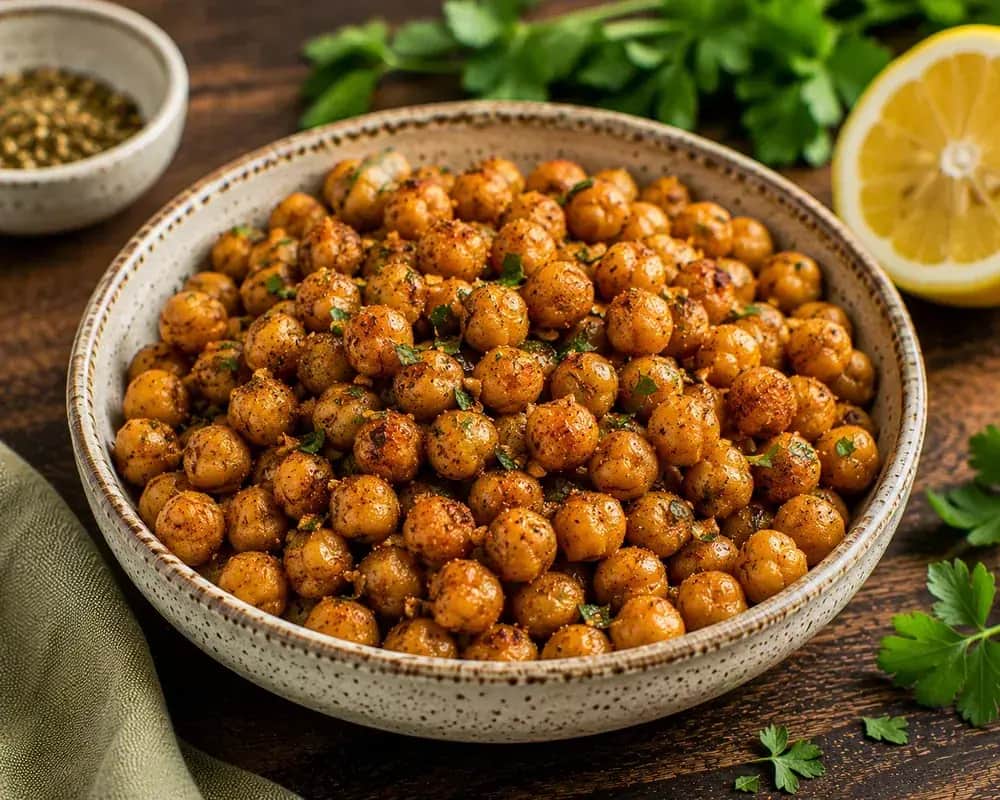
Mediterranean Roasted Chickpeas Recipe — Crispy Healthy High-Protein Chickpea Snack
Crispy roasted chickpeas seasoned with olive oil and Mediterranean spices. The chickpeas are roasted until browned and crunchy, making them a simple snack or a savory topping for salads, soups, grain bowls, and mezze.

Stuffed Dates with Almonds & Pistachios Recipe — Healthy Mediterranean Date Snack
Medjool dates filled with roasted almonds and pistachios, with optional goat cheese, honey, sesame, cinnamon, and mint. These small bites combine soft fruit with crunchy nuts and can be assembled without baking.
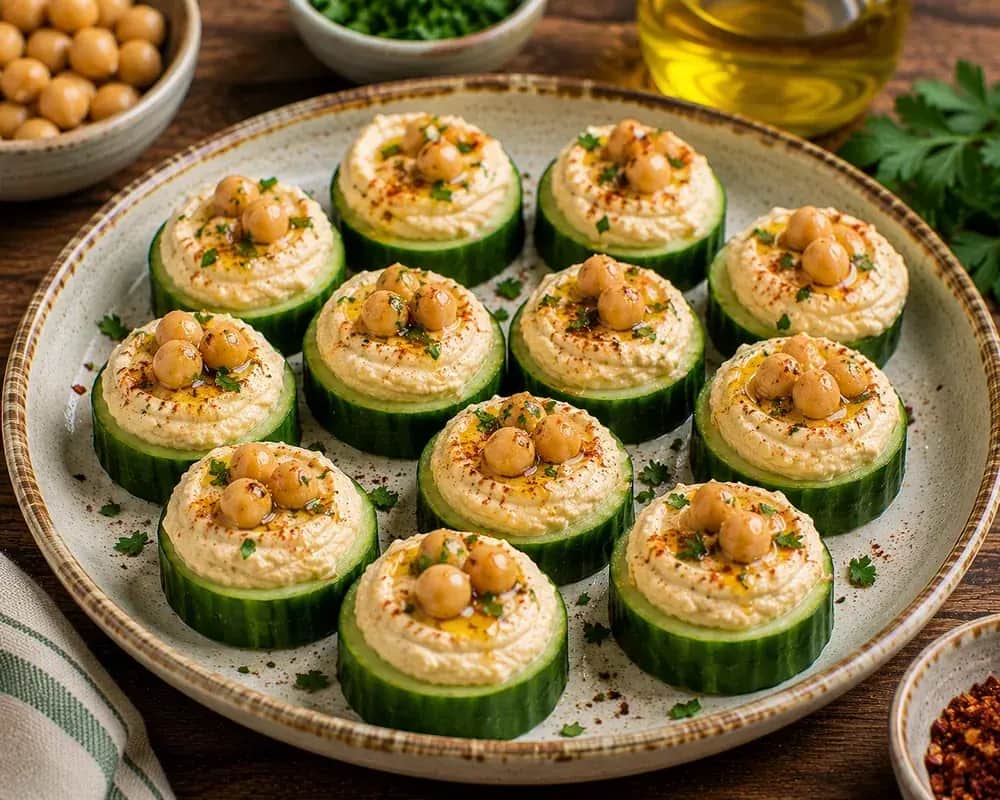
Cucumber Hummus Bites Recipe
Crisp cucumber rounds topped with creamy hummus, cherry tomatoes, feta, Kalamata olives, parsley, and extra virgin olive oil. These small Mediterranean bites bring fresh vegetables, creamy hummus, and salty toppings together without the need for crackers or bread.