
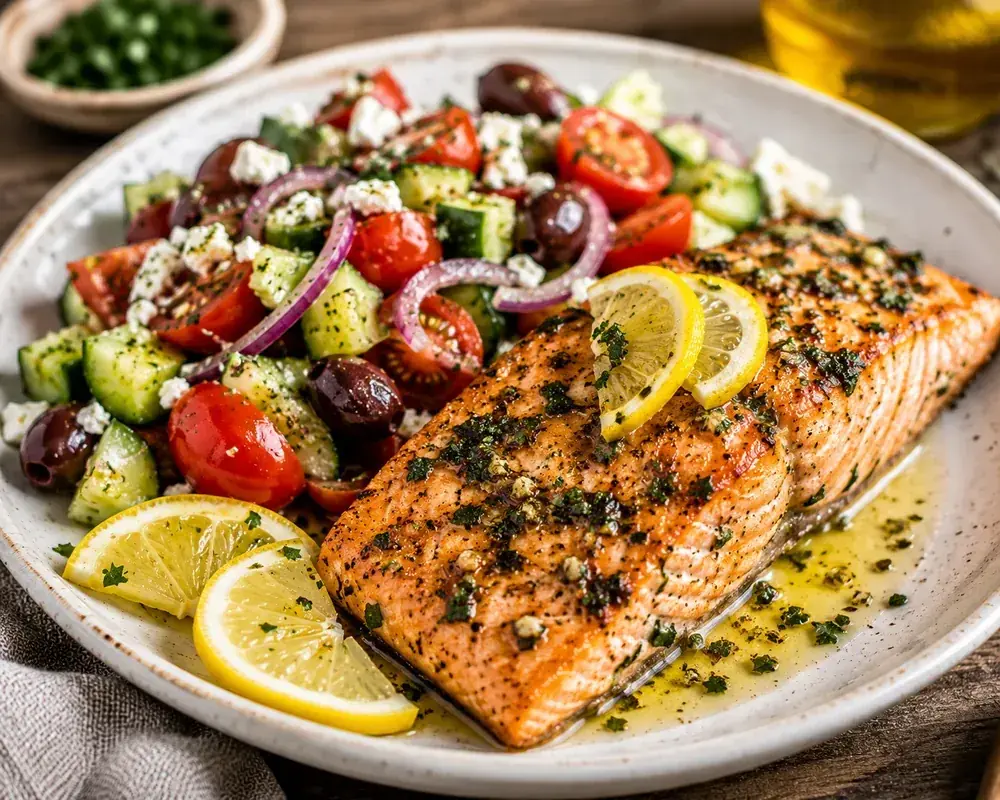
Mediterranean Lemon Herb Salmon Recipe — Healthy Baked Salmon with Lemon & Herbs
This Mediterranean lemon herb salmon recipe combines tender oven-baked salmon with fresh lemon, garlic, extra virgin olive oil, dill, parsley, roasted zucchini, and juicy cherry tomatoes. The salmon is lightly seasoned and baked until tender, then finished with fresh herbs and lemon. Easy to prepare for a healthy Mediterranean dinner, high-protein meal, or simple weeknight fish recipe.
Prep Time
15 mins
Cook Time
20 mins
Total Time
35 mins
Servings
2
A TASTE OF TRADITION
The Story Behind This Recipe
This salmon is a modern Mediterranean-inspired recipe rather than a claim of one specific traditional Greek dish. Its character comes from a combination that feels immediately at home beside the Aegean: good olive oil, lemon, garlic, fresh herbs, vegetables, and simply cooked fish. The goal is not to cover the salmon with a heavy sauce, but to let the fish remain the center of the meal while the herbs, citrus, and roasted vegetables provide freshness and contrast.
Cultural & Culinary Context
The strongest country connection for this recipe is Greece. Greek cuisine is known for making high-quality ingredients do much of the work, with lemon, olive oil, herbs, vegetables, and fresh fish appearing prominently across the country's regional cooking traditions. Coastal and island cooking naturally reflects the relationship between the sea and the land: fresh seafood is paired with the produce, herbs, and olive oil available locally. This recipe takes that philosophy and applies it to salmon, a fish that is widely available today but is not being presented as a uniquely traditional Greek fish.
What Makes It Mediterranean?
The Mediterranean identity of this recipe comes from its cooking philosophy as much as its ingredients. Olive oil provides the main added fat, lemon brings acidity and brightness, fresh herbs supply aroma, garlic adds depth, and vegetables are cooked simply beside the fish. Greek and Aegean culinary traditions specifically feature fresh fish, lemon, olive oil, and aromatic herbs, making Greece the most natural Mediterranean inspiration for this modern salmon dish.
Mediterranean Influences
- 🌿Extra virgin olive oil is used as the principal added fat rather than a heavy cream-based sauce.
- 🌿Fresh lemon provides acidity and brightness, a classic partner for fish in Mediterranean cooking.
- 🌿Garlic, parsley, and dill give the dish fresh herbal and aromatic character.
- 🌿Zucchini and tomatoes provide a simple vegetable accompaniment instead of a heavy starch-based side.
- 🌿Fish is cooked simply so its natural flavor remains prominent.
- 🌿The recipe uses a short ingredient list and relies on fresh ingredients rather than a complicated sauce.
- 🌿The overall balance of fish, vegetables, olive oil, herbs, and citrus reflects the relaxed style of Mediterranean coastal meals.
Ingredients
- 2 salmon fillets, about 180–200 g each (Choose fillets of similar thickness so they finish at roughly the same time. Skin-on or skinless both work.)
- 2 tbsp extra virgin olive oil (Use part for the salmon seasoning and the remainder for the vegetables.)
- 1 lemon (Zest the lemon before juicing it and reserve wedges for serving.)
- 2 cloves garlic, finely minced (Finely mince the garlic so it distributes evenly over the fish.)
- 1 tbsp fresh dill, finely chopped (Reserve a little for finishing the cooked salmon.)
- 2 tbsp fresh parsley, finely chopped (Use some before cooking and some fresh at the end.)
- 1 tbsp fresh lemon juice (Keep the marinade relatively light and save additional lemon for serving.)
- 0.5 tsp sea salt (Season lightly first; more can be added at the table.)
- 0.25 tsp black pepper (Freshly ground pepper gives the cleanest flavor.)
- 1 medium zucchini, sliced into thick half-moons (Thicker slices stay tender without becoming mushy.)
- 200 g cherry tomatoes (Keep small tomatoes whole or halve larger ones.)
Instructions
- 1
Remove the salmon from the refrigerator about 10 minutes before cooking. Pat the fillets thoroughly dry with paper towels. Run clean fingers gently over the flesh to check for pin bones and remove any you find with clean tweezers or fish-bone pliers.
- 2
Zest the lemon, then squeeze 1 tablespoon of juice into a small bowl. Add 1 tablespoon of olive oil, minced garlic, chopped dill, 1 tablespoon of parsley, salt, and black pepper. Whisk until evenly combined. Keep the remaining lemon for serving.
- 3
Place the salmon on a plate or shallow dish and brush the herb mixture over the top and sides. Let it stand for about 10 minutes while the oven heats. Avoid leaving salmon in a strongly acidic marinade for hours because the lemon can soften the surface texture.
- 4
Preheat the oven to 200°C (400°F). Line a baking tray with parchment paper or lightly oil it. Arrange the zucchini and cherry tomatoes on the tray, leaving enough room for the salmon. Toss the vegetables with the remaining olive oil and a light seasoning of salt and pepper.
- 5
Place the salmon on the tray. If the fillets have skin, place them skin-side down. Leave a little space between the fillets and vegetables so hot air can circulate and moisture can escape rather than steam everything.
- 6
Bake for about 12–15 minutes for average-thickness fillets, checking early because salmon thickness varies. Thicker fillets may require closer to 18–20 minutes. For the most reliable food-safety check, the thickest part of the salmon should reach 63°C (145°F).
- 7
If the salmon is cooked but the vegetables need more color, transfer the salmon to a clean plate and return the vegetables to the oven for a few additional minutes. Do not keep already-cooked salmon in the oven simply to brown the vegetables because it can become dry.
- 8
Remove the salmon from the oven and let it rest for 2–3 minutes. The short rest helps the juices settle while keeping the fish warm and tender.
- 9
Finish with fresh parsley and dill. Squeeze fresh lemon over the salmon immediately before serving rather than adding all the lemon juice before cooking.
- 10
Serve the salmon hot with the roasted zucchini and cherry tomatoes. Spoon some of the olive oil and flavorful juices from the tray over the vegetables and salmon just before eating.
SET YOURSELF UP FOR SUCCESS
Before You Cook
👨🍳 Keep In Mind
- •Read the recipe completely before starting because the salmon and vegetables cook on the same tray but may finish at different times.
- •Choose salmon fillets with similar thickness so they cook more evenly.
- •Check the salmon for pin bones before seasoning.
- •Pat the fish dry; excess surface moisture can dilute the seasoning and interfere with browning.
- •Zest the lemon before squeezing it because it is much easier to zest a whole lemon.
- •Keep the lemon marinade short rather than leaving the salmon in lemon juice for hours.
- •Cut the zucchini into thick pieces so it does not become mushy before the salmon is ready.
- •Have a food thermometer available if possible because salmon thickness varies considerably.
💡 Helpful Tips
- •Do not press or flatten the salmon while it cooks.
- •Place skin-on salmon skin-side down.
- •Do not overcrowd the baking tray; crowded vegetables release steam and roast less effectively.
- •Use lemon zest for strong citrus aroma and reserve fresh lemon juice for finishing.
- •Start checking thin salmon fillets earlier than the stated cooking range.
- •Thicker fillets can require several additional minutes.
- •If the vegetables need more browning, remove the salmon first rather than overcooking the fish.
- •Fresh herbs added after cooking taste brighter than herbs cooked for the entire time.
- •Let the salmon rest briefly before serving rather than cutting into it immediately.
👀 How Do I Know It's Done?
- ✓The thickest part of the salmon reaches 63°C (145°F) on a food thermometer.
- ✓Without a thermometer, the flesh should be opaque and separate easily into flakes when gently tested.
- ✓The salmon should still look moist rather than chalky and dry.
- ✓The vegetables should be tender but not falling apart.
- ✓Cherry tomatoes should be softened and juicy.
- ✓Zucchini should have some structure and lightly roasted edges.
- ✓If the salmon is done before the vegetables, remove it and continue roasting the vegetables separately.
Tweak It
Make This Recipe Work for You
Adapt the recipe to your ingredients, dietary needs, budget, time, serving size, or meal-prep plans.
🔄 Ingredient Substitutions
Use trout instead of salmon
Trout can be prepared with the same lemon, garlic, olive oil, dill, and parsley flavor profile. Adjust cooking time according to the thickness of the fillets.
Use frozen salmon
Thaw the salmon safely in the refrigerator, then pat it very dry before seasoning. Frozen-thawed fillets may release more moisture during cooking.
Replace fresh dill
Fresh dill can be replaced with a smaller amount of dried dill. Alternatively, use additional parsley and a little oregano for a different Mediterranean herb profile.
Change the vegetables
Bell peppers, asparagus, green beans, or thinly sliced eggplant can replace some or all of the zucchini. Adjust cutting size and cooking time according to how quickly the vegetable cooks.
🌱 Dietary Adjustments
Naturally dairy-free
The recipe contains no dairy ingredients, making it suitable for a dairy-free meal as written.
Naturally gluten-free
The recipe contains no wheat-based ingredients. Check packaged seasonings and other optional additions if strict gluten avoidance is required.
Lower-sodium version
Reduce the added salt and use fresh lemon, garlic, herbs, and black pepper to maintain flavor. Avoid salty packaged sauces or seasoning blends.
Use less added oil
The salmon itself contains natural fat, so the added olive oil can be reduced modestly while still coating the vegetables and fish.
💰 Budget-Friendly Options
Choose frozen salmon
Frozen salmon can be a practical and economical option when fresh fillets are expensive. Thaw it completely in the refrigerator and dry it thoroughly before cooking.
Use seasonal vegetables
Replace the zucchini or tomatoes with vegetables that are affordable and in season while keeping the same simple olive-oil and herb approach.
⏱️ Time-Saving Options
Prepare the seasoning ahead
Chop the herbs and garlic and mix the olive-oil seasoning shortly before cooking. Keep it refrigerated if preparing in advance.
Use one baking tray
Roast the salmon and vegetables together to reduce cleanup. Keep enough space between them so the vegetables roast rather than steam.
Prepare vegetables ahead
Slice the zucchini and prepare the tomatoes earlier in the day, then refrigerate them until cooking time.
👨👩👧👦 Serving Adjustments
Make one serving
Use one salmon fillet and halve the vegetable and seasoning quantities. Start checking the fish early because a single smaller fillet may cook faster.
Make four servings
Double the recipe and use a larger baking tray. Avoid crowding the fish and vegetables; use two trays if necessary.
🥡 Meal Prep
Keep salmon and vegetables separate
For the best texture, store cooked salmon separately from the roasted vegetables and add fresh lemon and herbs after reheating.
Reheat gently
Reheat leftover salmon gently and only until hot enough to serve. High heat for too long can dry the fish.
RECIPE RESCUE
🧩 What Do You Need Help With?
Choose the problem you're facing and get a recipe-specific solution instead of a generic cooking tip.
WHAT IF?
🔄 What If...?
Choose your situation and we'll show you a practical pathway for making this recipe work.
STORAGE & LEFTOVERS
🥡 Storage & Leftovers
Transfer leftover salmon and vegetables to clean, covered containers and refrigerate promptly rather than leaving them at room temperature for an extended period.
For the best texture, store the salmon separately from the vegetables when possible.
Keep fresh herbs and lemon wedges separate and add them after reheating.
Reheat gently rather than using high heat for a long time, because salmon dries out easily.
Add a small amount of fresh lemon and olive oil after reheating to restore brightness.
Do not repeatedly reheat the same portion; reheat only the amount you intend to eat.
Best Storage Time
For best quality and food safety, refrigerate leftovers promptly in covered containers and follow applicable local food-safety guidance for refrigerated cooked fish.
How to Store
Use a shallow airtight container for the salmon and a separate container for the vegetables. Keeping the herbs and lemon separate helps preserve their fresh flavor.
SERVING & PAIRING
🍽️ Serving & Pairing
Serve the salmon as the centerpiece of the plate with roasted zucchini and cherry tomatoes around it. Finish with fresh dill, parsley, and lemon immediately before eating. The dish is especially good when the salmon remains the main focus and the vegetables provide freshness, color, and a lightly roasted contrast rather than being covered in a heavy sauce.
What Goes Well With It?
RECIPE FAQ
❓ Frequently Asked Questions
How do you make Mediterranean lemon herb salmon?
To make Mediterranean lemon herb salmon, first pat the salmon fillets dry and check for pin bones. Mix extra virgin olive oil with lemon zest, lemon juice, minced garlic, fresh dill, parsley, salt, and black pepper. Brush the mixture over the salmon and let it stand for about 10 minutes while the oven preheats to 200°C (400°F). Arrange zucchini and cherry tomatoes on a baking tray, coat them lightly with olive oil, and place the salmon among the vegetables. Bake until the thickest part of the salmon reaches 63°C (145°F), usually about 12–15 minutes for average-thickness fillets. Let the salmon rest briefly, then finish with fresh herbs and lemon before serving.
Is this a traditional Greek salmon recipe?
No. This is a modern Mediterranean-inspired recipe. Greece is the strongest culinary inspiration because Greek cooking commonly pairs fresh fish and seafood with olive oil, lemon, herbs, and vegetables. Salmon itself is not being presented here as a uniquely traditional Greek fish.
Why did you choose Greece for the Mediterranean connection?
The combination of fresh fish, lemon, olive oil, aromatic herbs, and simple vegetables closely matches the flavor philosophy of Greek and Aegean coastal cooking. This makes Greece a natural inspiration for the recipe.
What temperature should salmon reach?
For the most reliable food-safety check, the thickest part of the salmon should reach 63°C (145°F). A food thermometer is the best way to verify this.
How can I tell when salmon is done without a thermometer?
The thickest part should be opaque rather than translucent, and the flesh should separate easily into moist flakes when gently tested with a fork. If the center still looks raw or glassy, continue cooking.
Should I leave the skin on the salmon?
Yes. Skin-on salmon works well for this recipe. Place it skin-side down during baking; the skin helps protect the flesh from direct heat. You can remove it when serving if you prefer.
Why should the salmon only marinate for about 10 minutes?
The lemon juice is acidic and can change the texture of the surface of the fish if it sits in the marinade for too long. The short seasoning period provides flavor while keeping the salmon's texture firm.
Can I use frozen salmon?
Yes. Thaw it safely in the refrigerator, then pat it very dry before seasoning. Frozen-thawed salmon may release more moisture, so drying the surface is especially important.
Why is my zucchini watery instead of roasted?
The most common reasons are overcrowding, very wet vegetables, or insufficient oven space. Spread the zucchini out so hot air can circulate and allow moisture to escape.
What should I do if the salmon is cooked but the vegetables are not?
Remove the salmon and let it rest on a clean plate. Return the vegetables to the oven until tender and lightly browned. This is much better than keeping the cooked salmon in the oven until the vegetables finish.
What should I do if the vegetables are finished first?
Remove them from the tray and keep them loosely covered while the salmon finishes. Return them briefly to warm through before serving if necessary.
Can I replace dill?
Yes. You can use a smaller amount of dried dill, or replace it with additional parsley and a little oregano for a different Mediterranean flavor.
Can I use other vegetables?
Yes. Bell peppers, asparagus, green beans, or thinly sliced eggplant can work well. Adjust their size and cooking time because different vegetables soften and brown at different rates.
How do I keep salmon from becoming dry?
The most important factors are not overcooking it, checking thick fillets with a thermometer, removing the salmon when it reaches the safe target temperature, and not leaving cooked salmon in the oven while waiting for vegetables.
Can I prepare this recipe ahead of time?
You can prepare the herb mixture and vegetables ahead of time, but salmon is best cooked close to serving. Cooked leftovers can be refrigerated and reheated gently.
Is this recipe gluten-free?
The recipe itself contains no wheat-based ingredients. If strict gluten avoidance is required, check packaged ingredients and any optional sauces or side dishes.
Is this recipe dairy-free?
Yes. The recipe contains no dairy ingredients as written.
Can I grill the salmon instead of baking it?
Yes, if your grill is suitable for fish. Use medium heat, oil the cooking surface carefully, and monitor the thickest part of the salmon rather than relying only on time. A grill basket or foil can make handling delicate fillets easier.
Explore More
Go deeper into the cuisine
Learn more about the ingredients, traditions, and cooking approaches connected to this recipe.
You May Also Like
More delicious recipes from the Main Dishes
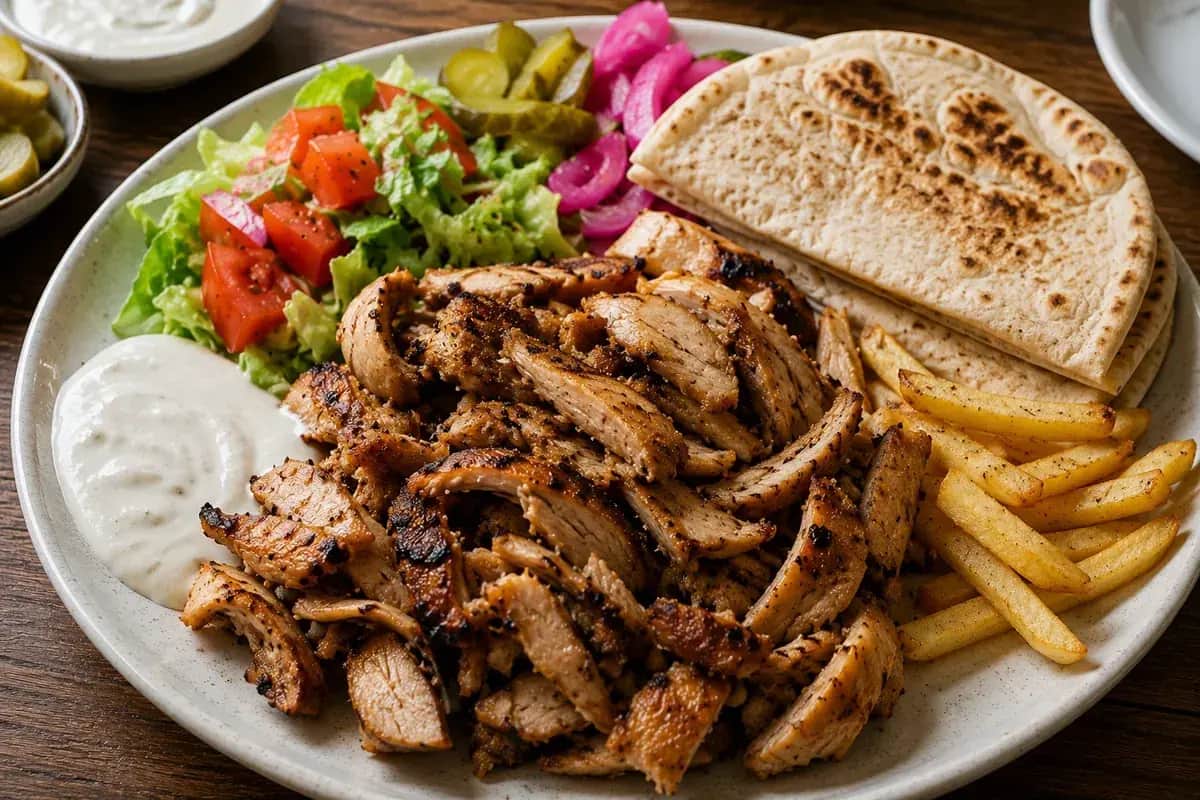
Palestinian Chicken Shawarma Recipe
A Palestinian chicken shawarma recipe made with thinly sliced chicken, yogurt, lemon, extra virgin olive oil, garlic, and warm Levantine spices. This homemade skillet version develops deeply browned edges while keeping the chicken tender and well seasoned. Serve it in warm pita, wraps, or a shawarma bowl with your favorite toppings.
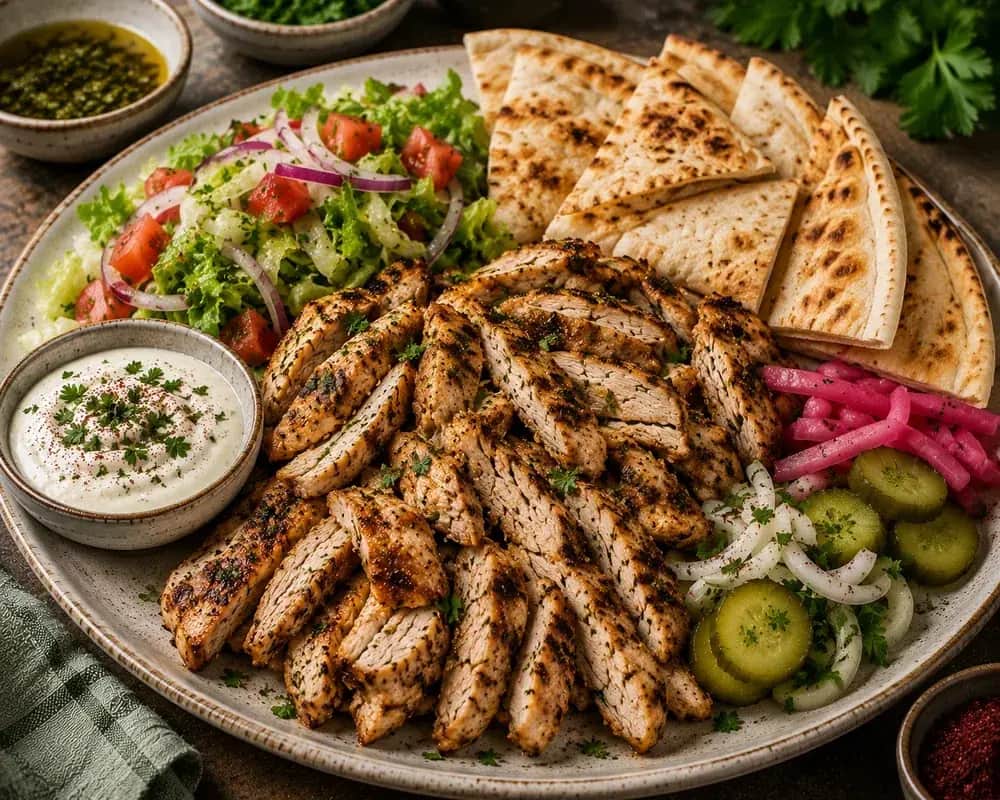
Grilled Chicken Shawarma Recipe — Lebanese-Style Mediterranean Chicken
A Lebanese-style grilled chicken shawarma made with thinly sliced chicken, yogurt, lemon, garlic, olive oil, and warm Levantine spices. The chicken develops lightly charred edges while staying tender, making it easy to serve in pita, wraps, bowls, salads, or as part of a mezze spread.
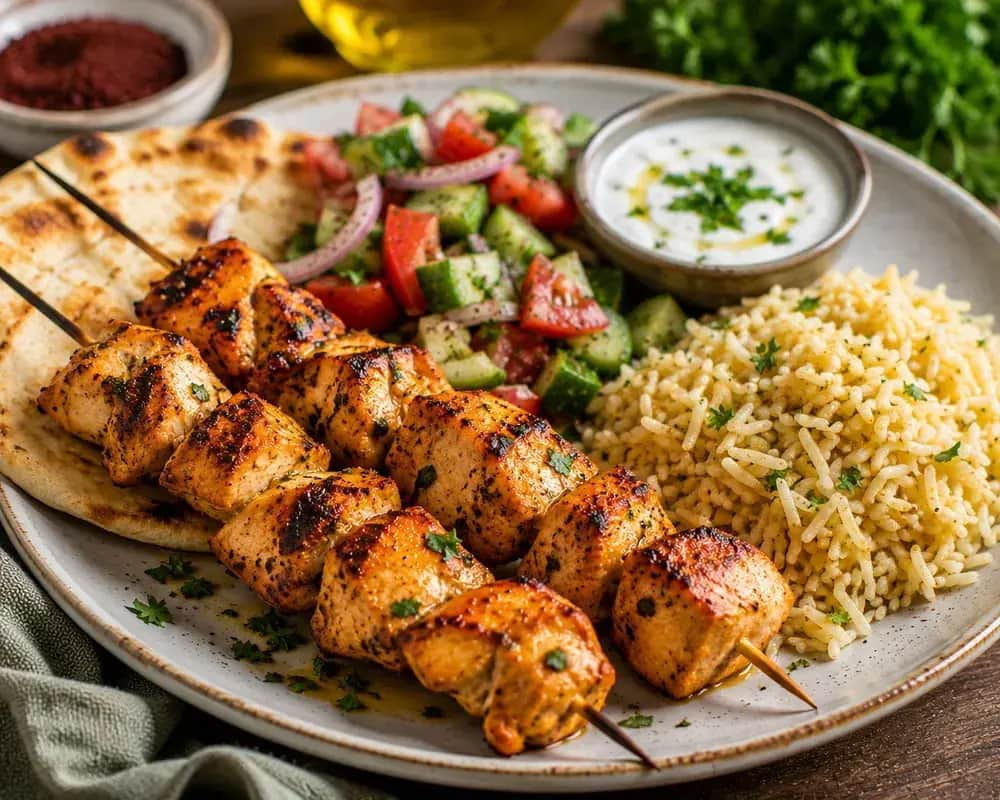
Shish Tawook Recipe — Juicy Lebanese Chicken Kabobs with Yogurt Marinade
This Shish Tawook recipe makes juicy Lebanese-style chicken kabobs marinated in Greek yogurt, lemon, garlic, extra virgin olive oil, tomato paste, paprika, cumin, oregano, and turmeric, then grilled until tender with golden-brown and lightly charred edges. An easy Mediterranean chicken recipe that's high in protein and perfect with toum, warm pita, rice, grilled vegetables, pickles, or fresh salad.