
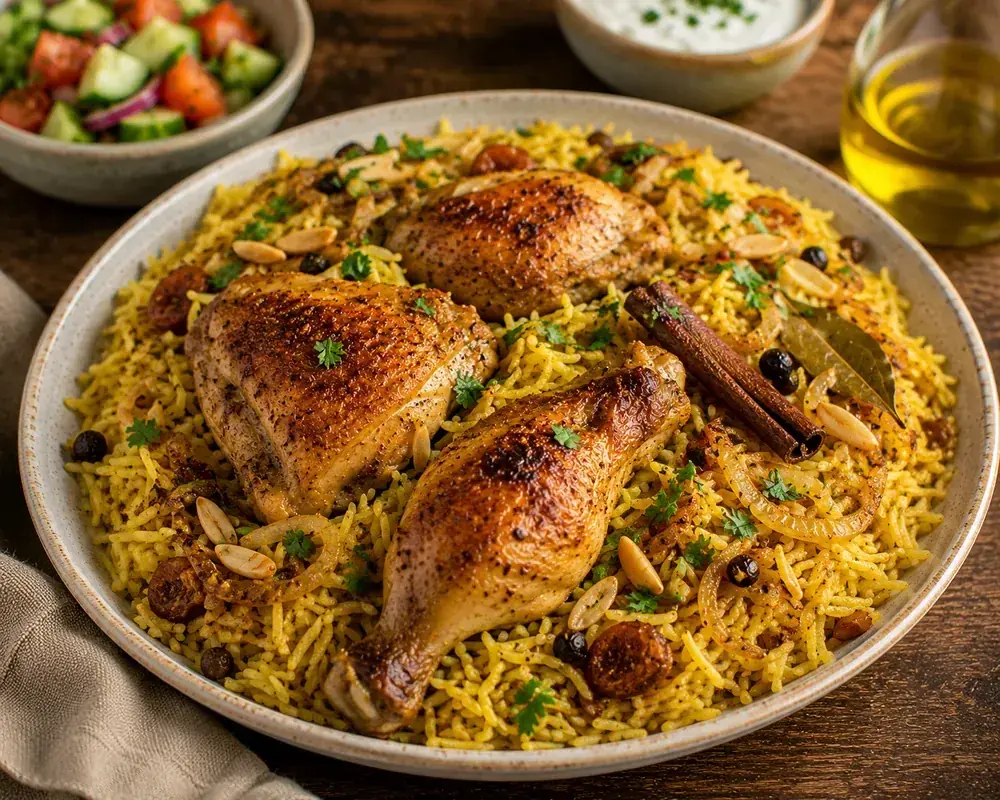
Mediterranean Chicken Kabsa Recipe — Healthy Saudi-Style Chicken & Brown Basmati Rice
A Mediterranean-inspired chicken kabsa made with skinless chicken, brown basmati rice, vegetables, olive oil, and a measured blend of warm spices. The chicken and rice cook together so the grains absorb the savory broth and aromatic seasoning.
Prep Time
20 mins
Cook Time
55 mins
Total Time
75 mins
Servings
6
A TASTE OF TRADITION
The Story Behind This Recipe
Kabsa is the kind of dish that makes a kitchen smell like a family gathering long before anyone sits down to eat. Fragrant rice, tomatoes, chicken, onions, and warm spices cook together until the cooking liquid has worked its way into every grain. What makes the dish memorable is not one exotic ingredient, but the way ordinary pantry ingredients are layered into a deeply aromatic meal. The chicken is browned first, the vegetables and spices build the broth, and the rice finally absorbs all of those flavors. It is a generous, comforting style of cooking designed for sharing.
Cultural & Culinary Context
Kabsa is strongly associated with the Arabian Peninsula, particularly Saudi Arabia, and is enjoyed in many forms throughout the Gulf and wider Middle Eastern culinary landscape. Recipes vary between households and regions, with differences in the choice of meat, rice, spices, vegetables, and garnishes. Some versions use chicken, while others use lamb or other meats; some cooks add additional dried fruits, nuts, or regional spice blends. Because of these variations, Kabsa is best understood as a broad family of fragrant rice-and-meat dishes rather than one completely fixed recipe. The dish keeps the spirit of kabsa while using skinless chicken, brown basmati rice, vegetables, olive oil, and a measured spice blend for an approachable everyday meal.
What Makes It Mediterranean?
Although Kabsa is rooted most directly in the Arabian Peninsula rather than the eastern Mediterranean alone, this version shares several qualities with Mediterranean and Middle Eastern home cooking: olive oil, tomatoes, vegetables, herbs, whole grains, nuts, and aromatic spices are layered rather than hidden under a heavy sauce. The use of parsley and toasted almonds at the end adds freshness and texture, while the tomato and spice base gives the rice its characteristic warmth and depth.
Mediterranean Influences
- 🌿Extra virgin olive oil is used as the main cooking fat.
- 🌿Tomatoes, onions, garlic, and carrots form the vegetable foundation.
- 🌿Brown basmati rice provides a whole-grain option.
- 🌿Fresh parsley adds a bright herbal finish.
- 🌿Toasted almonds provide texture and unsaturated fats.
- 🌿The dish relies on aromatic spices rather than a heavy cream-based sauce.
- 🌿The finished meal pairs naturally with fresh vegetables and salads.
- 🌿The recipe emphasizes layered flavors and simple whole-food ingredients.
Ingredients
- 6 boneless or bone-in skinless chicken thighs (Pat dry before seasoning so the surface browns properly instead of releasing excess moisture into the pot. Bone-in thighs may require a little additional cooking time.)
- 2 cups brown basmati rice (Rinse thoroughly under cold water and drain very well. Excess water can change the final rice-to-broth ratio.)
- 1 large onion (Dice evenly so the onion softens at the same rate.)
- 4 cloves garlic (Minced.)
- 1 medium tomato (Diced.)
- 1 medium carrot (Dice into small, even pieces so it becomes tender without disappearing into the sauce.)
- 2 tbsp tomato paste (Cook it with the vegetables and spices for several minutes to remove its raw taste and deepen the sauce.)
- 3 tbsp extra virgin olive oil (Used for browning the chicken and cooking the aromatic base.)
- 4 cups low-sodium chicken broth (Use hot broth when possible. The exact amount of liquid needed can vary slightly with the rice and how thoroughly it was drained.)
- 1 tsp ground cumin (Provides a warm, earthy backbone to the spice mixture.)
- 1 tsp ground coriander (Adds a fragrant, lightly citrusy spice note.)
- 1 tsp paprika (Adds mild sweetness, warmth, and color.)
- 0.5 tsp ground turmeric (Adds earthy flavor and a golden tone to the rice.)
- 0.5 tsp ground cinnamon (Use a moderate amount so it complements the savory spices rather than becoming dominant.)
- 0.25 tsp ground cloves (A small amount adds depth. Too much can overpower the other spices.)
- 1 tsp sea salt (Adjust at the end according to the salt level of your chicken broth.)
- 0.5 tsp black pepper (Freshly ground is preferable for a more pronounced aroma.)
- 2 bay leaves (Add during simmering and remove before serving.)
- 2 tbsp toasted sliced almonds (Add at the end so they retain their crunch.)
- 1 fresh parsley (Chop shortly before serving for the freshest flavor.)
Instructions
- 1
Rinse the brown basmati rice thoroughly under cold water until the water is mostly clear. Drain it very well and set it aside. Good drainage is important because excess water can make the final Kabsa softer than intended.
- 2
Pat the chicken thighs dry with paper towels. Season both sides with salt and black pepper.
- 3
Heat the olive oil in a large heavy-bottomed Dutch oven or deep pot over medium heat. Add the chicken and brown both sides until they develop a golden surface. The chicken does not need to be fully cooked yet.
- 4
Transfer the browned chicken to a clean plate. Keep the oil and flavorful browned bits in the pot.
- 5
Add the diced onion and cook for about 4–5 minutes, stirring occasionally, until softened and lightly golden.
- 6
Add the minced garlic and cook for 30–60 seconds, just until fragrant. Avoid browning the garlic heavily because burnt garlic can make the entire dish bitter.
- 7
Add the diced tomato, carrot, and tomato paste. Add the cumin, coriander, paprika, turmeric, cinnamon, cloves, remaining salt, and black pepper.
- 8
Cook the tomato and spice mixture for about 4–5 minutes, stirring regularly. The tomato paste should darken slightly and lose its raw smell, while the spices should become noticeably fragrant without scorching.
- 9
Return the browned chicken to the pot. Pour in the chicken broth and add the bay leaves. Bring the liquid to a gentle simmer.
- 10
Cover the pot and simmer for about 20 minutes. This gives the chicken time to become more tender and allows the broth to take on the flavor of the vegetables and spices.
- 11
Carefully remove the chicken and place it on a clean plate. Keep the seasoned broth and vegetables in the pot.
- 12
Add the well-drained brown basmati rice to the hot broth. Stir gently once so the rice is distributed evenly and any flavorful browned bits are incorporated.
- 13
Return the chicken to the pot and arrange the pieces over the rice. Bring the liquid back to a gentle simmer if necessary.
- 14
Cover the pot tightly and reduce the heat to low. Cook for approximately 30–35 minutes, or until the brown basmati rice is tender and the chicken is fully cooked.
- 15
Avoid repeatedly opening the lid during this stage. The trapped steam helps the brown rice cook, and frequent opening can lengthen the cooking time or leave the rice firm.
- 16
Near the end of cooking, check the rice. If it is still firm and the pot is nearly dry, add a small amount of hot broth or water, cover again, and continue cooking gently. Add liquid gradually rather than all at once.
- 17
When the rice is tender and the chicken is fully cooked, turn off the heat and leave the pot covered for 10 minutes. The resting period allows the rice to finish steaming and helps redistribute moisture.
- 18
Remove the bay leaves. Gently fluff the rice with a fork rather than stirring vigorously, which can break the grains and make the dish sticky.
- 19
Taste the rice and adjust salt and black pepper if necessary. Transfer the chicken and rice to a large serving platter or serve directly from the pot.
- 20
Finish with toasted sliced almonds and chopped fresh parsley. Serve warm with fresh vegetables, salad, or lemon if desired.
SET YOURSELF UP FOR SUCCESS
Before You Cook
👨🍳 Keep In Mind
- •Read through the entire recipe before starting because the chicken is browned, removed, simmered, removed again, and then returned while the rice cooks.
- •Rinse and drain the brown basmati rice before browning the chicken. Letting the rice sit well-drained gives you a more predictable liquid ratio later.
- •Pat the chicken dry. Wet chicken tends to steam rather than brown, which means you lose an important layer of flavor.
- •Prepare the onion, garlic, tomato, carrot, and measured spices before turning on the heat.
- •Use a large heavy-bottomed pot with a tight-fitting lid. Brown rice needs steady heat and trapped steam.
- •Have the chicken broth hot or at least warm before adding it to the pot.
- •Toast the almonds separately if they are not already toasted, and keep them aside so they remain crunchy.
💡 Helpful Tips
- •Do not crowd the chicken excessively. If your pot is too small, brown the chicken in batches.
- •Brown color on the chicken and the bottom of the pot is desirable, but blackened residue is not. Burnt bits can make the entire Kabsa bitter.
- •Lower the heat if the onion or garlic begins browning too quickly.
- •Cook the tomato paste with the vegetables and spices instead of simply adding it to the broth. This gives the finished rice a deeper flavor.
- •Do not add the rice until the broth has already developed its flavor.
- •Brown basmati rice generally needs more time and liquid than white basmati, so do not judge it by the timing of a standard white-rice recipe.
- •Keep the lid closed during the main rice-cooking stage. Every unnecessary lid opening releases steam.
- •If the pot becomes dry while the rice is still firm, add hot liquid in small amounts rather than flooding the pot.
- •If the rice is tender but there is still a little liquid, remove the lid and let the excess moisture evaporate gently rather than continuing to cook aggressively.
- •Let the finished Kabsa rest before fluffing. This is especially helpful with brown rice.
- •Use a fork to fluff the rice so the grains remain recognizable.
- •Add parsley and almonds at the end rather than cooking them into the pot.
- •Taste the rice after resting because the broth may taste stronger before the rice absorbs and distributes its seasoning.
👀 How Do I Know It's Done?
- ✓The chicken is fully cooked and reaches a safe internal temperature of 74°C / 165°F at the thickest part.
- ✓The rice is tender when tasted and has no hard, chalky center.
- ✓There is no large pool of broth remaining underneath the rice.
- ✓The rice is moist and flavorful but not watery or mushy.
- ✓The chicken remains juicy rather than dry and stringy.
- ✓The tomato and spice flavors are noticeable throughout the rice rather than concentrated only in the cooking liquid.
- ✓The carrot pieces are tender enough to bite but still retain some shape.
- ✓After the 10-minute rest, the rice can be gently separated with a fork.
Tweak It
Make This Recipe Work for You
Adapt the recipe to your ingredients, dietary needs, budget, time, serving size, or meal-prep plans.
🔄 Ingredient Substitutions
Using white basmati rice
White basmati can be used if you prefer a faster-cooking rice. It usually needs less cooking time and may require less liquid than brown basmati, so begin checking it earlier rather than following the full brown-rice cooking time.
Using chicken breast
Chicken breast is leaner but less forgiving than thighs. Avoid prolonged simmering and check it earlier so it does not become dry. Thicker pieces may need to be cut evenly for more consistent cooking.
Replacing the almonds
If almonds are unavailable, other toasted nuts can provide a similar crunchy contrast. Add them only at serving time so they remain crisp.
Using water instead of chicken broth
Water will work, but the finished rice will have less savory depth. Taste carefully at the end and adjust the seasoning rather than automatically adding more salt.
🌱 Dietary Adjustments
Lower-sodium option
Use a low-sodium or no-salt-added chicken broth and reduce the added salt. Taste the rice after resting before adding more seasoning.
Whole-grain focused
The recipe already uses brown basmati rice. Pair it with a generous fresh salad or steamed vegetables for an even more vegetable-forward meal.
Gluten-free preparation
The main ingredients are naturally gluten-free, but check packaged broth, spices, and tomato paste if gluten avoidance is medically necessary.
Dairy-free
The recipe contains no dairy ingredients, making it suitable for a dairy-free meal as written.
💰 Budget-Friendly Options
Keep the chicken economical
Chicken thighs are usually more forgiving and economical than premium cuts. Bone-in thighs can also provide additional flavor if you do not mind adjusting the cooking time.
Stretch the garnish
Use a modest amount of almonds and plenty of fresh parsley. The almonds provide crunch while parsley adds freshness without requiring a large quantity.
Make the vegetable base work harder
Do not rush the onion, tomato, carrot, and spice mixture. Properly cooking the inexpensive ingredients gives the rice much of its final flavor.
⏱️ Time-Saving Options
Prepare the vegetables ahead
Dice the onion, tomato, and carrot and mince the garlic earlier in the day. Store them covered in the refrigerator until cooking time.
Measure the spice blend in advance
Combine the cumin, coriander, paprika, turmeric, cinnamon, cloves, salt, and pepper in a small bowl before starting. This prevents the cooking base from sitting unattended while you measure spices.
Toast the almonds ahead
Toast the sliced almonds before starting the one-pot cooking process and keep them at room temperature until serving.
👨👩👧👦 Serving Adjustments
Making a smaller batch
Reduce the ingredients proportionally and use a smaller pot. Keep the rice in a reasonably shallow layer so it cooks evenly.
Making a larger batch
Use a wide heavy pot rather than a very deep narrow pot. A wide cooking surface helps distribute the rice and heat more evenly.
🥡 Meal Prep
Prepare portions for later
Kabsa works well for meal prep. Divide the cooled chicken and rice into individual containers and add fresh parsley or almonds after reheating.
Reheat without drying the rice
Add a small splash of water or broth before reheating and cover the container to trap steam. Reheat only until hot rather than repeatedly cooking the rice.
RECIPE RESCUE
🧩 What Do You Need Help With?
Choose the problem you're facing and get a recipe-specific solution instead of a generic cooking tip.
WHAT IF?
🔄 What If...?
Choose your situation and we'll show you a practical pathway for making this recipe work.
STORAGE & LEFTOVERS
🥡 Storage & Leftovers
Cool the cooked chicken and rice promptly rather than leaving the finished dish at room temperature for an extended period.
Transfer the Kabsa to shallow airtight containers so it cools and stores evenly.
Keep toasted almonds and fresh parsley separate when possible to preserve their texture.
Store the chicken and rice together only after they have cooled sufficiently for refrigeration.
Reheat only the portion you plan to eat.
Add a small splash of water or broth before reheating if the rice has become dry.
Cover the container while reheating so steam can soften the rice.
Heat until the chicken and rice are thoroughly hot throughout.
Avoid repeatedly reheating the same portion because this can progressively dry the chicken and rice.
Best Storage Time
For best quality and food safety, consume properly refrigerated cooked chicken and rice within 3–4 days.
How to Store
Use shallow, airtight food-safe containers. Individual portions are especially convenient because they cool, store, and reheat more evenly.
SERVING & PAIRING
🍽️ Serving & Pairing
Serve the Kabsa warm on a large platter with the chicken arranged over the seasoned rice. Scatter toasted almonds and fresh parsley over the top immediately before serving. Fresh vegetables and bright, acidic sides work especially well because they contrast with the warm spices and rich rice.
What Goes Well With It?
RECIPE FAQ
❓ Frequently Asked Questions
How do you make Mediterranean chicken Kabsa?
To make Mediterranean chicken Kabsa, first rinse and drain 2 cups of brown basmati rice thoroughly. Pat 6 skinless chicken thighs dry, season them with salt and black pepper, and brown them in 3 tablespoons of extra virgin olive oil in a large heavy-bottomed pot. Remove the chicken, then cook 1 diced onion and 4 minced garlic cloves until softened. Add 1 diced tomato, 1 diced carrot, 2 tablespoons tomato paste, cumin, coriander, paprika, turmeric, cinnamon, cloves, salt, and black pepper, and cook until the tomato paste deepens in color and the spices become fragrant. Return the chicken to the pot, add 4 cups of low-sodium chicken broth and 2 bay leaves, and simmer for about 20 minutes. Remove the chicken again, stir the well-drained brown basmati rice into the seasoned broth, return the chicken on top, cover tightly, and cook over low heat for approximately 30–35 minutes until the rice is tender and the chicken reaches 74°C / 165°F. Rest the covered Kabsa for 10 minutes, then remove the bay leaves, fluff the rice gently, and finish with toasted sliced almonds and fresh parsley.
Is Kabsa Lebanese or Saudi?
Kabsa is most strongly associated with the Arabian Peninsula, particularly Saudi Arabia, and is enjoyed in many forms across the Gulf and wider Middle Eastern culinary landscape. The name reflects the combination of a kabsa-style rice-and-chicken method with ingredients and presentation suited to the site's broader Mediterranean and Middle Eastern collection.
Why does my brown rice take so long to cook?
Brown rice retains its bran layer, so it generally requires more time and liquid than white rice. In this recipe, avoid judging doneness by the timing of a white-basmati recipe. Keep the pot covered and maintain gentle heat so the rice can cook through its steam.
How do I know when the chicken is safe to eat?
The most reliable method is to check the thickest part of the chicken with a food thermometer. It should reach 74°C / 165°F. Avoid touching the bone when measuring because that can give an inaccurate reading.
Why should I brown the chicken before cooking the rice?
Browning creates a more flavorful surface and leaves browned bits and seasoned oil in the pot. Those flavors become part of the broth that the rice later absorbs.
Can I skip browning the chicken?
You can cook the chicken without browning it, but the finished Kabsa will generally have less depth. Browning is especially valuable in a one-pot recipe because the same pot becomes the foundation for the rice.
Why is my Kabsa rice mushy?
The most common causes are too much liquid, rice that was not drained well, excessive stirring, or cooking the rice for too long. Add liquid cautiously, keep the lid closed during cooking, and fluff the finished rice gently with a fork.
What should I do if the rice is dry but still hard?
Add a small amount of hot broth or water, cover the pot tightly, and continue cooking over very low heat. Do not add a large quantity of liquid at once because the rice may become watery once it finishes cooking.
Can I use chicken breast instead of thighs?
Yes, but chicken breast is leaner and can dry out more easily. Check it earlier and use the internal temperature rather than the recipe time as the final indicator of doneness.
Can I use white basmati rice?
Yes. White basmati generally cooks faster than brown basmati, so start checking it earlier and be more conservative with the liquid. The exact cooking time will depend on the rice brand and whether it was soaked or simply rinsed.
Why does my Kabsa taste bitter?
Burnt garlic, scorched tomato paste, or overheated ground spices are common causes. Keep the heat moderate, stir the spice mixture regularly, and do not scrape blackened residue from the bottom of the pot into the food.
Why is my Kabsa bland even though I used all the spices?
The rice absorbs the seasoned broth, so the broth needs to be properly seasoned before the rice is added. Also make sure the onion, tomato paste, garlic, and spices were cooked enough to develop flavor. Taste the finished rice after resting and adjust the salt if necessary.
Can I make Kabsa without almonds?
Yes. Almonds are a garnish and provide crunch rather than being essential to the rice. You can omit them or use another toasted nut if appropriate.
Can I prepare Kabsa ahead of time?
Yes. It works well for meal preparation. Cool the cooked chicken and rice promptly, refrigerate in shallow airtight containers, and reheat individual portions thoroughly. Add parsley and almonds after reheating for a fresher texture.
How can I stop the rice from sticking to the bottom?
Use a heavy-bottomed pot, keep the heat low after the broth reaches a simmer, and maintain enough moisture for the rice to cook. If the rice is still hard and the pot is dry, add a small amount of hot liquid instead of increasing the heat.
Should I stir the rice while it cooks?
No. Once the rice is distributed evenly in the broth, keep stirring to a minimum. Repeated stirring can release starch and make the finished rice sticky or broken.
Why is resting the Kabsa important?
The 10-minute covered rest allows residual steam to finish cooking the rice and helps moisture redistribute. It also makes the grains easier to fluff without breaking them.
What should I serve with chicken Kabsa?
Fresh cucumber and tomato salad, green salad, lemon, herbs, pickled vegetables, yogurt-based sides, and fresh vegetables all work well. Bright and crunchy sides balance the warm spices and rich rice.
Explore More
Go deeper into the cuisine
Learn more about the ingredients, traditions, and cooking approaches connected to this recipe.
You May Also Like
More delicious recipes from the Main Dishes
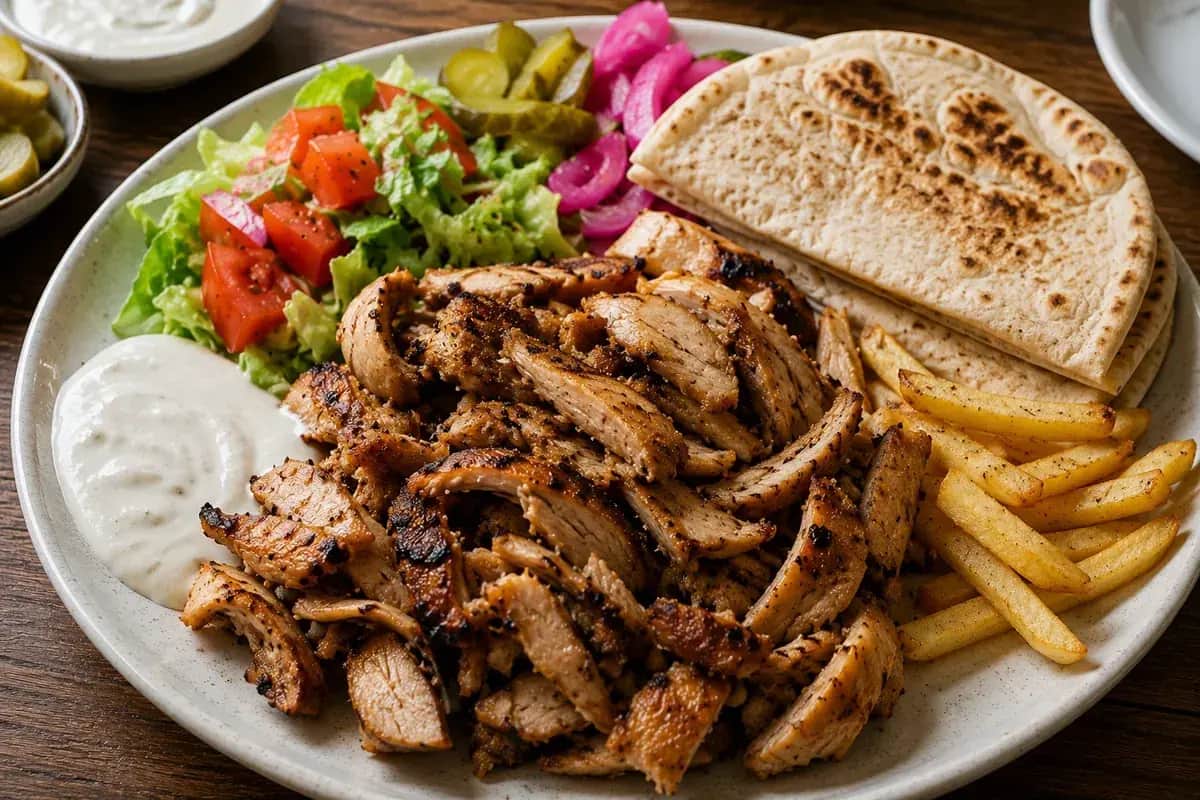
Palestinian Chicken Shawarma Recipe
A Palestinian chicken shawarma recipe made with thinly sliced chicken, yogurt, lemon, extra virgin olive oil, garlic, and warm Levantine spices. This homemade skillet version develops deeply browned edges while keeping the chicken tender and well seasoned. Serve it in warm pita, wraps, or a shawarma bowl with your favorite toppings.
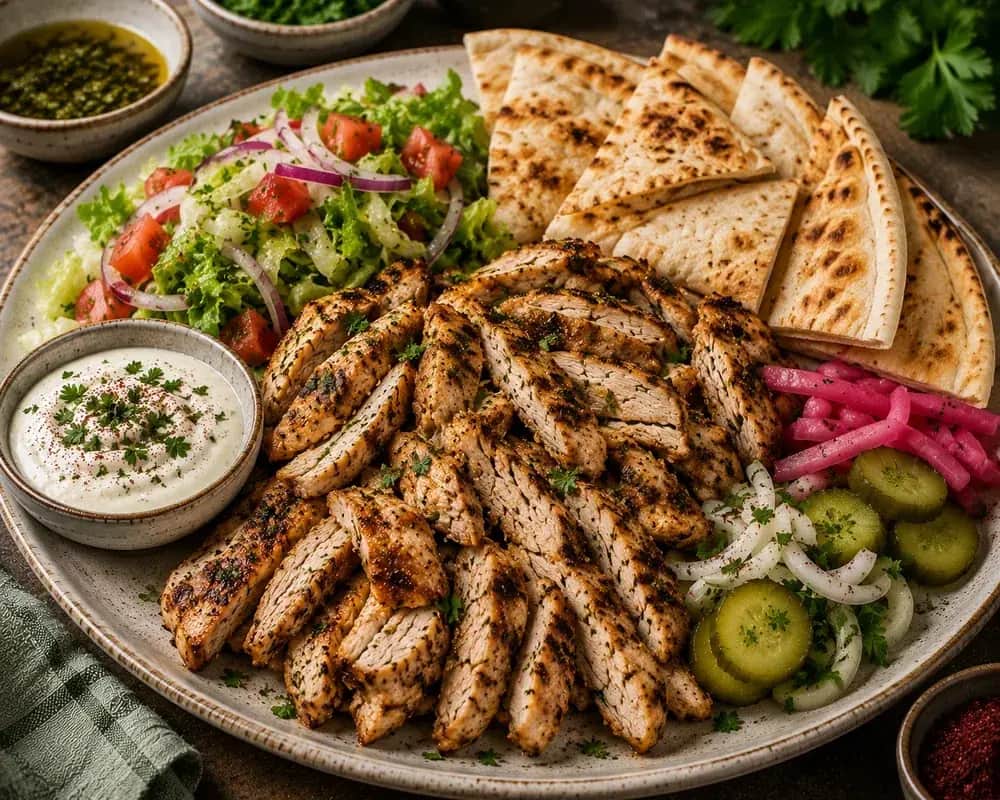
Grilled Chicken Shawarma Recipe — Lebanese-Style Mediterranean Chicken
A Lebanese-style grilled chicken shawarma made with thinly sliced chicken, yogurt, lemon, garlic, olive oil, and warm Levantine spices. The chicken develops lightly charred edges while staying tender, making it easy to serve in pita, wraps, bowls, salads, or as part of a mezze spread.
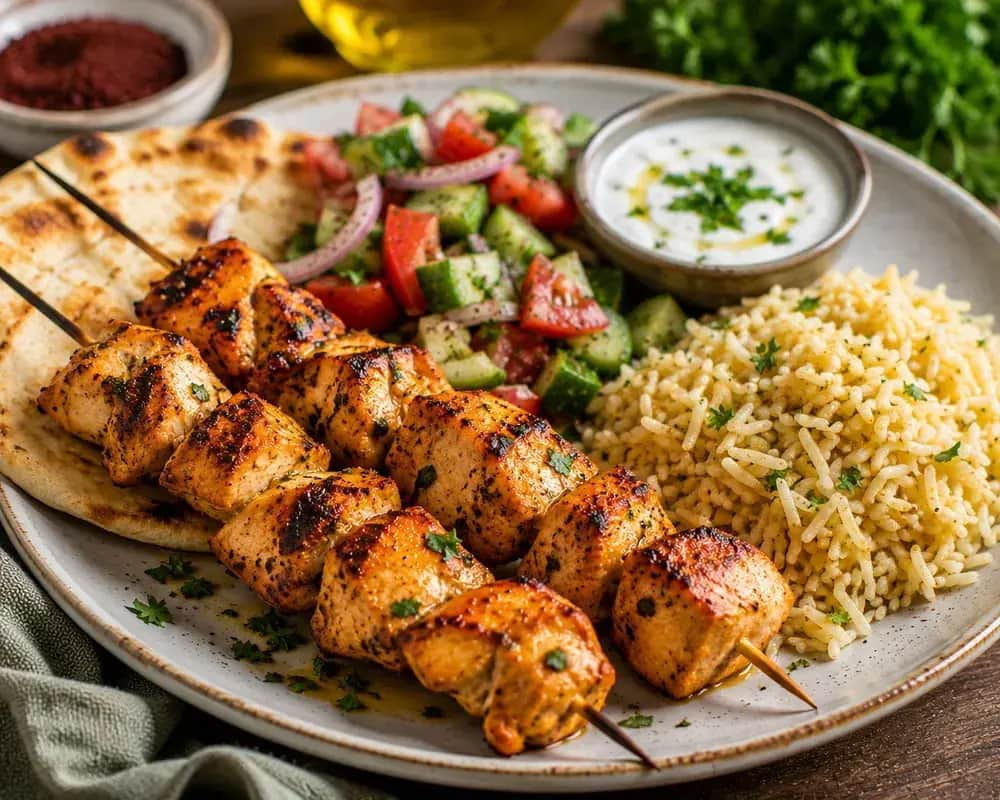
Shish Tawook Recipe — Juicy Lebanese Chicken Kabobs with Yogurt Marinade
This Shish Tawook recipe makes juicy Lebanese-style chicken kabobs marinated in Greek yogurt, lemon, garlic, extra virgin olive oil, tomato paste, paprika, cumin, oregano, and turmeric, then grilled until tender with golden-brown and lightly charred edges. An easy Mediterranean chicken recipe that's high in protein and perfect with toum, warm pita, rice, grilled vegetables, pickles, or fresh salad.