
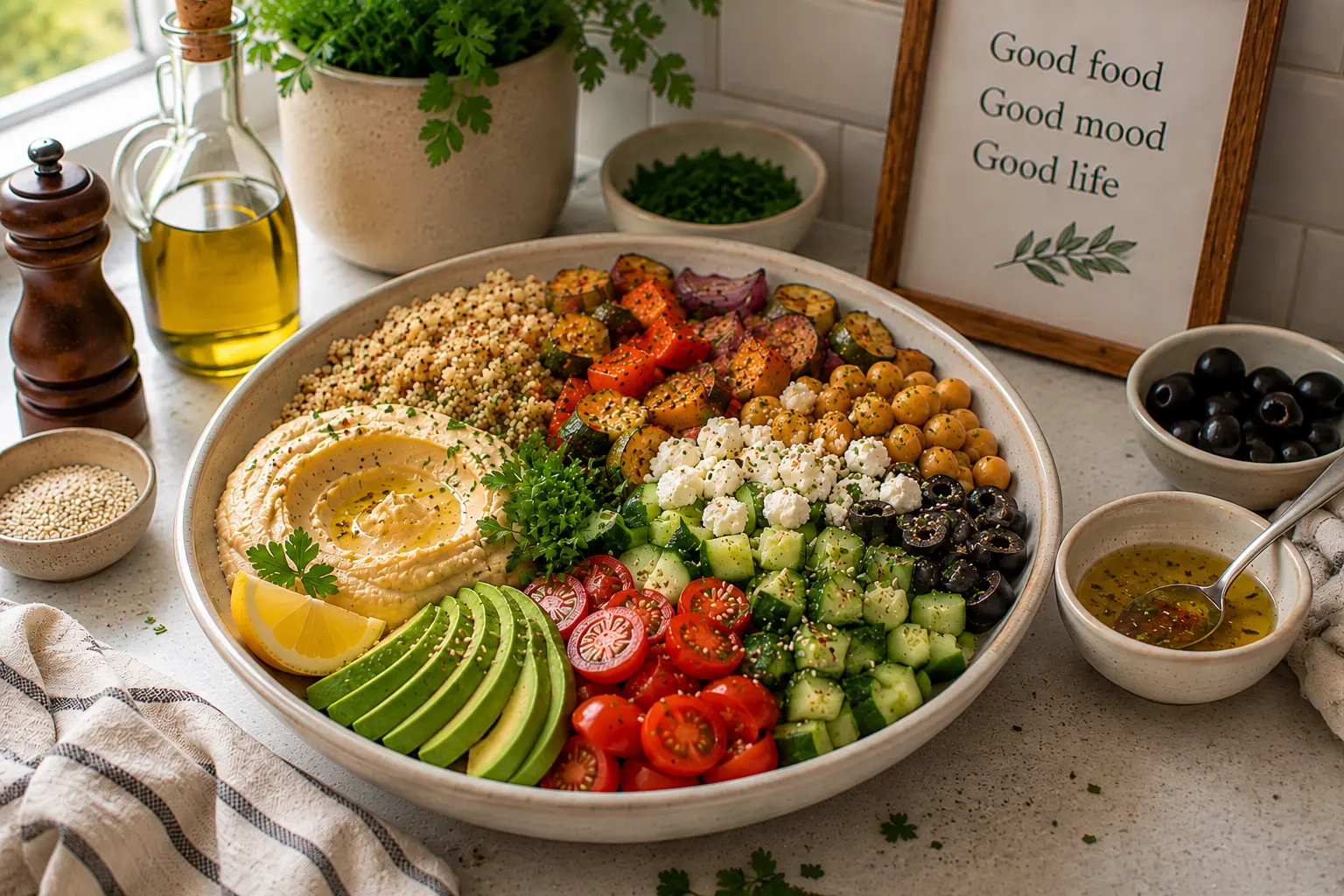
Hummus Power Bowl Recipe — Healthy Mediterranean Chickpea & Quinoa Bowl
This hummus power bowl recipe is a wholesome Mediterranean-inspired meal made with creamy hummus, protein-rich chickpeas, fluffy quinoa, roasted vegetables, crisp cucumber, cherry tomatoes, fresh parsley, lemon, sesame seeds, and extra virgin olive oil. An easy vegan and gluten-free bowl that combines plant-based protein, fiber, colorful vegetables, and satisfying Mediterranean flavors.
Prep Time
20 mins
Cook Time
15 mins
Total Time
35 mins
Servings
4
A TASTE OF TRADITION
The Story Behind This Recipe
The Hummus Power Bowl is a modern interpretation of the Mediterranean habit of building satisfying meals from simple plant foods. It is not presented as an ancient traditional dish or a single historical Lebanese recipe. Instead, it brings together ingredients and flavors strongly associated with the Eastern Mediterranean and places them into a contemporary bowl format that suits today's busy kitchens.
Cultural & Culinary Context
Chickpeas, tahini, lemon, olive oil, fresh herbs, and vegetables have deep roots in the food traditions of the Eastern Mediterranean. Hummus in particular is part of a much broader regional mezze culture in which chickpeas and tahini are transformed into creamy dishes served alongside bread, pickles, vegetables, salads, and other small plates. Meals built around these ingredients emphasize freshness, contrast, sharing, and the quality of simple pantry staples. This bowl takes those familiar flavors beyond the mezze table and turns them into a complete individual meal.
What Makes It Mediterranean?
The strongest Mediterranean connection comes from the combination of hummus, chickpeas, extra virgin olive oil, lemon, sesame, parsley, cucumber, tomatoes, and roasted vegetables. These ingredients create the characteristic contrast of creamy and crisp textures, earthy and bright flavors, and warm and fresh components. Quinoa is a modern addition rather than a traditional Mediterranean grain, but it works naturally as a nutritious base for the bowl without changing its Mediterranean-inspired flavor profile.
Mediterranean Influences
- 🌿Hummus and chickpeas provide a chickpea-based foundation closely associated with Eastern Mediterranean cuisine.
- 🌿Tahini in the hummus contributes the nutty sesame flavor characteristic of many regional dishes.
- 🌿Extra virgin olive oil is used as both a finishing fat and a source of rich Mediterranean flavor.
- 🌿Fresh lemon juice provides the bright acidity commonly used to balance legumes, vegetables, and tahini.
- 🌿Parsley, cucumber, and tomatoes add fresh elements that complement the richer hummus and roasted vegetables.
- 🌿Roasted vegetables bring warmth and depth while preserving the emphasis on plant foods.
- 🌿The bowl follows the Mediterranean preference for combining simple ingredients with contrasting textures and fresh finishing flavors.
- 🌿Quinoa is a modern addition that makes the meal more substantial while the overall flavor profile remains Mediterranean-inspired.
Ingredients
- 1.5 cups hummus (Use thick, creamy hummus. If it is very loose or watery, chill it before assembling so it holds its shape when spread in the bowl.)
- 1.5 cups cooked chickpeas (If using canned chickpeas, drain and rinse thoroughly, then pat dry if they are very wet.)
- 1 cup dry quinoa (Rinse thoroughly under cold water before cooking to remove surface bitterness.)
- 1 medium zucchini (Cut into thick half-moons so the pieces remain tender without becoming mushy during roasting.)
- 1 medium red bell pepper (Remove the seeds and cut into bite-sized strips similar in size to the zucchini.)
- 1 small red onion (Peel and cut into small wedges, keeping the layers together enough to caramelize without burning.)
- 1.5 tbsp extra virgin olive oil for roasting (Toss the vegetables thoroughly with the oil before placing them on a parchment-lined baking tray. This helps prevent sticking and promotes browning.)
- 1 large cucumber (Wash well and cut into bite-sized pieces or half-moons. Keep it separate from the warm roasted vegetables until assembly.)
- 1.5 cups cherry tomatoes (Wash and halve larger tomatoes so they are easy to eat with the other bowl components.)
- 0.25 cup fresh parsley (Finely chop shortly before serving for the freshest flavor and brightest appearance.)
- 2 tbsp fresh lemon juice (Add gradually and taste because the hummus may already contain lemon juice.)
- 2 tbsp extra virgin olive oil (Use a good-quality olive oil as a finishing ingredient because its flavor is noticeable in the finished bowl.)
- 1 tbsp sesame seeds (Use plain sesame seeds or lightly toast them for a deeper nutty flavor.)
- 0.5 tsp sea salt (Add cautiously because hummus and canned chickpeas can already contain significant salt.)
- 0.25 tsp freshly ground black pepper
Instructions
- 1
Rinse the quinoa thoroughly under cold running water. Transfer it to a saucepan and cook according to the package directions. Once the grains are tender and their small spirals have separated, remove the pan from the heat, cover it, and let the quinoa rest for about 5 minutes. Fluff gently with a fork rather than stirring aggressively.
- 2
While the quinoa cooks, prepare the vegetables for roasting. Cut zucchini, bell pepper, red onion, carrots, or your chosen combination into similarly sized pieces. Keeping the pieces reasonably uniform helps prevent some vegetables from burning while others remain undercooked.
- 3
Roast the vegetables until tender and lightly browned around the edges. Give the pieces enough space on the roasting surface. If they are packed too closely together, released moisture can cause them to steam instead of developing browned, caramelized edges.
- 4
Drain and rinse the chickpeas thoroughly if using canned chickpeas. Pat them dry if they are carrying a lot of moisture. Excess liquid can dilute the hummus and make the finished bowl watery.
- 5
Prepare the cucumber and cherry tomatoes while the warm components finish. Keep them fresh and separate from the roasted vegetables so their crisp texture remains intact.
- 6
Taste the quinoa once it has rested. It should be tender and fluffy rather than wet or crunchy. Allow it to cool slightly so it is warm rather than steaming hot when assembled.
- 7
Spread approximately 3 tablespoons of hummus into each serving bowl. Use the back of a spoon to make a shallow circular or sweeping shape, leaving room for the other ingredients.
- 8
Divide the quinoa, chickpeas, roasted vegetables, cucumber, and cherry tomatoes among the bowls. Arrange the ingredients in separate sections or loose groups so each component remains visually distinct and retains its own texture.
- 9
Drizzle the bowls with extra virgin olive oil and fresh lemon juice. Add the lemon gradually and taste before adding more because both hummus and the roasted vegetables may already have their own seasoning.
- 10
Finish with chopped fresh parsley and sesame seeds. Season carefully with sea salt and freshly ground black pepper, remembering that the hummus and chickpeas may already be salted.
- 11
Serve immediately while the quinoa and roasted vegetables are pleasantly warm and the cucumber and tomatoes remain cool and crisp.
SET YOURSELF UP FOR SUCCESS
Before You Cook
👨🍳 Keep In Mind
- •Read the ingredient list and decide which vegetables you will roast. Zucchini, bell pepper, red onion, and carrots have different densities, so cut firmer vegetables slightly smaller if necessary.
- •Rinse the quinoa before cooking. This is especially important if you notice a bitter or soapy flavor from unrinsed quinoa.
- •Check the hummus consistency before starting. Very thin hummus can make the bowl watery and difficult to arrange.
- •If using canned chickpeas, rinse them well to remove excess canning liquid and reduce the chance of an overly salty or metallic flavor.
- •Prepare the cucumber, tomatoes, and parsley while the quinoa and vegetables cook so assembly is quick once the warm components are ready.
💡 Helpful Tips
- •Do not overcrowd the roasting pan. Space between the vegetables allows moisture to escape and encourages browning.
- •Let cooked quinoa rest covered before fluffing it. This allows remaining moisture to distribute evenly through the grains.
- •Allow hot quinoa and roasted vegetables to cool slightly before placing them beside fresh cucumber and tomatoes.
- •Taste before adding salt. Hummus and canned chickpeas can vary considerably in saltiness.
- •Add lemon gradually. Too much acid can overpower the creamy tahini flavor of the hummus.
- •Keep the components separate until serving if you want the best contrast between warm, creamy, crisp, and roasted textures.
👀 How Do I Know It's Done?
- ✓The quinoa is ready when it is tender and fluffy rather than crunchy or sitting in excess water.
- ✓The roasted vegetables are ready when a fork can enter the thickest pieces easily and the edges show light browning.
- ✓The chickpeas are ready to use once they are thoroughly drained and rinsed and no excess liquid is collecting around them.
- ✓The bowl is properly assembled when the hummus remains creamy, the fresh vegetables remain crisp, and the warm ingredients are not so hot that they wilt the cucumber and tomatoes.
- ✓The final flavor should have a balance of creamy hummus, earthy chickpeas and vegetables, bright lemon, fresh herbs, and fruity olive oil rather than being dominated by salt or acidity.
Tweak It
Make This Recipe Work for You
Adapt the recipe to your ingredients, dietary needs, budget, time, serving size, or meal-prep plans.
🔄 Ingredient Substitutions
Change the roasted vegetables
Use seasonal vegetables such as eggplant, cauliflower, broccoli, sweet potato, zucchini, bell pepper, carrots, or red onion. Adjust cutting size according to how quickly each vegetable cooks.
Use another grain
Replace quinoa with cooked bulgur, brown rice, farro, or another suitable whole grain. Adjust the cooking method and liquid according to the grain selected.
Use homemade hummus
A homemade chickpea-and-tahini hummus works especially well. Keep it thick enough to remain creamy when spread in the bowl.
Change the topping
Replace sesame seeds with toasted pumpkin seeds or sunflower seeds when desired, especially when avoiding sesame.
🌱 Dietary Adjustments
Vegan
The bowl is naturally vegan when the hummus and all packaged ingredients are made without animal-derived ingredients.
Gluten-free
The bowl can be gluten-free when quinoa, hummus, spices, and other packaged ingredients are certified gluten-free. Avoid replacing quinoa with grains that contain gluten.
💰 Budget-Friendly Options
Use seasonal vegetables
Choose affordable vegetables that are in season instead of buying a fixed combination. Roasting allows simple vegetables to develop substantial flavor.
Use dried chickpeas
Cooked dried chickpeas can be more economical than canned chickpeas when prepared in larger batches. Cool and portion them before storing.
⏱️ Time-Saving Options
Prepare components ahead
Cook the quinoa, roast the vegetables, rinse the chickpeas, and prepare the fresh vegetables ahead of time. Refrigerate the components separately and assemble the bowls when needed.
👨👩👧👦 Serving Adjustments
Make half a batch
Halve the ingredient quantities to prepare approximately two servings. Keep the same preparation sequence so the textures remain balanced.
Make a larger batch
Double the ingredients for approximately eight servings, but roast vegetables in more than one batch if necessary so the roasting surface does not become overcrowded.
🥡 Meal Prep
Meal-prep bowl
Store hummus, quinoa, chickpeas, roasted vegetables, cucumber, and tomatoes in separate containers or compartments. Assemble just before eating to preserve the best texture.
Pack for lunch
Pack the hummus and lemon-olive-oil dressing separately when possible. Add them shortly before eating so the quinoa and fresh vegetables do not become soggy.
RECIPE RESCUE
🧩 What Do You Need Help With?
Choose the problem you're facing and get a recipe-specific solution instead of a generic cooking tip.
WHAT IF?
🔄 What If...?
Choose your situation and we'll show you a practical pathway for making this recipe work.
STORAGE & LEFTOVERS
🥡 Storage & Leftovers
Store the individual components in separate airtight containers whenever possible.
Refrigerate cooked quinoa, chickpeas, roasted vegetables, hummus, and prepared fresh vegetables.
Keep lemon juice and olive oil separate from the fresh vegetables until serving.
If storing an assembled bowl, keep the hummus and dressing away from the cucumber and tomatoes as much as possible.
Do not leave the completed bowl at room temperature for extended periods.
Best Storage Time
Best assembled fresh; prepared components should be refrigerated and used according to their individual freshness and storage requirements.
How to Store
Separate airtight food containers or divided meal-prep containers
SERVING & PAIRING
🍽️ Serving & Pairing
Serve the bowl while the quinoa and roasted vegetables are warm or slightly warm, with the cucumber and tomatoes still cool and crisp. Keep the hummus visible as the creamy centerpiece and finish with fresh parsley, sesame seeds, lemon, and a final drizzle of extra virgin olive oil.
What Goes Well With It?
RECIPE FAQ
❓ Frequently Asked Questions
How do you make a Hummus Power Bowl?
To make a Hummus Power Bowl, first rinse and cook 1 cup of dry quinoa until tender and fluffy, then let it rest covered for about 5 minutes before fluffing it with a fork. Roast zucchini, red bell pepper, and red onion with 1½ tablespoons of extra virgin olive oil at 220°C (425°F) for about 20–25 minutes, turning once, until tender and lightly browned. Drain and rinse 1½ cups of cooked chickpeas and prepare the cucumber, cherry tomatoes, and fresh parsley. Spread approximately 3 tablespoons of thick hummus into each serving bowl, then arrange the quinoa, chickpeas, roasted vegetables, cucumber, and tomatoes around it. Finish with extra virgin olive oil, fresh lemon juice, parsley, sesame seeds, sea salt, and freshly ground black pepper. Serve while the quinoa and roasted vegetables are warm or slightly warm and the fresh vegetables remain cool and crisp.
Is a Hummus Power Bowl a traditional Mediterranean dish?
Not in this exact bowl format. It is a modern Mediterranean-inspired meal built from ingredients strongly associated with Eastern Mediterranean food traditions, including chickpeas, hummus, tahini, olive oil, lemon, parsley, cucumber, tomatoes, and vegetables. Quinoa is a modern addition rather than a traditional Mediterranean grain.
Can I make this bowl without quinoa?
Yes. You can replace quinoa with cooked bulgur, brown rice, farro, or another suitable grain. The bowl will still work because the main Mediterranean flavor comes from the hummus, chickpeas, vegetables, lemon, herbs, and olive oil.
Why does my quinoa taste bitter?
Quinoa can retain a bitter-tasting surface coating if it has not been rinsed properly. Rinse it thoroughly under cold running water before cooking and drain it well.
Why are my roasted vegetables watery instead of browned?
The most common reason is overcrowding. When vegetables are packed tightly together, the moisture they release becomes trapped and they steam instead of roast. Spread them into a single layer with space between the pieces.
Can I use canned chickpeas?
Yes. Canned chickpeas are convenient and work very well. Drain and rinse them thoroughly, then pat them dry if necessary before adding them to the bowl.
Can I prepare this bowl ahead of time?
Yes. It is best to prepare and refrigerate the components separately. Keep hummus, quinoa, chickpeas, roasted vegetables, cucumber, and tomatoes apart and assemble shortly before eating.
How do I keep the bowl from becoming soggy?
Keep the hummus, lemon juice, and olive oil away from the cucumber and tomatoes until serving. Also make sure the quinoa and chickpeas are not carrying excess water before assembly.
Can I make this recipe gluten-free?
Yes. Quinoa is naturally gluten-free, but check packaged hummus, seasonings, and any replacement grains for cross-contact or gluten-containing ingredients if strict gluten-free preparation is required.
Is this bowl vegan?
Yes, when the hummus and all other packaged ingredients contain no animal-derived ingredients. The canonical recipe uses plant-based ingredients.
Why does my finished bowl taste too salty?
Hummus and canned chickpeas can both contain salt. Avoid salting each component heavily. If the finished bowl is too salty, add more unsalted quinoa, vegetables, cucumber, or tomatoes and brighten it with a small amount of lemon juice.
Can I use homemade hummus?
Absolutely. Homemade hummus works especially well. For the best bowl texture, keep it thick and creamy rather than very loose.
What vegetables work best in this bowl?
Zucchini, bell pepper, red onion, carrots, eggplant, cauliflower, broccoli, and sweet potato can all work well. Choose seasonal vegetables and adjust their size according to how quickly they cook.
Explore More
Go deeper into the cuisine
Learn more about the ingredients, traditions, and cooking approaches connected to this recipe.