
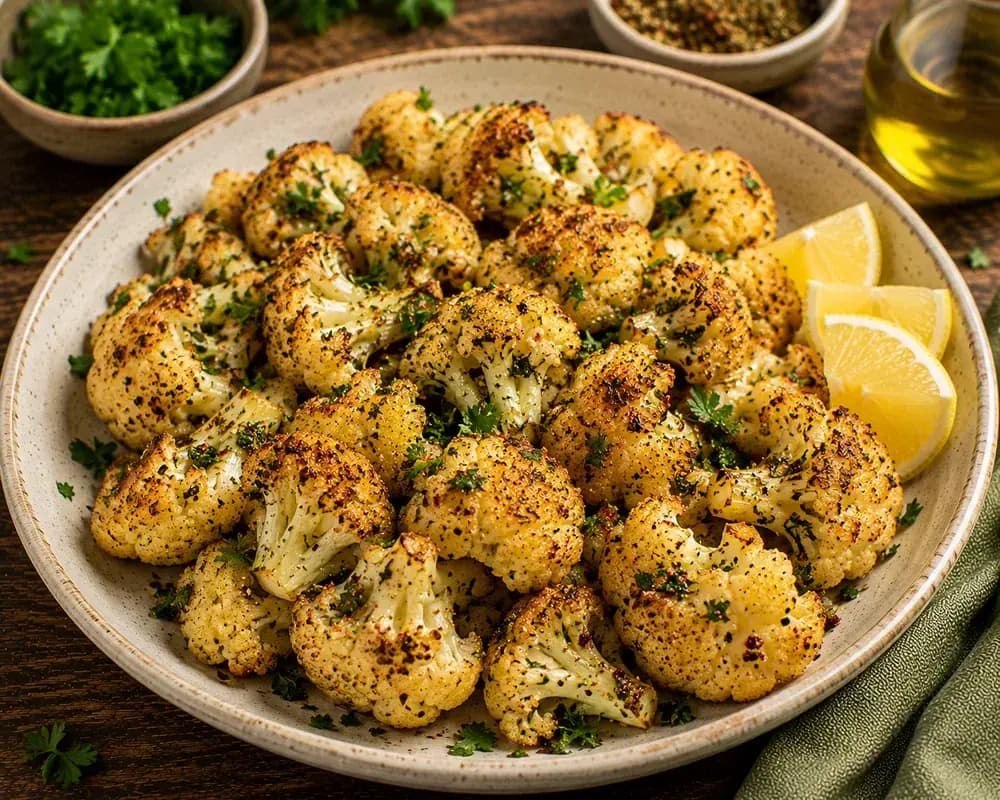
Herb-Roasted Cauliflower Recipe — Healthy Mediterranean Garlic & Herb Cauliflower
Oven-roasted cauliflower tossed with olive oil, fresh herbs, garlic, lemon, and Mediterranean seasonings. High-heat roasting brings out the cauliflower's natural sweetness and gives the florets browned edges while keeping the center tender.
Prep Time
15 mins
Cook Time
30 mins
Total Time
45 mins
Servings
4
A TASTE OF TRADITION
The Story Behind This Recipe
Cauliflower has a long culinary history across the eastern Mediterranean and Levant, where vegetables are often treated as central components of a meal rather than simply as side dishes. In Lebanese and neighboring cuisines, cauliflower appears in many forms, from fried and roasted preparations to dishes served with tahini, garlic, lemon, herbs, and other familiar regional flavors. This roasted recipe draws on that tradition while using a straightforward oven method that brings out the natural sweetness and nuttiness of the cauliflower.
Cultural & Culinary Context
In Lebanese home cooking, cauliflower is a remarkably versatile ingredient. It can be paired with tahini, garlic, lemon, herbs, or warm spices, and it often appears alongside other vegetables and mezze. The combination used here—olive oil, garlic, oregano, thyme, cumin, paprika, lemon, and parsley—captures the spirit of Levantine cooking without requiring a complicated sauce. The oven does much of the work, concentrating the cauliflower's natural flavor and creating browned edges that provide a satisfying contrast to the tender center.
What Makes It Mediterranean?
The recipe reflects a broader Mediterranean cooking philosophy in which good vegetables are enhanced with a small number of aromatic ingredients rather than hidden under heavy sauces. Extra virgin olive oil provides the main cooking fat, garlic creates a savory foundation, herbs and spices add warmth, and fresh lemon is used at the end to brighten the finished dish. These simple elements allow the cauliflower itself to remain the star.
Mediterranean Influences
- 🌿Extra virgin olive oil is used as the primary cooking fat.
- 🌿Garlic provides a classic savory foundation.
- 🌿Oregano and thyme contribute a familiar Mediterranean herb profile.
- 🌿Cumin and paprika add warm Middle Eastern and eastern Mediterranean depth.
- 🌿Fresh lemon juice provides the bright acidic finish commonly used with vegetables in the region.
- 🌿Fresh parsley adds freshness, color, and herbal contrast.
- 🌿The dish emphasizes vegetables and simple ingredients rather than a heavy sauce.
Ingredients
- 1 large cauliflower (Choose a firm cauliflower with tightly packed florets. Remove the leaves and tough core, then cut into medium, evenly sized florets.)
- 3 tbsp extra virgin olive oil (Use enough to lightly coat every floret without making the cauliflower greasy or pooling oil on the tray.)
- 3 cloves garlic (Finely minced. Distribute it evenly through the seasoning so large piles of garlic do not burn during roasting.)
- 1 tsp paprika (Provides warm color and a mild roasted-pepper flavor.)
- 1 tsp dried oregano
- 1 tsp dried thyme
- 0.5 tsp ground cumin (Adds warm earthy depth. Avoid using substantially more because cumin can overpower the herbs.)
- 0.5 tsp sea salt (Start with this amount and adjust after roasting if necessary.)
- 0.25 tsp black pepper (Freshly ground is preferable for a stronger aroma.)
- 2 tbsp fresh parsley (Finely chopped and added after roasting to preserve its fresh flavor and bright color.)
- 1 tbsp fresh lemon juice (Add after roasting. The acidity brightens the finished cauliflower without interfering with browning in the oven.)
- 1 lemon (Cut into wedges for serving.)
Instructions
- 1
Preheat the oven to 220°C (425°F). Allow the oven to fully preheat before roasting because the initial high heat is important for browning the cauliflower rather than steaming it.
- 2
Remove the cauliflower leaves and tough central core. Separate the cauliflower into medium-sized florets. Try to keep the pieces reasonably similar in size so that smaller pieces do not burn before larger pieces become tender.
- 3
Wash the florets thoroughly and dry them very well with a clean kitchen towel or paper towels. Do not skip this step. Excess water on the cauliflower creates steam in the oven and can prevent the deep golden browning that gives roasted cauliflower its best flavor.
- 4
Place the completely dry cauliflower in a large mixing bowl. Add the extra virgin olive oil, minced garlic, paprika, oregano, thyme, cumin, sea salt, and black pepper.
- 5
Toss the cauliflower thoroughly until every floret has a light, even coating of oil and seasoning. Scrape seasoning from the bottom and sides of the bowl and redistribute it so that none of the garlic and spices are left behind.
- 6
Line a large baking tray with parchment paper. Spread the seasoned cauliflower over the tray in one layer. Leave visible space between the florets. If the cauliflower is crowded or piled on top of itself, use two trays because overcrowding traps moisture and causes steaming instead of roasting.
- 7
Place the tray in the fully preheated oven and roast for approximately 25–30 minutes. After about 15 minutes, turn or flip the larger florets so several sides have a chance to contact the hot tray.
- 8
Continue roasting until the cauliflower is tender when pierced with a fork and the edges are clearly golden brown to deep golden brown. Tenderness and color are both important. If the cauliflower is tender but still pale, continue roasting for a few additional minutes.
- 9
Watch the minced garlic during the final part of roasting. Garlic can brown faster than the cauliflower. If small pieces of garlic are becoming very dark while the cauliflower still needs time, redistribute the florets or move exposed garlic away from the hottest areas of the tray.
- 10
Transfer the roasted cauliflower to a serving dish while it is still hot. Drizzle with the fresh lemon juice and gently turn the florets so the lemon is distributed without crushing the caramelized surfaces.
- 11
Sprinkle the chopped fresh parsley over the cauliflower. Taste one floret and adjust the salt, black pepper, or lemon juice if necessary.
- 12
Serve immediately with fresh lemon wedges. The cauliflower is at its best when hot and freshly roasted, with browned edges, a tender center, and a bright lemon-herb finish.
SET YOURSELF UP FOR SUCCESS
Before You Cook
👨🍳 Keep In Mind
- •Choose a firm cauliflower with compact, fresh-looking florets and no extensive dark discoloration.
- •Cut the florets into similar sizes so the tray finishes cooking more evenly.
- •Dry the cauliflower exceptionally well after washing. This is one of the most important steps for achieving roasted rather than steamed cauliflower.
- •Use a large baking tray. The cauliflower needs enough surface area to remain in a single layer.
- •Fully preheat the oven before adding the tray.
- •Have the lemon and parsley ready before the cauliflower finishes so the final seasoning can be added while the florets are hot.
💡 Helpful Tips
- •For the deepest browning, place some florets with their flat cut surfaces directly against the baking tray.
- •Do not pour excess oil onto the tray. The florets should be coated, not submerged.
- •Do not cover the cauliflower during roasting.
- •Avoid opening the oven repeatedly because every opening releases heat and can lengthen cooking.
- •Turn the cauliflower around the halfway point rather than constantly moving it.
- •If your oven has a strong hot spot, rotate the tray halfway through cooking.
- •Add lemon juice only after roasting to preserve the roasted flavor and surface browning.
- •Fresh parsley is best added after cooking rather than before roasting.
👀 How Do I Know It's Done?
- ✓A fork should enter the thickest part of a floret easily.
- ✓The center should no longer taste raw or hard.
- ✓The edges should have visible golden or deep golden-brown caramelization.
- ✓The cauliflower should smell roasted and aromatic rather than simply boiled.
- ✓The florets should hold their shape instead of collapsing into a soft mash.
- ✓If the cauliflower is tender but pale, it needs additional roasting for better flavor and color.
Tweak It
Make This Recipe Work for You
Adapt the recipe to your ingredients, dietary needs, budget, time, serving size, or meal-prep plans.
🔄 Ingredient Substitutions
If you do not have parsley
Use fresh cilantro for a more pronounced herb flavor, or finish with a small amount of finely chopped fresh mint for a brighter variation.
Adjust the dried herbs
If you do not have both oregano and thyme, use the dried Mediterranean herb you have available. Keep the total quantity moderate so the seasoning does not overpower the cauliflower.
If extra virgin olive oil is unavailable
A mild cooking oil can be used, although extra virgin olive oil provides a more characteristic Mediterranean flavor.
🌱 Dietary Adjustments
Naturally vegan
The recipe is already vegan as written and contains no dairy, eggs, or animal-derived ingredients.
Gluten-free
The ingredients are naturally gluten-free. If serving someone with celiac disease or strict gluten avoidance, verify that packaged spices and other ingredients are certified according to their needs.
💰 Budget-Friendly Options
Keep it budget-friendly
Cauliflower, dried herbs, garlic, and basic spices make this an economical vegetable dish. Use the herbs and spices already available in your pantry rather than buying a new blend.
⏱️ Time-Saving Options
Prepare the cauliflower ahead
Wash, dry, and cut the cauliflower several hours ahead and refrigerate it in a covered container. Keep it dry and season shortly before roasting for the best texture.
Mix the seasoning ahead
The dried spices can be combined in advance. Add the garlic and olive oil shortly before coating the cauliflower.
👨👩👧👦 Serving Adjustments
For two servings
Halve the ingredient quantities. Use a tray that still gives the cauliflower enough space for a single layer.
For a larger group
Increase the ingredients proportionally, but do not simply crowd everything onto one tray. Use additional trays whenever necessary.
🥡 Meal Prep
Meal-prep option
Cooked cauliflower can be refrigerated and reheated later. For the best texture, reheat it in a hot oven or air fryer rather than a microwave. Add fresh lemon and parsley after reheating.
RECIPE RESCUE
🧩 What Do You Need Help With?
Choose the problem you're facing and get a recipe-specific solution instead of a generic cooking tip.
WHAT IF?
🔄 What If...?
Choose your situation and we'll show you a practical pathway for making this recipe work.
STORAGE & LEFTOVERS
🥡 Storage & Leftovers
Allow leftover cauliflower to cool before placing it in an airtight container.
Refrigerate for up to 3–4 days.
Reheat in a hot oven, toaster oven, or air fryer when possible to restore some of the roasted texture.
Add fresh lemon juice and parsley after reheating rather than before storage.
Best Storage Time
3–4 days refrigerated
How to Store
Airtight food-storage container
SERVING & PAIRING
🍽️ Serving & Pairing
Serve hot or warm with fresh lemon wedges and parsley. It works particularly well as a Lebanese-inspired mezze component, a vegetable side dish, or a light vegetarian meal when paired with hummus, tahini, grains, or warm pita.
What Goes Well With It?
RECIPE FAQ
❓ Frequently Asked Questions
How do you make healthy herb-roasted cauliflower?
To make healthy herb-roasted cauliflower, preheat the oven to 220°C (425°F), then cut a large cauliflower into evenly sized florets and dry them thoroughly. Toss the florets with 3 tablespoons extra virgin olive oil, 3 minced garlic cloves, 1 teaspoon paprika, 1 teaspoon dried oregano, 1 teaspoon dried thyme, 1/2 teaspoon ground cumin, 1/2 teaspoon sea salt, and 1/4 teaspoon black pepper. Spread the cauliflower in a single layer on a parchment-lined baking tray and roast for about 25–30 minutes, turning the larger pieces around the halfway point. Continue roasting until the florets are tender and deeply golden at the edges. Finish with 1 tablespoon fresh lemon juice and 2 tablespoons chopped fresh parsley, then serve hot with lemon wedges.
Why is my roasted cauliflower not browning?
The most common causes are excess moisture, an overcrowded baking tray, or an oven that was not fully preheated. Dry the cauliflower thoroughly, leave space between the florets, and make sure the oven has reached 220°C (425°F) before roasting.
Should I boil the cauliflower before roasting?
No. This recipe is designed to roast the cauliflower directly. Boiling adds moisture and can make it more difficult to achieve deeply caramelized edges.
Why do I need to dry the cauliflower so well?
Water on the surface turns into steam in the oven. Steam keeps the cauliflower moist but interferes with browning. Dry florets have a much better chance of developing crisp, caramelized surfaces.
Can I prepare the cauliflower ahead of time?
Yes. You can wash, cut, and thoroughly dry the cauliflower several hours ahead and refrigerate it. For the best texture, add the oil and seasoning shortly before roasting.
Can I season the cauliflower the night before?
You can roast it this way, but the florets will brown less evenly. Salt and moisture can draw water from the cauliflower during storage. For the best roasted texture, prepare the dry cauliflower ahead and season it shortly before cooking.
Can I use frozen cauliflower?
Yes, although fresh cauliflower generally browns better. Frozen cauliflower contains more moisture, so spread it widely and allow extra roasting time if necessary. Avoid overcrowding the tray.
Can I make this recipe without garlic?
Yes. Simply omit the garlic. The herbs, paprika, cumin, olive oil, and lemon will still provide plenty of flavor. You can add a little extra parsley at the end for freshness.
Can I make the cauliflower spicy?
Yes. Add chili flakes, cayenne pepper, or another mild chili to the seasoning mixture. Start with a small amount and increase after tasting the finished dish.
Can I use fresh herbs instead of dried herbs?
Yes, but fresh herbs are more delicate and are generally best added partly or entirely after roasting. Fresh parsley is especially effective as a finishing herb.
When should I add the lemon juice?
Add lemon juice after roasting. The acidic juice brightens the finished cauliflower and works especially well against the warm spices and roasted garlic. Adding it after roasting also avoids interfering with surface browning.
How do I know when the cauliflower is fully cooked?
A fork should enter the thickest part of the floret easily, the center should no longer taste raw or hard, and the outer surfaces should have visible golden-brown caramelization.
What if the cauliflower is cooked but still pale?
Continue roasting for several minutes. If necessary, spread the florets farther apart first. Tenderness means the inside is cooked, but additional roasting is needed to develop the browned exterior and deeper roasted flavor.
What if the cauliflower is burning before it becomes tender?
Check whether the florets are too small or whether your oven runs hotter than its displayed temperature. Move darker pieces away from hot spots, reduce the temperature slightly if necessary, and continue cooking until the larger florets are tender.
Can I make this recipe in an air fryer?
Yes. An air fryer works well for smaller batches. Keep the basket uncrowded, cook until the florets are tender and browned, and shake or turn them during cooking. Exact timing depends on the appliance and floret size.
Can I roast the cauliflower on two trays?
Yes. Two trays are preferable to one overcrowded tray. If your oven has uneven heat, rotate the trays during cooking so both batches brown evenly.
How can I make the cauliflower crispier?
Dry it thoroughly, avoid overcrowding, use a fully preheated oven, keep the florets in a single layer, and allow enough roasting time for surface moisture to evaporate. Placing cut sides against the hot tray also encourages browning.
Can I serve this as a main meal?
Yes. For a more substantial meal, serve it with hummus or tahini, warm pita, lentils, bulgur, rice, chickpeas, or another protein-rich accompaniment.
How long does roasted cauliflower keep in the refrigerator?
Properly cooled and stored leftovers can generally be refrigerated for up to 3–4 days. Reheat them in a hot oven, toaster oven, or air fryer when possible for better texture.
Can I freeze roasted cauliflower?
You can freeze it, but the texture will usually become softer after thawing and reheating. If freezing is necessary, cool it completely, store it airtight, and reheat directly in a hot oven or air fryer.
What sauce goes well with herb-roasted cauliflower?
Tahini sauce, hummus, garlic yogurt sauce, or a simple lemon-tahini dressing pair especially well. For a fully vegan plate, use tahini or hummus.
Why does my cauliflower smell strongly while roasting?
Cauliflower naturally develops a stronger sulfur-like aroma as it cooks. High-heat roasting usually reduces this compared with boiling and replaces some of the vegetable aroma with a deeper toasted and caramelized smell.
Can I use a smaller cauliflower?
Yes. Reduce the seasoning proportionally if the cauliflower is substantially smaller. The most important thing is to avoid using so much oil or seasoning that the florets become heavily coated.
Explore More
Go deeper into the cuisine
Learn more about the ingredients, traditions, and cooking approaches connected to this recipe.
You May Also Like
More delicious recipes from the Vegetarian
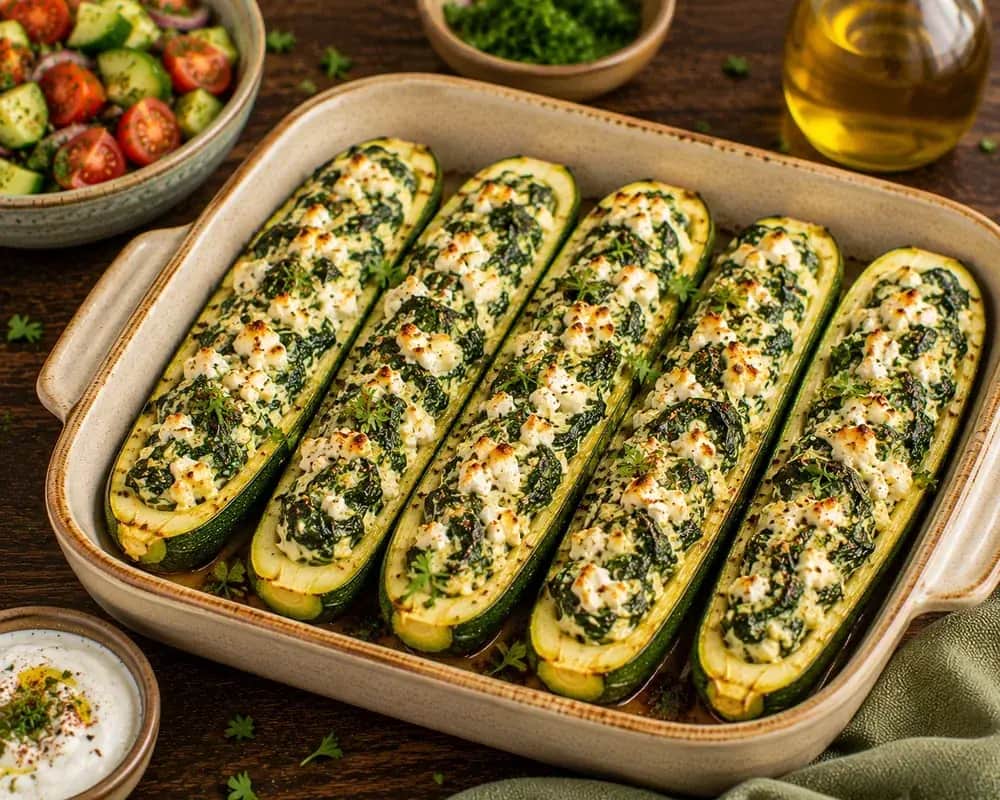
Spinach & Feta Stuffed Zucchini Boats Recipe — Healthy Mediterranean Vegetarian Dinner
Baked zucchini boats filled with spinach, feta, herbs, and Mediterranean seasonings. The zucchini becomes tender in the oven while the savory filling develops a lightly browned top.
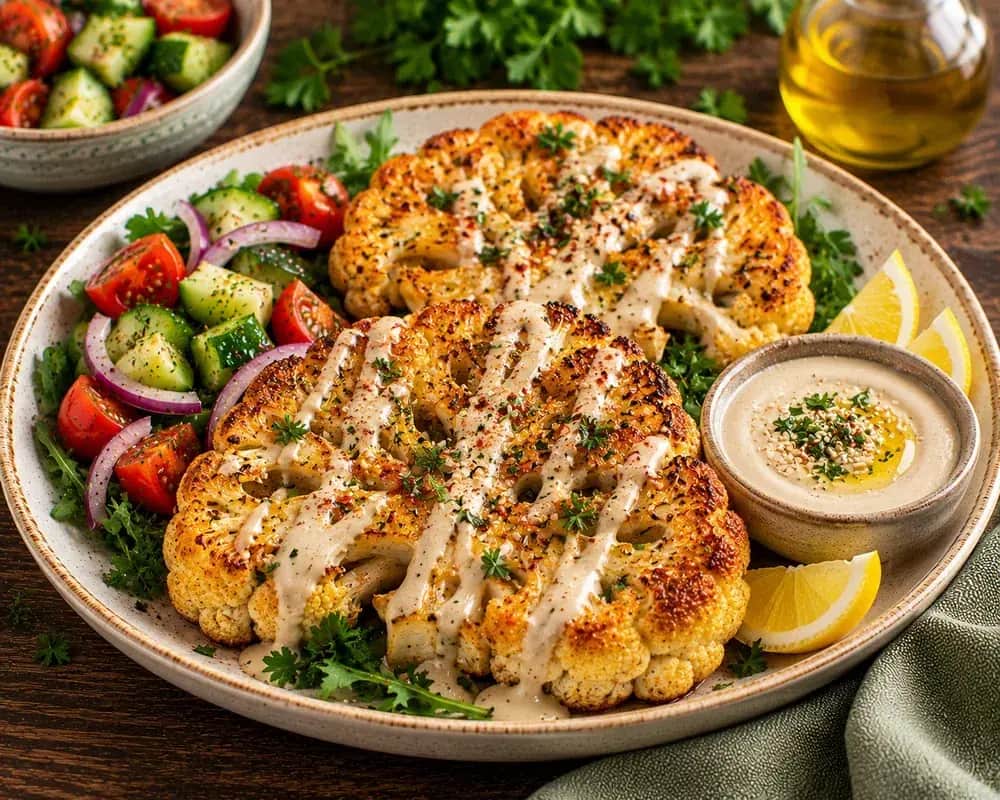
Cauliflower Steaks with Lemon Tahini Sauce Recipe
A healthy cauliflower steaks with lemon tahini sauce recipe made with thick roasted cauliflower, paprika, cumin, garlic, creamy tahini, fresh lemon, toasted pine nuts, and parsley. This easy Mediterranean vegetarian dinner is roasted until golden and caramelized, then finished with a bright, creamy tahini sauce.
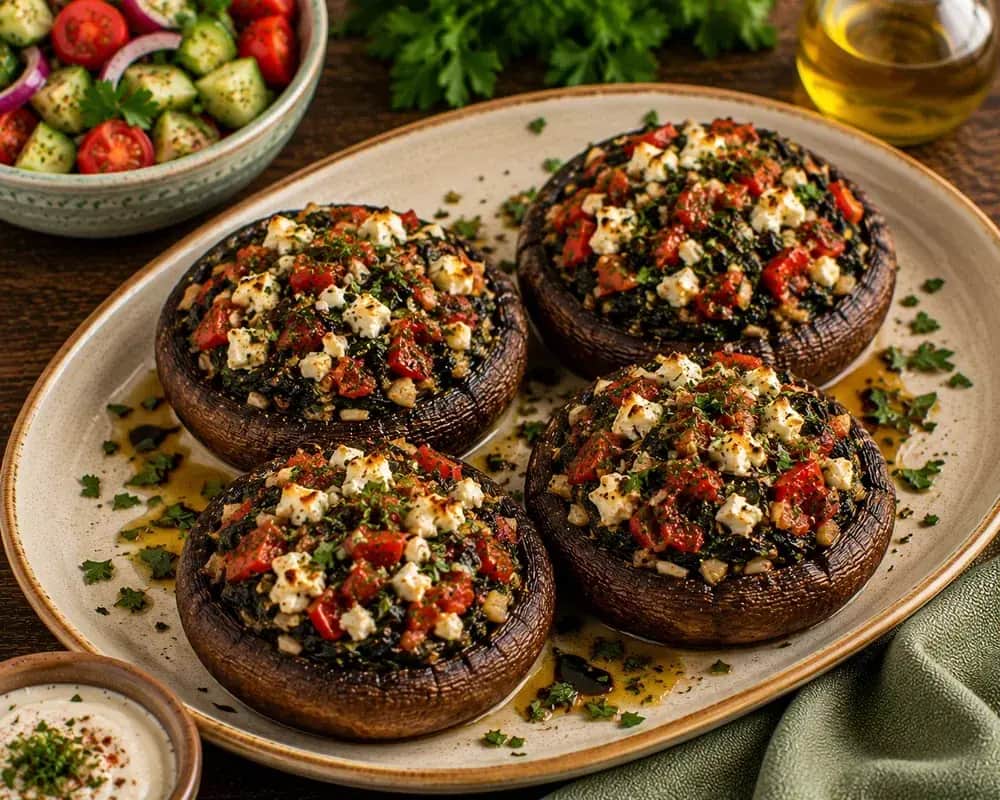
Mediterranean Stuffed Portobello Mushrooms Recipe — Healthy Vegetarian
Large Portobello mushrooms filled with quinoa, spinach, sun-dried tomatoes, feta, herbs, lemon, and Parmesan. The mushrooms roast until tender while the filling develops a savory, herb-rich flavor.