
Healthy Mezze Guide
Egyptian Breakfast Guide
Egyptian breakfast is often built around filling, familiar foods that are easy to share and practical enough for everyday life. Beans, eggs, vegetables, cheese, bread, herbs, and simple seasonings can come together in many different ways. At Healthy Mezze, we approach breakfast from the perspective of food we actually enjoy preparing at home, while keeping traditional flavors and practical adaptations in mind.
The foundation of an Egyptian breakfast
Ful medames is one of the most familiar foundations of Egyptian breakfast, but the morning table can include much more than beans. Eggs, vegetables, cheese, bread, herbs, pickles, yogurt, and simple dips can all have a place. The combination depends on the household, what is available, and how much time there is to prepare the meal.
Why ful medames matters
Fava beans are a practical breakfast ingredient because they are filling and can be seasoned in several different ways. Cumin, garlic, lemon, olive oil, chili, and fresh vegetables can change the character of the same basic beans. We like to treat ful as a flexible dish: start with the main ingredients, taste them, and adjust the seasoning to suit the table.
Building a balanced breakfast plate
A satisfying breakfast does not have to depend on one food alone. Combining legumes or eggs with vegetables, herbs, bread, yogurt, or other foods can create different textures and flavors. Fresh tomato, cucumber, herbs, lemon, and pickles can also provide contrast to richer or softer foods.
How we season breakfast dishes
We prefer tasting breakfast dishes as they come together instead of assuming that one fixed amount of seasoning will work every time. Lemon can brighten beans or eggs, cumin can add warmth, chili can increase heat, and a little salt can bring the other flavors forward. If something tastes too strong, adjusting another part of the dish can often restore the balance.
Eggs, vegetables, and simple preparations
Eggs are useful for a quick breakfast because they can be combined with vegetables, herbs, and spices without requiring complicated preparation. Baking is also one of the methods we use when it suits the dish. It can provide a practical alternative to frying while still allowing vegetables and other ingredients to develop flavor.
Traditional breakfast and healthier adaptations
Breakfast traditions naturally differ between families and generations. When we adapt a dish, we try to keep the main character of the food while making practical changes where they make sense. Depending on the recipe, that may involve using the oven instead of frying, adjusting oil, adding more vegetables or legumes, or providing substitutions when an ingredient is unavailable.
Making breakfast work with what you have
Home cooking rarely happens with a perfectly stocked kitchen. When an ingredient is missing, the important question is what role that ingredient plays in the recipe. Some replacements work naturally, while others change the final flavor or texture. Check the individual recipe for suggested substitutions and use the What If and Recipe Rescue sections when available.
A practical Egyptian breakfast routine
For an easy breakfast, start with one filling base such as beans or eggs, then add fresh vegetables, herbs, bread, or another side that gives the meal contrast. Taste the main dish before serving and adjust lemon, salt, spice, or oil as needed. The goal is not to make breakfast complicated, but to build a plate that feels satisfying and enjoyable.
Recipes from this guide
Try these recipes to put the ideas and ingredients from this guide into practice.
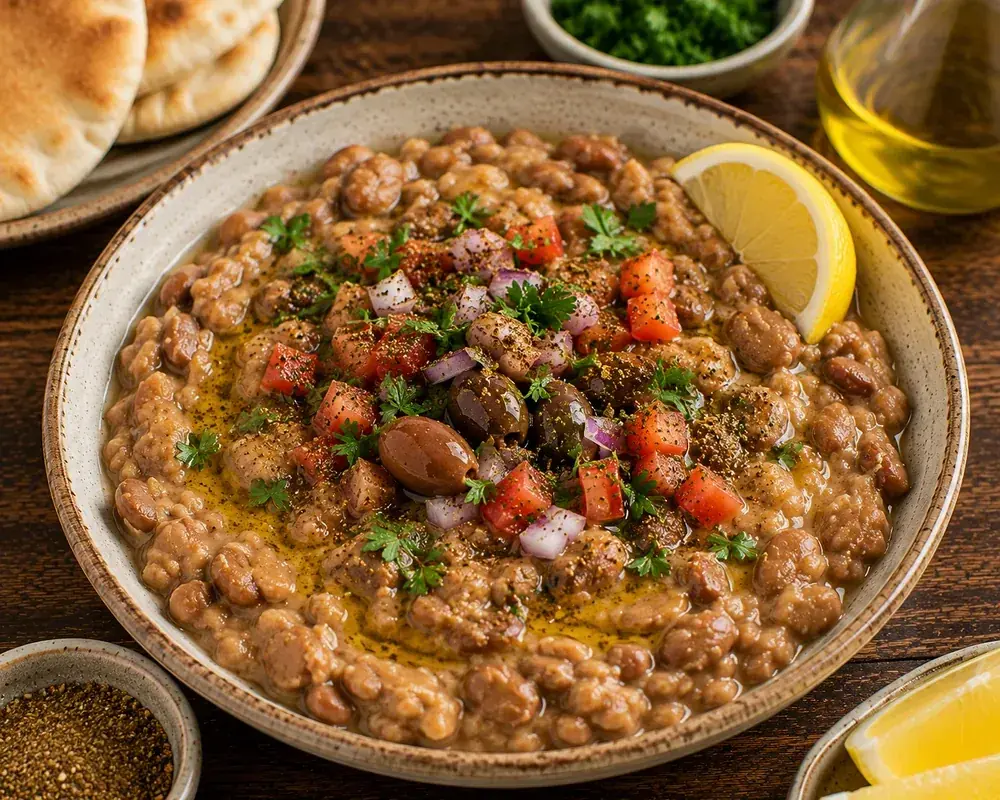
Ful Medames Recipe — Traditional Egyptian Fava Beans
A traditional Egyptian ful medames made with tender fava beans, garlic, cumin, fresh lemon juice, and extra virgin olive oil, finished with tomato, red onion, parsley, and warm pita. The beans are partly mashed for a thick texture while plenty remain whole.
View recipe →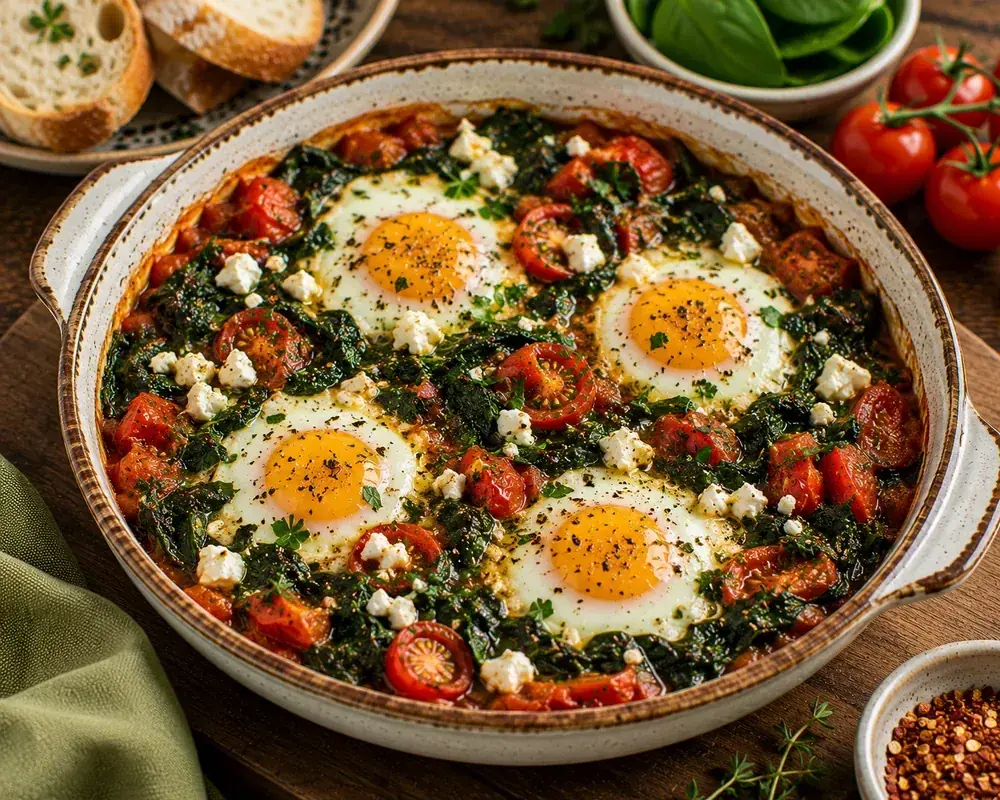
Baked Eggs with Spinach & Tomatoes Recipe
This baked eggs with spinach and tomatoes recipe features tender eggs nestled in spinach, cherry tomatoes, garlic, and feta cheese. A simple Mediterranean breakfast that's nutritious, satisfying, and easy to prepare in one pan.
View recipe →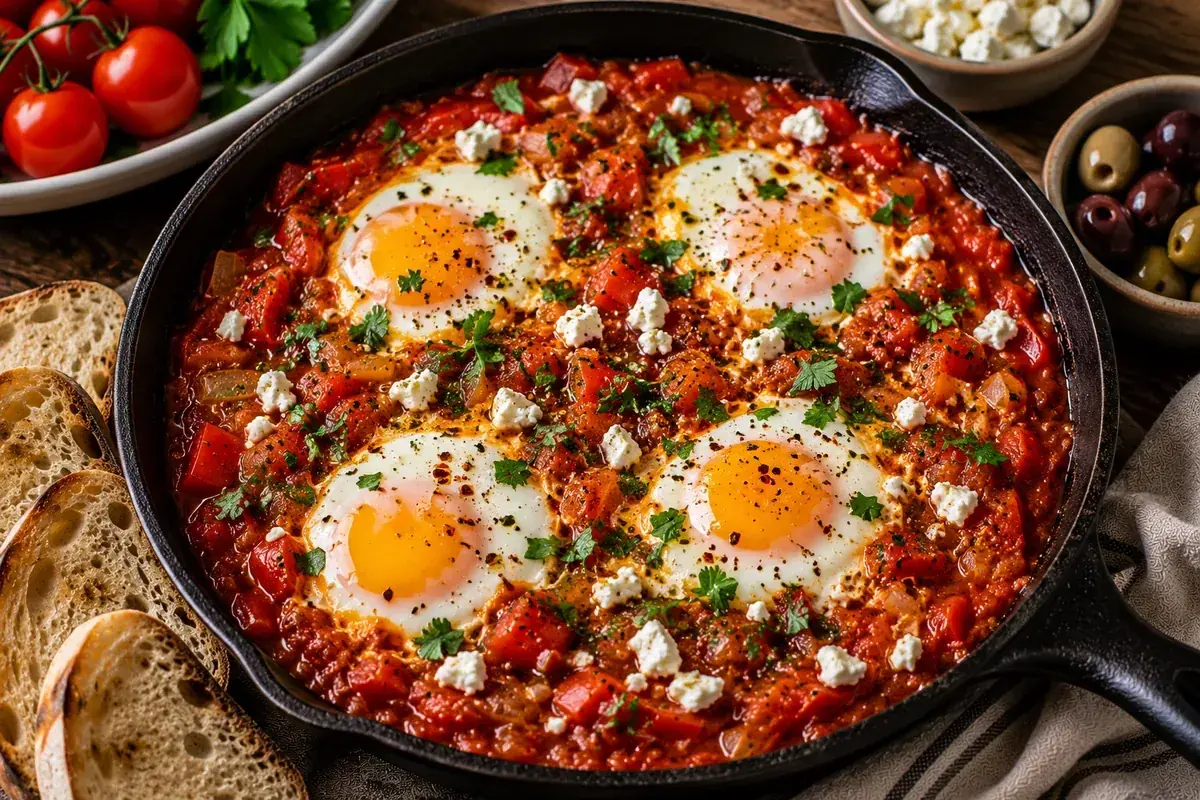
Mediterranean Shakshuka Recipe — Healthy Eggs in Tomato and Red Pepper Sauce
A Mediterranean-style shakshuka made with eggs gently cooked in a spiced tomato and pepper sauce with garlic, onion, and herbs. Serve it straight from the pan with warm pita for scooping up the rich tomato sauce.
View recipe →