
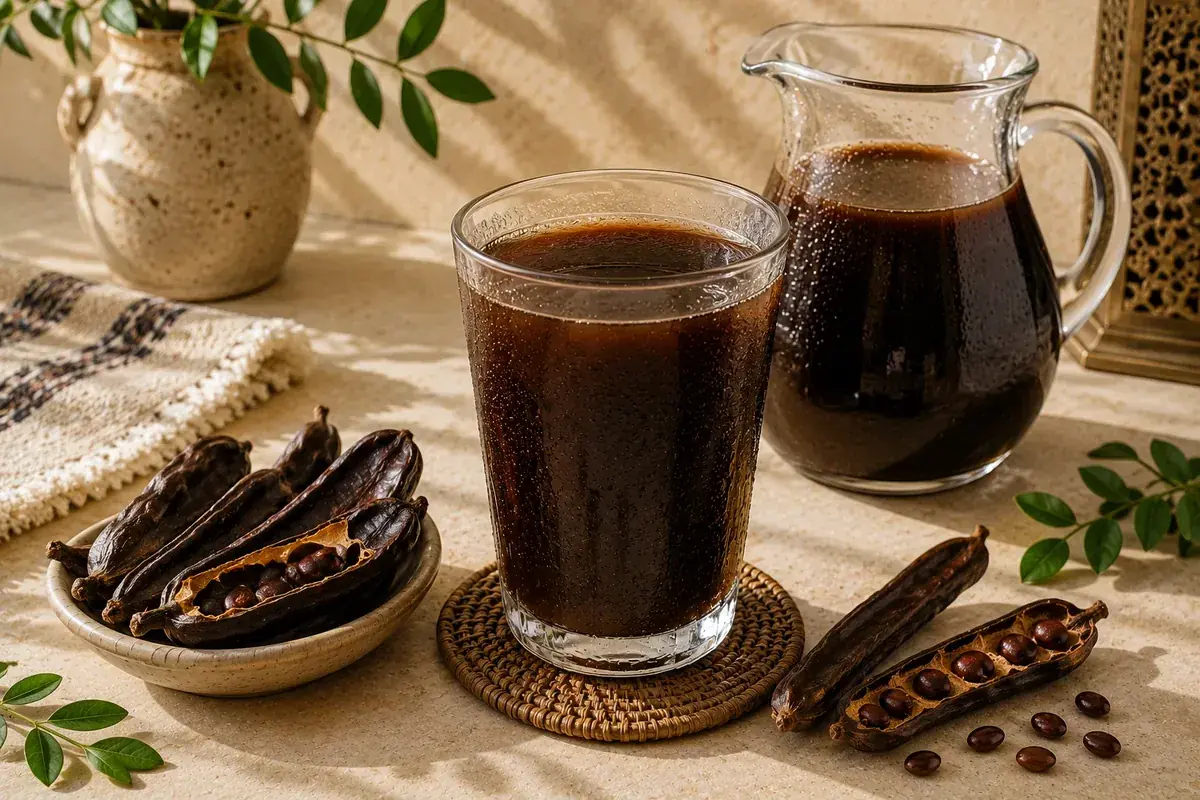
Authentic Egyptian Carob Juice Recipe (Kharoub)
An authentic Egyptian carob juice recipe made by simmering roasted carob pods with water, then chilling the naturally sweet, deep caramel-like beverage.
Prep Time
10 mins
Cook Time
25 mins
Total Time
35 mins
Servings
6
A TASTE OF TRADITION
The Story Behind This Recipe
Egyptian Kharoub is a beautiful example of how a humble ingredient can become a deeply familiar traditional drink. Carob pods are roasted and simmered in water until they release their dark color, toasted aroma, and naturally sweet flavor. The finished drink is simple, but its distinctive caramel-like taste makes it immediately recognizable.
Cultural & Culinary Context
Carob juice is strongly associated with Egyptian food culture and is especially popular during Ramadan, when traditional beverages are an important part of the iftar table. Kharoub is often served cold after a day of fasting, making its refreshing character particularly welcome. It is also enjoyed outside Ramadan, especially during hot weather and family gatherings. Preparation varies between households, including differences in sweetness, concentration, and the use of aromatic additions such as orange blossom water.
What Makes It Mediterranean?
Carob has a long history of use around the Mediterranean and Middle East, where the pods have been valued for their naturally sweet flavor and versatility. This drink reflects the broader regional tradition of transforming simple plant ingredients into refreshing beverages without complicated preparation.
Mediterranean Influences
- 🌿Roasted carob provides the defining flavor and natural sweetness.
- 🌿The recipe relies on simple plant ingredients and straightforward preparation.
- 🌿The finished drink is served cold and is especially refreshing in warm weather.
- 🌿Fresh mint and lemon provide familiar Mediterranean-style aromatic and citrus notes.
- 🌿Orange blossom water can add a subtle floral character.
- 🌿The recipe emphasizes the natural flavor of the main ingredient rather than a heavily sweetened syrup.
Ingredients
- 1 cup roasted carob pods (Roughly broken into smaller pieces so their roasted flavor can infuse into the water more effectively.)
- 6 cups water (Use fresh drinking water. Keep a little extra available if you need to dilute the finished juice.)
- 1 tbsp honey (Optional. Taste the carob juice after straining before deciding whether it needs additional sweetness.)
- 1 tsp orange blossom water (Optional. Add gradually because its floral aroma can become strong if overused.)
- 1 ice cubes (For serving. Chill the juice thoroughly before pouring it over ice.)
- 1 fresh mint leaves (For garnish. Add shortly before serving to preserve their fresh aroma.)
- 1 lemon slices (For garnish. Thin slices add a fresh citrus aroma and bright visual contrast.)
Instructions
- 1
Rinse the roasted carob pods thoroughly under cool running water to remove any loose dust or particles. Drain well.
- 2
Break the carob pods into smaller pieces if necessary. Smaller pieces expose more surface area and help the water extract their roasted flavor.
- 3
Place the broken carob pods and water in a medium saucepan.
- 4
Bring the mixture to a boil over medium-high heat. Keep an eye on the saucepan as it comes to a boil.
- 5
Reduce the heat to low and simmer gently for 20–25 minutes. The liquid should become darker and develop a noticeable roasted, caramel-like aroma.
- 6
Remove the saucepan from the heat and allow the mixture to cool slightly before straining.
- 7
Pour the mixture through a fine-mesh sieve into a large heatproof container. Press the softened carob gently with the back of a spoon to extract remaining liquid without forcing too much solid material through the sieve.
- 8
Taste the strained juice while it is still slightly warm. If you want it sweeter, stir in the optional honey until completely dissolved.
- 9
Add the optional orange blossom water and stir gently. Start with the listed amount because too much can overpower the roasted carob flavor.
- 10
Allow the juice to cool to room temperature, then cover and refrigerate until thoroughly chilled.
- 11
Taste the chilled juice before serving. If it tastes too concentrated, add a little cold water. If it needs more sweetness, add a small amount of honey and stir until dissolved.
- 12
Serve over ice and garnish with fresh mint leaves and thin lemon slices. Serve immediately while cold.
SET YOURSELF UP FOR SUCCESS
Before You Cook
👨🍳 Keep In Mind
- •Use good-quality roasted carob pods because their flavor determines most of the character of the finished drink.
- •Break large pods into smaller pieces before simmering so more of their flavor can move into the water.
- •Do not add honey automatically. Carob can be naturally sweet, so taste the strained juice first.
- •If using orange blossom water, measure it carefully because a little goes a long way.
- •Prepare enough refrigerator space for the strained juice to chill thoroughly before serving.
💡 Helpful Tips
- •Rinse the pods before cooking to remove loose dust and particles.
- •Keep the simmer gentle rather than boiling aggressively for the entire cooking time.
- •Press the softened pods gently when straining instead of forcing large amounts of pulp through the sieve.
- •Taste before sweetening because the natural sweetness of carob varies.
- •Chill the finished juice completely before deciding whether it needs dilution or additional sweetness.
- •For a clearer drink, strain through a fine-mesh sieve and avoid pressing too aggressively.
- •For a stronger flavor, allow the pods to simmer for the full cooking time before straining.
- •If the drink tastes too concentrated, dilute it gradually with cold water rather than adding a large amount at once.
- •If orange blossom water is used, add it carefully because its floral aroma should complement rather than dominate the carob.
- •Do not judge the final sweetness while the drink is very warm; taste again after chilling because cold temperatures can change how sweetness is perceived.
👀 How Do I Know It's Done?
- ✓The carob has simmered for approximately 20–25 minutes.
- ✓The liquid has developed a darker color and strong roasted aroma.
- ✓The pods have softened and released their flavor.
- ✓The juice has been thoroughly strained.
- ✓The sweetness and concentration have been adjusted after tasting.
- ✓The finished drink is completely chilled before serving.
Tweak It
Make This Recipe Work for You
Adapt the recipe to your ingredients, dietary needs, budget, time, serving size, or meal-prep plans.
🔄 Ingredient Substitutions
Skip the honey
Omit the honey completely if the natural sweetness of the carob is enough for your taste.
Skip the orange blossom water
The drink remains delicious without it, giving you a simpler roasted-carob flavor.
🌱 Dietary Adjustments
Make it vegan
Simply omit the honey. The base carob drink is plant-based.
Naturally caffeine-free
Carob is naturally caffeine-free, making this a useful alternative when you want a traditional roasted beverage without coffee or tea.
💰 Budget-Friendly Options
Keep the traditional base simple
Carob pods and water are enough to make the drink. Honey, orange blossom water, mint, lemon, and ice can all be treated as optional serving additions.
⏱️ Time-Saving Options
Chill ahead of time
Prepare the carob juice earlier in the day and refrigerate it so it is already cold when you are ready to serve.
Prepare a larger batch
The recipe scales easily for family meals and gatherings. Keep the ingredient ratio consistent and adjust sweetness after straining.
👨👩👧👦 Serving Adjustments
Scale for Ramadan gatherings
Multiply the ingredients proportionally when serving a larger iftar gathering. Taste the full batch after straining before adding additional honey.
🥡 Meal Prep
Make it ahead
Kharoub is well suited to advance preparation. Make the juice, strain it, refrigerate it thoroughly, and garnish only when serving.
RECIPE RESCUE
🧩 What Do You Need Help With?
Choose the problem you're facing and get a recipe-specific solution instead of a generic cooking tip.
WHAT IF?
🔄 What If...?
Choose your situation and we'll show you a practical pathway for making this recipe work.
STORAGE & LEFTOVERS
🥡 Storage & Leftovers
Cool the strained juice promptly and refrigerate it in a clean covered container.
Keep the juice refrigerated until serving.
Store the mint and lemon separately and add them only when serving for the freshest presentation.
If sediment settles at the bottom, gently stir before serving rather than shaking aggressively.
Do not leave the finished juice sitting at room temperature for extended periods, especially in hot weather.
Freezing is not recommended when you want to preserve the best fresh flavor and serving texture.
Best Storage Time
For best quality, use refrigerated homemade carob juice within 3–4 days.
How to Store
Use a clean airtight glass bottle, pitcher, or food-safe covered container.
SERVING & PAIRING
🍽️ Serving & Pairing
Serve Egyptian Kharoub thoroughly chilled in clear glasses over ice, especially during Ramadan, warm-weather meals, or family gatherings. The deep amber-brown color looks beautiful through the glass. Finish each serving with fresh mint leaves and a thin lemon slice for a bright contrast to the roasted carob flavor. For a larger family gathering, the chilled juice can be presented in a glass pitcher and poured over ice as needed.
What Goes Well With It?
RECIPE FAQ
❓ Frequently Asked Questions
What is Kharoub?
Kharoub is the Arabic name commonly used for carob, and Egyptian Kharoub refers to the traditional drink made by extracting the flavor of roasted carob pods in water and serving the resulting beverage chilled.
How do you make Egyptian carob juice?
Egyptian carob juice is made by rinsing and breaking roasted carob pods, simmering them in water for 20–25 minutes, straining the liquid, adjusting the sweetness if needed, and chilling it thoroughly before serving.
Is Egyptian carob juice sweet?
Carob naturally has a sweet, toasted flavor with caramel-like notes. Some preparations add sugar or another sweetener, but this version keeps honey optional so you can taste the natural sweetness first.
Is Kharoub a traditional Egyptian drink?
Yes. Carob juice is a familiar traditional beverage in Egypt and is especially associated with Ramadan and warm-weather serving.
Does carob juice contain caffeine?
Carob is naturally caffeine-free, so Kharoub provides a roasted beverage experience without the caffeine found in coffee or tea.
Can I make Kharoub without honey?
Yes. Honey is optional. Taste the strained juice before adding it because roasted carob pods already provide natural sweetness.
Can I make this drink vegan?
Yes. Simply omit the honey. The carob, water, orange blossom water, mint, lemon, and ice are all plant-based.
Why is my carob juice too strong?
The flavor can become overly concentrated depending on the carob pods and simmering time. Dilute it gradually with cold water and taste after each addition.
Can I serve Kharoub without ice?
Yes. Ice is optional. Thoroughly chill the juice in the refrigerator and serve it in chilled glasses if you prefer not to dilute it with melting ice.
How should I store homemade carob juice?
Keep it covered and refrigerated in a clean container. For the best quality, use it within 3–4 days and add fresh mint and lemon only when serving.
Can I prepare Kharoub ahead for Ramadan?
Yes. It is well suited to advance preparation. Make and strain the juice earlier in the day, refrigerate it thoroughly, and add ice and fresh garnishes immediately before serving.
Explore More
Go deeper into the cuisine
Learn more about the ingredients, traditions, and cooking approaches connected to this recipe.
You May Also Like
More delicious recipes from the Drinks
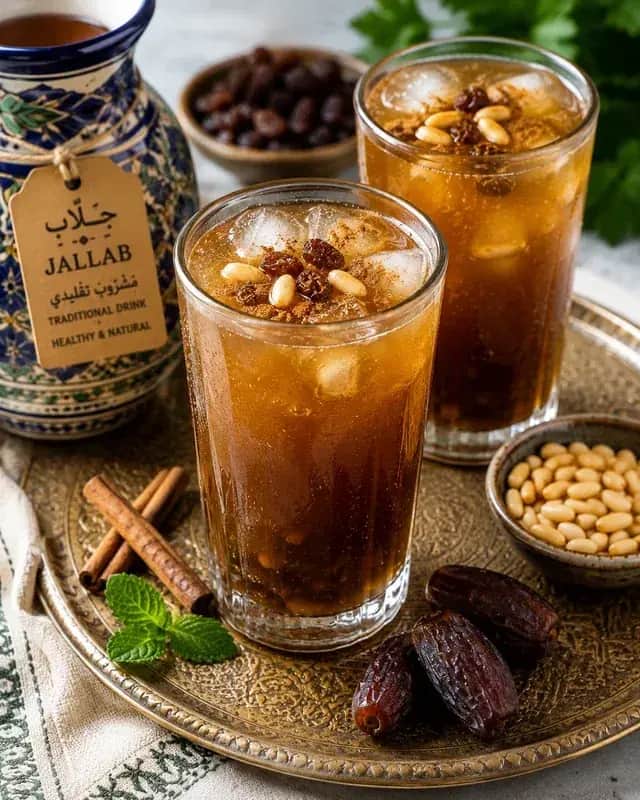
Traditional Jallab Recipe — Lebanese Date & Grape Molasses Drink
This Traditional Jallab recipe is a refreshing Lebanese and Levantine drink made with date molasses, grape molasses, rose water, and chilled water, served over ice and finished with pine nuts and golden raisins. A naturally sweet, floral, fruit-molasses beverage that comes together in minutes and is especially popular during Ramadan, family gatherings, festive meals, and warm weather.
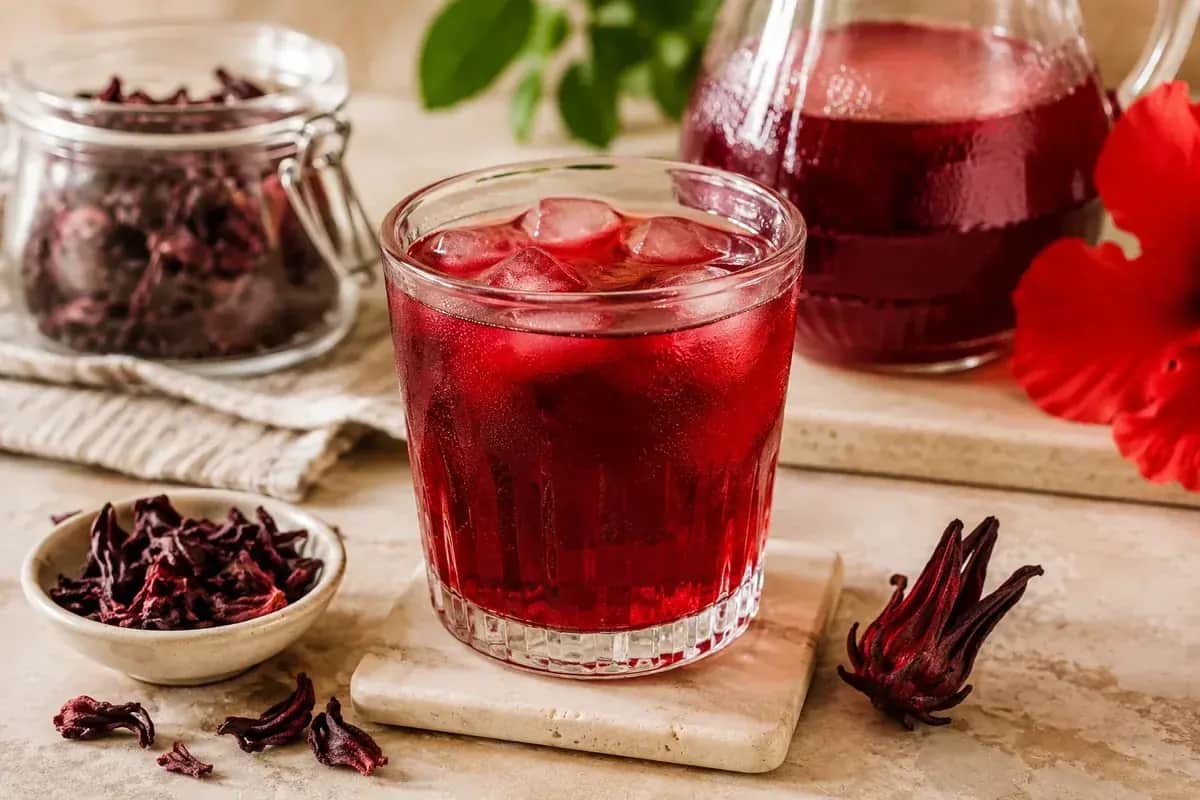
Authentic Egyptian Karkade Recipe (Hibiscus Tea)
An authentic Egyptian Karkade recipe made with dried hibiscus flowers, honey, and optional fresh lemon for a vibrant ruby-red hibiscus drink that can be served hot or chilled over ice.
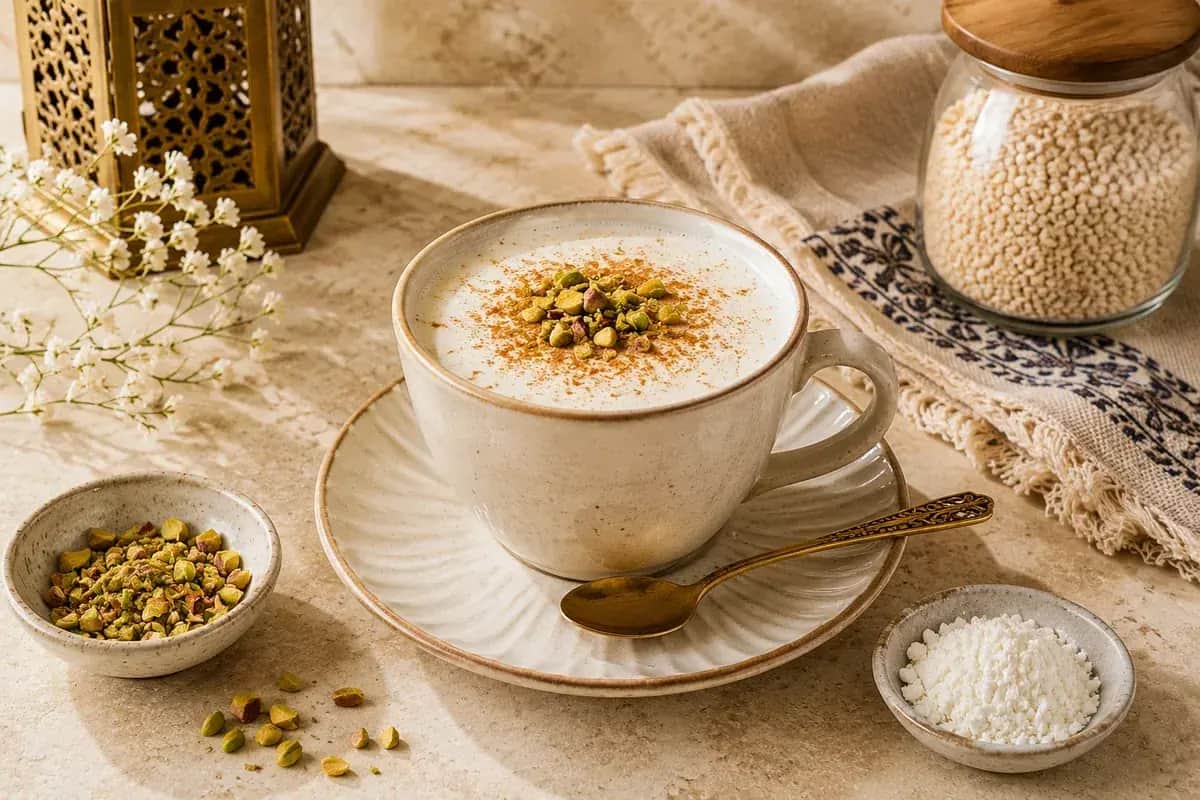
Authentic Sahlab Recipe (Healthy-Inspired Version)
An authentic Sahlab recipe for a warm, creamy Middle Eastern milk drink thickened with sahlab powder and scented with orange blossom water, vanilla, and cinnamon, then topped with pistachios and coconut.